
 Less than half a year after the introduction of 'Agentforce', Salesforce has returned to the Netherlands with the 2025 Agentforce World Tour. With great energy, the market leader in CRM brought the agentic AI solutions to the man. Key message: Agentic AI only works if your data is in order.
One major difference from six months ago is that Salesforce is no longer the only player offering AI agents. Almost every software company is now doing something with agentic AI and certainly in customer contact, one introduction after another has passed by in recent months.
Use cases are trickling in
Six months ago, Agentforce was launched as a 'digital labor platform'. The biggest question is: will the concept catch on, and if so, how? More than last year claims are now also coming about use cases. For example, Salesforce's own Agentforce assistant (for supporting Agentforce) handles 30.000 conversations per week, of which 85% are resolved independently. But reMarkable, a fast-growing company with customer service challenges, also speaks of a 35% deflection rate; Spotify is boosted with a 40% reduction in average conversation duration.
front office
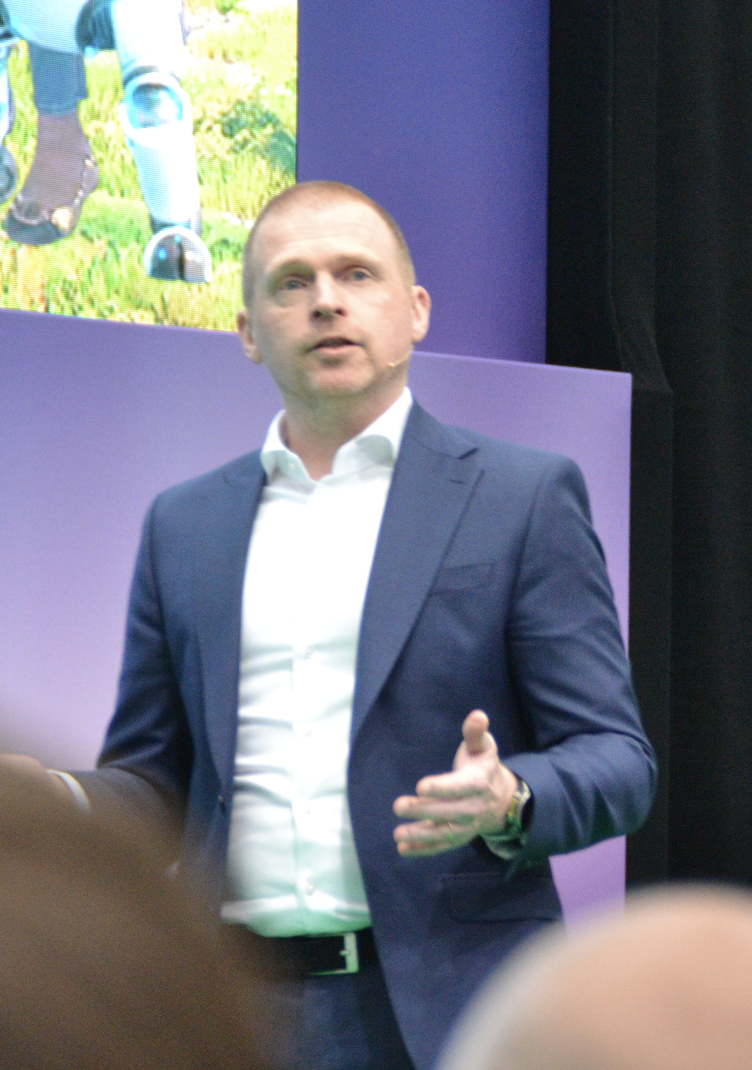 The examples give the impression that the demonstrable benefits so far are mainly visible in the front office. That may also explain why Remko Reinders, SVP and general manager of Salesforce Netherlands since November last year, states at his kick-off of the 2025 Agentforce World Tour that 'frontliners' are more overloaded than ever. Finding and retaining talent, but also productivity that is under pressure, especially in healthcare, are major challenges. "But customers do not take this into account: they do not want waiting time, but an expert who is available at the time of their choice," says Reinders.
Connected kitchen appliances
There were also live demos. At the end of last year it was all about the American department store Saks, now there was a leading role for Fisher & Paykel, a fast-growing subsidiary of the Chinese Haier and supplier of (connected) kitchen appliances. Fisher & Paykel offers customers a subscription to (proactive) appliance management, but also real-time support to customers in the use of the equipment. The company states that Agentforce now solves 33% of customer questions.
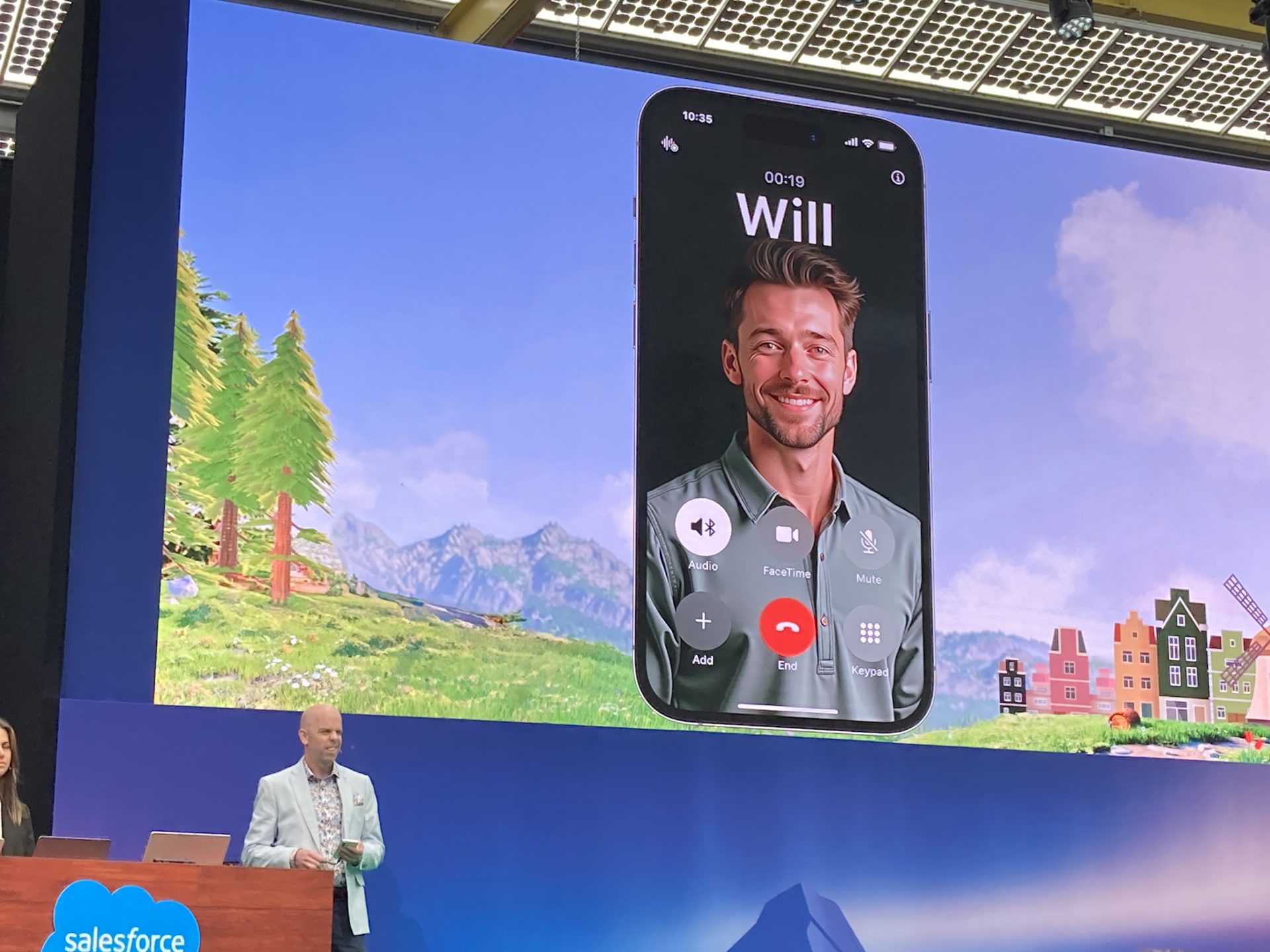
During the demo with Reinier van Leuken (senior director AI product management at Salesforce) it became clear what virtual agent Will should be able to do: as a voicebot, provide the customer with advice and solutions in real time, for example by interpreting a photo that the customer uploads. In the demo, Will was able to answer the question 'what size refrigerator fits in this spot in my kitchen?'
Also demonstrated: expanding Will's competencies, so that the assistant can get started with customized agreements for deliveries. Van Leuken could suffice with entering a concise prompt, which was further elaborated by the AI agent. "AI builds AI," says Van Leuken. Then it also became visible how Agentforce works with a newly created task and which data (sources) are used to make decisions.
Not just a data issue
click to enlarge
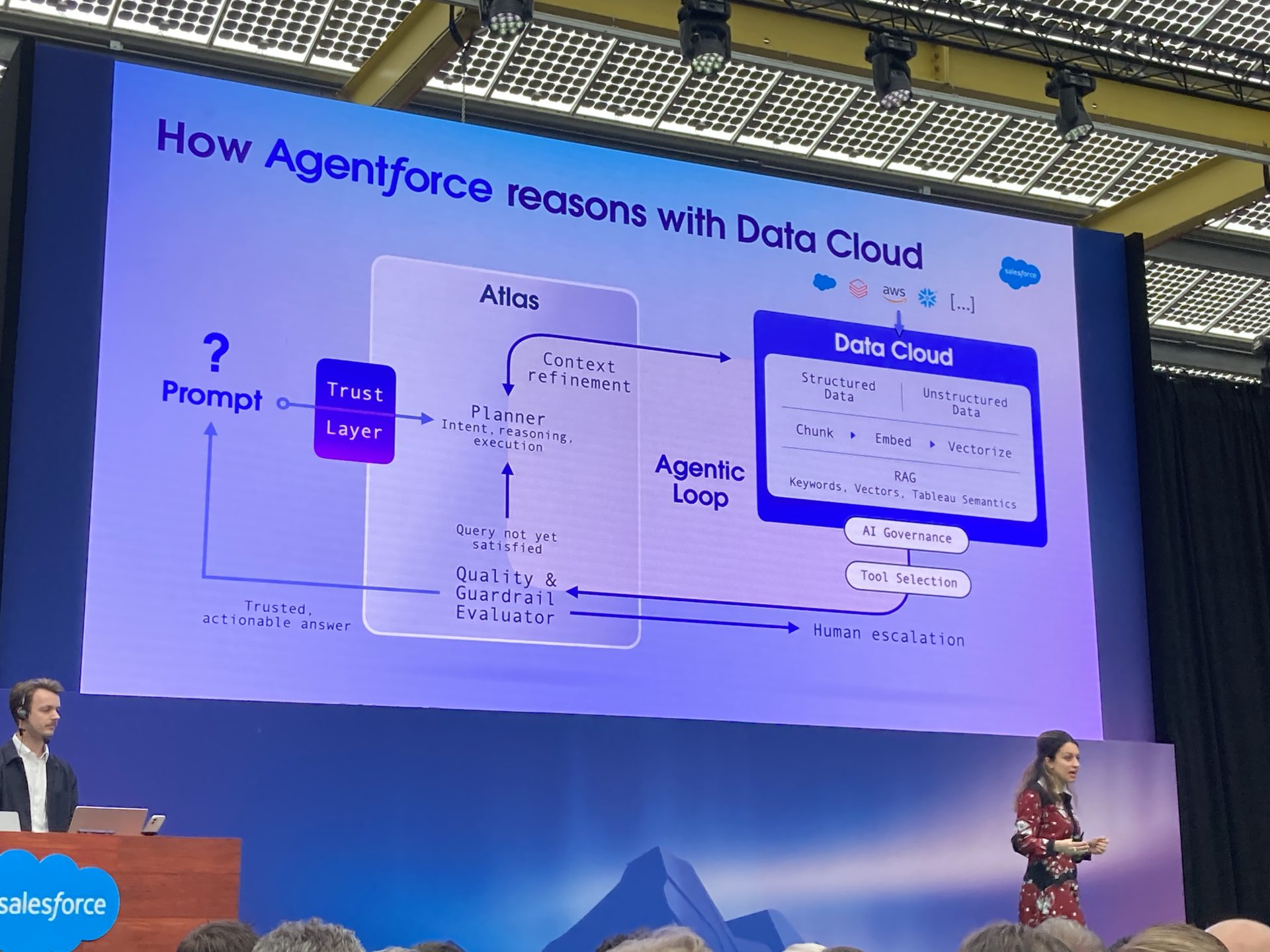
The absolute prerequisite for the use of AI agents is the availability (and accessibility) of good data. Without data, no AI agents, or as also Olfa Kharrat emphasized: “Agents are as good as your data foundation”.
But that's not all, says Van Leuken. Also needed to make an AI agent work well: LLMs, metadata, an application landscape and supporting tools such as RAG, to be able to make meaningful plans, and of course guardrails and governance. In that application landscape, a new 'user' is emerging, according to Reinders earlier, in the form of the 'agentic user'.
And interesting in light of discussions about the use of data by suppliers of AI solutions: “Your data is never our product and it never will be,” says Salesforce. Incidentally, the company is also involved in the Stichting Gelijkwaardig Herstel – the organization that must organize the compensation for the Toeslagenaffaire.
Where to start?
Remko Reinders could “well imagine” that the audience wondered: and where do I start? Salesforce also advocates 'starting small'. Step 1 is using AI to answer questions - so reactively and based on GenAI. In step 2 you can start working reactively with actions and tasks; in step 3 you arrive at proactive actions and tasks. Or as one of the visitors said: “perhaps in step 1 you will find out how the quality of your data is.”
Jan-Maarten de Vries, CEO Bridgestone Mobility Solutions first deployed Agentforce to get things in order internally – so more on the reactive side, resulting in higher productivity. This was necessary because there were fragmented pricing and subscription models within the company.
Bridgestone can now do more, such as using insights and translating them into actions towards customers. And Agentforce is being used by the (live) customer service agents so that they too can become more proactive. “AI agents must help us make offers: which offer to which customer? And which agent should do that at what time?” Interesting detail: on stage, De Vries reported that Salesforce “pushed us well to start using Agentforce”. And at Bridgestone too, the big word came out: all this will only work if data and content are 'clean' and accessible. So start small, or “don't boil the ocean”.
(Ziptone/Erik Bouwer)


Also interesting
-

Sudden fear that technology like AI will take your job? You might be suffering from Kasparov syndrome. The good news:…
-
Agentic AI Services is a suite of services that helps organizations easily deploy, build, manage, and scale…
-

Pegasystems introduces Pega Agent Experience (Pega AgentX for short), as a dynamic engine for agent orchestration.