
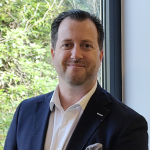
PlanMen can be regarded as the party that has put the field of WFM on the map in the Netherlands. Within PlanMen, Willem van den Brink has emphatically left his mark on the WFM field – his substantive expertise and unbridled energy were particularly striking. Colleagues recently knew the Lifetime Awards to Van den Brink. But even without that Award, there are plenty of reasons to look back with him and Arjan Spruijt on his role within the WFM field. And get to know his new role within Ablefield.
The idea for the creation of PlanMen got hands and feet when Willem van den Brink and Arjan Spruijt worked together in different roles at SNT (nowadays Webhelp). Spruijt about the SNT era: “For me as a project manager, determining the required capacity was one of the first tasks for new projects at the time. Account managers also had to look at staffing and productivity for correct pricing. At that time, Willem was already busy with the WFM field. It was also clear to me: WFM pushes the buttons of HR and finance. The field was still in its infancy, for example, there were no courses or books yet.”
Unscrew grilles
Van den Brink also remembers his time at Telecom Operator Services, a facility contact center set up by KPN, where he plunged into the WFM field as a brand new student. “I just rolled into it. WFM tools such as Blue Pumpkin, one of Verint's predecessors, were used. At that time, the schedules were printed out on Wednesdays, hung up in the canteen and, if there were too many changes on paper – applied with Tipp-Ex – that part of the schedule was printed out again. Sometimes there were 200 A4 sheets on the wall. Employees had to register and deregister on a list and received a signed time sheet to the employment agency on Friday afternoon.”
Planners busy with changes
In the early years of his WFM career, Van den Brink benefited greatly from the coaching of his SNT colleague Frans Sloesen: “He took the time to explain things and had a good sense of planning. He asked critical questions and engaged in scenario planning: what-if? SNT then served major parties such as Achmea, KPN and internet provider Wanadoo. There was a team of 18 employees who were only involved in processing schedule changes, the cupboards were full of folders with archived change requests. At that time, planners received dozens of calls a day with change requests. Around 2004, the first web-based tools came onto the market. As a result, employees could view the planning online, also on the work floor. That led to privacy discussions at the time.”
Career of Willem van den Brink
Education: human geography, Utrecht (not completed)
Career:
1999 – 2004 WFM at SNT
2004 – 2007 WFM at Tele'Train, ai at companies such as Rabobank, Telfort, Oxxio
2007 – 2021 co-founder and director PlanMen and ai at companies such as Cygnific, Eneco, Rabobank, Ziggo
2011 – 2020 Core teacher post-hbo WFM at Coniche Business School, later WFM-Academy
2013 – 2020 Expert Group WFM Customer Service Federation
2021 – present Director of Ablefield
Costly link to the ACD
In addition to solutions such as Blue Pumpkin, there were also WFM applications from Genesys, NICE and Aspect, among others, “but at the beginning of the century the vast majority of contact centers still worked with Excel,” says Van den Brink. “In particular, the costs for the link with the ACD quickly went up to a few hundred thousand euros, so that companies did not quickly start a separate WFM application.”
Spruijt remembers from that time that organizing planning in the contact center world often led to problems. “In those days, the 'planner' was often invisible and docile. Because the main software suppliers also provided advice, there was a lack of an independent, specialized party.”
The start of PlanMen
“With the four founders (Arjan Spruijt, Robert van Honschoten, David van der Pouw Crane en William van den Brink – ed.) we had knowledge about HR, marketing, finance and WFM. Our dream: to professionalize the field,” says Van den Brink. The team thought it would start supplying interim capacity in the WFM field. But that quickly turned into consultancy work. And although the route via independent software advice was more obvious, PlanMen focused the first few years on strengthening the content of the WFM profession (knowledge and expertise about processes) and improving the visibility of the WFM professional. One of the first achievements is the disk of six, with which the planning issue is structured.
WFM put on the map
What is the biggest victory achieved by PlanMen? Spruijt: “I think the great merit of PlanMen is that it has contributed to the pride of WFM professionals in their field and their work. In the past it was a fairly minor role.” Van den Brink adds: “I think that since about 2012 the various WFM roles have been taken really seriously. Since 2010, our annual WFM conference has really reached a good substantive level. A year later, we launched the post-graduate course. In the period that followed, we structurally emphasized multidisciplinary aspects in our marketing. That has been handled well by contact centers.” Spruijt adds that the field has recently been given an extra boost by the corona pandemic, which has put the role of the WFM teams in the foreground again. “Just look at the corona lines that have worked for the GGD or hospitals.”
Capacity planning is an organization-wide issue
Eighteen months ago, PlanMen director Arend van Houweling, who had just been appointed at the time, stated this PlanMen had to double in a few years, both in turnover and size. “We are still exactly on the intended growth line,” says Arjan Spruijt now. “After the emancipation of the WFM professional, we are now focusing on collaboration with HR and finance. That affects the planning processes and that is what matters next to software and people. The WFM Academy will also receive new impulses in the near future.”
Willem: “If I had to give Arend an assignment: make sure that in 2025 there is something like a Chief Planning Officer, CPO, within organizations – who looks at the deployment of people and resources across departments. If things get busier at the front office now, it will mean extra pressure at the back office in a week.”
Spruijt: ”Capacity planning is about people times euros and that is not just the party of planning.”
Van den Brink: “Not many companies are looking three years ahead in this area.”
Transfer to Ablefield
Back to the reason for the interview: Van den Brink's departure from PlanMen and being awarded the Lifetime Achievement Award. Admittedly by his colleagues, but “this makes you look back even more and yes, we have achieved quite a bit,” says a proud Van den Brink. “We asked the market who should be nominated and our competitors were also able to vote,” Spruijt corrects.
It is clear to Van den Brink that his transfer to Ablefield means that he is exchanging the WFM field for another field of work. “Ablefield focuses on optimally facilitating employees. Scheduling is part of that, but the relationship with your manager is also part of it, just like your well-being and your competences. We want to make people's working lives as fun and easy as possible.”
Make connections
That raises the question 'how'. First of all, Ablefield wants to help provide a shell for all employee-oriented applications – such as the roster tool, the HR portal, the employee satisfaction survey, the personal development plan, the intranet and the e-learning environment. In addition, Ablefield works with frequent and short employee satisfaction surveys, in which all data – including soft KPIs – offers guidance via the use of AI for both employees and direct managers to continue to discuss specific topics with each other. So no traditional employee portal aimed at self-service; what Van den Brink's priority at Ablefield is that employees and managers are actively supported in making connections between different aspects of the work. (Ziptone/Erik Bouwer)


Also interesting
-

Karin Brommer-Bloemendaal will be the new General Manager of Werkend2040. She succeeds Arend van Houwelingen.
-

Björn Kole is leaving TP for NEXT wfm, where he will start as Team Lead. At TP, Kole was during…
-
Mark Elschot has been in the customer contact business for 25 years. Reason for a (relay) interview with him and then other (not so) old…