
 My domestic help is called a housekeeper these days. She still does pretty much the same thing as before, but it sounds like, after vacuuming, she also gives advice on the lighting and the arrangement of my family in the living room.
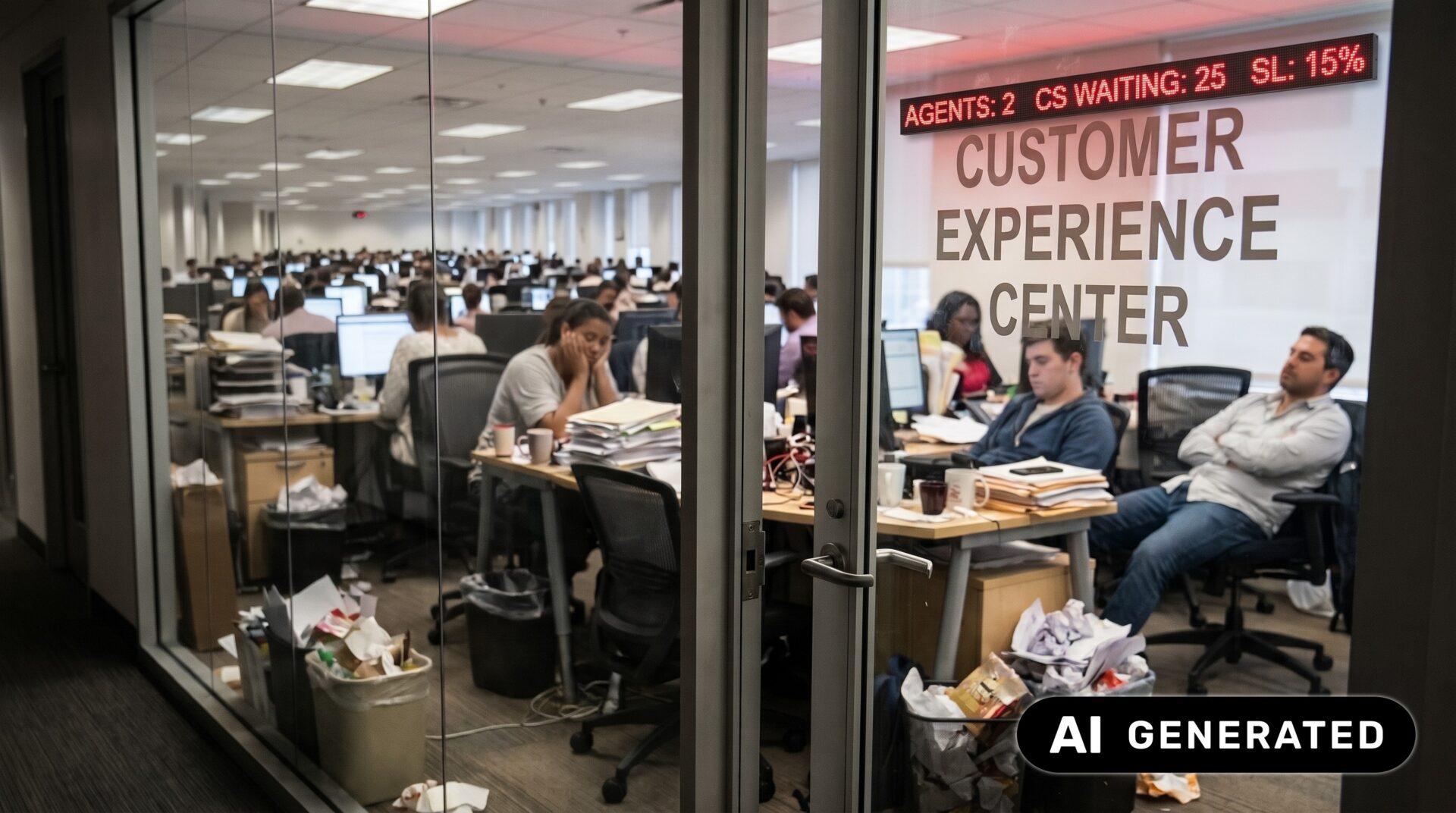
I was reminded of this the other day when I walked through a contact center. The door neatly displayed 'Customer Service'. Inside, dozens of people with headsets were solving queries. The screens were full. So was the queue. On the wall hung a dashboard that used red, orange, and green to show exactly how human things were going that day.
In customer contact, we love new names. The receptionist became a call center employee, the call center employee became a customer service agent or ambassador, and the call center became a contact center. Every name change promised progress. Sometimes something really did change. Sometimes, mostly the sign at the entrance.
Let's call the contact center the Customer Experience Center from now on.
Therefore, I propose calling the contact center the Customer Experience Center from now on. Yes, I can hear you thinking already: there goes another one of those consultants with an English term. Someone who gives an old department a new name, creates a PowerPoint presentation for it, and then contentedly notes that the transformation has succeeded.
But perhaps that new name is useful precisely if it forces us to take a fresh look. In many organizations, a contact center is still the place where contact is handled. We organize capacity, channels, accessibility, processes, and responses. We measure how long the customer waits, how long the agent talks, and how many seconds are still needed afterward to record what on earth those two were discussing.
An Experience Center starts with a different question: What should a customer experience after having contact with us? It doesn't have to be spectacular. No violin music in the queue. No employee blowing confetti through the headset afterwards. Above all, the customer wants to feel that someone knows him, listens to him, and takes responsibility. That he doesn't have to tell his story three times. That the employee is allowed to arrange something. And that even a 'no' can be understandable if someone takes the trouble to explain why.
Handling time
The curious thing is that at physical experience centers, we effortlessly understand that the experience is allowed to cost money. We invest in a beautiful location, good coffee, interactive screens, and architects who discuss the right shade of beige for three months. But as soon as a customer calls because something is going wrong, we nervously look at the average handling time.
Then six minutes suddenly trumps genuine attention. Then a conversation is called 'efficient' if it is over quickly, even when the customer calls again an hour later. Then we congratulate ourselves on a green KPI, while the same customer turns red.
Perhaps that is why we shouldn't start with the new sign on the facade. Begin with one simple question at the end of every design, process, and schedule: what experience are we actually organizing here? Not just: was the request handled? Not just: did we stay within the SLA? Not just: how many calls did we have per hour? But: what did this customer experience with us?
Data or listening?
That question is uncomfortable, because the answer doesn't always fit into a dashboard. Do experienced customers trust? Do they feel that someone is taking ownership? Do they know that the organization doesn't see them as a ticket, case, or number? You can certainly put numbers alongside that, but you discover it primarily by listening. To customers *and* to the employees who hear every day where processes creak and policies groan.
So a different name doesn't solve anything. Ultimately, my housekeeper still just cleans my house. But her new title did make me think for a moment about what I actually expect from her work. Not just that the dust is gone, but that my house feels more pleasant afterwards.
So feel free to hang a new sign on the door tomorrow: Customer Experience Center. But don't just change the name. Give employees space, design processes from the customer's perspective, and don't measure solely how quickly the interaction is over.
After all, calling a contact center a Customer Experience Center without changing anything about the customer experience is like calling my vacuum cleaner a 'facility maintenance management system'. It sounds impressive, but under the couch, it just remains dusty.
(Ziptone/Mark Elschot)


Also interesting
-
Completely reversing the work-from-home option isn't a solution to a leadership problem. It's a missed opportunity.
-

Customer contact is an important part of the care process. You only realize just how important it is when you don't get an answer to your…
-

Christian Schneemann starts working at system integrator Contact Center Live as head of Go To Market & New…