
 The chatbot owes its negative image to users and suppliers who settled for a half-functioning solution, says Nienke Bloem. She has pinned her hopes on further development of the technology and on companies that want to think about the question: when do we really think a chatbot is good?
On the one hand are customer contact professionals who say that we have unnecessarily burdened the customer with chatbots that do not work. On the other are experts and suppliers who maintain that the first group has not understood that there are also well-functioning modern chatbots.
Some of this contradiction is also visible in Ramòn Delima's statement in NRC from March 29: the KSF chairman finds it bizarre that we have been “experimenting live with chatbots on customers” for years.
We're down 3-0 with the chatbot
“Now that we know ChatGPT is here, it is also easier to burn off the first generation of chatbots,” says customer experience expert Nick Flower. “But Delima certainly has a point. It's not pretty. We are 3-0 behind when it comes to the use of chatbots. A few years ago I wrote in CustomerFirst about the FAQs: F#ck the FAQ. Just like the chatbot, it is also very transactional and functionally designed, from the perspective of the organization. The customer just has to hope that his or her problem will be solved.”
“FAQ is a widely accepted English term in the world of customer experience. Now I understand that, because FGM – as in Frequently Asked Questions – sounds a bit strange. It also looks too much like the TGV and let's be honest, few customers experience their digital search on websites like that of a high-speed train.” (Nienke Bloem in CustomerFirst)
With the new generation of chatbots we have to approach things differently
“Delima put it very sharply. And mind you, the customer is right, only 8 percent of consumers are enthusiastic about the chatbot. That is exactly the problem: which perspective do you use, inside-out or outside-in? Customers are no longer waiting for a chatbot, because they think it can't do anything. Let that perception improve in the near future. This does mean that you have to design, train and test the second generation chatbot in a different way: transformational and relational.”
That 'transformational' facet refers to dealing with your customers in a fundamentally different way: not focused on carrying out a transaction, but focused on improving and deepening the customer experience, thereby perpetuating the relationship. Bloem: “Who do we want to be towards our customers? A chatbot can play a role in this, but how do you prevent a chatbot from providing inferior service? Do you really want to help customers or do you use the chatbot to avoid contact with employees? For example, do you offer customers who are stuck to call back?
Back to Delima's quote: what is the limit on whether or not to release technology to customers?
“Companies should experiment more before rolling out new solutions for all their customers. Test on a small scale and gain insights from your customers. After a session with a chatbot, you will be asked 'did this chat help find a solution?' with a thumbs up or down. Why don't you call the customer back if he gets a thumbs down? The chatbot may save money, but the question is whether companies have insight into the long-term effect: calling back angrily, lacking confidence. That is not the outcome you dreamed of, so you are probably less likely to ask about it.”
Do you know examples of companies where the chatbot functions just as well as an experienced employee?
"No. I think the chatbot is poor so far, especially when your question is slightly different than what the bot is trained on. Only 8 percent of questions to chatbots are answered correctly. Perception is reality. In the contact center we often have KPIs for first time right. Which KPIs do you use for your chatbot? Another criterion is: do you confidently let your mother do business with the chatbot? Do I dare to let my 78-year-old mother loose on the chatbot?”
“When do we really think a chatbot is good?”
Isn't it time for a technology manifesto in relation to customer focus? For example: You shall not use failing technology?
“That would be wonderful, good idea. The chatbot often does not answer the question, it is transactional. But when I see how fast the development of generative AI is going, I think that in two years we will be at a different point. If your organization still has a first generation chatbot in operation, you will soon be lagging behind. Organizations can set the bar really high, especially when it comes to the application of AI. When do we really think a chatbot is good?” (Ziptone/Erik Bouwer)


Also interesting
-

The KSF is getting to work on a national chatbot improvement plan. Ziptone is launching the research into chatbot performance one last time…
-
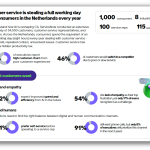
Dutch consumers spend an average of eight hours annually on customer service: waiting, calling back, problems that are not resolved.
-

If no one answers, customers get – even if unintentionally – the impression that the company or brand…