

Frontline Solutions Customer Day, Hooge Vuursche. Image: TasfotoNL / Shutterstock.com
How do you transition from 'service' to 'experience'? This question was addressed from various perspectives during Frontline Solutions' Customer Day. The various sessions didn't offer any stereotypical implementation stories. Instead, they provided plenty of food for thought on the question: how can AI help (and not help!) in enhancing customer experience?
What AI tools should you let go of, and what shouldn't, for both customers and employees? In which cases can you improve the experience? And what role does the experience play for end users of the contact center software? After all, satisfied and productive employees contribute to a good customer experience. What choices does a fast-growing company like Fixami make, with an NPS of +76 as the end result?
Experience is the ultimate form of service
"Service is objective and measurable, experience is subjective," says Hans Reuver, general manager of Frontline Solutions, who also chaired the event. Subjective or not, you can certainly do something with it. And yet, in customer contact, we tend to focus primarily on hard KPIs. And those, in turn, are often cost-driven. That's why it was good that Mirella Kleijnen, professor of Customer Experience Management at the VU Amsterdam, kicked off the event.
Reading tip: Ziptone's interview with Mirella Kleijen. Technology has a huge impact on CX. The use of technology in customer contact can also be overdone: for example, old-school chatbots and IVRs have few fans among consumers. Does "poor customer contact" detract from brand experience, or is it not that bad?
 Kleijnen addressed the question to what extent AI can create 'delight' and how. AI can certainly play a role in the building blocks of 'delight'. Think of personalization or applications where consumers can improve their lives (the transformation economy by Joe Pine), or think about entering into almost social relationships.
The transformation economy
The rise of AI cannot be ignored, Kleijnen acknowledged. That makes it all the more important to do your best to learn as much as possible about it and be selective in its use. Kleijnen and her colleagues publish extensively in journals on AI and customer experience. In practice, not only are there speed differences visible (per company, per sector), but also cultural differences. For example, companion robot It's commonplace in Japanese society, something the average European might not yet be ready for. At the same time, Kleijnen discussed the use of a study companion for Dutch students, as an (accessible) supplement to the physical study advisor. In other words: it seems our society is also slowly moving towards a situation where we're acting socially with something that isn't necessarily social.
Using AI for complaint handling?
In her presentation at Frontline's Customer Day, Kleijnen specifically addressed the use of AI in complaint handling. Is that a good idea or not? On the one hand, research shows that only 18,1% of online shoppers want to do business with AI for complaint handling. Companies that use AI across the board could take this into account more. On the other hand, when it comes to less positive news regarding minor issues—for example, not receiving compensation—it's more readily accepted when AI is present than when an employee makes the announcement. Consumers have the belief (rightly or wrongly) that a robot is more honest and doesn't discriminate between customers. But with more serious problems, this shifts. Kleijnen demonstrates that efficiency isn't the only consideration when deploying AI.
Look very carefully at the task you want to give your AI
Kleijnen's advice is therefore: start with a thorough analysis of the task. Is it routine, complex, or does emotion play a role? Then find appropriate solutions and ensure the right combination of AI and human interaction.
Another takeaway: we still have a lot to learn about AI, and the technology is constantly evolving. Besides, it's wise to consider how employees, even in the long term, can interact with these sliding panels. Building trust and focusing on transparency are key to success.
The Genesys Roadmap: 2024-2026
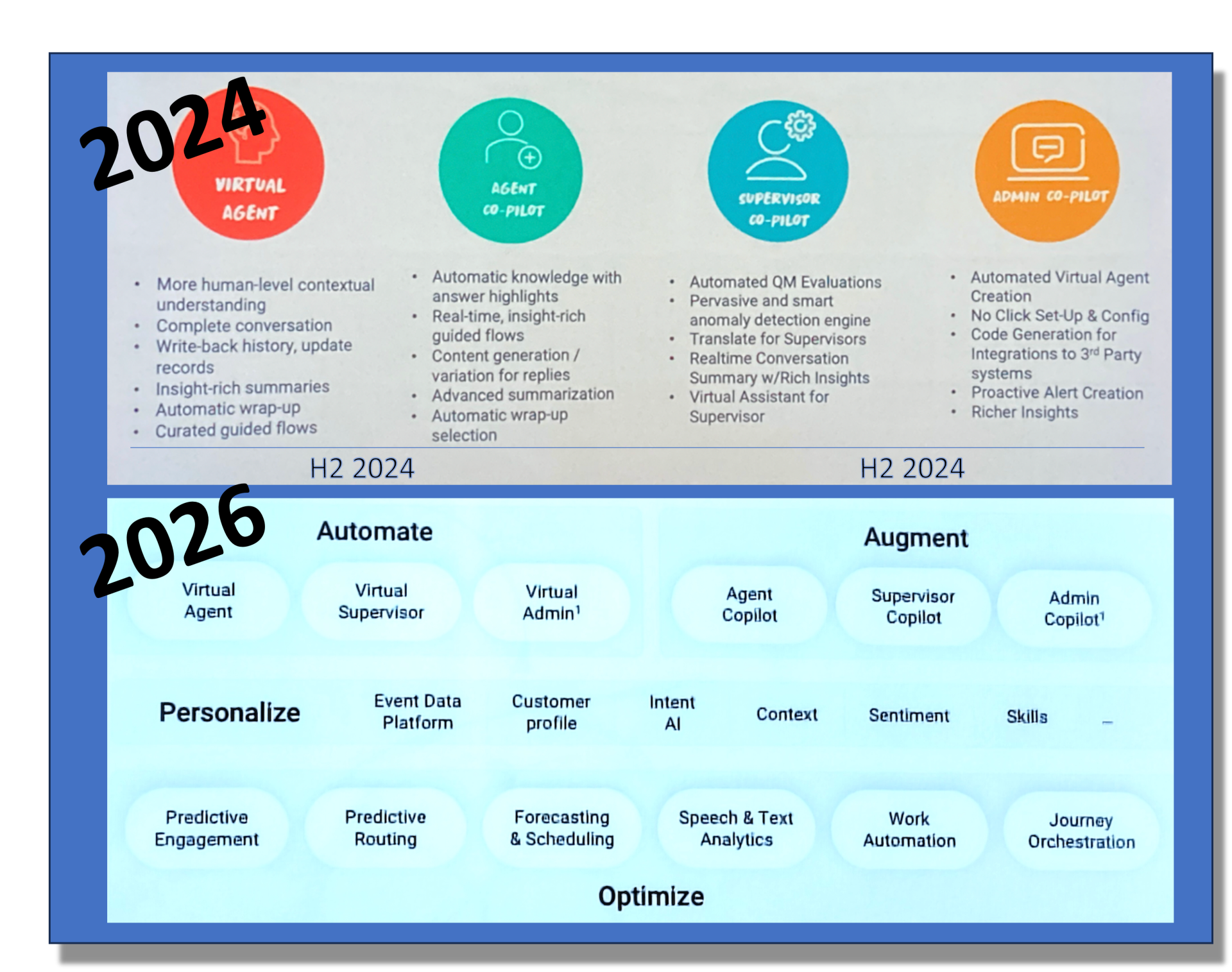
Image: Ziptone. Click to enlarge.
December 2023 was a while ago, but during the Genesys G-Summit in Amsterdam, the CCaaS player presented its AI roadmap for 2024.
That year, Genesys promised that (in addition to automated summarization), applications such as offering knowledge snippets, support through automatically generated answers, automated QM, and AI-based routing would be on the horizon. Now, just over three years later, it's time to take stock. The conclusion: the focus on agent assist was a good choice back then, and the current portfolio contains a range of concrete functionalities.
Catching up
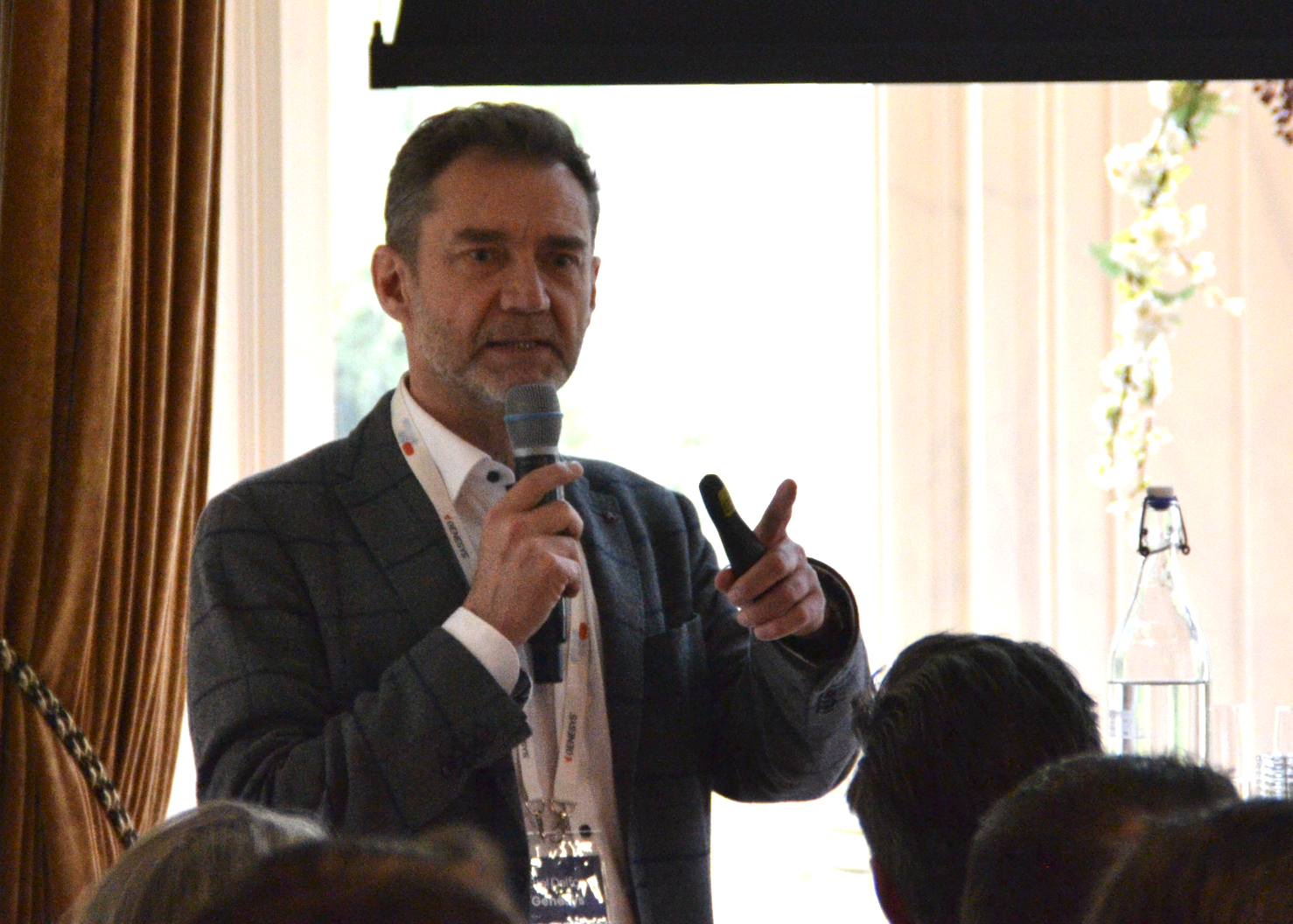
Michel Delfosse. Image: Ziptone
Michel Delfosse – Sales Director Benelux at Genesys – started his story with a personal experience ordering a mudguard for his mountain bike. The outcome: after ordering and paying, a lot of hassle and no mudguard. Customers, and employees alike, will leave if the experience isn't satisfactory. Customers don't just want a solution; they want it quickly and correctly.
Companies often still think and act in the service economy, focused on efficiency, according to Delfosse, but customers are now in the experience economy. (And if we're to believe marketing guru Joe Pine, we're on our way to the transformation economy.) So it's time to catch up, especially for companies still in the era of IVRs and omnichannel.
1,5 billion for further development of CX-focused AI
The next phases are agentic AI (phase 4, semi-autonomous agents and a human in the loop) and agentic orchestration, phase 5. More and more companies are experimenting with this fourth phase. Delfosse expects agentic orchestration to become a reality in about two years. In other words: several autonomous AI agents work together on a single (composite) task. Delfosse refers here to the joint investment of $1,5 billion by Salesforce and ServiceNow in Genesys.
Necessary for this technology to work: an open platform that allows businesses to control the process and integrate easily. Anything not found within the Genesys platform may be available in Genesys' App Foundry. Some of the functionality is free, such as online behavior screening; the smart monitoring of this is based on tokens. This combination makes predictive engagement Possible: If the customer has been searching for specific information online for a long time, you can have a chatbot appear that offers assistance.
Sovereignty: a theme that also concerns Genesys
At the end of Delfoss's story, some questions about sovereignty also arose. Genesys uses the AWS platform, and AWS recently European Sovereign Cloud announced. Long story short: the issue is also relevant within Genesys. Encrypting data and storing it in Europe is always a good idea, but many questions remain, and sovereignty is a key topic. Meanwhile, it became clear that despite the encryption, complex support tickets can be forwarded to the team in the US. And that Genesys is largely owned by European investors. "We're happy to think along with you," Delfosse sensed, because it's a complex issue that involves more than just data.
Alliander invests in the employee experience of Genesys users

Martin van Baekel. Image: Ziptone
From service to experience, this can also be applied to the services provided to CCaaS solution customers and their (end) users. Both Alliander and Frontline made themselves vulnerable, based on rational arguments. CCaaS is becoming a commodity, according to Hans Reuver, and we must realize our distinctiveness through implementation and support. Even in such a partnership, you can collaborate experience-driven and manage outcomes, according to Martin van Baekel, Product Owner at Alliander, the largest network company in the Netherlands (with 42 devops teams focused on digitalization).
Both partners have jointly embraced the XLA, as a supplement to the SLA as laid down in contracts. Experience Level Agreement is a framework that helps manage those outcomes. Or, to put it another way: just because everything works technically doesn't mean all stakeholders get exactly what they need to do their work successfully. So, it's about looking beyond standard KPIs.
Further roll out XLA
Following an implementation process supported by XLABS and a baseline measurement, Frontline Solutions now sends out a monthly questionnaire to various Genesys end users within Alliander. The goal: to gain insight into how the delivered products and services are experienced by Alliander's approximately 1000 end users. Is "good" good enough? This insight is created by combining technical, operational, and experience data. The results, according to Van Baekel, are always useful and sometimes raw. They are good for dialogue, sometimes with superusers and team leaders, sometimes with end users.
Alliander is determined to further roll out XLA to other IT areas, such as the workplace. Alliander already sees that XLA leads to better insight into end-user experience, that it is a good starting point for dialogue with the supplier ("what do you expect from us, now and in two years"), that it improves collaboration and that more targeted improvements are worked on.
Fixami's growing pains
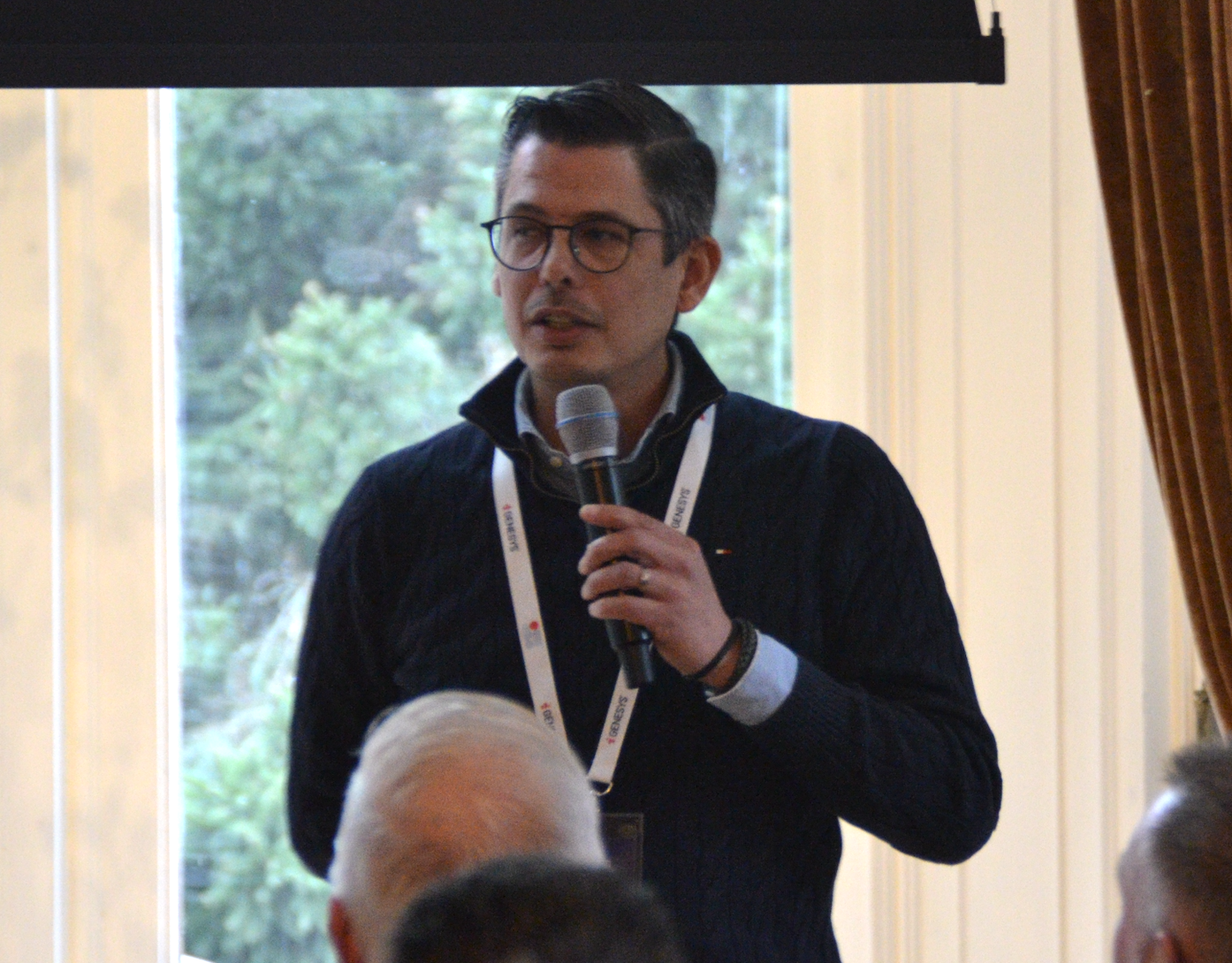
Bram Bos. Image: Ziptone
Bram Bos, CEO of Fixami, gave an energetic presentation about the explosive growth of the paint and tools company. Even before the coronavirus pandemic, the founders had decided that specific choices were necessary to ensure the company's continued growth. These included "investing in people who are better than yourself" (and, eloquently put: we'd rather have two four-legged sheep than one five-legged sheep) and investing in tooling.
The company chose Genesys and went live with it two weeks before the pandemic broke out, so thankfully, the company was able to transition to working from home without any issues. During the pandemic, everyone got busy with DIY projects. Orders poured in, but customer service was overwhelmed. That's not a good model for a company that relies on reliability and tight margins – see also this case study from that peak period.
Also read: Fixami: scaling up and professionalizing in e-commerce Fixami has expanded its operations to Belgium (2016), France and Spain (2019), and Germany (2021) in a relatively short period. This primarily results in thousands of emails per day, received from customers via the web forms on the various websites. French and Spanish customers are calling sooner and more frequently. More questions are simply asked per order.
Reflection
After the coronavirus pandemic, the company licked its wounds: should we continue to grow in Europe or prioritize profitability? It chose the latter, and with it came a stronger focus on returns. Everyone within the company has a say in this; each manager was tasked with getting their own domain in order. This proved remarkably successful, not only by divesting countries but also by improving them. By the end of 2025, the NPS for online services stood at +73.
Now that calm has returned, the company can once again focus on growth. The key is to work smarter and more efficiently, which is why Fixami has acquired solutions from Kindly in addition to Genesys. These help automate all standard queries and even contribute to cross-selling and upselling. In that respect, Fixami has gained a new sales and conversion channel. And Kindly's technology has made the application of experience and expertise—we're talking about professionals and serious DIYers—scalable.
From SEO to GEO
The next challenge is already looming: how does Fixami remain discoverable now that consumers are increasingly trading Google for a bot like ChatGPT? "It's only a matter of time before LLM providers introduce a cost-per-click rate," says Fixami CEO Bos. He emphasizes the importance of very well-structured content. But Bos doesn't believe a Makita tool will be sold to a professional by a bot within a year. In the meantime, he's closely monitoring developments.
The smartphone won't work for us
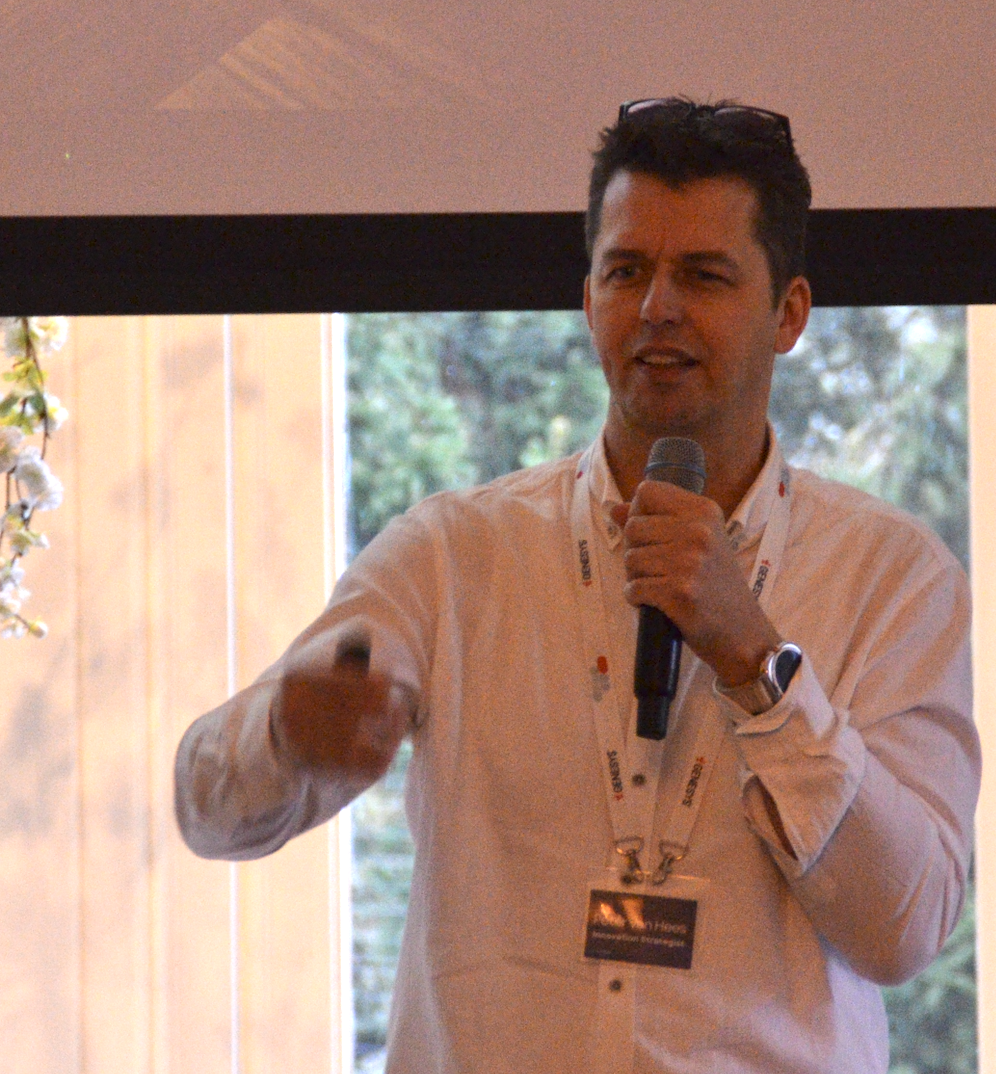
Peter van Hees. Image: Ziptone
The closure was at the expense of Peter van Hees, innovation strategist, and author. Like a futurologist, he guided the audience through the latest developments in AI. Besides the usual topics ("What is the real Picasso?"), he clearly explained why we're gradually reaching the next phase after the mobile, online era. Yes, the smartphone is convenient and fast, but also impractical because of all the apps that are good at only one thing and can't work together. We humans are the "middleware," according to Van Hees.
Moltbook
If you pay close attention, you'll see that smartphone vendors are no longer innovating with even better cameras or faster chips, but are instead launching integrated AI agents. Gartner has already highlighted autonomous agents significantly in its Hype Cycle within the past year. Van Hees was on top of the latest developments when he pointed out ClawBot and Moltbook – the "social network" for AI agents whose added value remains to be seen.
He concluded with a useful tip for the coming period, in which customer contact professionals will be increasingly inundated with stories about agentic AI. Technically speaking, these are autonomous bots, but Van Hees warns against botwashing. True agentic AI can be subjected to the APM test: Autonomous, Proactive, and having a memory. Only through this combination can agentic AI effectively handle complexity and context, which is also the prelude to personalization. True agentic AI works like a butler, taking care of things without us even realizing it. As an example, Van Hees gives agentic actions that result from data collected by your smartwatch, such as a more demanding workout when you arrive at the gym.
Intelligence and knowledge become a commodity
Finally, he has some advice for the future. Intelligence and knowledge are becoming commodities, according to Van Hees. Asking questions, in particular, will become a valuable human skill, as will creative problem-solving. While until recently we were looking for people with a T-shaped profile, that T will be turned upside down in the coming years. Across the board, we need to be proficient with AI and, above all, specialize in human judgment. Customer service trainers can prepare themselves.
Frontline Solutions' Customer Day took place at Hooge Vuursche Castle in Baarn on February 5, 2026. There were approximately 100 guests.
(Ziptone/Erik Bouwer)


Also interesting
-

Effective January 1, 2026, Frontline Solutions has been a preferred partner of Kindly.ai, a European provider of a platform for…
-
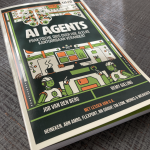
This book is about AI agents: software that can perform tasks independently. Will customer contact also have to deal with this? The answer…
-

Premature deployment of GenAI chatbots and virtual agents for customer contact will lead to increased consumer skepticism, according to Forrester.