
After Madrid, London, and Paris, Sabio's client event took place. Sabio Disrupt Utrecht is also affected. The question, of course, is: is there anything left to disrupt? The answer: absolutely. The contact center process could be disrupted in the coming years by external bots that may act unpredictably and irrationally.
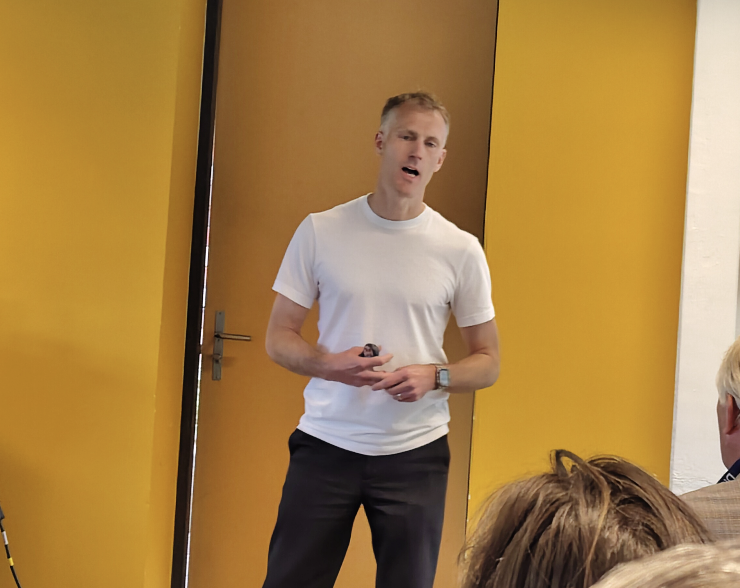 Stuart Dorman, chief innovation officer at Sabio, posed the question to his audience: 'Are you an AI optimist or an AI pessimist?' Dorman acknowledges that it is difficult to remain positive: there is a great deal of uncertainty, wars are raging near Europe, climate change has been knocking at the door for years, and then, to make matters worse, AI is going to take your job. Naturally, as a tech chief, Dorman also counters these doomsday scenarios. While AI does consume energy, it is simultaneously a major driver for making the energy supply more sustainable. AI is not going to eat up jobs on a large scale for the time being, but it does have everything it takes to help the world move forward with new knowledge. As far as Dorman is concerned, the first gains have already been secured: we can now truly collaborate effectively with computers, because they finally understand our language.
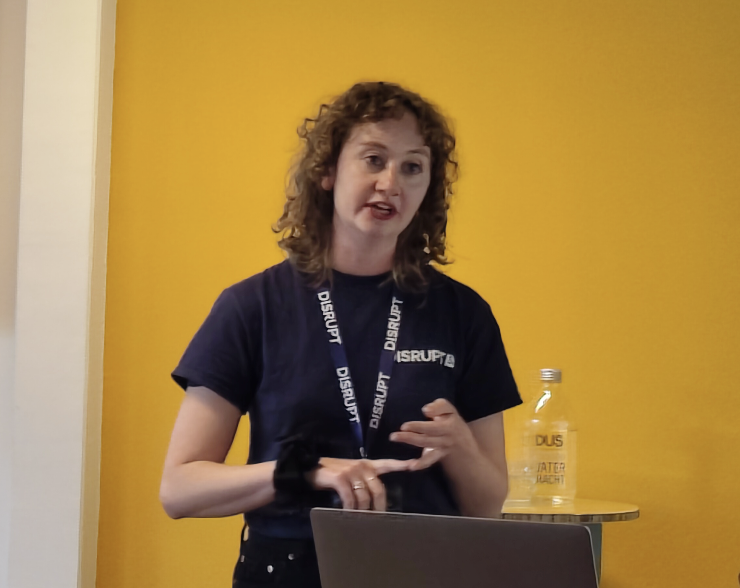 During Sabio Disrupt at De Utrechtse Stadsvrijheid, Sabio presented two case studies (with full details) and, between product demonstrations, provided essential tips to help beginners get started with agentic AI. According to several speakers, that concept requires no further explanation. Jacqueline van Arkel, AI Solutions Architect at Sabio, drew attention to the actual deployment of AI agents. You only discover how it really works in production. Therefore, start with a limited use case and gain experience with it. Work model-independently, make good use of agentic tools, document the development process ('prompt versioning'), and consider knowledge management as the foundation of AI applications.
Agentic AI requires red teaming, observability, and prompt versioning.
If you ask an LLM a question multiple times, you receive answers that are formulated in different ways or contain errors. Due to this lack of fixed, deterministic outcomes, continuous testing is mandatory. Fortunately, you can put AI agents to work for this, which makes continuous testing scalable. Red teaming It is also part of this: systematically checking whether the bot is doing things that are not allowed. It is part of observability: making the chatbot's invisible behavior visible. Automated quality monitoring exists for employees, but equally for agentic voice bots. And in addition, you must keep track of new attack methods.
Intraday management
Martijn Sterk (Sabio) championed intraday management using AI and wants to get rid of the term trafficHe gave a demo of a WFM bot you can talk to: what are today's figures? Explain why the service level is 21 percent? Can you implement some changes to the staffing? It is a good thing the bot designed to handle these WFM questions has already been developed, but anyone who is somewhat up to date with the latest developments in prompting and vibecoding could also build a small app in a few minutes capable of handling datasets from Excel.
Fast and slow migrations at Essent
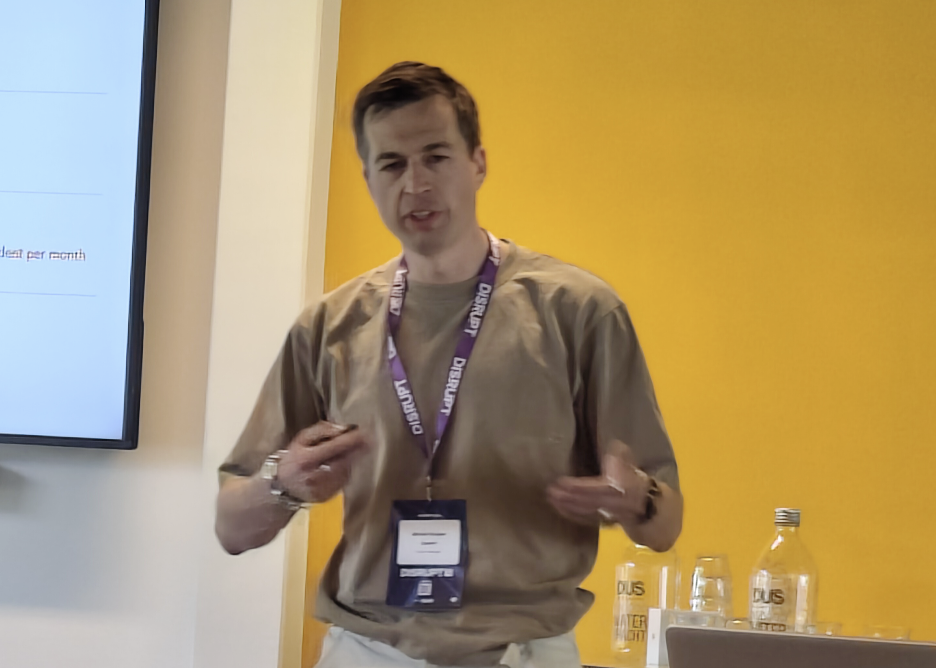 Both cases came from Essent and Vattenfall. Both energy companies are busy working on their customer contact environment. Michiel Kouijzer, Product Manager at Essent, spoke about one of the fastest CCaaS migrations of all time: from a legacy on-premise solution to Genesys Cloud in just 12 weeks. There were several reasons for Essent to overhaul its IT landscape, including the contact center. Costs were rising (there were many suppliers and applications to manage), NIS2 was on the horizon, and the company was struggling to innovate. The decision-making phase (just under a year) was too slow for Kouijzer, partly because an expiring contract created time pressure. The migration of the voice channel went well (thanks to SMEs as guinea pigs, the route with the least pain), but transferring messaging channels required more time. And switching to a real WFM tool proved even more complicated. Or as Kouijzer put it: “We were Excel heroes, and we still are.”
Most steps for the contact center have been completed since the end of last year, but the differences in pace across the various building blocks were significant. The causes varied: from (as it turned out) outdated call flow descriptions to issues with role allocation and changes in management. Ultimately, 1000 employees transitioned in one week, saving Essent's contact center half a million euros in direct IT costs. Furthermore, the employee NPS increased by 7 points. What is now in place is a foundation for, among other things, an agentic voicebot, integrated agent assist, and AI-based email processing. That last channel was almost eliminated and scrapped, but Essent realized just in time that this was not a good plan. Now, email is once again an important contact channel.
Vattenfall prepares for the machine customer
 Tjeerd Schopman, Manager AI Automation at Vattenfall, spoke about the further development of chatbot Nina (2019), which was due for an update. Vattenfall has also opted for Genesys, but in combination with Cognigy. This is quite remarkable, as Cognigy is part of NiCE and Genesys has been flirting with Salesforce, which practically invented agentic AI, for years. In fact, Vattenfall now views Cognigy as the first platform where all customer interactions begin or must pass through. Previously, that was the routing platform.
Vattenfall only wants to further automate customer contact if it improves the customer experience; in other words, the company wants to offer an effortless customer experience. As early as 2022, the company began thinking about the further development of Nina, but in the meantime, generative AI emerged. Many companies are facing that pivot.
Schopman made a great statement: bots have no understanding of the customer journey, and without context, it is difficult to deliver value. With this, he points to the importance of knowledge about your customer, but Vattenfall is also considering another side of that story. Schopman expects that in the coming years, the contact center will increasingly have to deal with contacts from consumer bots. When customers deploy bots themselves (whether homemade or not), this presents the contact center with new challenges. After all, bots have no interest in first-time fixes or waiting times. Consequently, they can operate completely inefficiently: think of repeatedly contacting the customer with detailed questions, but without the necessary context. “We assume that this will happen within a few years. You have to be prepared for this,” says Schopman.
Where does that machine customer come from? Judging by a number of Disrupt visitors, the major platforms (Meta, Google, and perhaps Apple) hold the best cards. But consumers can also 'cobble something together' themselves using Gemini Canvas or Claude Code.
“AI agents will be your customers”
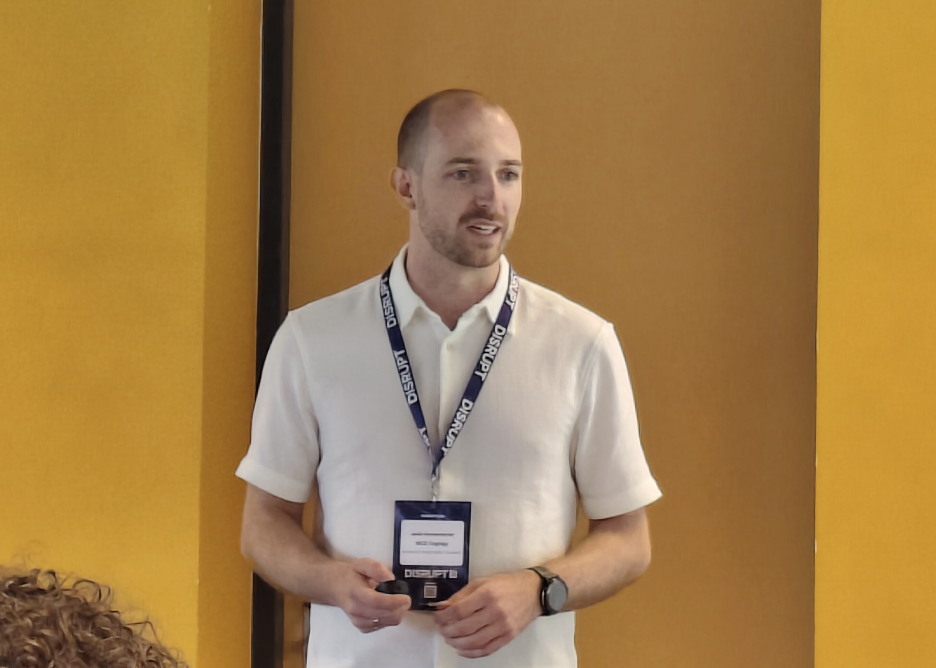 Also Janik Emmendorfer, Principal AI Transformation Consultant at NiCE Cognigy, concurred: “AI agents will be your customers.” Emmendorfer reiterated what Van Arkel said: LLMs never give exactly the same answers to the same question. Knowledge management is therefore the foundation, both for the 'production' of customer contact and for monitoring its quality. As far as Emmendorfer is concerned, it is time to invest in bots that simulate customers (in terms of mood, a goal or intent, and an identity) so that this monitoring becomes scalable. But AI can just as easily go through your customer interactions of the past year to subsequently come up with relevant use cases. It is a matter of prompting. In the coming period, more and more interesting collaborations and interactions between AI applications in the contact center will emerge.
Give AI a role in your business operations
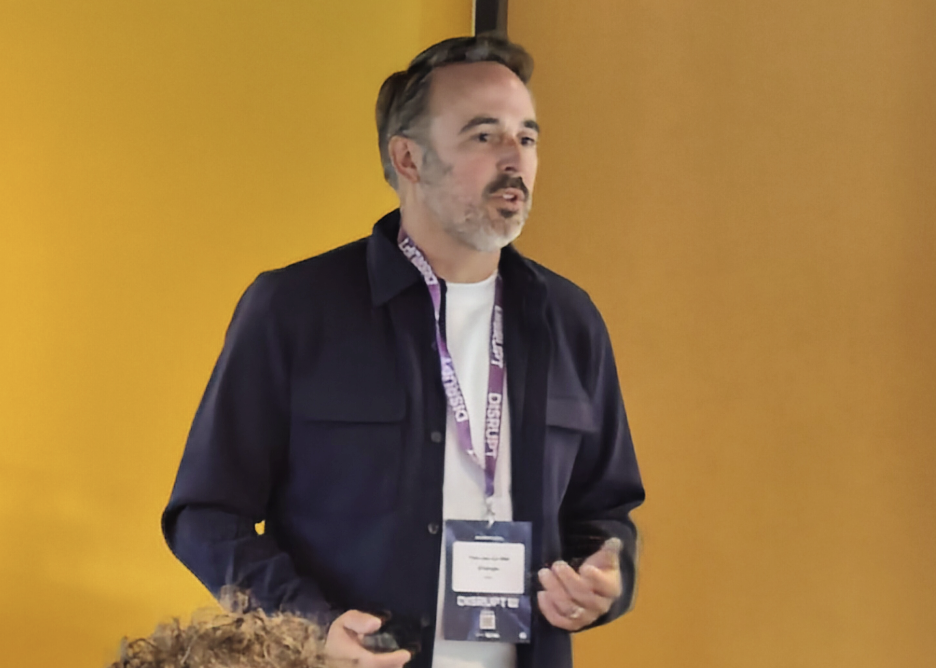 Deploying AI as a tool for agents or as a communication channel for customers (chatbots) is therefore only half the story. The other half: giving AI a role in your operations or business management. That was also the message of Tom van de Wal en Laura van Vlijmen of Change. Change collaborates with Sabio to create AI-driven contact center environments, “where the incentives, operational processes, and culture all point in the same direction.” In other words: value creation for both Change and Change’s clients.
Of course, we have been saying for a while that the contact center is sitting on a mountain of data and that all the potential is therefore present. But generative AI, among other things, makes harnessing that potential a lot easier. The condition, however, is that you connect different processes and do not cling too much to AI in the form of fragmented point solutions.
Van Vlijmen presented a list of tips based on the experiences of an unnamed customer. As far as Ziptone is concerned, the most important tips are: you can achieve quickly visible results with the deployment of an AI-based point solution, but the real gains only become apparent later. For example, because the application has other effects that reduce savings. Think of a higher AHT for the remaining calls, or more interactions for the AI (with higher token usage or costs), or a lower first-time fix in live contact. Therefore, look at the big picture, is her advice. And another tip: reserve sufficient energy, time, and resources for the period after the go-live, for adoption, measuring, and adjusting.
(Ziptone/Erik Bouwer)


Also interesting
-

As consumers, we cobble together our own AI agents using vibe coding, and just like that, off they go.
-

Following a major transformation of the contact center infrastructure, technology costs at Essent have decreased by 50%.
-

Essent migrated super fast from a legacy platform to Genesys Cloud together with Sabio. Michiel Kouijzer on the approach and the hurdles.