
 As of today, July 1, 2026, a full opt-in applies to outgoing telephone calls of a commercial nature. This rule also applies to contacting existing customers. Last week, both the government and advocacy groups such as trade associations and consumer organizations drew attention to the new situation.
In brief:
- DDMA warns of strict ACM supervision of consent
- DMCC offers new e-learnings
- Radar warns consumers about companies that ask for an opt-in
“Do you sell a service or product over the phone (telemarketing)? As of July 1, 2026, you may no longer call consumers unsolicited, even if they are (or have been) customers. These stricter rules are intended to protect consumers against pressure. The new rules apply to entrepreneurs who use telemarketing,” according to the Entrepreneurs Square from the national government.
Strict supervision by the ACM
The DDMA warns its members about “close supervisionby the ACM. The regulator expects, for example, that organizations can demonstrate that the person who gave consent is indeed the user of the telephone number in question. The DDMA therefore points out the importance of additional verification steps. The DDMA also warns against the use of improper working methods. For service calls, the ACM applies a strict interpretation and makes a sharp distinction between service and commerce. “Organizations must carefully consider the design of their customer contact processes,” is the advice of the DDMA.
In the new situation, organizations must be able to demonstrate who gave consent for telemarketing, when, and for what purpose. It must also be clearly demonstrable that the phone number belongs to the person contacted. Obtaining consent is a two-step process. Consent must be requested and subsequently confirmed in writing or digitally by the customer, for example via a confirmation link, SMS verification, or a separate (and therefore new) call that is recorded. The KSF has prepared a handy factsheet.
Chain responsibility
The DDMA also warns that the regulator does not only look at companies that make calls themselves. Even when organizations engage external parties, call centers, or lead suppliers, the responsibility remains with the organization on whose behalf the calls are made. This means that agreements with intermediaries and external partners must not only be properly documented but also actively monitored. Organizations must therefore be vigilant regarding safeguards throughout the entire chain: who collects the consent, how is it verified, and how is it ensured that only persons with valid consent are contacted?
The ACM focuses primarily on governance.
The ACM has informed the DDMA to start checking from July 1st how organizations comply with the new obligations. In doing so, the ACM examines, among other things, the manner in which consent is collected, recorded, and verified. It also assesses how organizations supervise external parties making calls on their behalf.
According to Daniel Zwarts, member of the DDMA Telemarketing Committee and working as Client Manager and New Business Manager at 2Contact and Certin, obtaining and recording consent is therefore the most urgent challenge for the sector“The ACM has recently made it very clear that you cannot simply ask for a commercial opt-in without an opt-in, even during a service call. This means that organizations must think much earlier in the customer journey about how they obtain and record consent,” says Zwarts on the DDMA site.
New Telemarketing Code In line with the amended legislation, the DDMA is working on a update of the Telemarketing CodeThis requires self-regulation to align with the new legal frameworks. It is expected that the amended code will soon be submitted to the General Meeting of Members for approval and subsequently to the Advertising Code Foundation.
Enforcement is effective
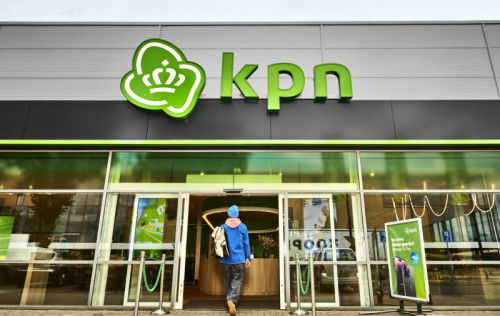 Last week, the ACM already demonstrated that supervision is effective. For instance, KPN adjusted its telemarketing practices following an intervention by the ACM. Consumers and (small) business owners were being called on behalf of KPN without their consent. According to the ACM, telemarketers were not always clear about the reason for the call and the content of the offer. KPN also failed to properly verify whether the call centers it hired were complying with the rules. The ACM addressed KPN on this matter and made agreements regarding improvements. The ACM is currently pursuing similar cases with two energy suppliers.
New DMCC e-learning
Consultancy firm DMCC points out the adjusted Weetwatjezegt e-learnings of the agency. The changes relate not only to the amended Telecommunications Act, but also to the manner in which the ACM supervises consent for telemarketing and the provision of information by intermediaries and price comparison sites. The updated Weetwatjezegt e-learnings will be made available by DMCC as of July 1.
Radar provides consumers with tips
Consumer program Radar warns consumers are aware that many companies are approaching people to give permission for future telemarketing calls after July 1. “If you give permission for this, you should be aware that you may continue to be contacted by the company in question by telephone after July 1. However, you can withdraw this permission at a later time,” according to Radar. The program advises consumers to to report telemarketing without consent at ACM Consuwijzer.
Radar is clear about the exceptions (charities, lotteries that donate money to charities, and publishers of daily newspapers, weekly newspapers, and magazines). Radar also explains that the Authority for Consumers & Markets (ACM) checks whether companies comply with the new legislation. The ACM states that it will closely monitor this: “We have various instruments at our disposal, including penalty payments and fines.”
(Ziptone/Erik Bouwer)
Telemarketing under pressure; opt-in increasingly the starting point


Also interesting
-

The DDMA has expanded the Telemarketing Committee with Simone Mercx, Daniel Zwarts and Arjen van Eeuwen.
-

The Netherlands Authority for Consumers and Markets (ACM) will monitor telecom and energy companies that use telemarketing by examining their working methods.
-

The sale of IT company Solvinity to the American Kyndryl shows: what creates trust today is open to question tomorrow.