
Image: Yource
Not only in the Netherlands, but also abroad, thousands of Dutch people work in customer contact. Temporarily on a gap year basis, or permanently as immigrants. Both arrangements require adaptability and perseverance. Ziptone spoke with Gosse Wijnsma, Country Director of Yource Spain.
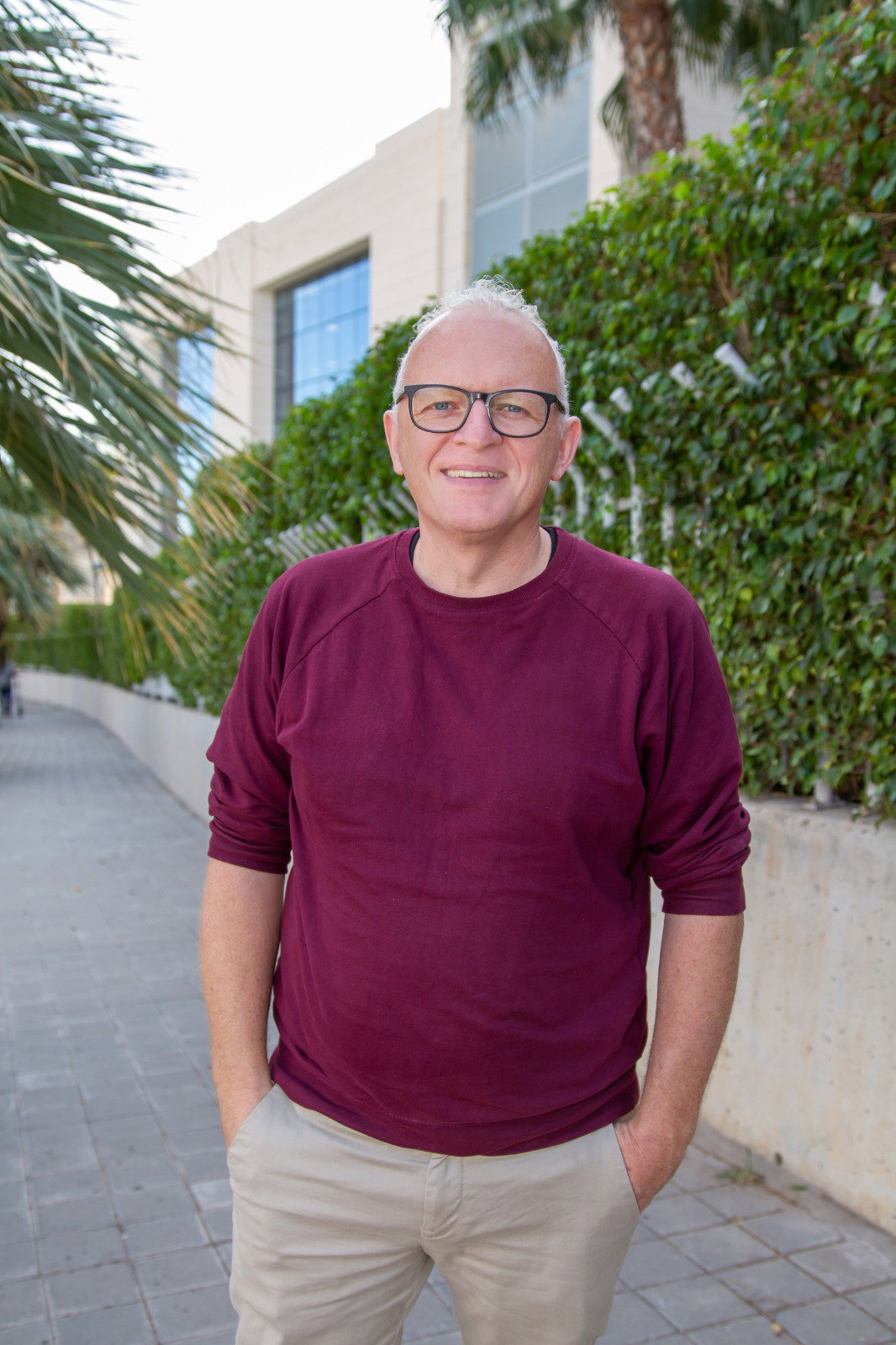
Gosse Wijnsma (47) has been in the customer contact business for 25 years. Before starting at his current employer Yource, he was responsible for Vodafone's internal contact centers. Now he is on the other side of the table and lives in another country. “In the distant past, I worked for Defence for a number of years – in the navy, so I travelled a lot. Because of that, I know what the world has to offer when compared to the Netherlands. At Defence, the foundation for structure and discipline was also laid for me, a good starting point for a career in the business world. At home, we had the wish, if we ever got the chance, to go abroad.”
From gap year to permanent
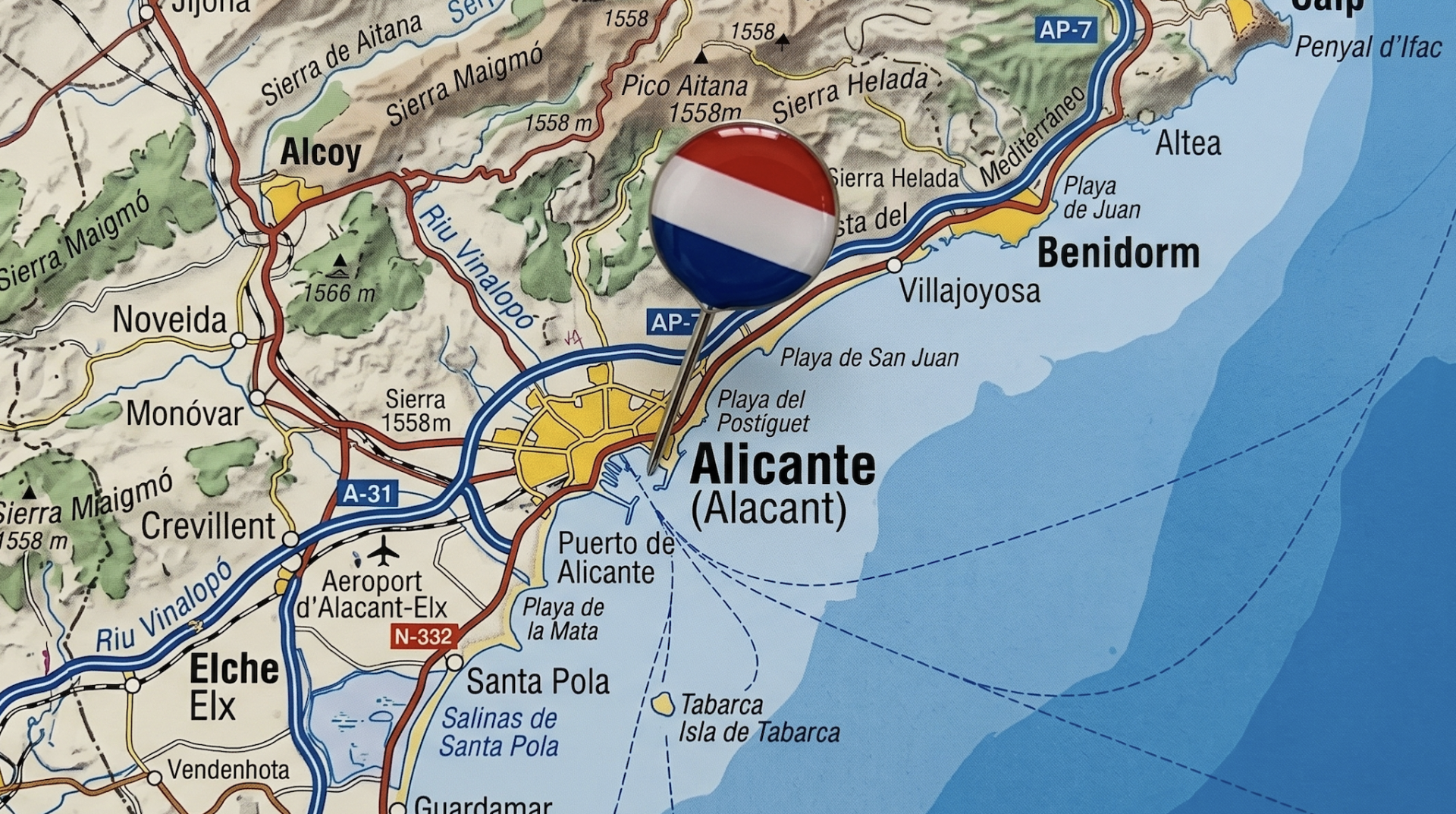
Wijnsma's work in Spain began 4,5 years ago with the establishment of a new branch in Alicante. That was a logical continuation of the successful recipe of Yource in Valencia, where the company worked with Dutch students taking a gap year. But in Alicante, it became clear that there was another, more obvious target group.
The gap year model is a labor-intensive model for Yource: for this group, the company arranged, among other things, accommodation, paperwork, transport to and from work, and Spanish lessons. Nevertheless, not everyone sticks with the gap year model, says Wijnsma. There are also employees who say after three months that they are very disappointed. The gap year employees have an average age of 24 and a relatively high turnover rate.
A large group of Dutch immigrants lives in the Alicante region. These are people with a somewhat higher average age and a slightly different attitude, as Wijnsma points out. “These are people with families, people who have emigrated permanently. Permanent emigrants are associated with low turnover, low absenteeism, and high intrinsic motivation. We concluded that, for a sustainable presence in Spain, we needed to reverse the ratio of temporary to permanent staff from 70/30 to 30/70. Within a year, we had about 300 employees – Dutch people living in Spain temporarily or permanently. In 2023, it was decided to roll out this new model at a third location in Malaga as well. We now have at least 80 percent of employees who live, work, and reside permanently in Spain.”
Dutch emigrants
With this shift in recruitment and selection policy, Yource has primarily looked at what the permanent emigrant needs.
“Our starting point is: Yource is not the reason why people come to Spain. However, for many people, we are an employer that makes it possible to live in this country. People sell their homes, move to Spain, and want to build a new life here. You simply need an income here too, but they often discover that their Spanish language skills are not sufficient to work for a Spanish employer.”
Spanish work reality
Those who speak good Spanish find that the Spanish work culture differs significantly from that in the Netherlands. “It is hierarchical here: your boss calls the shots, and you don't easily contradict your boss. In August, everyone in this country is off; the country grinds to a halt. You are off then too, and that means your vacation days are used up. People also discover that the gross monthly salary here is considerably lower than what they are used to, even if they have an excellent CV.”
In short, anyone who cannot or does not want to work for a Spanish company due to cultural or language barriers can do remote work here, work in the hospitality industry, or choose a Dutch employer, says Wijnsma, but there aren't very many of those.
The wage gap is also visible in what Yource offers its employees. The average customer contact salary in Spain is around 1.300 per month. “We start at 1.550 euros per month, and that can go up to 2.200 euros. Dutch people who have just settled in are shocked by those amounts, but once they have been in Spain longer, they quickly discover the value of Yource as an employer. Consequently, Wijnsma is not yet experiencing a shortage on the labor market.
Two hours flight time
Within the Yource group, Spain is now the largest destination. This is due to clients who see the benefits of a European destination with EU laws and regulations just a two-hour flight away. “The business operations and work culture align with what clients in the Netherlands are used to. Even the most skeptical prospects who visit us are quickly won over,” says Wijnsma.
Image: Ziptone/Gemini
Clients – Yource is quite transparent about the clients who are served from Spain. In the financial sector, the company offers vacancies for Rabobank, ING, ASN, and Santander. In Telecom, they recruit for Odido and Proximus. In the healthcare sector, these are Infomedics and Menzis. Additionally, Hema, Translink, PostNL, and Eneco are listed as clients on Yource's general Spain page. The vacancies change weekly.
Personal experience in HR policy
Yource Spain’s new HR strategy incorporates various elements that Wijnsma has contributed based on his own experience. He provides a few examples: “When I came here with my family, one of my children fell ill. It turned out that not everything was properly insured, which cost a lot of money. That is why Yource offers a collective health insurance plan. In addition, I have gained considerable experience with Spanish bureaucracy. It requires a great deal of patience, and you really have to learn how to navigate it. Even then, you can still get stuck. That is why we also have a helpline for our employees who encounter obstacles.”
Opening a new bank account can be arranged at our office. We are in discussions with a party that can assist with mortgage and pension advice, as both matters are complex. And naturally, we organize social events in the regions where our employees live. Think of a barbecue, a beach walk, a hike—activities that help employees build a network and a new social safety net.
In addition, Yource also envisions a broader role for itself as an employer: “We also want to be there for our people when things really go wrong here. Although things usually go well.”
Who is a good fit for Yource Spain?
Now that Yource is starting to become an important employer for Dutch immigrants, the question is how to select suitable candidates within that group. First of all, Wijnsma emphasizes that many people leaving for Spain underestimate the impact of emigration.
I often tell them about the emigration curve: it is really tough in the beginning when you come here to build a new life, detach yourself from the Netherlands, and experience having to function in a new language with a different bureaucracy and without a social safety net.
When assessing candidates, we determine whether they are still coming from the Netherlands or already live in Spain. We work with different personas, including the 'Ik Vertrek' couple, adventurers, and people who want to fully integrate and simply become Spaniards. Someone who has been here a bit longer knows how things work better and can therefore focus better on the work. We look at the extent to which someone is able and willing to learn. You shouldn't assume that you can continue your Dutch career here in a straight line. Wages are lower, and there is more of a start-up culture here. We conduct tests and assessments. What do you need to learn here? How to work your way through the paperwork, how to find a garage in Spanish, or what to do if you break down on the highway. How to choose a school.
red flags
“Sometimes we tell candidates: come back in three months, when you have your life a bit more in order. If someone then replies, ‘I can’t manage that with my reserves,’ that is a red flag for us. Do people understand what they are getting into and do they have perseverance? How do you deal with setbacks? Everyone has to go through a certain curve, with frustrations, fear, sadness, and anger. If you hand in a form here with a crease in it, they send you back. Do you remain friendly and strike up a conversation, with the possibility that the official accepts the crease?”
Wijnsma also speaks from personal experience. “Many people reach a point where they say: what have I gotten myself into? There is no one there to give you a pat on the back, a nudge, or a kick in the butt and say 'keep going'. I found it incredibly tough myself, the hardest thing I have ever done in my life, both personally and career-wise. In the beginning, I found the enormous responsibility for an organization under development heavy, because you are on your own. And I chose to keep work and private life well separated, because Dutch people in Spain, that is a very small world. As an employer, I wanted to be able to continue making my own choices without my private life interfering.”
“We often tell employees: you have to get through it; it will get better over time. To anyone cursing the Spaniards, I always say: then your integration has failed. You really have to do it yourself here. That contributes to Yource having a certain type of employee on board in Spain. I am really proud of my teams: everyone is driven above average. Consequently, we have almost exclusively internal advancement to other positions, such as management and staff roles. And a significant portion doesn't even come from the customer contact side.”
Growth and results
Over the past two to three years, Yource has fully implemented the transformation, and the result is that the company is growing by 20 percent annually in Spain. As Wijnsma says, the company has “a few competitors” in Spain, but they are smaller. Yource aims to make a difference through good employership.
It is noticeable in Valencia, however, that rental prices are skyrocketing due to the city's success. The region is the fourth-largest economy in Spain and accounts for 9,3% of the total Spanish GDP. The Valencia region grows annually by approximately 100.000 inhabitants, according to figures from the Spanish National Statistics Institute, and this is mainly due to immigration. According to Wijnsma, Spain's wage cost advantage will diminish, but employee loyalty remains high. And he sees a second generation gradually entering the workforce: children of Dutch parents who grew up entirely or largely in Spain.
Gap year model exit?
Has the gap year model flopped with the success of the new strategy? No, it still works, Wijnsma emphasizes. “Valencia is still very popular with students. But we now also have a large group of customer contact professionals on board who say: 'I’m not giving up, because I put a lot of effort into being able to live here. I’m staying in Spain.'”
(Ziptone/Erik Bouwer)


Also interesting
-

The Spanish Congress of Deputies today gave final approval to the Customer Service Law.
-

International BPO player Atento is selling its BPO activities in Spain to ABAI, a smaller competitor in the Spanish market.
-

Belgian WEngage and Yource Group are joining forces. The current shareholders remain on board.