
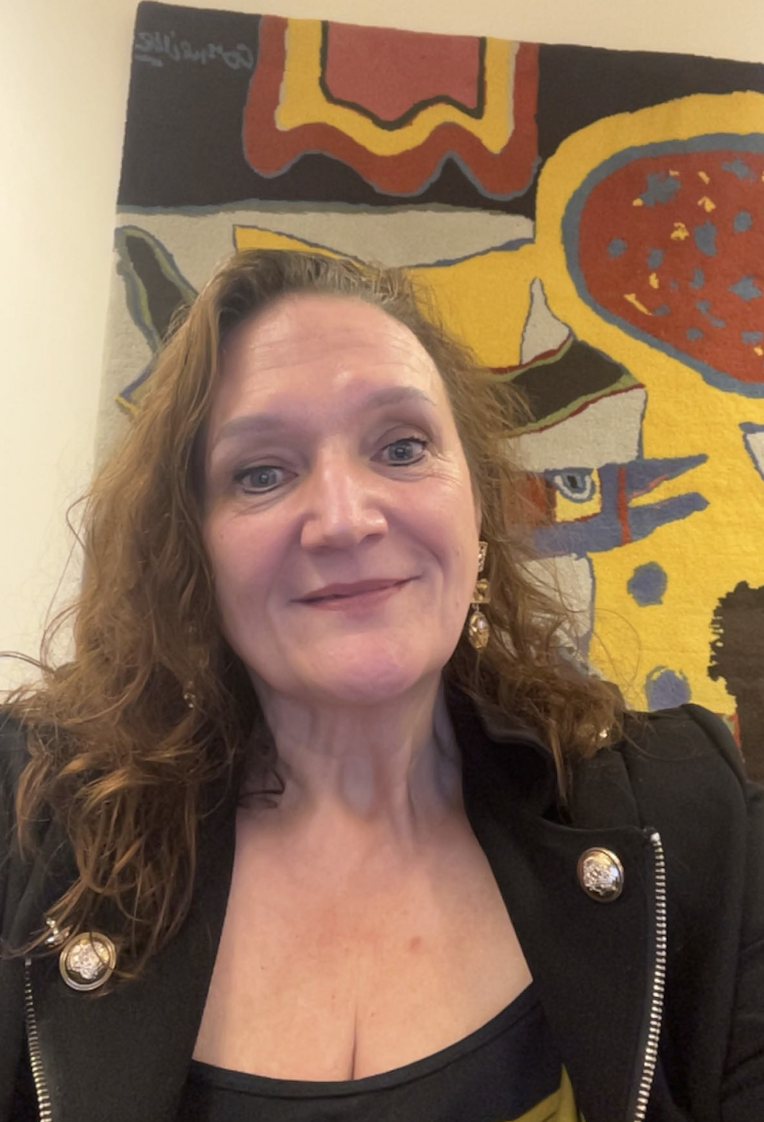
 Ankie Straathof (1965) has been the face of customer care at de Bijenkorf for sixteen years. She has seen the customer contact sector change, and even her own department has been 'organizationally relocated'. Ziptone spoke with Straathof about finding your way in a new world, about switching gears quickly, and about delivering both output and added value. Portrait of a passionate contact center veteran.
As a school leaver, had Ankie Streethof She had no idea what she wanted to become, but she certainly didn't lack ambition. That sounds like a difficult combination; yet she ended up at KPN quite quickly, first in technology and then, via marketing, in customer contact.
“Both within my family and in my immediate circle, I was the only one who went to pre-university education. I grew up in The Hague’s Spoorwijk, not exactly a wealthy neighborhood. I was a good student and excelled in biology and mathematics. I felt I had to go to university with my pre-university education; I wanted more,” Ankie Straathof reflects.
“One of my friends went to Wageningen to study molecular sciences. That sounded interesting to me, so I started. It aligned with my subject choices, and yet it wasn't a match. In hindsight, I think I let myself be guided by arguments that didn't hold water. I also studied pedagogy for a while. After some time, I stopped that as well, just to figure out what I really wanted first.”
Rolled into the marketing profession
Straathof worked alongside her studies and had meanwhile moved in with her partner. Through her part-time jobs, she rolled into the marketing field and completed NIMA-A and NIMA-B. “I felt that suited me better, but it still wasn't a perfect match,” she says. “That changed when I got on board at KPN through a contact. That is where my career really started.”
Straathof started working at a KPN division that dealt with the maintenance and repair of, among other things, telephone exchanges. Initially, this was done for KPN itself and for KPN customers. “My role: figuring out where to find new customers; devising new concepts. As an account manager, I dealt with customers who PABXs or had in-house corporate telephone systems, including the lines to business premises. Through this role, I learned to look through the customer's eyes, and that was the match I was looking for: developing business models, shaping KPN's customer promise. The company had just been privatized, so there was a lot to be done. Very educational, therefore.”
Privatized
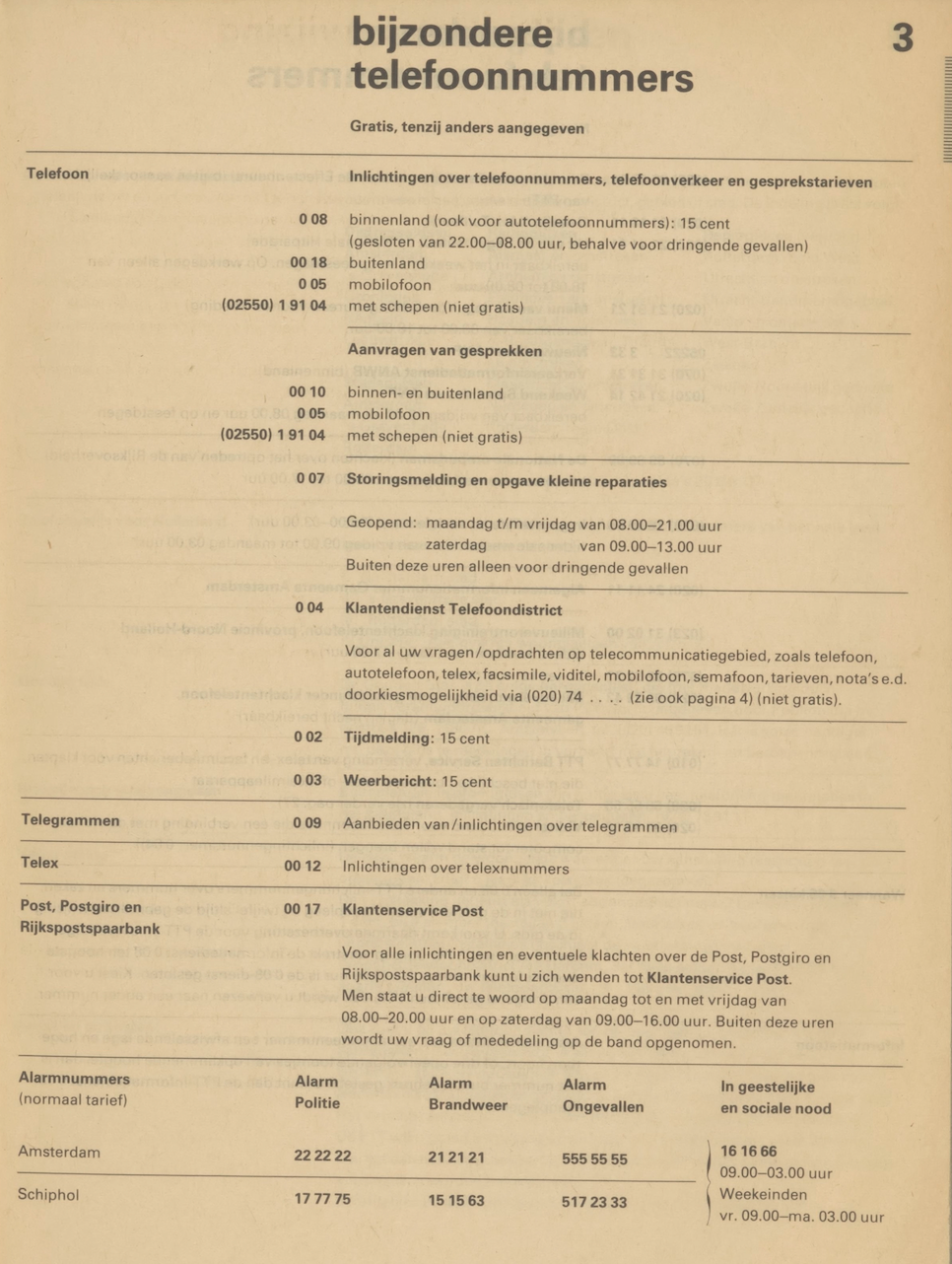
Telephone directory 1983/1984. Image: Amsterdam City Archives
There was still more to be done within the former state-owned company. KPN's customer contact was originally organized regionally; the 'call center' concept had just arrived from the US and offered opportunities to centralize customer contact. Straathof became part of the team that considered how this could be organized. “Initially, this involved gathering information: how did local teams work and what could be achieved with a uniform approach? When I returned from my maternity leave, KPN had already made significant progress, and I was asked if I wanted to run a contact center.” Straathof started working at the regional KPN fault service in Eindhoven, with the assignment to turn it into a 24/7 operation in a short time.
KPN telephone accessibility
The centralization of various telephone entry points had already taken place. Performance was under severe pressure. Significant scaling up was required: seven team managers, a large number of new employees, and expansion of the second line. That was a very enjoyable job: building the team, designing and implementing procedures. CRM was still in its infancy, and the telephony environment offered limited insights. Best practices for employee development, for example, were also not readily available. Call centers were truly a new phenomenon at that time.
From KPN to SNT
Through KPN, Straathof ended up at SNT, the new facilities contact center founded by Tobias Walraven. KPN had outsourced operations there and also invested in the company; KPN became the majority shareholder in 2000 when SNT went public. At SNT, Straathof's portfolio of work soon expanded beyond just KPN, as other clients were also served.
“What really surprised me about SNT was the vast expertise, as well as the enormous drive to acquire new clients. SNT was significantly more professional, both technically and organizationally, than I had been used to up until then. The pace was much higher on all fronts: when a new client was brought in, agreements had to be made within a very short time and delivery had to be rapid.”
Emphasis on accessibility
Although there was a strong focus on identifying problems and continuous improvement, the emphasis in the early days lay on accessibility and delivering production. “Companies had a telephone line, customers could often email as well, but there was no social media yet. At the time, many companies did not view a contact center as part of their core business. 'Managing away' the causes of customer contact was secondary; everything revolved around efficient handling and low hourly rates,” says Straathof. “During that time, I learned a lot about all the basics of customer contact—think of customer satisfaction, employee development, or quickly implementing improvements—but just as much about the importance of things that are often less prominent, such as adherence with rosters. SNT was a great and challenging time.”
First steps in e-commerce
When Straathof made the switch to de Bijenkorf in 2010, the department store had just taken its first steps into e-commerce. Customer service, still a young department, was fully outsourced to SNT but was housed at de Bijenkorf's office.
“Retail wasn’t at the forefront at that time,” says Straathof. “My assignment was to professionalize the contact center. There were budget overruns, and management wanted more and better insight into the processes. Experience also needed to be built up with the use of CRM. I set to work on improvements regarding capacity, performance, and management information. And from there, we continued to build. Think of measuring customer satisfaction. Basically, the basics,” says Straathof, looking back.
Outsource or do it yourself?
After the major improvements, Straathof went looking for another outsourcing partner in 2012, and that became VANAD. “With them, we implemented many more improvements, including in the areas of forecasting and quality. We also organized the internationalization of de Bijenkorf together.”
The contact center of 25 colleagues grew to 125 employees over the years. In a earlier interview Straathof stated“Within de Bijenkorf, the sourcing strategy came up frequently: do we continue to outsource everything – from WFM to first- and second-line support – or do a part ourselves? Ultimately, only two people within de Bijenkorf itself were involved in organizing customer contact.” Ten years later, Straathof’s responsibilities changed: in 2022, customer contact was brought in-house, and Straathof had her own customer contact operation.
Outsourced or in-house, Straathof has now been working for de Bijenkorf’s contact center for sixteen years. “Not a single year is the same. The organization is constantly evolving. With a customer contact center, you are right on top of the business. When the company makes a decision, you have to act on it immediately.”
Not an obvious role
Does Straathof see himself more as a contact center expert or as a service specialist?
“One cannot exist without the other,” she says. “In my conviction, the contact center represents the voice of the customer. The contact center generates insights that enable the company as a whole to operate better. If the department itself is not functioning well, that naturally has an impact on the customer as well. We have the role par excellence to contribute to making processes within the organization function more efficiently and better, so that the customer has a better experience.”
That role is not a given, according to Straathof. “For a long time, in customer contact, we were primarily focused on production. How can you deploy employees as effectively as possible, how can things be done cheaper – without us as an industry having an eye for the added value: improving the overall service delivery of the organization. It really took a long time before we achieved that position. It is, of course, also a production department, but the fact that it took so long is linked to the way we have treated contact centers, namely as cost centers. That often results in too little being invested in them. I think there are still companies where that battle is being fought.”
What will the added value of outsourced contact centers look like in the future?
Over the past few years, Straathof has become acquainted with all flavors of service provision: from doing it herself to full outsourcing. And she has sat on both sides of the table. How has that influenced her current view of facility contact centers?
“I come from the facilities sector, but I doubt I have a clear picture of how things are currently going in facilities contact centers. I do see interesting changes, such as facilities managers supporting the client even more during transformations. Especially in this day and age, with all the developments in AI, that is absolutely an opportunity. But I also still see the move towards offshoring. It is the client who is forced to opt for lower costs, so the question is whether service providers are always given sufficient room to do their thing. And I wonder what the added value of facilities contact centers will look like in the future. Due to the use of technology, the number of inquiries directed to the contact center is decreasing. That has an impact on the business case for outsourcing: how long will outsourcing remain attractive?”

Image: David Peperkamp / Shutterstock.com
A contact center that is part of logistics
Straathof's own position has also been adjusted. Over the past year, De Bijenkorf's contact center has become part of the Supply Chain department. Previously, the contact center fell under Marketing and subsequently under 'Online'. Straathof comments on this decision: “We have a significant overlap in operational roles and the challenges regarding process improvement, both in the type of work involved and the way work is performed. A large portion of the inquiries we receive relates to online and logistics processes. This relocation is a logical choice that helps us stay close to the chain and collaborate more closely with it. For example, to resolve questions related to logistics processes more quickly or to prevent them altogether. And from within the supply chain, we can effectively work together to provide feedback to the rest of the organization. This increases our effectiveness.”
(Ziptone/Erik Bouwer)


Also interesting
-

The new collective labor agreement also applies to KPN's 1.200 customer contact employees in the company's three contact centers.
-

KPN is launching click & collect: order something online and then pick it up at the KPN store.
-
Bouchtaui worked at Delta as Manager Operations Customer Care. He has a long track record in customer contact.