
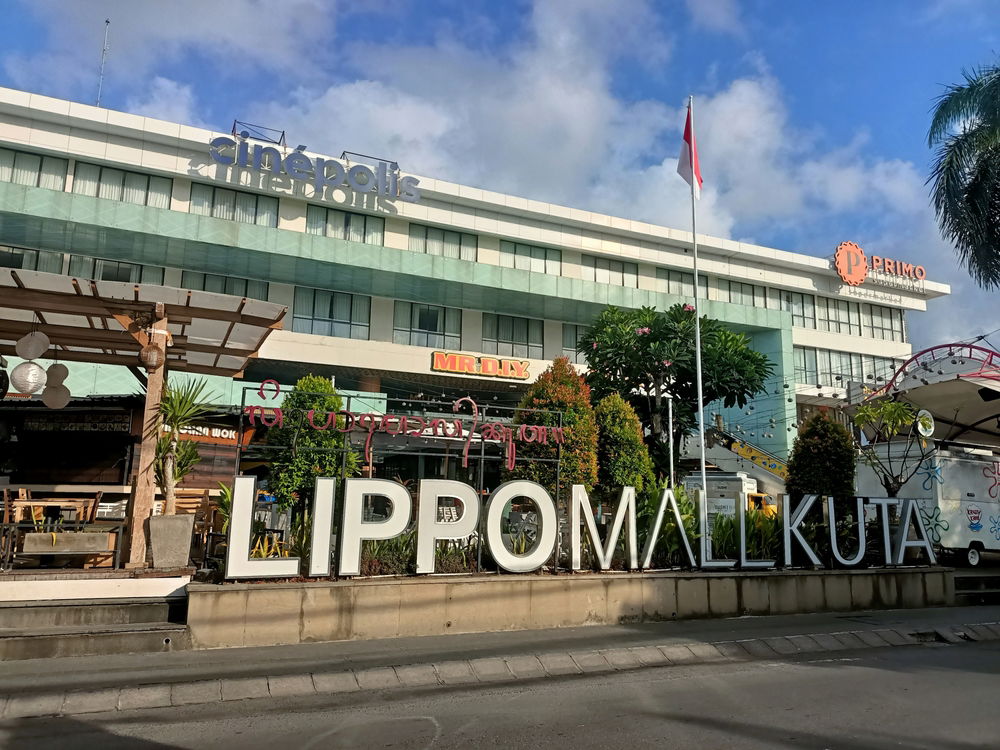
Image: Yuliadisaja / Shutterstock.com
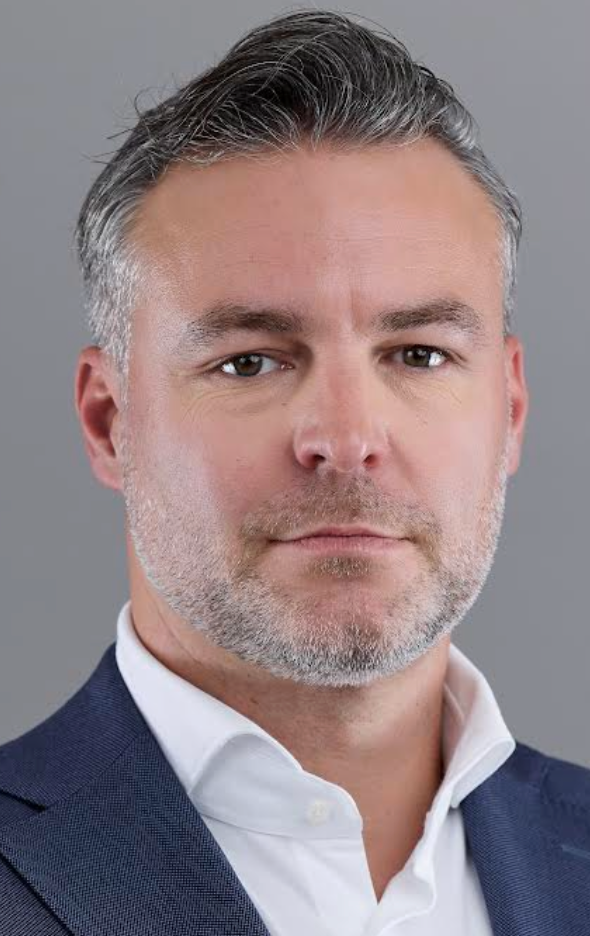
When Pascal Matern (TP) started talking about Bali as an offshore destination almost two years ago, he was mostly met with frowns. For Dutch-speaking customer contact? TP now has a launch customer: bol.com has launched a pilot program there.
If you've been paying attention, you might have already seen a post on LinkedIn: TP is now also providing customer contact services from Bali. In the words of NYT columnist Thomas Friedman: the world is flatBut why Bali in particular? And how great is the potential there? Ziptone spoke about this with Pascal Matern (CCO TP Benelux, Suriname, and the Nordics).
There are three main reasons for Matern to add Bali to its portfolio of BPO destinations. First, it's a good way to ease some of the pressure on Suriname. Second, Matern hopes this will attract the Scandinavian market. And third, Matern enjoys pioneering.
Pressure from the boiler
 Let's start with Suriname. It's clear to everyone that the labor market in Suriname is gradually tightening. Matern: "I'm a big advocate of the Surinamese model. But when our clients rely heavily on it and see the labor market tightening, I can imagine that an alternative is welcome. In discussions with our partner Bol.com, in which we looked ahead a few years, the search for a new destination came up. In October 2024, TP opened a multilingual hub for the Asian market in Bali – in the city of Kuta. That site was still largely vacant."
TP is well-known in Indonesia. Under the leadership of TP Indonesia CEO Michael Wullur, offices are managed in Jakarta, Yogyakarta, Solo, and now also Bali. TP already employs approximately 7.000 people in Indonesia. Besides English, many Asian languages are available, and the country boasts an experienced management team. "Indonesia is well on its way to becoming the new Philippines, but the market it serves is different," says Matern. "The Philippines primarily serves the American market. Indonesia caters primarily to the Asian market."
Scandinavia and offshoring
TP is also planting its flag in Bali for a second reason. Matern explains: “Based on my responsibility for the Nordics, I'm looking for offshore destinations that are attractive to the Scandinavian market. Swedes, Finns, and Norwegians aren't yet used to outsourcing, let alone near- or offshoring. But if we can offer Finns or Norwegians working from Bali, I expect we can shake up the market quite a bit. This will be particularly true for tier-two clients, such as local banks in Scandinavia that are still fully focused on in-house operations and are accustomed to relatively high onshore rates.”
A pilot with ball
"The very first question was, of course, whether we could get Dutch-language customer service for bol.com off the ground in Bali. We went to Bali for the first time last year to assess the situation and determine together whether a pilot program was feasible," says Matern.
This relies partly on flying in expats. Offering Dutch people jobs in attractive foreign locations has worked well so far for nearshore locations like Athens and Lisbon. "These are 'holiday destinations' where people also like to work as expats," Matern explains. "The people now starting in Bali were already in Bali, or come from the Netherlands or one of TP's nearshore destinations. Every employee receives a so-called expat package."
Pioneers
TP has used the past year to investigate whether there is interest in Bali as an expat destination.

Image: Ziptone/Gemini
The idea is for employees to start around noon local time and work until around eight in the evening. After that, they can go out. In the morning, employees can, for example, take their surf lesson or yoga class. We arrange a one-year contract, visas, work permits, and housing allowance. All of this sounded like an attractive model to us.
The result of that search is that we now have over 500 candidates with a Dutch background. The quality of their work is excellent. Recruitment in Bali itself is a matter of onboarding the local expat communities, where Dutch people meet each other through work, the local Dutch school, or a Dutch club. They frequently connect and, for example, celebrate King's Day together.
Global sourcing
The first three "classes," totaling around 25 people, are currently undergoing training in Bali. While this represents the next step in Bol's global sourcing, international customer contact is nothing new for the company. Matern sees the company as open to exploring new avenues. Bol has already served clients from countries including Greece, Portugal, and Suriname.
The TCO of customer contact
The Bali model, with flown-in Dutch staff, won't necessarily be cheaper. The advantage lies in the mix, with some of the work handled by local employees, Matern explains. In bol.com's case, this means Dutch-speaking employees handle the voice channel, while local employees handle digital customer contact using translation software. This combination results in a lower TCO for clients compared to Suriname. "The coming period will reveal whether our experiment is successful."
Bali as an offshore destination
Bali won't be a location that grows to tens of thousands of employees, but Matern expects to initially be able to grow to 500 workstations at the Balinese location. There are opportunities to further expand to a thousand workstations. Matern also sees few obstacles in other areas. While Suriname has a set of operating instructions in certain areas, Bali is a different story. There's an international business culture, and the infrastructure is in good order. Measures against power outages or connectivity problems aren't necessary. Only the traffic is chaotic, says Matern. "During rush hour, which starts at four o'clock in the afternoon, you can easily be stuck for a few hours."
Other choices
 Back to Thomas Friedman, who with The World is Flat primarily viewed the world through the internet as a globally unifying force. Now there's AI, and that's making the world even flatter. Matern estimates that destinations like Kenya, Ghana, and South Africa currently have the best prospects as customer service destinations.
"In the next two to three years, names like Ghana and Kenya will be mentioned more often, especially for 'written care' combined with translation software. There's a large supply of well-trained talent with excellent English and French proficiency. 'Sub-Saharan' will become competition for countries like Egypt, Tunisia, and Morocco, but also for the Philippines, due to the high level of English proficiency in these new destinations."
Some clients say: 'I don't need what is possible, I need what we want'
But just because translation technology is available and constantly improving doesn't mean all our partners are ready for it. Some clients literally say, 'I don't need what's possible, I need what we want,' and they explicitly choose to use people over technology. Sometimes new options simply don't align with an organization's CX strategy. On certain stretches of highway, you're only allowed to drive 130 km/h, but that doesn't mean everyone chooses that.
(Ziptone/Erik Bouwer)
Corrections and additions: An earlier version of this article stated that 45 bol.com employees work for Bali. This is incorrect and has been corrected in the text above. The previous version also stated that bol.com also collaborates with TP in Turkey. TP is no longer working with TP in that country; this has also been corrected.


Also interesting
-
For his new role, Matern will move to Turkey with his family. He will be responsible for the foreign branches of…
-

The CCMA strives for greater diversity in its board and would also appreciate it if members were more involved…
-
Matern was, among other things, Chief Commercial & Client Officer at TP. He is currently also Chairman of the Contact Centers Association…