
 As of July 1, 2026, new legislation is expected to take effect that will only allow telemarketing targeting existing customers through opt-in. This prompted the DDMA Telemarketing Committee to request the Netherlands Authority for Consumers and Markets (ACM) to review the existing and new rules.
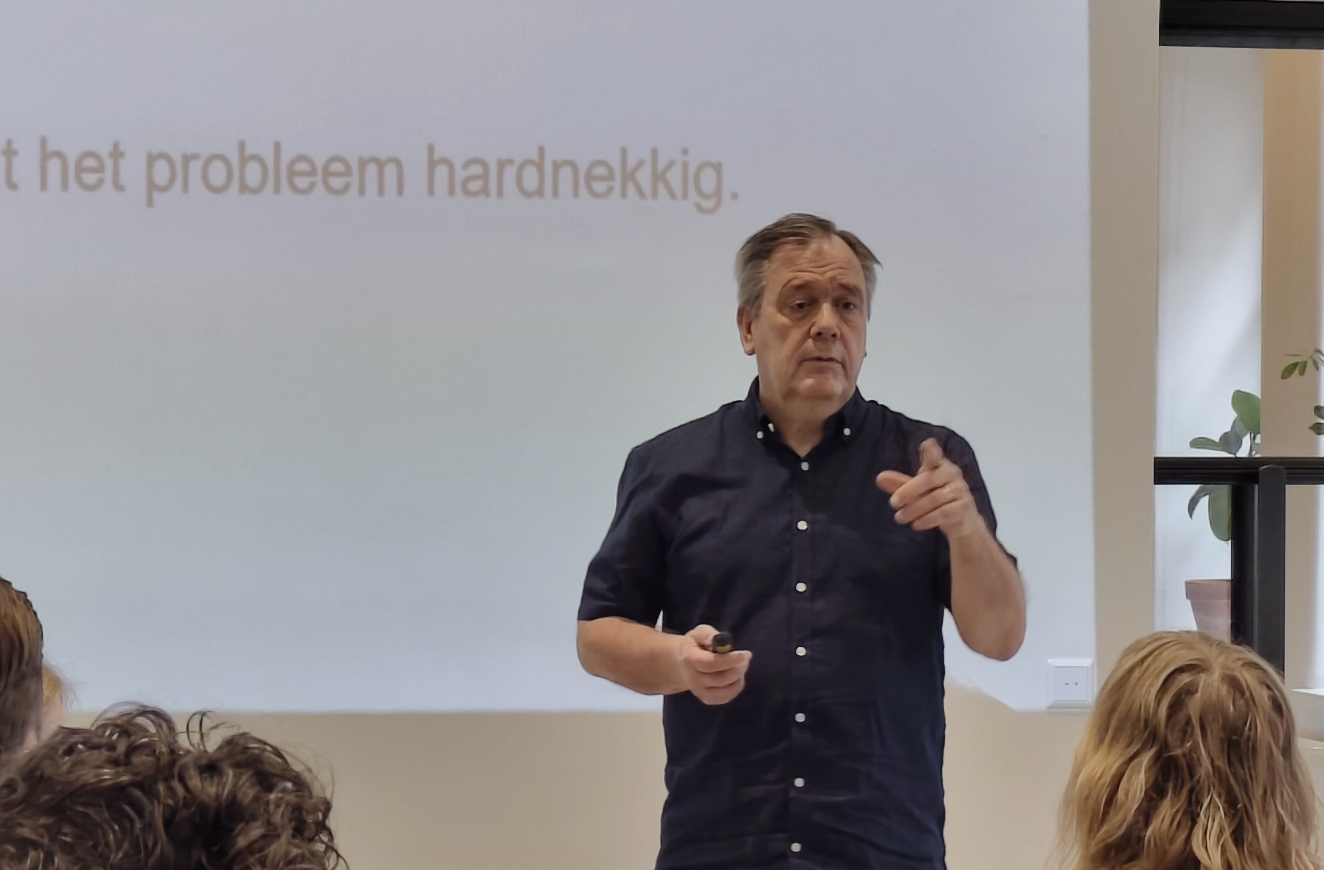
“We receive many reports and they are often about telemarketing,” said Wim Kettenis, which together with Kirsten Lenssen provided a presentation on behalf of the ACM during a Telemarketing Meet Up of the DDMA.
These reports cover the entire journey, from "you don't have permission to use my contact information" to contracts concluded based on misleading information. In other words: baseless calls, failure to comply with information requirements, and unfair commercial practices.
Kettenis spoke of a "persistent problem" that the ACM wants to resolve, preferably through dialogue with the industry. On this point, the DDMA and ACM agree. At the end of the meeting, he emphasized Arjen van Eeuwen (CEO of DMCC Group and member of the DDMA Telemarketing Committee) that the industry doesn't want to cause any friction and wants to ensure the channel's sustainable use. Kettenis also mentioned during his presentation that the industry sometimes comes up with innovative solutions, which the Netherlands Authority for Consumers and Markets (ACM) is happy to review and discuss with the sector.
“If you're going to do it, do it really well.”
As of July 1, 2026, companies (themselves or through agencies they hire) may only approach existing customers via telemarketing with a commercial offer if there is a Opt-inThis new restriction is regulated by an amendment to the Telecommunications Act. Kettenis emphasized that this involves chain liability: "As an industry, ensure that the entire chain functions properly. Monitor who you collaborate with, choose your partners carefully, and consider whether telemarketing is the right tool," Kettenis said. "If you're going to do it, do it very well."
(text continues after the box below)
Telemarketing Regulations – A Brief History
- 2007: After Research shows that 91,8% of consumers find cold calling annoying, State Secretary Frank Heemskerk announces a mandatory Do Not Call Register, where consumers can centrally unsubscribe from telemarketing.
- October 1, 2009: The Do Not Call Me Register will be legally established. Businesses will now be required to maintain their call logs and inform consumers about the option to join the register.
- May 25, 2018: Introduction of the General Data Protection Regulation (GDPR), replacing the previous Personal Data Protection Act. The GDPR is intended to give consumers more control over their data.
- July 1, 2021: Unsolicited calls to private individuals (including freelancers) will be prohibited unless someone has given prior permission or is (or has been) a recent customer. The Do Not Call Me Register will therefore become redundant and will be discontinued.
- October 15, 2024: The revised Telemarketing Code comes into effect, introducing, among other things, a cooling-off period and stricter compliance requirements.
- May 15, 2025: The cabinet announces new restrictions: from 2026, companies may no longer contact consumers, including their existing customer relationships, without prior notice. Exceptions to this are made for charities, certain lotteries, and magazine publishers.
- July 1, 2026: Intended effective date for the ban on telemarketing without explicit consent, including to existing or past customers. The "soft opt-in" (calls based on customer relationships) will be phased out, except for publishers, charities, and charity lotteries.
Also In the countries around us, telemarketing is under discussion and the options are increasingly limited, mainly by opting for rules based on opt-in.
Opt-in becomes the standard
With the new rule, which will also include telemarketing to existing customers as of July 1st, opt-in will become the standard for all telemarketing. However, the industry has managed to secure an exception for publishers, charities, and lotteries targeting charities. However, in all cases, you must request consent (step 1) and verify that consent (step 2) so you can demonstrate consent afterward—not a new rule per se; the requirements for consent have not changed.
Strict requirements also apply to the way in which consent can be obtained. Consent must be obtained without pressure and must be specific, personal, clear, and unambiguous. Furthermore, consent must be given actively by the consumer. So, a pre-checked box under a send or confirmation button, mentioning something in small print, or referring to the terms and conditions: none of these are allowed.
ACM enforces structural work practices
The Netherlands Authority for Consumers and Markets (ACM) doesn't enforce incidents, but focuses primarily on how companies operate systematically. This is why, for example, consumer or customer consent must be carefully recorded. When this is done via a voice log, statutory retention periods apply under privacy legislation. Once that retention period expires, the GDPR requires the log to be discarded, but the ACM stated that consent is not required again. This, in turn, raised doubts among the public, who might have seen opportunities to collect consent before the law changed.
The responses from the approximately fifty attendees (representatives of both telemarketing agencies and companies that conduct telemarketing themselves or outsource it) demonstrate a significant need for information. It also became clear that the telemarketing process can be structured in hundreds of ways, and that there are almost as many ways to push the boundaries: "When I approach an existing customer with an (outbound) service call, can I make a commercial offer later in the conversation?" The answer is "no" after July 1, 2026. Making a sales offer during the same call will no longer be possible, as consent is required for making a commercial offer by phone. However, upselling and cross-selling during an inbound service call are not covered by the new rules. The Netherlands Authority for Consumers and Markets (ACM) indicated that if the customer contacts the customer by phone (inbound) with a service request, the salesperson may make a commercial offer if the call is suitable.
Strict driving conditions
There are a large number of other regulations that telemarketing must comply with, such as providing clear, complete, and verifiable information to the consumer right at the beginning of the call about who you are and what you are calling about. Explanatory Memorandum In the bill that accompanies it, various elements are explained.
Other examples of 'on the edge' (or just over it) include the use of online petitions ("check this box if we can contact you by phone three times a year with a commercial offer") or creating accounts with web shops ("by checking this box you give us permission...").
Anyone who chooses this approach must then verify the consumer's consent by email, text message, or phone call (this has been the case since 2022). If the consumer doesn't respond, consent is not granted. And you can't ask for it later in a commercial phone call.
Limited capacity
The ACM referred several times to the commitment made by VodafoneZiggo has contacted the Netherlands Authority for Consumers and Markets (ACM) after the company was reprimanded. Global Marketing Bridge's name was also mentioned when the audience suggested the ACM should step up its enforcement efforts. "We are taking action, but the problem remains persistent. And we have limited capacity," the ACM responded, "so we have to make choices." The ACM is not a helpdesk or advice center, but "in addition to enforcement, we also provide assistance; our approach is to solve the problem together."
Accessible
Arjen van Eeuwen called telemarketing a "great channel." But she also demonstrated, using several examples, that complying with all the regulations is a complex game. Her most important advice aligns with the Netherlands Authority for Consumers and Markets (ACM)'s call: don't just be compliant, but also clearly document how you organize your processes.
Van Eeuwen offered several practical tips and advice, such as a link or button in the footer of your website that allows consumers to easily revoke consent once it has been given. Or: consider what you can still do until July 1st (such as collecting consents) and how you will structure your process after July 1st, 2026. The DDMA agrees that canceling or terminating the agreement should be easy.
Anyone who listened carefully could hardly escape the impression that obtaining (legally valid) consent for telemarketing is becoming almost a greater challenge than the conversion itself. The industry is accommodating, with just one important caveat: telemarketing is a crucial channel that must be preserved.
The future of telemarketing
Telemarketing agency Improvers was also discussed. The agency, which has not always had a positive impact in recent years, came into the news, appears to be working on professionalization. For example, investments are being made in AI solutions to support telemarketers in real time and to check their calls for compliance. The company, which is part of Essent, is collaborating with Freeday, a supplier of AI-based agent assist solutions and voice agents. Mathijs Gast Van Freeday outlined a clear roadmap in which the role of AI changes from supporting to autonomous execution.
Guest also pointed out the technical possibilities of Rich Communication Services (RCS) to his audience. By including your company name and logo, as well as the reason for your call, you could provide additional clarity for consumers. Guest also raised an interesting question: when everyone soon has a personal AI agent on their phone, the question is whether telemarketers will still be able to speak to consumers—or whether they will increasingly use AI assistants as a "filter." Or will the future essentially involve AI agents "calling" each other?
New reporting point?
Finally came Boris Bol (channel manager direct sales at the Dutch Lottery and member of the DDMA Telemarketing Committee) has come up with an interesting initiative. "Complaints about telemarketing are received in a fragmented manner," says Bol. This prompted the Committee to consider a new hotline where both complaints and compliments about telemarketing, door-to-door marketing, field marketing, and other forms of marketing can be submitted.
"Such a self-regulatory mechanism offers the sector insight, allowing for targeted and transparent improvement efforts," Bol said, which could help "eliminate the stigma." The hotline could also be a tool for effectively directing the Netherlands Authority for Consumers and Markets (ACM) to action. And: such a hotline could also be useful for telemarketers who have to explain their work at birthday parties, it was audible.
(Ziptone/Erik Bouwer)
An overview of the rules for telemarketing can be found on the website of the DDMA.


Also interesting
-

As of July 1, 2026, a statutory opt-in applies.
-

To bring the Telemarketing Code back into line with applicable laws and regulations, adjustments are necessary; DDMA calls…
-

As of today, July 1, 2026, a full opt-in applies to outgoing calls of a commercial nature.