
Telemarketing for energy companies? It is understandable that this has come to a standstill during this period. But other parties continue as usual: that applies equally to the charities and to the cowboys. Ziptone spoke with Diana Janssen, director of the DDMA, about regulations, enforcement, building trust, codes of conduct and blacklisting outbound telephone numbers.
 When we speak with DDMA director Diana Janssen, the trade association is busy drawing up the vision until 2030. It will be presented to the members on November 17, says Janssen. “People are central to this. We strive for responsible, respectful and successful marketing. You also look at the legal frameworks, now and in the future.”
The field that the DDMA – the largest trade association for data-driven marketing, sales and service – takes care of is broad and that is reflected in the membership (see box). The DDMA offers all kinds of services to its members. “For example, we provide tools so that laws that have been drawn up in a fairly general way can be applied in practice. We are working on rules of conduct for everything that happens 'under the hood' of members. There are more parties that have rules of conduct, we are looking at the extent to which we can make one set of them across the entire sector.”
About the DDMA The DDMA (formally Data Driven Marketing Association, formerly known as Dutch Dialogue Marketing Association) has existed since 2003 and has more than 360 member organizations, both clients and service providers. In the membership base: digital agencies, some service providers from the customer contact corner (such as 2Contact, Improvers or Soleo), large companies such as Philips, but also banks, museums, theaters and charities. The DDMA office is located in the former Wilhelmina Gasthuis in Amsterdam-west and has sixteen employees.
Build trust
Broadening the rules of conduct does not alter the fact that organizations must determine for themselves how they deal with the scope that the law offers. In other words: DDMA members can deal with this differently, according to Janssen. “As said, we look at 'respectful'. Some things are allowed, but the question is whether you should do it. Consumers are increasingly in the driver's seat. Marketing is increasingly about being allowed into the private sphere. So the question is whether you get permission.”
“Don't do greenwashing. The consumer understands this and reacts immediately via social media, for example.”
“We conduct research every year in which we ask the Dutch what they consider important when sharing data. Trust is always at the top, which becomes an important part of your marketing mix. This allows companies to distinguish themselves. We encourage our members to actively investigate what their customers expect from their organisation. By means of focus groups, we investigate together with consumers how you as a company build and maintain that trust.”
One thing is clear, Janssen emphasizes: do not engage in greenwashing. The consumer understands this and reacts immediately via social media, for example.
How important is telemarketing for BV Nederland?
How important is telemarketing for BV Nederland at the moment? “I think the importance is underestimated,” says Janssen. “As a result of a withdrawing government – such as subsidies that have been canceled or limited – charities are increasingly dependent on their own fundraising. People usually don't give unsolicited to charity; in many cases you have to approach them actively. Telemarketing is also important for a sector such as telecom, for example to tempt customers with a good offer.”
But although Janssen emphasizes that there is still a lot of potential in the market – think of health insurers or banks – as far as she is concerned, the question remains which channel to use when and with whom. “Telemarketing is a vulnerable channel, you have to be careful with consumer irritation. You will never be able to completely reduce that irritation to zero, but every complaint is one too many.”
Enforcement
This irritation has led to more and more rules in recent decades, from self-regulation to legislation that has replaced the Do-not-call-me register (BMNR). Where are we standing right now? "The Telecom Act has been changed July 1, 2021. We have done our best to inform everyone about this in a timely manner. Large organizations have implemented the new law well, many small companies are still working on compliance. Our concern prior to the amended legislation is enforcement; to a stricter law that leads to all kinds of administrative burdens. Parties that did not comply with the law in the past will not do so now. Stricter rules will not change that. Parties that do not comply with the rules must be dealt with. We are in regular contact with the regulator (ACM, ed.), whom we always remind: act now. "
“The DDMA would like to have insight into the reports that ACM receives. Which service providers or clients have the problems?”
Are there enough rules now?
Is the current mix of rules, codes and hotlines good enough for the consumer? Janssen: “We receive feedback from our members that the number of consumer complaints has decreased. But that may also be due to the malaise in the energy market. The DDMA would like to have insight into the reports that ACM receives. Which service providers or clients have the problems? Then we could mobilize the sector. Sometimes we receive signals that ACM has intervened.” An interesting detail: ACM does not want to share data, says Janssen, due to privacy considerations.
Penalties
In the meantime, the DDMA is working with all kinds of parties from the field, including the KSF, to draw up rules of conduct. Think of rules about training for people who do telemarketing, so that qualitative, respectful conversations are established. The question is what the consequences are if members do not comply with the rules and guidelines. “If members do not behave, they will be expelled from the DDMA. That happened last year. The agreement within the association is that it will not be announced externally who it concerns.”
“The DDMA has further it Privacy Guarantee, an independent audit that screens organizations. This should help organizations to comply with the rules. The DDMA has specialists available for this. The Privacy Guarantee provides insight into how compliant your organization is. Keeping such a quality mark in the air is time-consuming and expensive.”
“I hope that we can take steps with the sector so that telemarketing is experienced less as an irritation. In other words: that people experience a conversation as a pleasant conversation. Part of this is learning to estimate better on the basis of data who you should and who you should not call. Do not shoot with hail: that is expensive and you prefer to approach people who are open to it.”
Sources of irritation
Speaking of which, a few persistent sources of telemarketing irritation are energy contract sellers and the Chamber of Commerce. The energy sector has already been mentioned – telemarketing now seems to have come to a standstill there. But a few months ago, as a consumer, you could still read that a rogue telemarketing agency made a cunning pivot and started selling energy contracts itselfn. CIRE was established to qualify sales parties within the energy sector as reliable. Janssen does not want to say much about it: “CIRE was a transparency register, specifically aimed at the energy sector. It is a pity that it no longer exists.”
CIRE (Central Intermediary Energy Market Register) was set up as a register in 2019 by the Integrity and Transparency Energy Advice Foundation (SITE). SITE is an initiative of Patrick Jordens of DMCC (DMCC is a member of the DDMA and Jordens was a DDMA board member between 2005 and 2018). Reason for the establishment of CIRE were several incidents with intrusive and/or aggressive sales practices of intermediaries. SITE wanted to contribute to transparent, compliant and honest intermediary advice on and mediation in the sale of energy contracts. Upon connection, intermediaries were tested for findability, accessibility and recognisability, and energy companies and distribution platforms would only cooperate with affiliated intermediaries. CIRE had outsourced the execution of an important part of its activities to TQIS, an agency that measures quality in customer contact and that is part of the DMCC group.
The participating energy companies and distribution platforms signed three-year contracts with SITE in mid-2019, which would expire in mid-2022. An inventory conducted by the foundation board this year showed that none of the participants wanted to give a commitment for an extension until the end of 2023, after which the foundation filed for bankruptcy. That bankruptcy was declared in August this year. The trustee investigated a restart, but it turned out not to be possible.
Kamer van Koophandel
The second source of irritation is the Chamber of Commerce, as a ZBO a monopolist that has had no would trade data of self-employed persons more. But the files are of course still circulating. The Chamber of Commerce has long resisted stopping the sale of data, Janssen also knows. The zbo, which earned half a million euros a year from the sale of address details of self-employed persons without employees, was a DDMA member from February 2019 to January 2020. Reason for the cancellation, according to a spokesperson for the Chamber of Commerce: the costs did not outweigh against the benefits.
The Chamber of Commerce, which earned half a million euros a year from the sale of address data of self-employed persons without employees, was a DDMA member from February 2019 to January 2020.
Janssen about the data trade of the Chamber of Commerce: “We have had discussions with the Chamber of Commerce about this. With the current Telecom Act, self-employed persons are regarded as consumers, so you will need permission. We especially want to impress on our members that the datasets you use have been obtained in a good way - it is therefore about chain responsibility.”
The branded caller ID
Finally, the relatively recent debacle surrounding the companies that authenticate phone numbers: branded caller IDs. These companies determine when telephone numbers used for outbound calls are blacklisted and therefore show, for example, the indication 'possible spam' on the display of the called party. Companies that do outbound - this can also involve responding to callback requests from customers - can be affected by this. With Samsung smartphones, the functionality of Hiya is even baked into the operating system.
Janssen: “Branded caller IDs are an interesting development and we are looking into exactly what this means for consumers, for the telecom market, for our sector. Our legals are working on an analysis. Is it clear to the consumer which data is collected, does it comply with European legislation? And our Telemarketing committee will look at the impact on the business. The results will soon be available on our website.”
(Ziptone/Erik Bouwer)


Also interesting
-

To bring the Telemarketing Code back into line with applicable laws and regulations, adjustments are necessary; DDMA calls…
-

The DDMA has expanded the Telemarketing Committee with Simone Mercx, Daniel Zwarts and Arjen van Eeuwen.
-
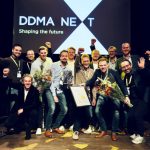
The DDMA Transformation Award 2025 is a prize for organizations that are leading the way in the responsible and innovative use of data.