
Teleperformance hopes to open its third branch in Suriname early next year. The company expects to grow into an organization with over 2.000 employees. Jörgen Raymann (Chief Inspirational Officer at Lenard and Lenard) and Pascal Matern (COO Teleperformance Benelux and Suriname) explain why offshore outsourcing of Dutch-language customer contact to Suriname is booming business.
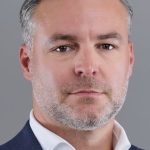
 Teleperformance (TP) started in 2015 with a number of small projects and then steadily expanded the business. Pascal Matern (COO, photo) is the first to admit that rookie mistakes were also made. “One of the first lessons for us was that the flat organization as we know it in the Netherlands was not a good fit. In Suriname, top-down management is more the standard than in the Netherlands. Openness and directness between employees and managers is simply less established here.” More about those differences in management culture later, but first about the growth plans.
More than a thousand agents
“After the initial start-up period, during which we learned a lot, the decision was made more than three years ago to continue investing in Suriname,” says Matern. “We noticed, among other things, that we could count on the interest of young talent in this country. We then grew from 100 to 250 employees. During the corona pandemic, the branch has grown further, to 500 employees now. We will open the second building in July 2022, the capacity we offer there has already been allocated to customers. We expect to open the third branch early next year, by which time we will have about a thousand employees. In the course of 2023, we will have 1.200 to 1.400 employees. That is solid growth, but we dare to take it because we have recently invested a lot in a solid foundation.”
Invest in management
 The timely availability of sufficient new and good managers will be the biggest challenge, TP expects. Therefore, the company has the cooperation with Lenard and Lenard sought. Jörgen Raymann will support TP in achieving this growth. “I will help to build bridges between the Dutch and Surinamese cultures, which I know both well of course, and to increase mutual understanding. In addition, Lenard and Lenard will provide support with recruitment for management positions using its own network,” says Raymann.
He explains that the Surinamese economy, now that the oil industry is getting a new impulse (see box below), will benefit from modern employers and modern employees in the coming years. “TP can make a real contribution to this, for example by offering training and starting positions.”
Suriname is preparing for further intensification of the established oil and gas industry, now that new sizeable oil fields have been found off the coast in early 2020. In 2017, the Surinamese parliament passed a law to set up a 'Savings and Stabilization Fund', so that the expected oil revenues add value to the relatively small economy in a good way. It will take a few years before the oil fields will generate money for Suriname. Raymann: “What you learn as an employee of TP, you can easily apply in commercial and administrative positions that will soon increase in number. This is not only about competences, but also about gaining experience with things such as work rhythm and business processes in international organizations.”
Train longer
With regard to bringing in agents, the prospects are favourable. Matern: “The composition of the population is good: there are enough young people. But not everyone has the same good starting qualifications. TP also wants to contribute to this in the form of collaborations with trainers, such as the combination of education and work. A big difference with the Netherlands is that we train for six weeks in Suriname – instead of an average of about two weeks as in the Netherlands. For example, we pay a lot of attention to language and cultural differences.”
Build trust
In addition, it takes a little longer for employees to have confidence in an employer or in colleagues. In principle, employees are less assertive and often need clear frameworks, says Matern. Raymann attributes this to both the Surinamese upbringing and the nature of business in Suriname. “Many companies here are family businesses, where one person decides what happens. Employees are expected to commit to this. They are the remnants of the feudal system that we inherited from the Netherlands,” explains Raymann. “This gives you: 'the hand that feeds you, it does not bite you'. But the younger generation of Suriname attaches less and less importance to this. Young people are looking for a new employer and that is exactly what TP offers here.”
At the same time, TP shows that the company respects the Surinamese culture and invests in society – such as setting up childcare – “and that inspires confidence,” says Raymann. In addition, as a pioneer, TP has really built up a head start with modern employership and good employment conditions, including a salary in euros because of inflation. In the past, exchange rate compensation was paid, says Matern.
Potentially 10.000 customer contact employees
The influx of TP consists of newcomers in customer contact. There are several customer contact parties active in Suriname Majorel recently Alembo taken over – but no employees of competing colleagues are bought away. Matern expects TP to be able to offer more than 2.000 customer contact jobs by 2025. Matern estimates that the total labor market can provide more than 10.000 customer contact employees, of which TP can offer about 2.000 jobs. “The potential is there, but the crux is in training well and not putting people on the phone too quickly, so that we destroy the reputation of this profession.” Raymann sees opportunities for the various customer contact companies in Suriname to jointly raise the standard. “Furthermore, the intake of young employees here is really a matter of peer-to-peer: the experiences that young people share count heavily here,” says Raymann.
Offshoring of customer contact is once again in the spotlight, now the tightness in the labor market is at a peak. For a few years now, in addition to branches in the overseas Dutch-speaking area, there have also been branches closer, such as in Spain, Portugal and Turkey, where Dutch employees, among others, work as expats on a temporary basis. In all cases, in addition to access to talent, the outsourcer also benefits from wage costs. For Suriname, the size of this differs per project, says Matern. He also indicates that customer contact processes in Suriname are not infinitely scalable. “The biggest gain is in the loyalty of employees, which improves the quality of service. The offshore teams regularly score better than those in the Netherlands. In Paramaribo, a job in customer contact is really the start of a serious career.”
Expanding or extending your service window can be another argument for offshoring to Suriname. “In Suriname there is no 9-5 economy, but we have a 7-5 economy,” emphasizes Raymann. Matern adds: “In Suriname, we do a lot of offline customer contact, which offers the opportunity, for example, to get rid of a backlog from the previous day.”
Building a sector with a good reputation
Matern is determined to build a good reputation of the customer contact sector in Suriname. “The Dutch economy has meanwhile - unfortunately helped by labor market shortages - start looking differently at Suriname. The pioneer customers from the beginning are successful. The growth is now continuing. We have to ask potential customers for patience at the moment, there is a queue until February or March next year.”
Raymann adds: “Suriname is seen as an 'emerging market'. The political situation and public administration in the country are starting to gain a new impetus.”
Perhaps the new impetus will also spread to the business community in Suriname. Matern: “Some time ago we organized a people management seminar on management styles for all employees. How do we treat each other?"
Raymann: “That is quite unique for Suriname. In this country you mainly talk for and against your employees and not with your employees. It's good if that changes."
(Ziptone/Erik Bouwer)


Also interesting
-
For his new role, Matern will move to Turkey with his family. He will be responsible for the foreign branches of…
-
Bali as an offshore location for Dutch-speaking customer contact? Bol has started a pilot there. TP expects to be able to grow there to…
-
Matern was, among other things, Chief Commercial & Client Officer at TP. He is currently also Chairman of the Contact Centers Association…