
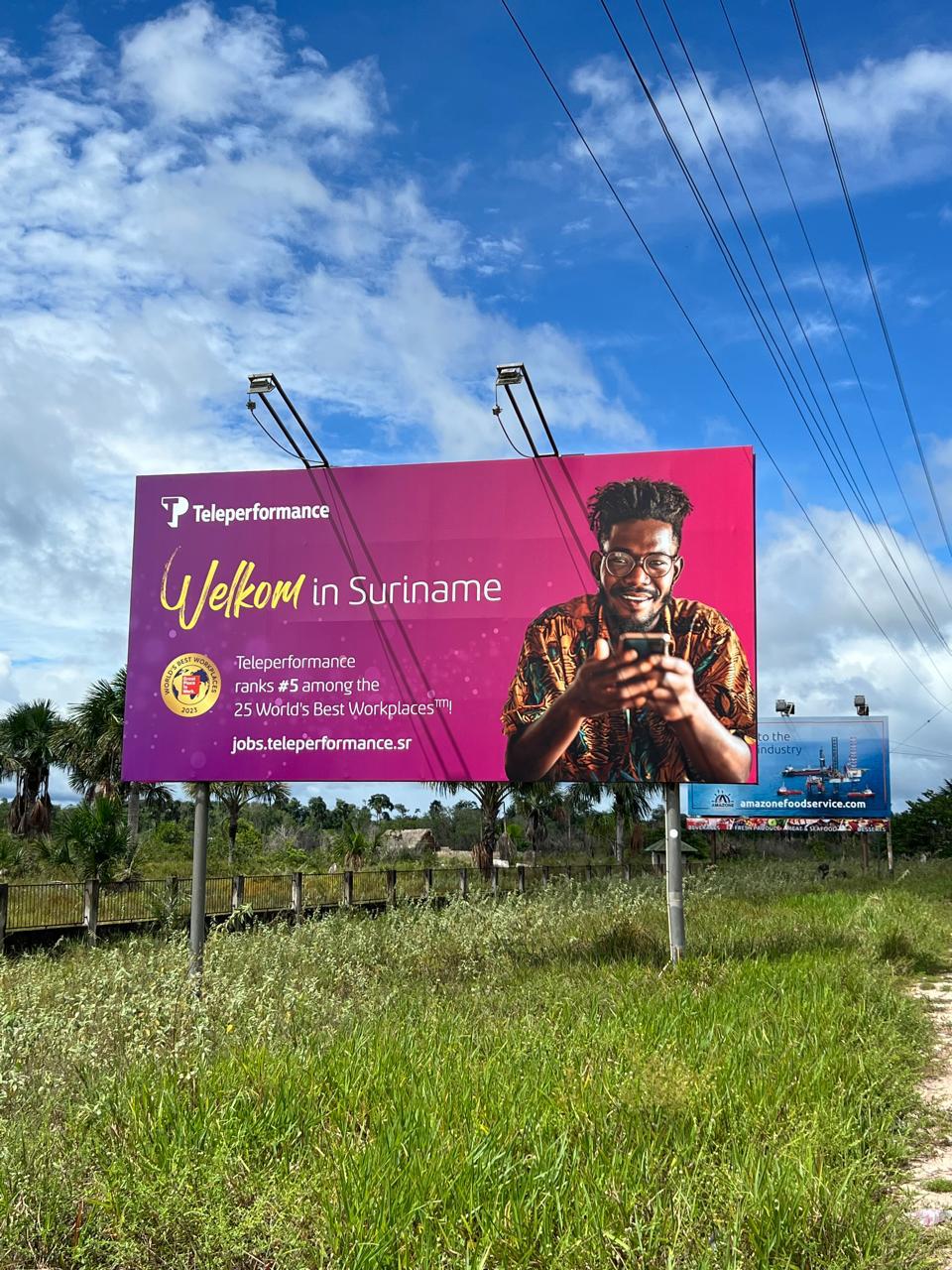
 TP recently opened a new office in Suriname, further expanding its capacity. The market is still growing, but not at the pace of a few years ago. "We're approaching the point where the growth in interactions can be offset by the ever-increasing degree of automation," says Pascal Matern, Chief Commercial & Client Officer for TP Benelux, Suriname, and the Nordics. But he emphasizes: this is a very gradual process.
Last week, the Surinamese magazine GFC Nieuws raised the question whether the Surinamese contact centers also can expect a blow from automation and AI Microsoft had just announced the layoff of 15.000 employees. A valid question, but there are also two other trends impacting Suriname. Consider the persistent labor cost pressure in the Netherlands and the rise of new offshore locations such as African countries of India.
“Ultimately, it is our customer who determines what the demand is,” responds Maternal"But the total cost of ownership (TCO) of offshoring in African countries—think of the extra training, management effort, and the use of real-time speech translation—is currently still higher than that of Suriname. Wages in Suriname are gradually rising, and the cost of AI is falling, so we'll reach a tipping point somewhere, and it will be worthwhile to explore the African model."
AI does not create atmosphere in a conversation
Still, the service-oriented nature of Suriname's customer contact professionals is a real plus. This is crucial because many of the brands we work for haven't yet transitioned to AI agents. A truly human response—think empathy, joking, and engaging in a pleasant and engaging conversation—brands don't yet see how AI could replace humans in this regard. AI is being used extensively to improve and streamline operations. Companies on the commodity side, in particular—energy, telecom—want to differentiate themselves across the CX spectrum, and a large part of that lies in human service.
Service culture
Regarding African countries, the cultural differences with the Netherlands are much greater than those between the Netherlands and Suriname, and real-time speech translation doesn't eliminate those, says Matern. "Moreover, Suriname has other advantages that shouldn't be underestimated. Employees are incredibly driven, eager to learn, and process-oriented. There's a truly solid foundation for a service culture here, which is questionable in other locations."
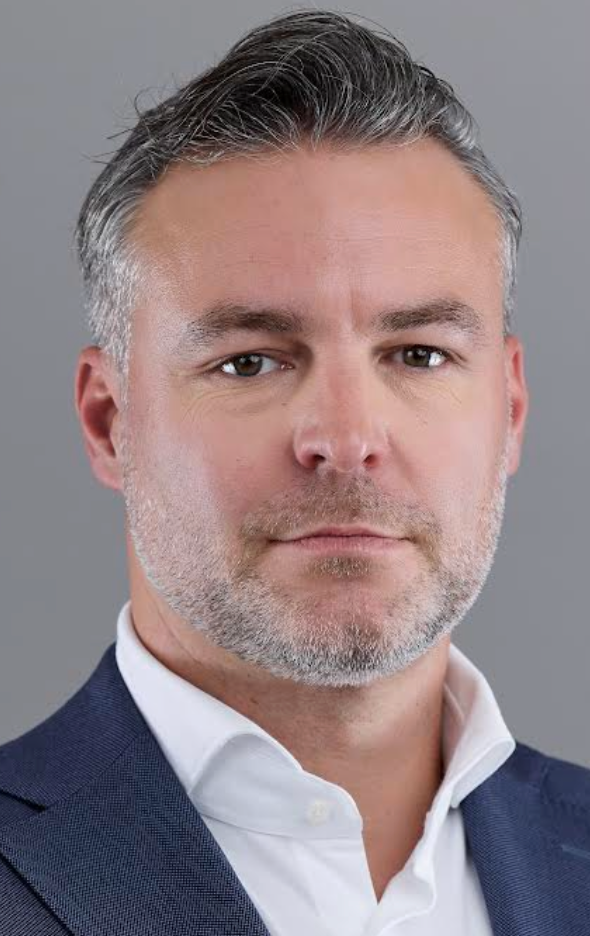
Pascal Matern
Matern explains that the situation is different for the Scandinavian market. Those languages are rarely, if ever, found in offshore destinations, and in those cases, it does make sense to use real-time speech translation in combination with language-independent offshore destinations. "But for Dutch companies, Suriname is a logical first destination. We achieve better results here on many accounts than in the Netherlands."
The latter is also related to the longer job tenure in Suriname, which leads to higher quality. The costs of turnover are also considerably lower, despite the fact that more training investment is required upfront. "In Suriname, KPIs like First Time Right are showing a sustained increase," Matern adds.
Fourth location
TP announced earlier this month the fourth location opened and is currently expanding the location it first occupied in 2014. This brings the total number of agents to approximately 1600 customer service representatives. "The new building was opened with new clients in mind. We may also open a branch in a strategic location for accessibility—so, in a different district. In total, I estimate we will grow by around 150 employees net over the next six months."
Here too, the market – in terms of interaction volumes – is currently still developing faster than automation potential, but this will reverse in the near future. "In recent years, a lot of energy has already been invested in the continued development of AI solutions. That's why, for example, at Samsung, around 30% of interactions are now handled via a bot. But the budget this frees up is largely invested in new service concepts that add value, such as a loyalty program."
Impact of AI on BPO jobs?
If you look at analysts and consultancies, McKinsey says that about 30% of jobs can be automated by 2030; OpenAI also says 30%, the IMF says 40%, and they all talk about so-called 'entry-level routine jobs.' I find it difficult and overly generalizing that the work our employees do is included in all sorts of discussions. The simple work is largely automated already. And before we've automated those more complex conversations... then you'll be back to the discussion about brand differentiation. We've seen at Klarna that human service isn't easily replaced.
Involving employees in AI
There was recently a discussion in the field about how to involve employees in the development of AI deployment. Not only to embrace tools, but also to negotiable to make sure that AI can ultimately impact jobs and functions.
This is a pressing question on everyone's mind. As part of the VCCS, of which we are a member, we plan to organize seminars that also involve external experts. These seminars are specifically intended for agents. Our employees will also encounter AI in other ways. For example, we have an internal AI-based HR advisor who can handle all kinds of HR-related questions—from employer statements to sick leave.
TP was remarkably positive and constructive when it became known that there was a new Surinamese trade union for contact center employees. Matern sees synergy, as the union largely shares the same agenda as the VCCS. "The VCCS is working on a quality mark that will cover all sorts of issues the union has also highlighted. This ranges from ergonomics to confidential counselors and from transportation to and from work to security. The VCCS has already invited the union to enter into discussions."
BPO sector and the Surinamese economy
In Suriname, the oil and gas industry is about to take off, and a new government has taken office. Does Matern still see opportunities for the BPO sector to contribute to the Surinamese economy in a broader sense—and by that, we mean more than just "good employment practices"?
TP recently closed a site with approximately 800 employees in Guyana – it was impossible to maintain good business operations there. That's why, says Matern, TP is closely monitoring Suriname's development. "In Suriname, we see sectors like hospitality and business services developing. We're increasingly seeing Surinamese TP graduates moving into self-employment or staff or management positions in Surinamese companies. This outflow isn't always convenient, of course, but it really makes me feel proud when I see, for example, that one of our former HR employees is now... HR officer is at Staatsolie.”
Foreign companies seeking staff here will prefer professionals with European work and management skills. We can serve as a springboard; we currently have ample management talent available for internal growth.
We're now reaping the benefits of our training and coaching programs for our middle management and are losing fewer people to our competitors. But I expect that the development of AI will align with the labor market shortages for agents in the future. Or vice versa; there will be a shortage here, so we're very keen to fully embrace AI. This also means that customer contact work will become increasingly high-quality and that it will be rewarded differently.
(Ziptone/Erik Bouwer)


Also interesting
-

The Surinamese trade union BVAW also advocates for a living wage with a gross hourly wage of six euros.
-

Intelcia Portugal already employs 7.000 people. That number is expected to grow by 700 jobs this year.
-
Matern was, among other things, Chief Commercial & Client Officer at TP. He is currently also Chairman of the Contact Centers Association…