
Image: Ziptone/AI
A large portion of Dutch contact centers still run on on-premise contact center software. For those planning a cloud migration: what does cloud sovereignty mean? And what's the point of uptime SLAs if you don't have full control over your company's data and software?
Two-thirds of Dutch companies fears losing contact with customers in the event of a power outage, according to recent research by the Chamber of Commerce (KVK). That's why many companies have arranged for an emergency power supply or a fallback scenario. Even though electricity is a commodity, choosing a reliable power supply is a no-brainer. This is different with cloud services, sometimes also referred to as a commodity, where convenience and sunk investments often weigh heavily.
The vendors involved are acutely aware of the concerns surrounding the risks of using American cloud services. Since the beginning of last year, their "European" cloud products have been receiving considerable attention. European software companies are also raising their profile more prominently. And Ziptone released a market study in which dozens of European CCaaS solutions were placed next to each other.
AWS European Sovereign Cloud
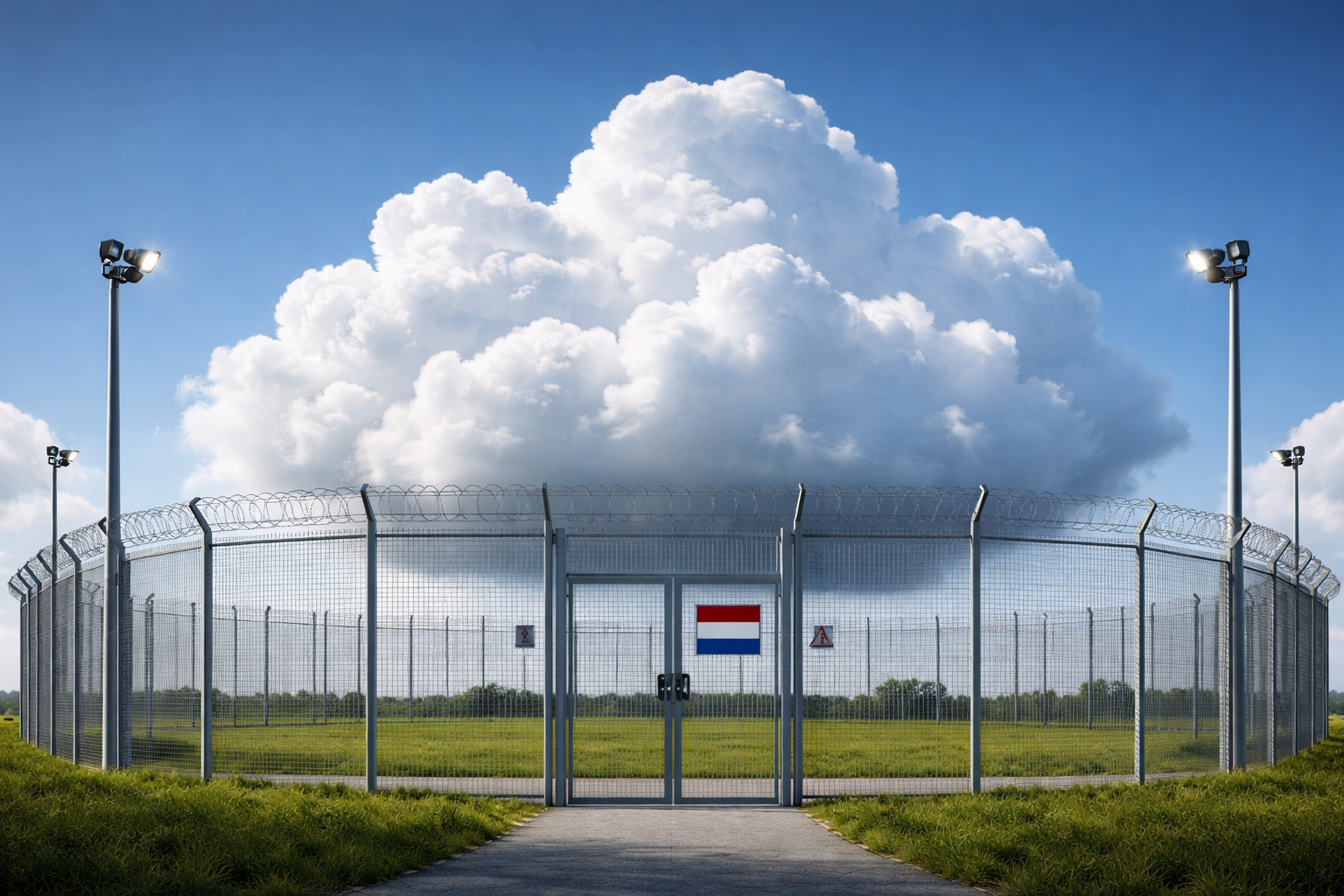
The latest marketing campaign comes from AWS, the hyperscaler that, in addition to general cloud services, also provides the Amazon Connect customer contact platform. This month, AWS launched a sovereign cloud, including so-called sovereign local zones in the Netherlands and Belgium. The idea: AWS European Sovereign Cloud should offer organizations in both countries additional guarantees regarding data residency, governance, and operational independence.
These local zones are specific infrastructures located in larger cities, from which key AWS services, such as compute, storage, and databases, are offered. These local zones not only offer lower latency but also ensure data location sovereignty.
In addition, AWS said, the AWS European Sovereign Cloud activities will fall under a new European holding company (GmbH) managed by local managing directors.
“They are obliged to defend the interests of the European Sovereign Cloud,” said Barbara Baeyens, head of public sector Belux at AWS, in an article in Computable.
Local AWS infrastructure
Other technical matters are also handled locally. The infrastructure runs entirely on the AWS Nitro System, meaning even AWS employees don't have access to customer data. Identity and access management, the separate billing and metering system, and the storage of customer metadata, such as configurations, roles, and permissions, are all handled entirely within Europe. Baayens told Computabe that this ensures legal, technical, and contractual independence.
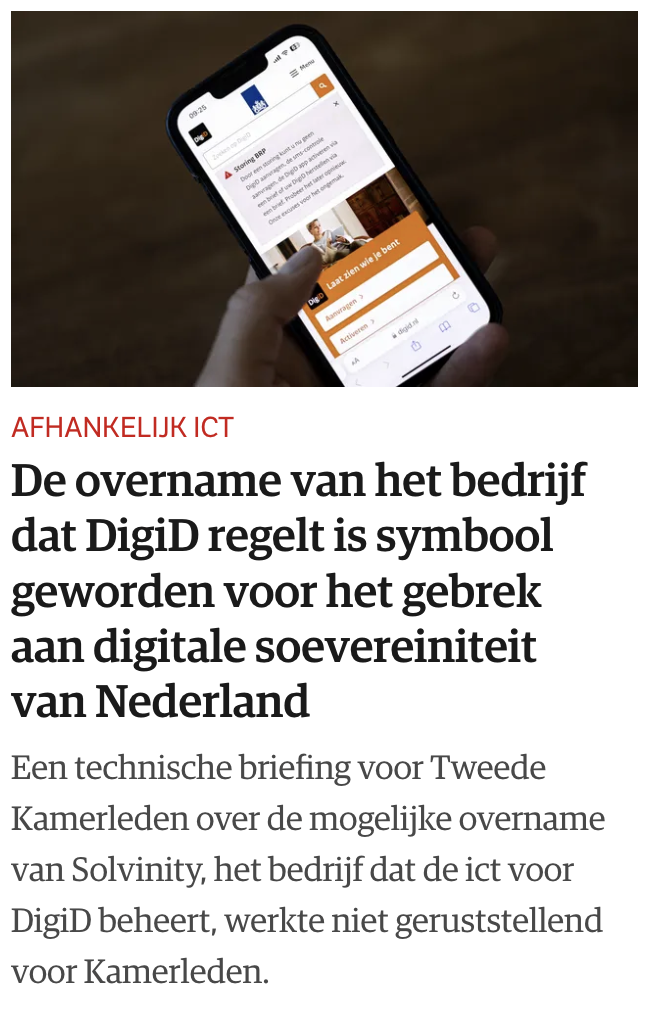
But AWS is less certain about the legal side, as is evident when AWS Benelux director Daniëlle Gorlick speaks during a interview with NRCShe was asked how AWS can be sure it won't have to follow orders from the U.S. government under the Foreign Intelligence Surveillance Act (FISA, Section 702) or the Cloud Act.
Gorlick then refers to data encryption, where AWS customers store the keys themselves. "That means our people can never access that data." She doesn't address the legal implications of the question at that point.
Misunderstood
However, AWS does attempt gaslighting in the interview. According to Gorlick, the CLOUD Act is "often misunderstood." She refers in the interview to "strict requirements for substantiating suspicions that data has likely been used for a crime."
Gorlick thus ignores not only Trump's systematic undermining of the American rule of law, but also the real possibility that the US will first push the buttons (which could have a direct impact on continuity) and that victims can only then go to court. This sequential approach is essential: both for accurately assessing the impact and for recognizing the dependence on American technology.
When NRC tightens the screws further during the interview—"Can Amazon fire the European Sovereign Cloud leadership in the US, and does headquarters determine salaries and bonuses?"—Gorlick doesn't receive any further answers. Even when NRC probes the possibility that Amazon could order the shutdown of services or products in the Netherlands from the US, she only gets as far as "If something like that hypothetically happens, we can provide continuity in our services."
Sovereignty
NRC Analysis – Click for article
We must therefore be careful with the use of the word "sovereignty." Users tend to downplay its meaning; providers like to emphasize that they have taken all sorts of technical, organizational, and legal measures that seem to offer guarantees.
BNR also recently pointed out the lack of clarity when it comes to the concept of 'sovereignty'. “The fact remains that a American company controls the sovereign cloud – ultimately, it simply belongs to AWS. And that's sufficient under US law to request our data," according to BNR. Incidentally, the possibility of AWS being "switched off" was not discussed.
Relying on legal mechanisms
Michiel Steltman is one of the experts who believes in the proper functioning of legal mechanisms. He says that the risks associated with suppliers with American shareholders—which may soon be the case with DigiD—have long been identified and that these risks—for example, those related to exerting pressure—also exist with fully European suppliers. "It's not about what risks are conceivable, but how strong companies are in resisting actual pressure," Steltman said in a response to the fuss about DigiD that would fall into the hands of the American IT service provider Kyndryl. Steltman also ignores the importance of complete control over the technology and the impact of technical interventions from the US.
“Don't look at where the company came from”
The NLdigital trade association states that “a choice for maximum sovereignty without appropriate investments can lead to a poorer level of security.” The key question, according to the trade association, is therefore not where a company comes from, but also which legislation (jurisdiction) applies and what technical barriers have been erected. Even if data is physically stored in Europe, legislation such as the US Cloud Act can have an impact. NLdigital therefore believes that technical measures such as encryption, where the supplier does not hold the "key," and strict physical management by screened personnel within the EU should be pursued.
Furthermore, NLdigital bases its risk assessment on the so-called CIA framework: Availability, Integrity, and Confidentiality. Availability considers the possibility that a supplier could block access due to legal restrictions or bankruptcy. This also includes developing exit plans to enable a quick transition. Ziptone wrote extensively about this exit for customer contact software at the beginning of last year.
Bullshit
Back to AWS's sovereign cloud. Tech expert Bert Hubert is explicit about AWS's sovereign cloud: "nonsense." This aligns him with the EU definition of (cloud) sovereignty, in which legal sovereignty is one of the pillars. Incidentally, in response to Trump's threat to impose sanctions on European countries related to the Greenland conflict, Hubert is working on a list of organizations who use American cloud technology for their mission-critical applications. The key question: what happens if someone in the US press the red button?
The question of the dependence of the Netherlands BV on American cloud technology has only recently been structured by others mapped.
Chain dependency
A final addition to the concept of sovereign IT is that companies also face supply chain dependencies. Customers and suppliers who rely on American big tech can also pose a risk to your own business continuity.
The fact that other tech experts are rebutting the situation and pointing to the cloud infrastructure's inherent presence of American players (e.g., servers of American origin) doesn't detract from the key point: in the event of a conflict, European users of the AWS cloud have no ultimate say, let alone control, over its operation.
Compare it to speculation about the existence of a kill switch in the Joint Strike Fighter (JSF). As long as you're not certain of its existence, you don't have full control over its operation. Let alone that in the event of a conflict, you're unsure whether you'll have timely and free access to spare parts that have to be sourced from the US. Anyone who accepts these kinds of uncertainties in the IT landscape must also be willing to let go of uptime guarantees.
(Ziptone/Erik Bouwer)


Also interesting
-
The VNG will further support municipalities in increasing digital autonomy and announces, in addition to existing forms, new forms of…
-
NTT Data will collaborate with AWS to provide services in the areas of European cloud solutions and Amazon Connect.
-
With the acquisition of Sikom, BSI Software is giving substance to its platform strategy. Both companies focus explicitly on sovereign IT.