

Image: Soraya Ebrahimi
In April 2023, the holiday park companies Roompot and Landal GreenParks received permission from the Netherlands Authority for Consumers and Markets (ACM) to merge. They will now operate under a single name: Landal. While the integration process is still underway, innovation is high on the agenda. Head of Guest Services, Remco Smit: "Poorer accessibility directly impacts our revenue."
We spoke with Remco Smit at the holiday park in Kijkduin. The interviewer spent a few months overwintering here to bridge the renovations. Remko Smith, who started at Roompot in 2020, knows the park on the southwest side of The Hague, close to the sea, like the back of his hand.
From friction to holiday fun
"This," Smit points around him, "is customer experience. One of the things I noticed when I started here was that I wouldn't be responsible for customer experience. I think I didn't fully realize then that customer experience is the product that matters here."
A second difference that Smit sees when Ziptone lists the contact centers where he has worked so far: HCN, UPC, ABVAKABO, KPN, Eneco, DELA, Rentokil and now Landal.
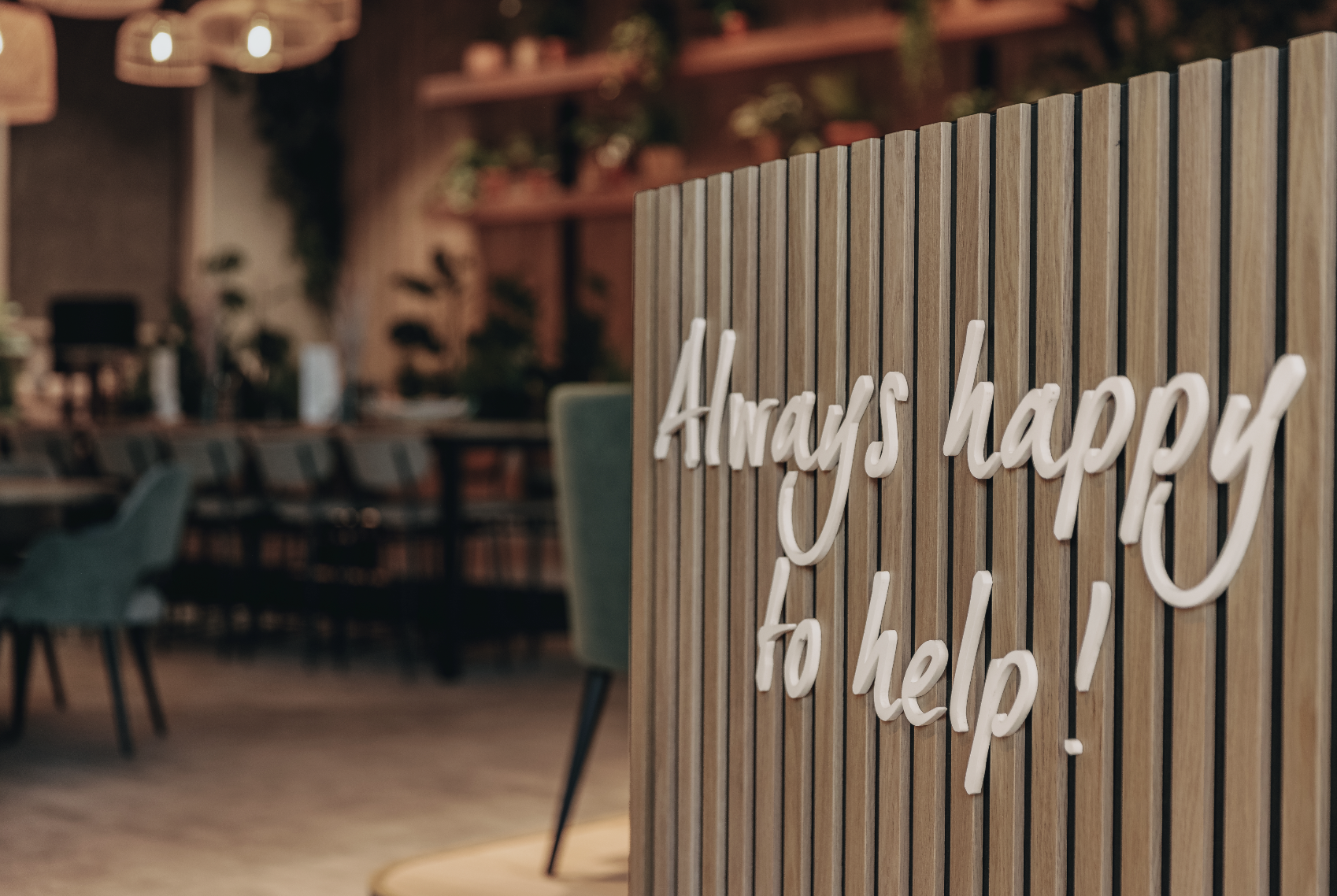
Image: Landal
Landal is different from the rest. Contact with customer service almost always starts with friction. Your package hasn't arrived, the bill is wrong, your internet isn't working, you don't understand a statement you received. In short, often something that's not so pleasant. At Landal, the journey begins with 'vacation.' When guests contact our contact center, it's often about something that has yet to happen and, in most cases, a pleasant prospect. It rarely concerns issues that could arise later in the vacation process, such as payment questions. Most of the time, it starts with 'I want to go on vacation, I'm looking for advice.' Friction inevitably creates a different energy among employees when they go home at the end of their workday.
Operations as the foundation of CX
"Our customer experience is built on the 'operations pillar' – everything that happens at the parks surrounding your stay," Smit explains. This includes things like fun & entertainment, cleaning, maintenance, catering, and supplies.
"During your stay, reception is the primary point of contact. If you can't walk to reception, you can contact the guest services contact center," says Smit. "Guest services is responsible for all communication with guests before and after their stay. Furthermore, the strategy is 'voice first' and 'native first.' So, German guests who call are assisted by native German speakers." This option came with the arrival of Landal GreenParks parks in Germany, where German guests were spoken to in their own language.
In total, Smit manages approximately 100 FTEs, in practice around 200 people, spread across locations in Goes, Trier in Germany, Varde in Denmark and Norwich in England.
Open the valve and offer something extra
For Smit, guest contact is about more than just accessibility. “Ensuring that guests can turn on the valve is essential to prevent ultimate frustration such as road rage.
But simply solving the guest's problem isn't enough, Smit believes. "Suppose a guest comes to reception complaining that the accommodation isn't clean yet. Regardless of the cause, cleaning the accommodation isn't the solution to the problem the guest is experiencing. Landal will always have to do more."
“The lack of reporting means, among other things, that you have the space to come up with appropriate solutions.”
Examples include offering dinner in the restaurant or taking guests on a fun outing at the company's expense. It's up to the reception staff to creatively resolve such a complaint at their own discretion. Although Smit is ultimately responsible for handling complaints, resolving complaints during the stay isn't included in general reporting. "That also has a positive aspect: the lack of reporting means, among other things, that you have the freedom to come up with appropriate solutions."
The contact center generates revenue
Image: Landal
Smit isn't worried about budget cuts squeezing service. "The big advantage is that we contribute significantly to revenue with guest services. We handle bookings for people who browse the website but aren't confident booking yet, aren't confident with the payment method, or aren't IT-savvy enough to handle everything themselves. Some people really want to discuss with our staff: what best fits our plans? Poor accessibility directly impacts our revenue. That's a huge help in securing the capacity we need."
But customers are also becoming more demanding, as is often heard in the industry. Highly critical customers with short fuses? Smit doesn't recognize that as common. "Sometimes a guest reports something negative on social media without first speaking to anyone at Landal." Landal counters this direct route from 'complaint' to 'social media,' inviting customers to call. "Then we'll fix it together."
Deploying digital channels
At the beginning of the integration, started in 2024, the company shut down WhatsApp, web chat, and Facebook messaging to create more capacity for the phone channel. Turning off these channels was a calculated risk, Smit explains. "We assumed that if we stopped using digital channels, half of the interactions would return as calls. But to my surprise, it hasn't had a measurable effect on the workload. In this field, we know that opening a new channel usually leads to extra work. In our case, we don't know exactly where those digital inquiries went or whether they disappeared due to, for example, an improved website or improved guest self-reliance."
Integration issues
The integration of Landal Green Parks and Roompot was a significant undertaking and a tense time, especially for the employees, says Smit. He emphasizes that the entire operation was meticulously planned and carefully thought out, and fortunately, disaster scenarios like "no payments possible" or "bookings disappearing" did not occur. "So far, the integration is proceeding within budget and on time."
On top of all the new processes and systems, a new headquarters has also been opened on Amsterdam's Wibautstraat, with many new employees working for a new company, with new products, and on new systems. But now that the biggest hurdles are behind us, there's a vibrant atmosphere at the headquarters in Amsterdam and in Goes, where a new floor has been added, says Smit.
Digitalization plans
Furthermore, preparations are underway for further process digitization. For example, there are small experiments with using AI for some customer contact—think of a voicebot that can ask various questions at the beginning. For example, to determine where the customer is in the customer journey for routing purposes. Or consider identifying the lead booker, as not everyone is allowed to change or cancel a booking. The idea is also being considered for having the voicebot handle simple requests entirely.
Smit: "Voicebots will make a huge difference in customer contact: they can listen in continuously and do things simultaneously. If you want to book a crib, you can do so without having to speak to someone, but if you do want to, you'll be contacted immediately. In short, we're replacing the IVR with an intelligent solution, and I think that's more user-friendly than pressing buttons."
Working without a screen
While Coach House Conversation #4 Smit also advocated for "screenless working" for team leaders and supervisors. Has he embraced this practice himself? "I really try to bring my laptop to meetings as little as possible. I also don't want to be distracted by my smartphone; all notifications are turned off. Your attention has to be elsewhere."
What I learned quite early in my career: everything you give attention to grows. If you give positive attention to something, you have to be very demonstrative; I'm absolutely convinced of that. Managers should sit next to someone on the floor, tell them what's going well, give them a compliment, and speak a little louder. Make the atmosphere pleasant, talk about vacations, open the door, and make it audible that it's a pleasant atmosphere in that room. Other people will want to have those kinds of conversations with you, too.
Red flags when applying for jobs
Suppose Smit were to apply for a job somewhere sometime soon. What would be the red flags? The first thing he thinks of is a company outsourcing all the work. “A company that's extremely product-focused wants to focus on its product and not so much on answering customer questions. That can lead to a really good product—think Dyson, a product you can't repair yourself at all; the company isn't known for its fantastic customer service either. It has to be cheaper, fewer, and far away. Those are three red flags that make me think: that company isn't showing much commitment to solving the customer's problem.”
You can also turn it around: what exactly is a big green flag? When I first came to DELA for an interview, the conversation was mainly about the people, their experiences, the challenges. The team made themselves vulnerable: come help us. It wasn't about malfunctioning systems or reporting. It's been one of the best companies I've ever worked at, and that's largely due to their focus on people.
The future of customer contact

Image: Landal
My hope is that with the rise of AI, the remaining work will become more valuable and interesting. Furthermore, creating AI also requires humans; just think of setting up the guardrails. I've seen research showing that AI can only independently perform 24% of the processes in which it plays a role. The rest is still too complex to handle without a human. The word 'still' is important; I don't know how long that will remain the case. Much of what we do has to do with exceptions. Everything that is no longer an exception can be outsourced to AI. Still, Smit isn't worried about customer contact.
He is curious about what the future holds. "A few years ago, we were all striving for the wow experience. Every employee had to give every customer the wow experience. That's simply not possible. Then we came up with the customer effort score, which is obviously at odds with the wow experience. The question is increasingly: which customers are you going to embrace?"
The latter is becoming an increasingly complex issue, Smit believes, while in practice it might just happen to you: “The moment someone tells you 'my husband has just passed away', you not only understand why the problem or question of that customer is extra annoying for him or her, but you can also decide to devote much more time and attention to someone.”
(Ziptone/Erik Bouwer)


Also interesting
-
AI does not replace customer service representatives. However, AI does take over parts of their duties. What does this mean for their profession?
-

Ronald Smit is stepping down as COO at facilities contact center Yource. Smit joined Yource prior to the acquisition of Cendris…
-

Good customer service strengthens your brand. Or does good customer service actually start with establishing a strong brand?