
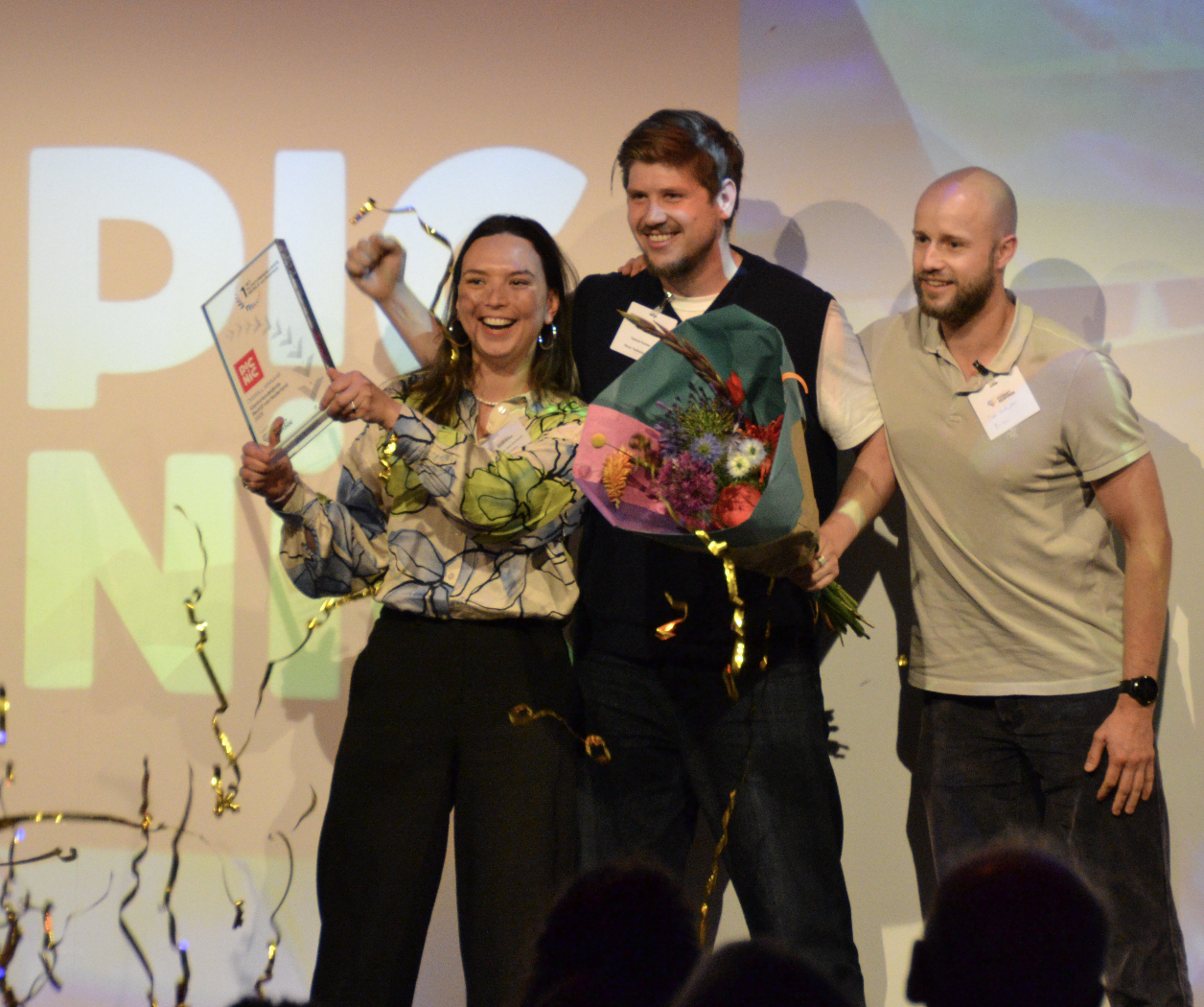
Image: Ziptone
Online supermarket Picnic is this year's new and perhaps surprising number 1 on the list of most customer-friendly companies in the Netherlands. Places two and three in the annual MarketResponse survey are for amusement park Toverland and wellness company Rituals.
Picnic has worked its way up in leaps and bounds: last year it was second, the year before that it was a newcomer with a seventh place. The second place is at least as special: amusement park Toverland had never achieved enough sightings to be included in the list. Rituals is at number 3 and has been in the top 10 before.
Method MarketResponse surveys 500 consumers every month about their experiences with organizations from four to five different sectors from a total of ten sectors. The respondents are asked which companies they have recently dealt with or have dealt with or are a customer of. For companies where they themselves indicate that they are a customer, they are asked how customer-friendly these companies are – in the form of a report score from 1 to 10. In this way, scores are collected continuously and therefore also for each edition of the Most Customer-Friendly Company from more than 350 companies. Anyone who has obtained at least 100 observations over a period of one and a half years, will be included in the list from MarketResponse.
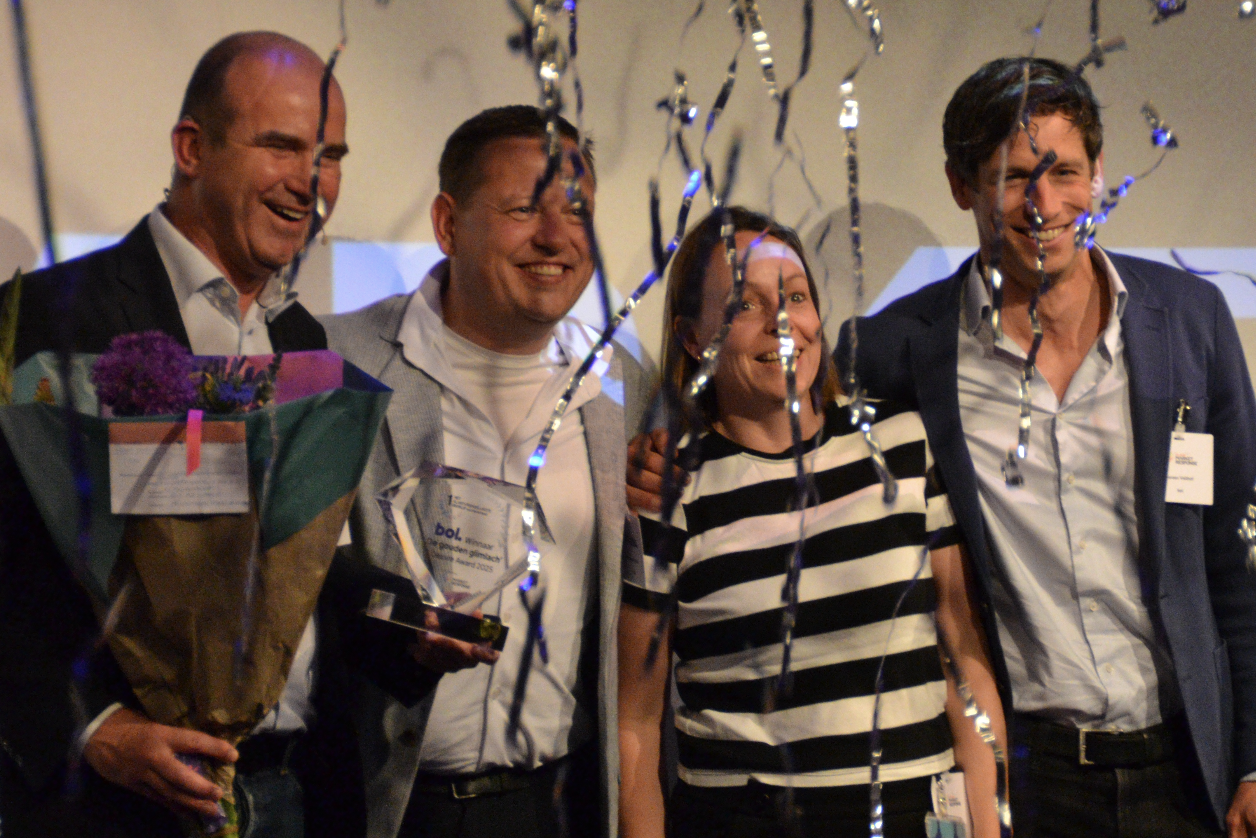
Image: Ziptone
Online marketplace bol received – because of the 40th anniversary of MarketResponse and therefore with a little wink – a lifetime achievement award, because no other company has been in the top ten so often (fourteen times in eighteen years) without ever ending up at number one.
Dealing with prejudices
Market Response’s ongoing research with the annual awards ceremony is more than just a ranking. It also offers several other insights. For example, it can dispel the prejudice that Dutch consumers never award eights, nines and tens to the companies they do business with. “The opposite is true,” says Gerrit Piksen, senior researcher at MarketResponse and program manager of the Most Customer-Friendly Company in the Netherlands. “Toverland scores an average of 8,26. And almost half (46%) of respondents give the park a 9 or a 10 for customer friendliness.”
Want to score high? These are the rules
In addition, the results show what you need to do to score high on customer friendliness. “The most important thing is that people say that they can easily reach the company,” Piksen explains. “That could be the contact center, but also the Picnic app, amusement park employees walking around or staff in the store or supermarket. Golden rule number two is that companies keep their promises. Picnic also scores very well on that point. Admitting mistakes and solving them quickly and properly is golden rule number three, also a quality of Picnic. Not making things difficult is the fourth rule. And not bothering customers unnecessarily is the fifth golden rule. These five rules have dominated 'customer friendliness' since 2007, when the research was first conducted. The sixth golden rule is 'be genuinely involved with your customer'. This only came back somewhat later in the open answers about why companies are considered customer friendly.”
Data plus the human factor
Having a lot of data and being able to use it meaningfully and effectively, AH is perhaps just as good at that as Picnic. “At the physical supermarket, you only recognize the customer when they scan their bonus card and Picnic has apparently set up the digital process so well that consumers are very happy with it. And yet, as we see, at Picnic it is ultimately the person who makes the difference – this mainly concerns the Picnic runners and their behavior. For example, they hardly cause any parking nuisance and apparently have a good connection when they come to deliver something. If you distill the comments from customers at Picnic from our research, those golden rules emerge. If you look at the tens that consumers give, they are almost always about the employee.
Effects of digitalization
MarketResponse does not go into great depth in its annual research and therefore does not know what the effects are of digitalization of services. Even a digital first player like Rabobank is in the top three of most customer-friendly banks.”
The combination of, and interaction between people and digital remains – certainly in customer experience – a complicated one. “At high-scoring companies, you can often just walk in. High-scoring insurers such as Univé, DSW and ZLM still have a branch network. A similar pattern is visible at banks, where Regiobank has been scoring very high for years.”
Customer satisfaction continues to rise
A final insight dispels the idea that customer satisfaction is deteriorating rapidly. Last year, the results showed a slight decline in general customer friendliness for the first time, but the increase over the years has continued this year. This is reflected in the growing size of the list of companies that score an average of eight or higher. Last year, these were the ten best performing companies, now there are nineteen. The downside of this is that it is becoming increasingly difficult to distinguish yourself. Companies are increasingly understanding what they need to do and they can of course learn from others.
Where is there still room for improvement?
The genuine involvement with the customer can be improved, says Piksen. In other words: ensuring that the customer feels that he or she is really being treated as a customer. Also ensuring that an employee is really available.” Both have to do with the right connection between brand, employee and customer, thinks Piksen: being able to connect well – that is partly also in how someone comes across, which makes customers feel something. Employees who are really available, that evokes associations with searching on websites and fiddling with chatbots. Digitalisation can also put involvement and accessibility in reverse. “There is still a lot to be gained for many companies. It is also the reason that Picnic, for example, opts for live agents instead of chatbot-first.”
The NPS is due for replacement
And finally. Piksen has another interesting tip for that cursed NPS. “In our research into the most customer-friendly company, we do not ask about the NPS, but about whether respondents actually recommended the company, in the form of a yes-no question. This reveals interesting trends. Across all companies, it appears that if consumers give a 10 for customer friendliness, more than a third (36%) actually recommended that company. If you get a seven, that is only 14% and if you get an insufficient, only 8 percent.”
15.000 tens were handed out; the company also recommended a good 5.000 of them to others. That modified question – did you recommend us – is a lot clearer than calculating with distractors, passives and promoters. Nonsense, Piksen thinks, and that is why MarketResponse also embraces the KRS, once created by the Volksbank. The Customer Relationship Score is composed of satisfaction, trust and love and forms the basis for actual recommendations.
At least an eight
For customer friendliness, you should be able to score at least a 7,5 to an 8, Piksen believes. Consistently scoring higher than an eight is not impossible. This is evident from the example of bol, which scores an average of more than an 8 for several years. As far as Piksen is concerned, this can also be considered a very good performance.
(Ziptone/Erik Bouwer)
Also read the interview with Kim Knape, Picnic


Also interesting
-
Erwin Hasselt, Manager of Feenstra Service Center, was elected CCMA Manager of the Year during a festive ceremony in Amersfoort…
-
Welkoop is the Most Customer-Friendly Company in the Netherlands 2026. The company rose from ninth place to first place last year.
-

Vermue worked, among other things, as business manager sales and marketing at Quality Contacts, which decided last year to a…