
Whether there are five or six thousand agents at work, the Surinamese contact center sector has become significant and is still growing. Ziptone spoke with Walter Oostelbos, ambassador of the Netherlands in Paramaribo, about the impact this booming business has on the country.

Walter Oostelbos
For Walter Oostelbos is no stranger to the industry. As an ambassador, he opened new branches of Yource en ContactCare. He sees that the sector is attractive to relatively highly educated Surinamese: people with a higher professional or university education. “People choose a job in a contact center instead of a job that matches their education because the employment conditions are better. I am sometimes addressed about this as an ambassador, but that is something that the Surinamese government in particular can tackle. Employees do not only choose for the money, but also for the secondary employment conditions. There is also a group that does it in addition to their studies. There is a brain drain to the Netherlands as well as within Suriname itself. I cannot substantiate it, but it would not surprise me if education and healthcare are missing out on people. Capable young people work at the facility contact centers. And they could perhaps have worked in education as well.”
Visible sector
At the same time, Oostelbos sees that Surinamese customer contact employees are proud of their jobs and that meaning is attributed to the companies. “They are not anonymous organizations. They are visible. Some companies have four or five locations. Some companies are located in very beautiful buildings. It is visible that they are investing. Personally, I think it is very good that ContactCare has an eye for the heritage here in the city and is not located in a modern building on the edge. I opened the Yource location together with Minister Rishma Kuldipsingh (Economic Affairs, Entrepreneurship and Technological Innovation, ed.) and it was in the newspapers; the smaller ContactCare also made the newspapers. Society here is aware of this sector.”
“Government is reluctant to cooperate”
Dutch companies that want to open an offshore location in Suriname, however, encounter obstacles. The Surinamese government is reluctant to cooperate. Companies must pay 6000 euros to obtain a permit to open a contact center without any demonstrable value or service in return. The electricity grid is often not sufficient for new locations. Registering a new NV with the Surinamese Chamber of Commerce takes at least six weeks. Is the Surinamese government doing enough to facilitate this industry?
Oostelbos: “Let’s not focus on this specific sector. Can the Surinamese government make itself more attractive to foreign investors? Yes, and that also applies to other sectors than contact centers. I started my career at the Ministry of Foreign Affairs at the Dutch embassy in Manila. Long ago, the American contact centers there encountered similar problems. Suriname is not a frontrunner in many areas, but they do want to attract foreign investors. More companies will of course follow in the wake of the oil and gas industry. TotalEnergies continuously asks the president and the ministers for attention, for example, to quickly issue work permits.”
Makandra Program – The Dutch government has been supporting the Surinamese government through the Makandra program since 2020 to capacity and quality of the Surinamese government to improve. This focuses, for example, on increasing the effectiveness of the police force and customs, but also on strengthening the audit office, the meteorological institute and health care. “Suriname has to do it itself, and if you talk a lot about facilitating foreign investors, then you will have to invest in that. The pace is ultimately determined by Suriname, not by us.”
Sustainable model?
For customer contact centers, the pain is mainly at the front end: when they want to establish themselves. Once they have 'landed', they benefit from the advantage of serving the Dutch-speaking market. But Oostelbos also sees that this advantage may be temporary: the European customer contact sector is also looking ahead. "Will we still need someone to answer the phone or can we do that with AI?"
This brings us to the question of how sustainable the BPO sector is for Surinamese society – in the short and long term. Salaries vary considerably and in Suriname a couple with children quickly needs three jobs to make ends meet. “Does a company go for maximum profit or is there also an eye for other things? That is currently a global discussion. At large listed companies, there is rarely a real entrepreneur on the board of directors. That is precisely someone who bears the risk themselves. If a CEO of a listed company fires five thousand people, his bonus goes up. Now you see a younger generation asking questions about that.” This also applies to the customer contact employees in Suriname: they have a lot of contact with each other, according to Oostelbos. “And if you get a little more from one than from another… The unions are quite outspoken here. They will automatically come to an agreement.”
These unions are easy to form, according to Oostelbos: often this happens at company level, but sometimes even at the level of a specific group of employees. The Ministry of Education has more than ten unions. The question, according to him, is: do you want to make maximum use of the wage cost advantage or do you also want to add value to society? “The employees who work for these Dutch contact centers do so in a pleasant working environment and have much better secondary employment conditions. But in the end, you cannot feed your family with the T-shirt you get and with the education you receive.”
How do you deal with the wage cost advantage?

Dutch embassy in Paramaribo – photo Ziptone
Does Oostelbos have a message for the outsourcers and service providers? “Suriname may be a former part of the Kingdom, but it is really a different country. This country is emerging and has a lot of potential, but also a distribution issue. Are you coming here for the quick win or for a sustainable investment? If there are complaints that certain players are paying too much, then you can also pay more yourself.” About the agent’s rate per hour: “You can go to Suriname for 20 euros, you can also go to Suriname for 23 or 25 euros, then you still have a wage cost advantage.”
In 2028, TotalEnergies will most likely start oil production off the coast of Suriname. Will the arrival of that industry benefit from a developing customer contact business in Suriname?
Oostelbos thinks so. “Companies can give something back by investing in strengthening the education and training system. That can create opportunities to attract lower and middle-educated people to contact centers, so that highly educated people can go and work in the oil and gas industry,” says Oostelbos. He also sees similarities between hospitality and customer contact.
“There are two sectors with major problems in Suriname: healthcare and education. The education system is creaking. The sector has an interest in investing in a training package and what may stimulate further education. I understand that the customer contact sector already invests a lot in employee development compared to other Surinamese companies.”
Inclusivity and diversity
Alembo, acquired by Teleperformance last year, will have the Matie Award won, a recognition from the LGBT community because the company has visibly invested in diversity and inclusivity in the workplace. The question is, according to Oostelbos, whether Albert Heijn (TP's customer in Suriname) in the Netherlands sees this - it is now Teleperformance that plays the role of employer here. The sector can learn from Alembo that it is good to pay attention to local circumstances. "There are also gaps in the local circumstances and Alembo has made itself known as a company that does not discriminate on the basis of gender or sexual preference. That is a thing here in Suriname. It is Pride Month here this month. I have been posting messages on Instagram every day for six years. This month I am posting photos about LGBT, which generates considerably fewer likes than on other days." Many Surinamese people are afraid that if they like an LGBT-related post, they will be labelled queer, Oostelbos explains. Much work also still needs to be done in the area of sustainability.
“Dutch-speaking customer contact from Suriname meets a need”
“I am the son of an entrepreneur and I believe in the importance of customer contact. Dutch-speaking customer contact from Suriname meets a need, you can hardly be addressed in your own language anywhere else. That is also a limitation: the Dutch market is small and technology in the field of automated translation is developing rapidly. It is great that we see the entrepreneurial spirit of Dutch companies here with a recognizable form of service.” (Ziptone/Erik Bouwer)


Also interesting
-

BPO service provider ContactCare has opened a new location on Dr. JF Nassylaan in Paramaribo.
-
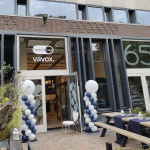
The new location is smaller than the previous one, but the number of workstations in the office is no longer the determining factor for facilities…
-

ContactCare starts with twenty workspaces in the heart of Antwerp, but has room to scale up further.