
Number information services? Yes, they still exist and despite gradually declining volumes they are still relevant: they are called thousands of times every day. Exchange Company opted for outsourcing the number information services (1888, 1850 and 1800) to Suriname. Director Sandra Ursem tells.
Interesting detail: number information services have existed since 1892 (see box below). There are several players who offer these types of services today. When the market for number information services was opened up in 2006, a group of investors (later the Exchange Company) responded to this and started exploiting 1850. At the moment, in addition to 1850, this party also offers 1800 and 1888.
click for a video about 008
Number information, a brief history In 1892, a start was made with providing information about telephone numbers: via an information line and a telephone directory. In 1933, the number 008 introduced, in 1998 this changed to 0900-8008. In 2006 the market for number information was liberalized; for this the number series 18xy reserved. On February 28, 2007, 31 issues of this series were issued. Many companies then chose to make the customer service number less prominent and to offer alternative channels more prominently.
Declining volumes, but still relevant
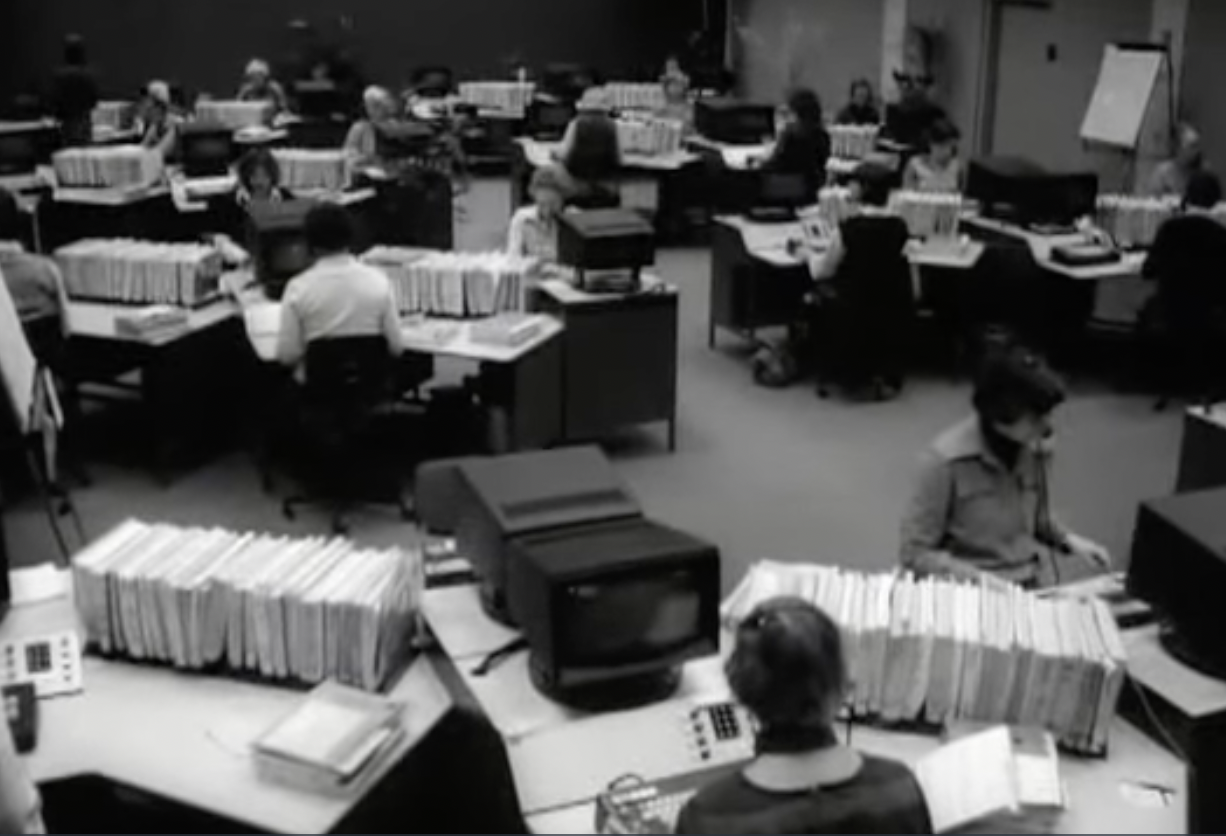
 The rise of the internet and smartphones (and fewer landlines) have caused the use of number information services to decline. But despite declining volumes, number information services are still used. “A consumer calls one of the number information services because he or she needs a phone number immediately and, for example, because he or she is in the car. Another part of the users consists of elderly people,” explains Sandra Ursem out. Until recently, she was in charge of Contact4You. Its predecessor, 1850 Contact Center, has been in business for twenty years and, in addition to operating the number information services, has also operated for a while as a facility contact center. In December 2023, the facility activities of Contact4You, including approximately 30 employees, were taken over by ContactCare.
Find and hold
“Although we had a solid and loyal core at Contact4You, it has become increasingly difficult to find and retain employees in recent years. When we started, we had around a hundred employees in the line, but that has gradually decreased; in the last year we had 30 to 40 agents on board. Although we did a lot to retain and captivate employees, they increasingly left because of the higher salaries elsewhere and the wide choice on the labor market. And getting the revenue model right has only become more complicated with the rising wage costs and the generally binding collective labor agreement.” Not all of the cost increases can be passed on to your customer one-on-one, Ursem believes.
Regulation
The strict regulation also makes it challenging to operate the number information services. “There are laws and regulations that apply, including restrictions that we have to adhere to,” Ursem explains. “That is why there is actually someone on the other end of the line with the number information services, who looks up the number. A computer speaks the number and connects the caller if necessary.”
There are also rules for the origin of the number information used: the legislator has established the association for this purpose COIN designated, where the telecom companies supply their data.
What makes the operation extra complicated is that demand can be quite erratic, says Ursem. “Despite the availability of historical data, it remains difficult to plan. We use a service level of 70 percent within 20 seconds, after which the customer must receive the requested telephone number within a minute.” This combination makes it a challenge for WFM'ers to guarantee good accessibility.
Offshore outsourcing as an option
The characteristics of the number information services led to ContactCare not taking over this part of Contact4You's activities. But another deal was made. Jasper Meerding, CEO of ContactCare, proposed to Ursem to outsource the number information services to ContactCare in Suriname.
Ursem had already read and heard a few things about offshoring customer contact – for example to Suriname or South Africa. “Of course it is an advantage if the same language is spoken. But I had quite a few doubts and questions about things like cultural differences, the time difference and language proficiency. Is the technology in order? Do our customers accept the Surinamese accent? Conducting customer satisfaction research is not really feasible for us: we have our customers on the phone for a minute at most and keeping them on the phone for longer is not an option.”
First impressions
Taking the pulse yourself was the best way to get more clarity. “I attended the official opening of the ContactCare building in Paramaribo, Meerding had only been working there for a few months at the time. My first impression was extremely positive. It was a warm welcome. The ContactCare office is of course special: a renovated monumental building, something completely different from a 'real office building' that the larger parties have opted for. That may be a bit more efficient, but a monumental building does provide more atmosphere.” Ursem was also impressed by the people: hospitable and friendly, motivated and very involved.
Start collaboration
The first visit to Paramaribo was enough for Ursem to start a pilot in November 2023. A group of employees was trained in two days. “Because part of the request is the place of residence or establishment of a person or company, we hung a large topographic map of the Netherlands in the contact center. After about three weeks, employees were fully trained. During the start-up, we quickly started working according to the train-the-trainer principle and ContactCare immediately started planning based on our historical data.”
How We Work
The ContactCare team starts at 04.00:08.00 in the morning (XNUMX:XNUMX in the morning Dutch time). “'Starting early' also means that you have to deal with possible sick leave in a different way. In Suriname you can't call an extra colleague out of his or her sleep,” Ursem explains. “The number information service therefore has to be scheduled in a different way: in principle a little more overcapacity and then possibly scaled down. Employees also do other projects to keep their customer contact job at ContactCare challenging – I have no further influence on that part.”
It is not a complex form of customer contact; the conversations are short. Based on the volume and the AHT, a small team is sufficient – think of 20 employees, of which a maximum of four to six are in the line. But precisely because of this, planning and staffing are very important. Increasing awareness of accessibility was one of the buttons that was turned during the start-up period – not everyone getting coffee at the same time and taking into account the distribution of breaks.
"I used to be the director of the customer contact center and worked with my own team with an operations manager, team leaders, a WFM'er and a functional manager, now they are all in Suriname. I follow the operation of ContactCare remotely in real time and work together with their WFM'er to optimize the planning. In the weekly business review we discuss, among other things, the quality, the AHT and the agreed SLAs. We also look together at absenteeism and the need for extra coaching.”
The results
Of course, the decision to outsource also has to do with costs, but the threat to continuity due to the tight labour market in the Netherlands was the deciding factor.
“The most important result is that continuity for the number information service is now guaranteed,” says Ursem. “In addition, the Surinamese employees are loyal and very customer-friendly. They are extremely involved and take their work very seriously. They will not quickly say that a telephone number cannot be found. If they notice that a caller is a bit older, they take some extra time. The availability is good, as is the language proficiency.”
'Size does matter'
After working together for a year, we know what we have in each other, says Ursem. “The quality and the cooperation are good.”
And size does matter, is her belief: “For our organization it is important that we have a collaboration with a somewhat smaller player. We now have very short lines. I can even ask directly to scale up or down and I don't think that is a realistic expectation with a large player.”
Of course, you can always switch to another service provider – there is also fierce competition among the facility contact centers in Suriname – “but then you lose everything you have built up. You have to make another supplier analysis and the question is whether that is worth it. You do not know whether you will get the same quality. Moreover, ContactCare is a B-Corp, I also value that,” Ursem concludes.
Tips
Anyone considering offshore should test their own expectations (or prejudices) in practice. Seriously considering offshore to Suriname only makes sense if you are open to cultural differences, says Ursem. She also advises opting for short lines, weekly coordination and clear work instructions. Ursem herself is on the ball, for example by immediately giving signals if she believes that adjustments need to be made to the planning. That is something you should be able to agree on with your partner. Building mutual trust takes time, but it helps if you, as the client, come over more often in the beginning and properly involve the offshore team in your desired way of working.
How does number information work? Anyone calling 1888 or 1850 will be connected to an agent who will ask which number the caller is looking for. If the number is found, the computer will read out the telephone number. The caller can also be transferred. The costs are €1,00/minute with a maximum of €10 per call, plus your usual call costs. Providers of an 18xy number may provide information about telephone numbers of subscribers and provide public, general information. They may also transfer callers if they give explicit permission to do so, but not to 0800 numbers. The ACM, which provides the 18xy numbers, keeps supervision on the providers of number information services.
(Ziptone/Erik Bouwer)


Also interesting
-

Gits started his career in customer contact in 2015 at Telenamic. He worked there in various roles, after which he switched to…
-

ContactCare's customer contact centers in Suriname and the Netherlands have been recertified for ISO 27001 and ISO 9001.
-

Webbink has been tasked with contributing to the expansion of ContactCare's activities in both Amersfoort and Paramaribo.