
 A common phenomenon in contact centers: managers see a problem and look for a tool to address it. They easily skip three steps: involving employees, building buy-in, or creating clear ROI calculations beforehand. Adoption is a multi-headed monster, but it's easily tamed.
Sometimes the desired functionality is already present in another solution, such as the CCaaS platform, or it will become available soon. Or managers choose to implement ("enable") a specific feature to improve a process, but it doesn't work as intended. For example, because employees don't use the technology. Consider the introduction of "super-convenient codes" for logging calls, where within a year the number of codes has exceeded the number of calls. Or consider the launch of a self-scheduling app, only to have traffic managers repeatedly override its use.
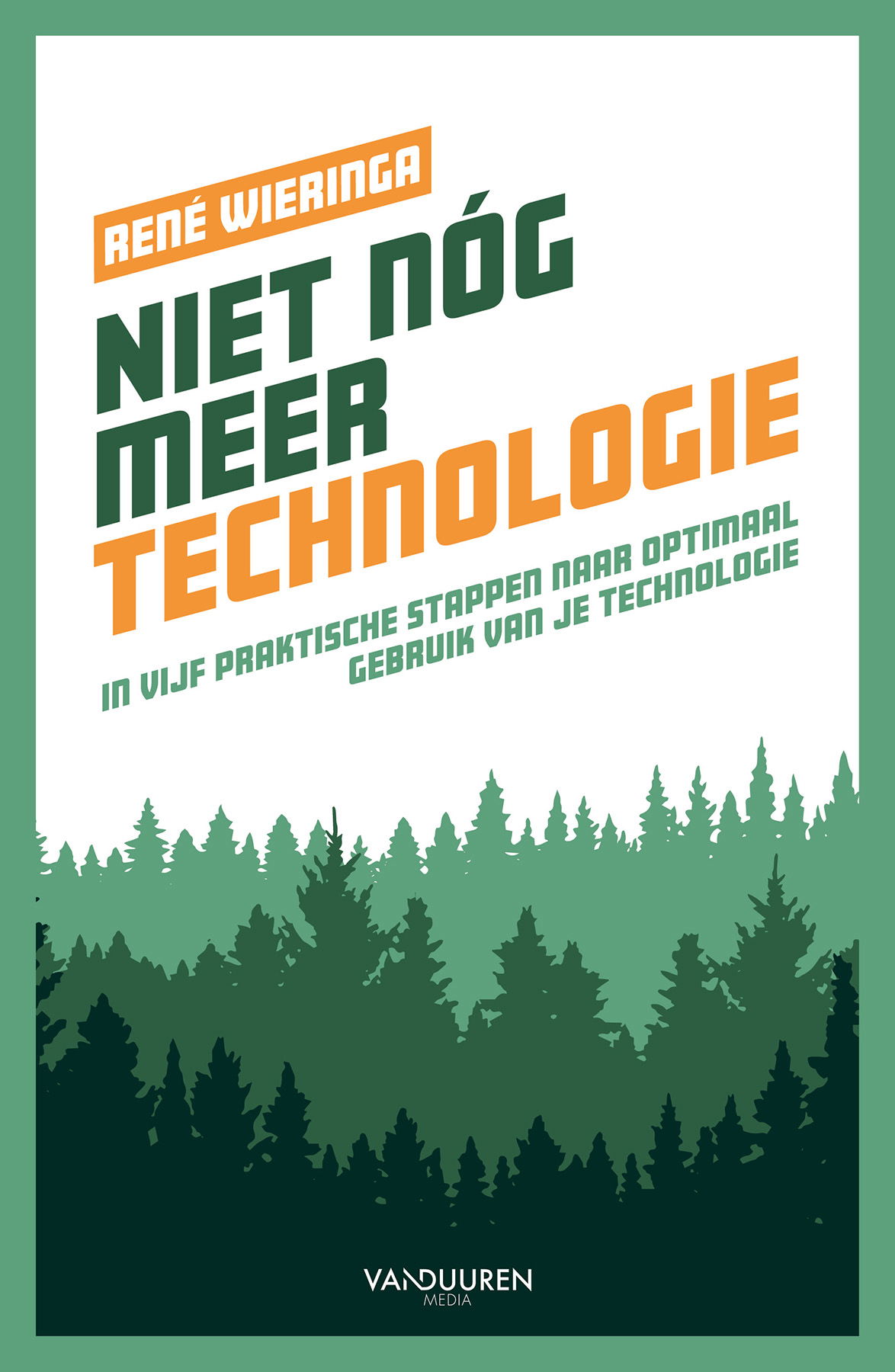
Companies where these kinds of examples are at play will recognize the reflex of the workplace: no more technology! Under that title—literally: "No More Technology"—a book has been published that, for once, doesn't tempt you to implement the very latest technology. On the contrary, the author René Wieringa aims to help users and managers extract more value from existing technology. But the book is also relevant for new implementation projects.
Final item: adoption
Why do organizations acquire new technology? And why is it used? How does it add value? How do you avoid buying what you already have? Do your users understand how it works and how to use it? Digital adoption—or rather, the way you demonstrate how well a technology is being used by an individual, group, or organization—is a crucial step in implementation processes.
Adoption is often a cost item, which is not only unfortunate but can also cause significant delays or even destroy capital. In the worst-case scenario, employees leave because they become stressed by ill-considered, unworkable solutions.
Devil's Triangle: Time, Quality and Costs
Wieringa first deconstructs several concepts, including "digital transformation," "adoption," and "implementation." The latter addresses the "devil's triangle" of time, quality, and cost: optimizing one often comes at the expense of the other two.
(New) systems also always serve multiple purposes: better quality, greater efficiency, a better user experience. Acceptance in the workplace—whether people will actually use them properly, so that the other goals are achieved—is a particularly under-researched success factor. Successful use is also being explored: consider success conditions such as training, involvement in developments, visible benefits, and so on. In this respect, implementing new technology is similar to undergoing training and education: one of the success factors there is whether the working environment also enables and encourages the application of new knowledge and skills.
Wieringa also shows this: new technology or new method, the difference is not that big.
Giving concrete substance to digital leadership
The book also addresses the phases and maturity levels of users and how leaders can take these into account. It also contains refreshing passages on (digital) leadership. The best techie as a leader? Success is certainly not guaranteed, even though management often relies on "proven performance." Architecture is also a prerequisite for technology adoption, and this is well-explained in concise yet clear language.
The most important chapter is Part 3, which covers human influence. Wieringa provides engaging models and practical examples. For example: working with key users in relation to digital leadership and working with different generations, who – generally – approach new technology in different ways. Generation Alpha (born after 2013) is also discussed.
Inclusion and support, yes. But sabotage?
And Wieringa addresses inclusion and diversity, but also internal politics and resistance. "Office Politics" is worth a book in itself; unfortunately, Wieringa doesn't address the extremes of these, such as resistance, sabotage, frustration, and obstruction, while polarizing forces are increasingly found in the workplace.
Another success factor is measuring adoption: ensuring you have insight into people's use, their experiences, but also the financial aspects of the technology. What are the costs and benefits? This section could be extremely valuable, as many managers lack financial savvy and find it difficult to calculate ROI. Wieringa also addresses the XLA, the eXperience Level Agreement, a vehicle that allows you to use user experience as a KPI. Highly relevant, because it's precisely the user who is responsible for making your new technology a successful investment. The final chapter provides tools for systematic evaluation and adjustment. Also relevant, because managers often don't know how to evaluate and therefore neglect it. Another typical final item. Besides, what we've implemented works, right? And if it doesn't, there's always another project waiting. Because you can never have too much technology.
For customer contact managers and system integrators
Is this book suitable for customer contact managers? Absolutely. Although the author is a seasoned techie, the book is actually very practical in content. You can also hire Wieringa for training courses and workshops—perhaps a fun department outing for employees who see their manager(s) making a mess of their technology programs. This also makes this book suitable for system integrators and implementation partners who work with customer contact managers (for example). One point of criticism: why do authors always skip the index? Fortunately, in this case, that's compensated for by a good glossary at the back—adoption starts with a good understanding: what are we actually talking about, without descending into management jargon? Furthermore, the book contains references to the accompanying online toolbox.
(Ziptone/Erik Bouwer)
Not more technology – In five practical steps to optimal use of your technology
By René Wieringa. 186 pages, Published by Van Duuren Media in 2025


Also interesting
-

Oliver Talens wrote a book about collaborating with AI. Or as he puts it: “About making choices. About daring to say: here…”
-

"AI Will Replace You" reads largely like an AI cookbook or an AI textbook. The most important part is about scaling.
-

The new book by Stephan van Slooten and Rien Brus is 'for organizations that want to become a true 9+ customer company'.…