
More information, more complexity, more questions and more need for advice? Yes, all. Pension provider APG is anticipating a considerable growth in customer contact as a result of the upcoming system change. APG's plan of attack: reintroducing a second line, engaging external service providers, introducing new skills for KCC employees. Part 2 in a series about the impact of the new pension system on KCCs.
Individual employees will soon have insight into their own individual pension pot - no later than 1 January 2028, when the new pension system is introduced. The investment value thereof may fluctuate due to economic and political developments. The picture can be rosier one time than the other time. How does APG estimate the impact of this on customer contact?
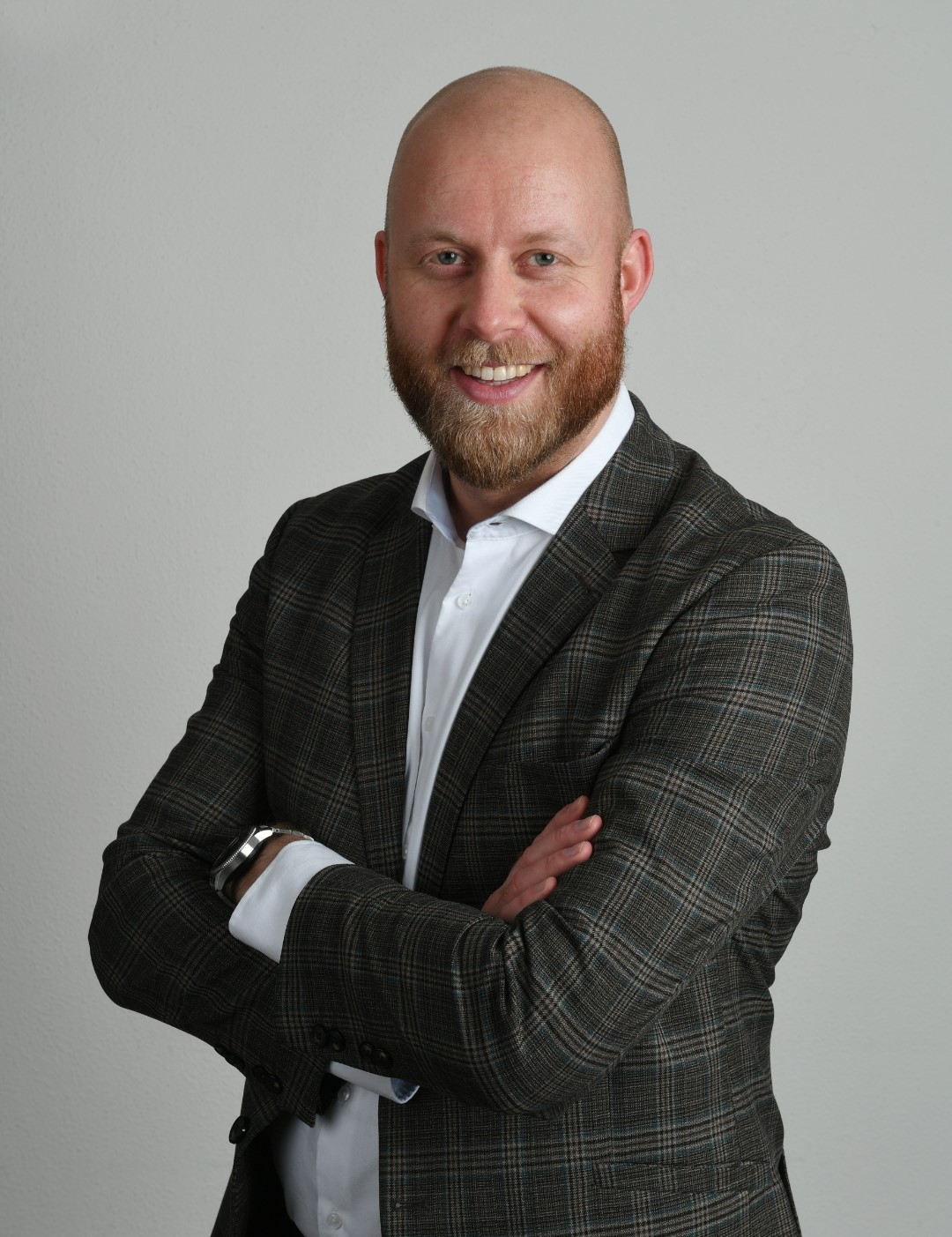
Stefan Ochse, APG
Stefan Ochse, head of GDC (Generic Participant Contact) at APG: “Preliminary: APG will allow the various pension funds we serve to transition to the new system in phases. It has been established that we want the Fund for Social Work Facilities and our own APG Pension Fund to transfer as of 1 January 2025. The other funds, such as bpfBOUW, the construction fund, and the ABP, will be transferred later. This enables APG to learn from transitions, so that the experience gained – also with customer contact – can be used for later.”
A new amount evokes reactions
“At the moment we are already communicating about the new system,” explains Ochse. “But it does not yet lead to a lot of customer questions. Our plan is to start with very concrete communication 9 months before the moment a pension fund switches to a new system. For the first fund, that means starting from the end of Q1 2024. That communication is becoming increasingly concrete and after about six months it is expected that we would be able to communicate information about amounts. On 1 January 2025, we will then communicate the new amount in the jar. This will be done through a new mining environment. You can imagine that this will generate reactions.”
Enable third parties
“We think we can handle the first response on January 1, 2025 ourselves, but we will have to scale up with external contact centers to handle the peak response during the transition of the larger funds. We have already discussed this at an early stage. That will probably also be the largest peak we have experienced in the history of APG's customer contact center. Estimates vary within APG – from a quarter more volume to ten times the usual volume – but we are taking into account a quarter more volume. On January 2, 2025, we will have indications whether that estimate is realistic.”
Jill Kleuters
What is the core of the changes for pension clients? Jill Kleuters is project manager inside Retirement from Soon, the program within APG aimed at the transition to the new pension system. She explains the core of the new pension system. “The existing pension schemes are benefit schemes: they lead to a commitment about the amount of the pension benefit. In the new system, you mainly make agreements about the level of the premium. The outcome will be announced later. But the current scheme also contains a certain degree of uncertainty: in addition to indexation, i.e. adjustment to price and wage increases, pension benefits can also be cut if the economy does not do as well. In the new system, participants build up a pot. Participants gain insight into this.”
Kleuters puts the fact that participants cannot now, but will soon be able to turn all kinds of knobs to adjust the level of the pension. “Most funds opt for a so-called more solid contribution scheme. The investment risk that a fund may run is determined at a collective level. On the one hand, the benefits move along with the economy and on the other hand, we strive for a certain degree of stability.” As now, participants will soon be able to decide for themselves whether they want to retire a little earlier and how they want to have the amount paid out. A difference is that a participant will soon see an individual game. And based on that, you have to consider whether or not it is sufficient for later. They then have the option of saving extra, via the employer (if the fund offers this) or on their own initiative in the third pillar. In the future, there may be an option to pay a small part of the pension benefit at once, says Kleuters.
A new role for the KCC employee
Due to the system change, APG also started to think about the future role of the organization. Ochse: “Of course, we are primarily a pension administrator, that is not going to change just like that. However, the statutory duty of care for the pension sector, among others, has been tightened as of 1 July this year. This also includes good selection guidance. Information must be very clear and a participant must know very well what he or she is saying yes or no to. It will become more and more common and will become more apparent that developments in the world have an impact on pensions. There will therefore also be more moments when we will move more in the direction of advice in customer contact. The scope of that advice may vary, depending on the pension fund's care ambitions, and they will make choices in the near future. So that is something that has yet to be determined.”
More and more complex questions
APG expects more questions and more complexity in the questions. This concerns, for example, an explanation of how a pension calculation has been made; an explanation of what you can do if a pension scheme no longer meets the expectations of you as a participant, and an explanation of the interaction between developments in the world and investment results in relation to asset management and your pension benefit. Ochse: “Those are three domains that our current KCC is hardly involved with at the moment. So that will soon result in a different way of working for the KCC.”
First and second line
Another explicit choice that APG is making with a view to the coming years is to split the KCC into a first and second line. Ochse emphasizes: “We have a nicely mixed group at our KCC: from experienced employees to young talent who are still studying and who are also interested in our career opportunities. With this group we can handle the current customer contact very well. But if customer contact becomes more extensive and complex, we have to work with a first and a second line. Most of it – say about 80% – can be done by the first line.” Yes, Ochse admits, that split also makes it a bit easier to outsource part of the customer contact later on.
Also read: Performance boards at APG emphasize KCC's role as a nerve center
Keeping the cost price low contributes to a higher pension
 “For complex issues, advisory issues, asset management issues, we rely on experts who are prepared to add all kinds of extra and new systems to their work. For example, it concerns complex tooling with which employees can explain why one achieves return A and the other achieves return B. It is not self-evident that all employees embrace that complexity.”
Renovating while the store remains open: that requires more capacity and therefore more FTE, says Ochse. Keeping the cost price per participant as low as possible is essential for all pension providers – the participant also benefits from this.
Ochse: “That is why we have to keep a close eye on innovations and technical developments in the field of customer contact. We have already done quite a lot and we have a team here that supports us. But also in customer contact we will see what we can gain with the use of automation, chatbots and voicebot.” The administration costs of a fund (and therefore indirectly also APG's management costs) will also be emphatically visible to the participant, which in turn can raise questions for the KCC.
Near real time
It is clear that a lot will change. At APG, however, it is still too early to use concrete examples to show what this means for the provision of information to both customers and employees and the self-service facilities. That also applies to Ochse for the nature of the information provision, but: “The importance of direction near real time to go is great as far as I'm concerned.”
Or as Kleuters puts it: “Wealth management and what we communicate with participants will become closer to each other.”
Despite the search for new automation possibilities, Ochse is firmly convinced that people will continue to work at APG's KCC. “People are always going to be involved to be there for other people. We want to be there – with empathy, with empathy and also with solid substantive answers and advice – for people who have worked hard all their lives and who now want to enjoy their retirement.”
About APG – APG works as a pension administrator for several small and large pension funds: ABP, BPF Bouw, SPW, Pensioenfonds Architectenbureaus, SMPS, PWRI, BPF Schoonmaak and APG's own pension fund. APG manages more than 500 billion euros in invested capital. Where the pension fund invests the premiums collected, the pension administrator takes care of the administration of the pension rights, the collection of pension premiums and the payment of benefits. Communication and advice are also part of the tasks of the contractor. About 3000 people work at APG.
(Ziptone/Erik Bouwer)


Also interesting
-

The new 'pension system': less certainties, more fluctuations, more information and knobs to turn. What is the impact on…
-
Including this new round of layoffs, a total of about a third of the jobs will be lost: 240 people will be fired.
-

Jones has more than 30 years of tech experience, including at Rackspace Technology, DXC Technology, Dell, HP and EDS.