
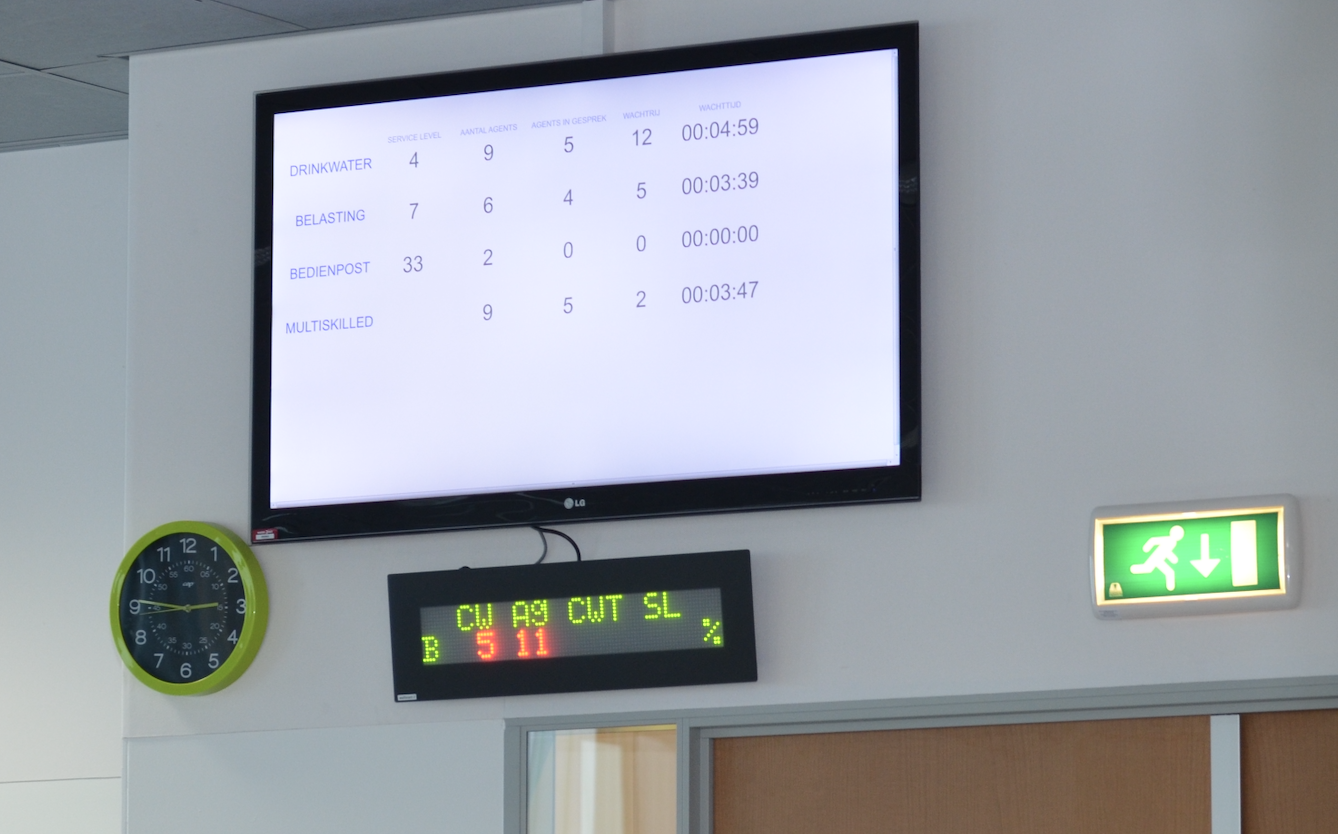
 Is striving for contact reduction a bad thing? Few people in the world contact customer service for fun. Most of the time, they do so because they have a problem they can’t solve themselves. While these contacts are inherently valuable – because they provide information about how the organization can improve its offering – redundant customer contact is a burden for both the customer and the organization.
Text: Cynthia Mak
Customers generally prefer their customer journey to include as few trips to customer service as possible. In addition, handling customer contact involves costs that do not directly contribute to increased turnover. Therefore, an organization may (have to) choose to reduce contact volumes: contact reduction.
What is contact reduction?
Contact reduction literally means reducing the number of customer contacts. It includes all efforts that lead to fewer contacts being handled in the customer contact center. For example, by preventing questions or having them handled automatically.
Tip: tackle the root cause – There are several ways to reduce incoming calls. For example, by not answering the phone when it rings or by closing a channel completely. However, this does not eliminate the underlying cause of the contacts. For a sustainable, customer-friendly approach to call reduction, choose an approach that eliminates the source of unnecessary customer contact.
How do you handle it?
Contact reduction may seem like a big project, but it is not. Ziptone helps you in four clear steps to successful implementation of contact reduction.
1. Know your customer vision
Contact reduction is not a goal in itself, but a means to an end. The way in which you fill in the route to that goal depends on the customer vision. That is a long-term plan that states how an organization deals with customers and works customer-oriented.
An essential part of the customer vision is “know your customer”. It is not only important to know Who the customer is, but also what the customer is concerned with, what solutions he or she is looking for and what the service preferences are. Based on the customer vision, you determine the customer contact vision: that is how you want to serve the customer. Do you opt for human interaction as much as possible? Or are solutions sought in the corner of technological developments? Effective contact reduction takes the customer experience into account: does contact reduction contribute to solving problems faster? Does it ensure higher customer satisfaction? Or does it lead to frustration because customers have to search longer for an answer, for example?
Someone who shops at a luxury, high-end clothing boutique will be treated differently than a customer at a second-hand clothing store. Both types of customers will also have different needs and expectations.
Front and back
Contact reduction can take place in two places. By improving the product, the service or the information provision at the front end, it can be prevented that customers (re)contact. Ownership for these initiatives lies with Marketing, Communication, Product Development, Purchasing, Logistics, Fulfilment, Finance and other departments involved. Improving the customer contact department itself is also part of this.
Back-end initiatives ensure that questions that could not have been prevented do not have to end up with an employee. This often requires cooperation between customer service and IT.
Remove contact reasons
Although handling customer contact is a task for customer service, preventing contact is a joint effort. Here too, management will have to take a position on this via the customer vision and comply with it. The composition of colleagues involved in reducing contact is also essential in this. Which department is facilitating and which are supporting or executive? It is strongly recommended to have a RACI matrix to be filled in as a guideline. This is a matrix in which the roles and responsibilities of persons involved in a project are mapped out. A distinction is made here between who is ultimately responsible (A) for the project, who takes responsibility for the implementation (R), which persons are consulted (C) and which stakeholders should be informed (I).
Tip: Is there no customer vision yet? Then start here! It forms the basis of all strategic decisions and will have to be supported and adhered to at all levels within the organization.
2. Get the basics in order
In order to reduce contacts, you first need to have a good idea of what the contact is about. What are the numbers at what times; what are the topics, what causes which contacts? The easiest way to tackle this is to start with process mapping: drawing out processes. Relevant processes include the customer journey and customer service processes. By mapping these step by step, it can quickly become clear which steps result in (unnecessarily) a lot of contact. Sometimes this is clear at a glance, because a process is complex to draw out or takes up a lot of actions. But enriching the process steps with data (see step 3) also helps to make this clear.
In addition, it is advisable that the setup of the CRM system corresponds to the customer contact processes. A good setup makes it possible to collect data around the process steps that customer contact employees perform to help a customer. You may discover during the process mapping that adjustments need to be made in the CRM system. Do this, because you ultimately want to be able to measure the effect of the contact reduction properly.
Mapping contact reasons
What cannot be missing in the CRM are possibilities to register contact reasons. This is a categorization of the reasons why customers contact. Usually this consists of a number of main and subcategories. By collecting and analyzing data per contact reason, targeted process improvements can be implemented, which lead to contact reduction. A good CRM system has extensive reporting options, which help with these analyses. The data analytics team can often also help with this. Do you not (yet) have a CRM system or data analytics team? Then you can always keep track manually.
Contact reasons can be divided into foreseen and unforeseen events.
Foreseeable events can reasonably predict. Think of the number of sales in a certain period, delays around the holidays, steps in the customer journey or bottlenecks in the standard processes.
Unforeseen events occur unexpectedly. These can be problems in the delivery process, a software bug, a backlog in ticket processing due to staff shortages, inventory problems or the sudden bankruptcy of a supplier.
A fourth element from the basis that must be in order is a feedback loop report. This reports weekly on how many contacts have been registered per contact reason. Based on these reports, actions are also set out at the responsible departments, to investigate how these contacts can be reduced. Customer Service can facilitate this, but can never be held ultimately responsible.
In an e-commerce environment, it is common to measure contact reasons in the Delivery category. Subcategories are for example: wrongly delivered, not delivered, delivered too late. Sub-subcategories of not delivered include: lost package, package wrongly addressed, package not processed, and so on.
Anyone who works with multiple delivery services will also want to know how often complaints are reported per subcategory per delivery service.
3. Data, data and more data
Measuring is knowing, and that is especially true for contact reduction. You not only want to know how much your volume decreases, but also what effect that has on other KPIs.
The first step is to be clear about which KPIs you are measuring and how they have developed historically. Identify the impact of anticipated events in advance. This will prevent you from accidentally confusing effects and trends. It is best if you can measure over a period of 2 years. In reality, there is rarely enough clean data available to be able to look back that far.
Air conditioner fitters know that they are busy in the summer and have little work in the winter. A decrease in contacts in the fall can therefore be predicted. If you apply contact reduction in that period and measure an effect, compare it with the expected trend.
How much contact do you want to have?
For a large part of the volume of incoming contacts, there is always a relationship with certain processes or developments. For example, with the number of orders or customers. Those who have a growing customer base will not mind that there are also more contacts, after all, there is growth! But if the contacts increase with a constant number of customers, then something is wrong. The relative nature of contact volumes can be expressed well in a contact ratio.
Contact ratio – An estate agency will mainly sell one house at a time per client. It is then obvious to express the contact ratio in contacts per customer.
An online clothing store would like to see each customer place multiple orders. A logical definition of the contact ratio is contacts per order.
Contact ratios can be calculated at many levels: by contact reason (customer question), product, department, supplier or process (step). You can also calculate the relationship with other KPIs. You may find a correlation between high contact ratios and low customer satisfaction scores. Once you have mapped or recorded the contact ratios for the first time, you can determine what the goal of the reduction is.
What is your vision on valuable customer contact?
Always relate this to the customer vision. Does the organization only want to reduce unnecessary contact, or prevent contacts altogether? It is also good to map the value of contacts. At one extreme are the contact reasons that help the organization to improve and grow (such as complaints about the quality of a product). At the other extreme are the contacts without value (think of spam messages, for example). Most contacts will be on the spectrum between these two extremes. There are various ways to categorize contact moments based on their value. For example, look at the relationship between contacts and customer satisfaction, repeat traffic, customer retention or additional turnover. This will help to decide which contacts are useful to reduce.
As mentioned before, the feedback loop report is an excellent tool to monitor the development of contact ratios. What needs to be well recorded is which adjustments have had a positive or negative impact on the contact reduction. Therefore, choose a method of progress monitoring that fits well with the team or the organization. Live dashboards can also be very helpful, if that visibility contributes better to awareness within the organization.
4. Reduce it!
The customer vision is clear, the foundation is in order, and there is sufficient data to analyze the impact. Time to actually start reducing contacts!
- Start small. Choose one low volume but high contact reason. This way you can safely start experimenting without the risk of making rookie mistakes on a high volume contact reason.
- Determine the problem: why is the contact ratio so high? Use the process and customer journey maps that have been created.
- Involve customer contact employees in the search for solutions. They know well what is going on and what is needed to improve something. Also see if improvements have already been suggested based on customer feedback.
You may find that improving the FAQ page or adjusting standard communication can prevent a lot of contacts. Also, a larger implementation may be needed, for example AI, improved training or new tooling.
- First, run your intervention as a pilot. Test over a short period (e.g. a week or a month) what effect you see on all KPIs of this solution.
- If you like what you see, roll out your pilot on a larger scale.
- Keep monitoring whether the desired effect continues. Are you still seeing good results after a month? Then celebrate the success not only with the team involved, but also with the entire organization.
- Find the right balance between moving quickly and experimenting versus running too many experiments at once. To properly measure the impact of a change, stability is needed. Otherwise it is unclear what effect is being measured.
- Also look critically at the offered contact channels and opening hours. A wide range of channels also results in more contacts. Are the offered channels and opening hours all necessary, valuable, and in line with the customer vision?
Contact reduction is an ongoing process, but starting it seems like a big project. Most of the work is in laying the foundation. A clear customer vision, well-documented processes and clarity in the division of roles between the various departments involved ensure that contact reduction is a joint effort. Keep the organization involved by sharing insights and results. Make sure that contact reduction is a win-win: better for the customer, better for the organization and better for the employees.
DOS
- Base contact reduction on a clear customer vision
- Map customer contact data in detail
- Start small and measure the impact
- Involve customer contact employees in the solutions
- Keep the customer experience central
Don'ts
- Don't just focus on cost savings
- Don't ignore the human factor
- Do not make any adjustments without first measuring
- Don't leave contact reduction to customer service alone
- Don't keep channels that don't add value
(Ziptone/Cynthia Mak)


Also interesting
-

Government organizations must update their statements by 1 October 2026 according to the new, expanded model.
-

In Gouda, a pilot has been launched with a chatbot that provides access to the social map for the municipality and…
-

Speech-to-speech works faster than the 'traditional' voicebot model. Robin van Leyden from Steam-connect provides an explanation.