
 Eva Stroo did an internship in Suriname and fell in love with the country. Now she runs the 'flexible shell' for the helpline of Stichting 113 Suicide Prevention in the Netherlands with Mind Matters. In addition to providing assistance to residents of the Netherlands, she and her team are also committed to tackling the major suicide problem in Suriname. Ziptone visited her in Paramaribo.
Like every master student had to Eva Stroo in 2008 to arrange an internship. As part of her forensic psychology training at the UvA, she chose the juvenile detention center in Suriname. “That was a special experience, but I also saw that a lot could be different and better. At that time, however, I had no idea what possible solutions could be. After that internship, I started working as a psychologist in prisons. I also went back and forth to Suriname very often. My network here kept growing and after a while I saw opportunities to build a life here. I quit everything in the Netherlands, emigrated in 2015 and started working here with various jobs at the same time.”
Satellite location of 113
In 2016, Suriname entered an economic crisis: the economy shrank while Desi Bouterse increased government spending enormously. Stroo lost part of her income, but was fortunately able to find work at the university as a lecturer. There she came into contact with Surinamese psychologist colleagues who worked for the Dutch suicide prevention line 113. This collaboration between the Netherlands and Suriname was an idea of Jan Mokkenstorm, the founder of 113, and could help to improve the accessibility of 113 in the evening and at night. At the end of 2018, Stroo started working as a care provider for 113. When there was a need to expand the staff, she was asked if she could help to expand the team through her network at the Surinamese university. This led to a plan to set up a serious satellite branch of the Dutch 113 in Paramaribo.
Peak traffic
A year later, in November 2021, Mind Matters Foundation Suriname, the foundation that houses the activities of 113 Suriname, was founded. “The collaboration with 113 was initially set up as a trial for a period of one and a half years. We started with three employees per day,” Stroo explains. “After one and a half years, nine employees were here every day, seven days a week, because it was getting busier. In the Netherlands, it was difficult to find new employees, especially because of the night shifts. The first shift starts here at 11.30:113 local time, which is the beginning of the evening in the Netherlands. The peak traffic for 03.00 in the Netherlands lasts until about XNUMX:XNUMX at night.”
Recently, the service for the external reception of contacts had to be put out to tender by 113. To her great relief - because a lot had been invested, but no experience with tendering processes - Mind Matters won that tender. "That gave a lot of peace of mind, because in the meantime we had grown to 39 employees, 15 of whom are on the line every day for chats and phone calls. I could never have imagined that at the start in 2021."
Above-average employment conditions

Due to her role as a lecturer at the Anton de Kom University, Stroo still has her pick of new team members. These are mainly graduates with a bachelor's degree in fields such as psychology, orthopedagogics, social work, etc. The team members work three days a week at Mind Matters as self-employed persons.
Stroo does not want to make any statements about the exact height of the hourly rate, but the employees are paid very well by Surinamese standards. This is not only due to the nature of the work, but also to the working hours, the employment relationship (self-employed, including secondary conditions and training budget). And in addition, the three-day working week is intended to help employees to build their own practice and also to contribute to the activities of the foundation - more about this later.
Motivational Interviewing Methodology
The Mind Matters team members are trained according to the methodology of 113 in the Netherlands and thus also adopt the aid methodology. Conversations are conducted according to a model of Motivational Interviewing with four phases: seeking connection with the caller or chatter, focusing on a goal, then working towards eliciting the so-called 'change language' that directs the mindset towards the motivation of the person himself, and finally making plans for the behavioral change - In the evening, for example, this is how someone can get through the night safely.
The training also focuses extensively on the Dutch language and culture. After the training, employees are intensively supervised for fifteen working days. There is a “tight coaching system”, according to Stroo, there are always two floor managers present. After about three months, someone is trained and employees can handle about fifteen conversations a day – these can be calls and chats. This mix is controlled by software, something that still has to be adjusted in the new platform at the time of this interview. sprinkler which was put into use by 113 last summer.
Read more about the contact center of the 113 Suicide Prevention Foundation in the Netherlands
Read more about other unusual contact centers
Mentally fit
“I myself worked in the line of 113 for almost three years. I think that is partly my strength here, I know all the processes and activities at every level,” says Stroo. “Also estimating when there is an exceptionally difficult conversation. It is essential that we, among other things through the day opening, keep in touch with how the team members are doing. Is every employee mentally fit to handle the day? Furthermore, we have created as much of a homely atmosphere as possible here.”
“We do no other work here than talking to people who want to die for 8 hours. Employees must feel safe here so that they dare to be vulnerable and express themselves. Even if, for example, something went wrong in a conversation with a person seeking help. You can just talk about that with your teammates and colleagues.”
Speaking up is not in your DNA
Speaking out about how you feel is definitely not ingrained in the various Surinamese cultures, Stroo explains. “The expectation is that you will be punished for that. Care providers who are active here in Suriname also encounter the problem that their clients are not used to talking about their emotions with friends, family or acquaintances. It is a small community here and there is a lot of chatter. But if there is a relationship of trust with a care provider, the conversation actually gets going very well. Sometimes it is about things that you, with a Dutch background, could say: you discuss that with one of your friends, don't you?”
Gatekeeper trainings
 Stroo also regularly goes out to Suriname, for example as a care provider after a suicide case. The team is also ready during, for example, the annual World Suicide Prevention Day on September 10 and provides gatekeeper training, aimed at key figures in society: teachers, police officers, general practitioners or nurses. They are taught how to recognize signals and tools to deal with people who struggle with suicidal thoughts.
Making a difference by knocking
Investing in awareness and prevention is the starting point and also the most effective at the moment. Because mental health care in Suriname is poor and hardly financially accessible for the average Surinamese: "There is a lack of knowledge and awareness. It is important that people learn to talk to each other. I am sometimes called in by a company when there is a suicidality. You then hear from other employees that the victim has been in a dark room for two days. Those colleagues do not feel called to start the conversation: not their business. While they could have made a difference if one of them had just knocked on the door.
“Suicide attempts are usually preceded by a lot of things. That is why we also have a very extensive website, also with all kinds of apps that can help you deal with stress, for example. We are very active on social media. With our programs in collaboration with the local Rotary Club, we reach half of the Surinamese population.”
The statistics are extremely worrying – Suriname recently ranked 5th in the world in terms of suicides per capita. According to UNICEF data, the country has an annual average of 26 suicides per 100.000 people, much higher than the global average of 16 per 100.000 people. The latest estimates: 600 suicide attempts per year (almost two per day) and 130 deaths by suicide per year, according to Numbers of Mind Matters. Stroo adds that there is a lack of data on, for example, ethnic groups that live more inland. The LGBTQ community in Suriname suffers from suicidal thoughts five times more often than the average, which is caused by stigma, discrimination, social isolation and other stress factors. Ambassador Walter Oostelbos also explicitly mentioned this problem in an interview with Ziptone. Mental health care is hardly reimbursed (up to about 10%) and quickly costs hundreds of SRDs
Living wage in the customer contact sector
The discussion about wages in contact centres also has a connection with the work of 113. Stroo finds it difficult to make statements about the salaries in the 'regular' contact centres in Suriname. What is a living wage depends on many individual factors. But she also sees limiting factors: an hourly wage of two to three euros is somewhat doable if you work 40 hours a week on a structural basis, but it does make it difficult to follow a (further) education. Not only because there is little time left, but also because with such an hourly wage there is no money left. A master's degree quickly costs 2000 US dollars, so that is usually where it stops for many students.
“At Mind Matters, we focus on continuous development. With the way we pay, we also make more expensive follow-up training accessible. In the past three years, I have seen a few employees leave here. That is not a bad thing, because they are going to do something good for society and take a mountain of experience with suicide prevention with them.”
Collaborating with the business community
The growth of Mind Matters has resulted in an aid agency, knowledge centre and NGO in the field of suicide that does more than just collaborate with 113 Netherlands, for which Mind Matters provides approximately a quarter of the required staff. But the work is far from done. As mentioned, the problems in Suriname are serious and structural. Or as Stroo says: “It is sad that Suriname is high in the global top ten in terms of suicide and that we have to finance the aid ourselves. The government and insurers are failing us – I have sat at the table with the ministers – and I have given up that fight. That is why we have now arrived at a strategic point where we are explicitly seeking cooperation with the business community. There are all kinds of plans to further expand the aid. The Mind Matters team can provide many additional services – from training to EMDR and trauma therapy.”
“People perform better when they feel good about themselves”
Employers hold the key to offering real prospects with their employment conditions, according to Stroo. A low hourly wage, (financial) stress and lack of prospects are risk factors. There are employers who organize some mental support internally, but Stroo doubts whether that is professional enough. "Colleagues see you walking in to the company psychologist, that is a huge threshold."
“My appeal to companies that are establishing themselves here? Don’t just look at the profit, but also look closely at the country and what society really needs. A ‘good hourly wage’ is not the whole story. This is a completely different society. Mental health is vulnerable and receives little attention. A company with 1500 employees in Suriname must take into account that a third of them are in the danger zone, according to Stroo. “And we all know that when people feel good about themselves, they perform much better.”
Are you thinking about suicide? Contact 24 Suicide Prevention 7/113 free and anonymously via 0800-0113 or via chat on 113.nl.


Also interesting
-
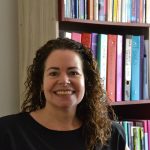
Stichting Mind Matters, the partner of the Dutch helpline 113, has contributed to the relaunch of Crisis Helpline 114 in Suriname.
-

ChatGPT still refers a striking number of people to 113 Suicide Prevention, even when there are no suicidal thoughts.
-
On stage: Shep Hyken with the truths about good customer service and Lisanne Buik on setting it on time…