
No one can get around the Great Resignation, although I prefer to call it the Great Reorientation. At first it seemed that employees left to enjoy a work-free life. But we soon discovered that was not the case. We now know that unemployment is falling, and that workers are not quitting their jobs to stop working. They just leave their current job for a better job, even if that job is really their great love.
We are dealing more with a reshuffling of the working population than with a 'resignation' or withdrawal. There are several reasons why some companies fail to keep their best people on board.
Dr. Dharius Daniels, a former Princeton University professor, expert in emotional intelligence, and author of the book "Relational Intelligence: The People Skills You Need for the Life of Purpose You Want," points out some of the reasons behind "the great resignation" that make have with leadership. Daniels identifies four leadership flaws that cause your best employees to seek refuge elsewhere. Here they are, with my comments:
 Crucial Leadership Mistake 1. Not recognizing that the employee is actually your primary customer.
I've written about this countless times. What happens on the inside of an organization is felt by customers on the outside. That means your customer service and CX efforts will have to start on the inside. About this Dr. Daniels: “Employees should be treated, cared for, guided and addressed in a manner that is consistent with what the company is committed to for its customers.”
In other words, treat employees as if they were customers. Anything that detracts from this will lead to inconsistency and detract from your efforts to provide a good customer experience. Just as customers want to trust the companies they do business with, employees want to trust the companies (and people) they work for. When employees trust their leadership, are treated fairly and are recognized for their work, they will work for the company and not just for the paycheck.
Crucial Leadership Mistake 2: Not recognizing the difference between leadership and management.
Management and leadership are not the same. “Managers need to get people to follow, but leaders make people want to follow,” says Dr. Daniels. Leadership creates the culture of the company. Managers ensure compliance with company policies, processes and other operational aspects to ensure that business continues as normal. Once leaders understand the difference between management and leadership, they are more likely to see their employees excel, especially when it comes to taking care of customers.
Crucial Leadership Mistake 3: Failing to see that finances are not the only form of valued reward.
Several studies have proven that employees want more than money. Dr. Daniels argues that employees value flexibility over money. Offering higher hourly wages in a toxic environment may have worked for older generations in the past, but not anymore, let alone Millennial employees. They want to be appreciated for what they do. That means they are looking for recognition for their work, opportunities to learn and grow, and fulfillment in their day-to-day responsibilities.
Crucial Leadership Mistake 4: Not recognizing that EQ is the multiplier of IQ.
Emotional intelligence (EQ) is the ability to communicate with and empathize with others. The intelligence quotient (IQ) is the measure of the ability to reason and solve problems. Dr. Daniels' point is that leaders need to be more empathetic and understanding of their employees. Empathetic leaders are able to bring out the best in their people, increasing their capabilities (or IQ). Daniels says, “Strengthening emotional intelligence should be seen as a core leadership competency.”
Treat your employees like customers
We can boil all this down to four simple principles:
- Treat employees like customers.
- Know the difference between being a leader and being a manager.
- Understand that effective compensation is more than money.
- Develop your EQ.
None of these principles should be difficult for leaders to understand. While its implementation may not be the ultimate answer to work-related issues, it is a good start. (Forbes/Shep Hyken)
This article was originally published on Forbes.com.


Also interesting
-
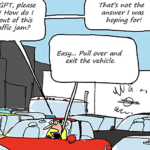
There are no stupid questions, you might say, but stupid answers certainly exist. And ChatGPT is good at it, like…
-

Shep Hyken is a customer service and CX expert, keynote speaker, and bestselling author, and publishes continuously on CX. Some of his columns…
-

If companies deploy AI for the right tasks, both customers and employees will get a better experience, Sheo Hyken hopes.