
Ask a group of customer contact specialists – from union leader to facility contact center director – what they want to bring to the table when it comes to inclusivity and diversity, and you will get a diverse list: working conditions; age discrimination; the inclusivity of AI; personal backgrounds and equal opportunities; attention to 'equity'. In short, DE&I policy is a multi-faceted issue. Fortunately, there were enough practical examples at the last Koetshuis interview: what works and what doesn't?
Discussion leader: Tom Jessen
Image: Soraya Ebrahimi
Text: Erik Bouwer
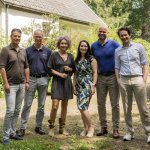
The participants (from left to right): Carlijn Timmermans, managing director CloudTeams; Tom Jessen, conversation leadership; Jennifer Razaac, independent, currently working for Change; Caroline de Oliveira Marreiros, owner of Ocaro and chairman of the HR Expert Group of the KSF; Elly Heemskerk, FNV director for contact centers, among other things; and Gert Buist, founder of ZilverWerkt.
Briefly
- In many countries and within many companies, ambitions in the areas of diversity, equality and inclusion (DE&I) have been scaled down or even abandoned.
- Among the participants in this edition of the Koetshuisgesprek, a more positive and progressive sound was heard.
- But there is still a lot of work to be done in terms of inclusivity: more 'doing what you say' and also leaders can start the real conversation with the individual sooner.
What do you mean by an inclusive and safe organization?
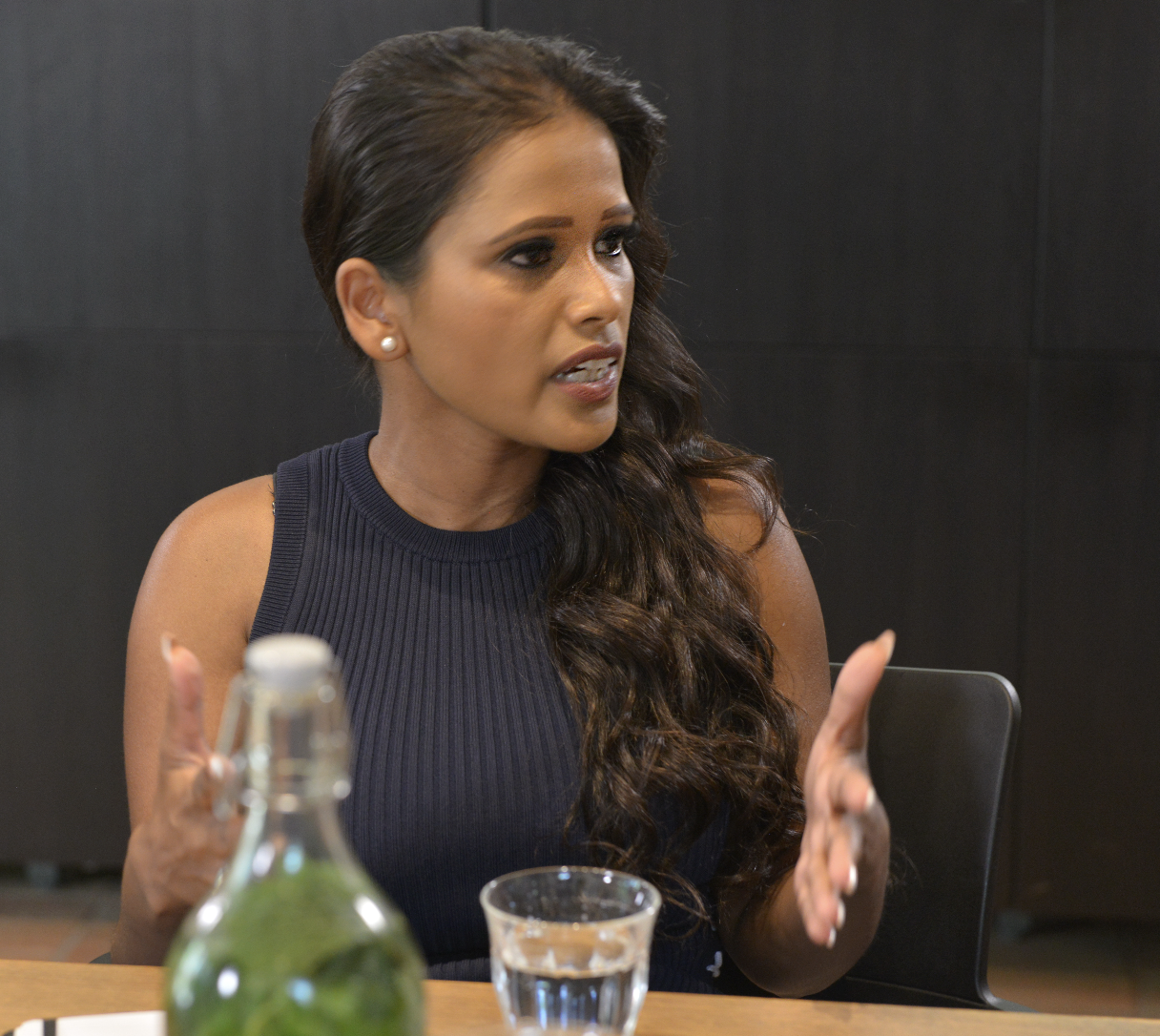 Razac The organization I work for now employs people from diverse backgrounds. I am from Guyana myself. Equal opportunities for everyone lead to better teams. At the same time, I also think that some organizations go too far – for example, when they say 'we still need X percent from a certain target group'. That can mean rejecting very good candidates. You have to keep looking for the best people for the right role. At the same time, it is my personal experience that organizations say they offer equal opportunities, but in practice they act differently. My CV states 23 years of experience in customer contact, but when I come in as a woman of 1.56 meters, I get the response that they 'lack seniority' as a client.
Timmermans Until October last year, I worked for bol for almost 9 years. DE&I is in the capillaries there. That was further strengthened when CEO Margaret Versteden took office. If you serve 14 million customers, you want to be recognizable to everyone. DE&I assumes inclusion and equal opportunities for everyone, but not everyone is the same. Paying attention to 'equity' also means that you take into account limitations or backgrounds, for example by offering more support to certain people so that they get the same opportunities.
Bust We have many unconscious prejudices that play a strong role. Think of age: older people would not be digitally skilled, which is not necessarily true. Since the AOW was introduced, life expectancy has increased by twelve years and the retirement age has increased by two years. You will have to become aware of these prejudices; we try to refute them with many stories and examples.
The Oliveira Marreiros The trick is to discuss these prejudices. We often talk about generations, but I think you should focus more on individuals. Of course there are similarities in age groups, but it often leads to stigmas. I think that if you delve more into individuals, you also benefit on the business side. A diverse team has more innovative power and creativity, research has shown this time and again. Diversity starts with your hiring policy. In customer contact, I believe the team lead has an essential role. Does he or she want 'more of the same' or is he or she prepared to invest?
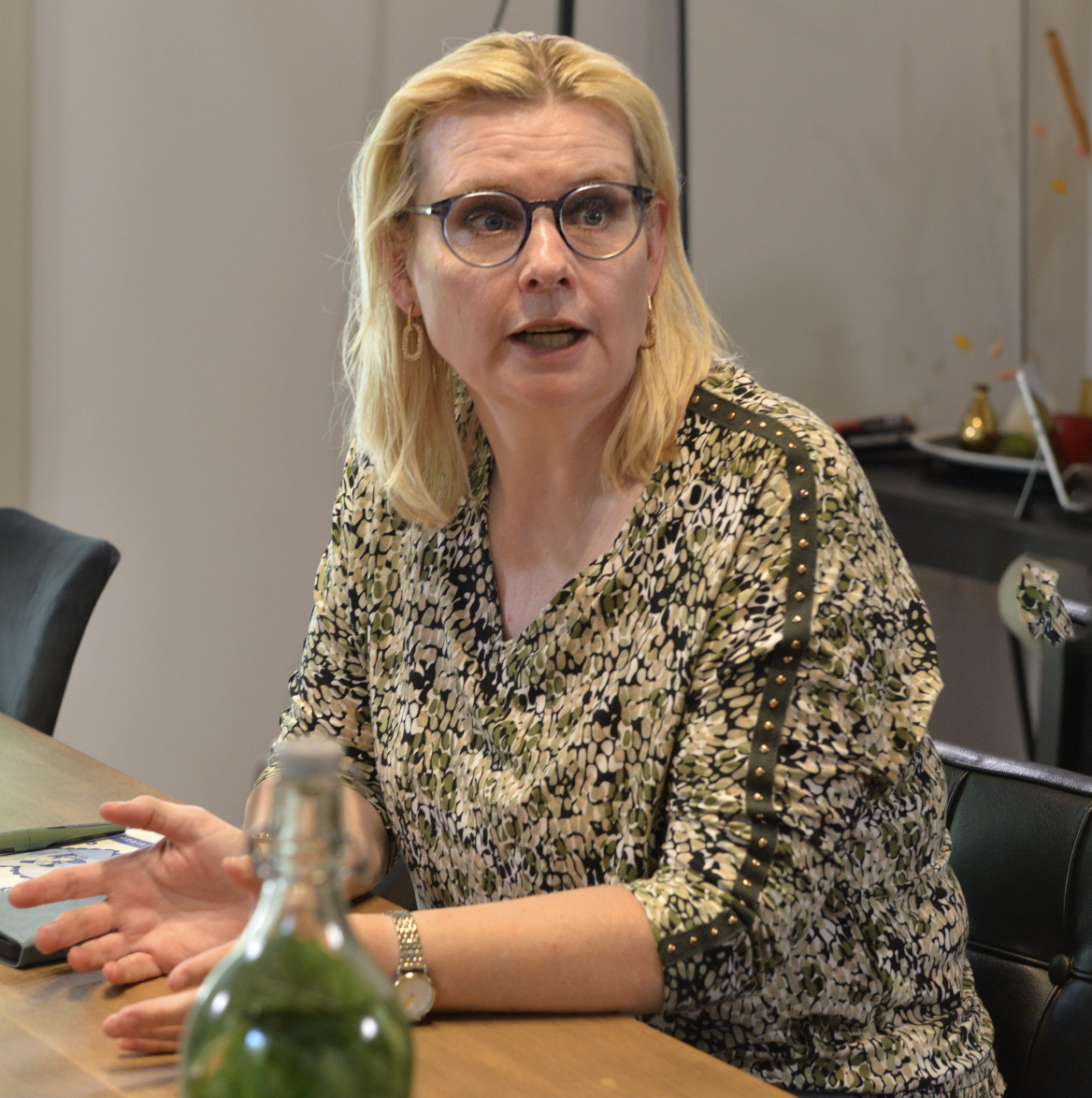 Heemskerk Diversity is inviting people to your party, inclusivity is making sure they join in on the dance floor. The idea is that this trickles down to the top, but in practice the pool there is becoming increasingly thin. I regularly conclude a collective labor agreement and there is never anyone with a different ethnic background at the table. However, the collective labor agreement for facility contact centers affects a group that is extremely diverse. The more you look at higher levels, the more it becomes of the same. I do think that you should actively encourage certain groups to come on board through preferential policies. If you are missing quality in certain groups, something has gone wrong in your recruitment and you need to look harder. They are there. Do these people want to work for you? Have you struck the right tone?
Timmermans I didn't really have that much focus on the collective labor agreement negotiations. But it's true that the top of companies often still has the same type of men. Fortunately, we are breaking through traditional role patterns together. If you're looking for a new team member, you have to dare to opt for diversity. Otherwise, nothing will change. Underrepresented groups have had fewer opportunities to take certain steps; we have the responsibility to ensure that people can develop well and move up. It not only ensures better results, but you are also a better reflection of society, your customer base, your company, which ultimately increases your potential for change.
The Netherlands has fallen considerably on the Global Gender Gap Index 2025 of the World Economic Forum: with 15 places to the 43rd position. Compared to our neighbouring countries, the Netherlands is even dangling at the bottom. Economically, the Netherlands is stuck at the 74th place, with only slight improvements in management and technical functions. According to professor Henk Volberda (UvA), even new emancipation policy needed to get the Netherlands back into the top 10.
There are organizations where the topic of DEI is sometimes dismissed as nonsense – men in particular are guilty of this.
Bust Recognizable, although I am not a braggart on this subject. I certainly see a role for myself in this area and perhaps it can even be better. From our company I am of course mainly concerned with one aspect of DEI. Age discrimination rarely has a place in HR strategies. The subject of DEI also often lives mainly on paper and in policy and the question is what organizations really do.
Razac It is a missed opportunity if you do not have a diverse team. If we do not work on this, nothing will change.
When is a team diverse enough?
 Timmermans You can measure that. At bol, for example, there were objectives for diversity, but you also measure it with surveys. When is it sufficient? Look at your flow, ask people questions about whether they feel safe and seen. If you don't hear anything, that's not always a good sign. If you do hear something, be open to it and start the conversation. As part of leadership, you really have to think about this subject. It sounds very inclusive if everyone can be themselves, but on the other hand, you sometimes have to protect people from themselves or others. It is precisely through these kinds of discussions and making it discussable that you can arrive at frameworks or agreements because there is also a collective context.
Heemskerk Diversity also plays a role in other areas. There is a lot of talking in contact centres. Women's speech organs are structured differently than men's. Women are more likely to suffer from voice complaints. We also investigated this last autumn. If you want a more diverse workplace, make sure that the workplace functions well for everyone. It often happens that certain groups are not taken into account when setting up a workplace - think of Ramadan. But I also think of menstrual and transitional leave that people should be able to apply for.
For example: how can you make the workplace work well for everyone during Ramadan?
Heemskerk You just have to ask the people involved themselves. Not eating all day, that's quite hard. Does someone want to adjust their work schedule or work fewer or more hours? Of course, you can't arrange everything down to the individual level, there are also general rules. But you can look at someone with more empathy and take it into account. Of course, I hear relatively often about cases where this doesn't work well. I also often hear that leaders don't communicate clearly to employees about the possibility of having this conversation. Inform your employees better.
The Oliveira Marreiros There will undoubtedly be more to gain, but I see quite a few good examples in this area, such as organizations that celebrate the end of Ramadan together. I also see good examples in another area, such as how verbal aggression from customers towards employees is dealt with. There are customers who say 'I'm glad I finally get a Dutch person on the line'. You can draw up rules for this, but employees also bring to their work what they have experienced themselves and what their own boundaries they want to maintain.
Heemskerk Do they have enough space for that? Because in customer contact, employees are bound by all kinds of time restrictions, aren't they?
The Oliveira Marreiros There is certainly room for improvement, but there are many customer contact organizations where this is well arranged, both in training and in the discussions afterwards about this. You will also have to discuss this, otherwise it is a predictor of absenteeism and turnover.
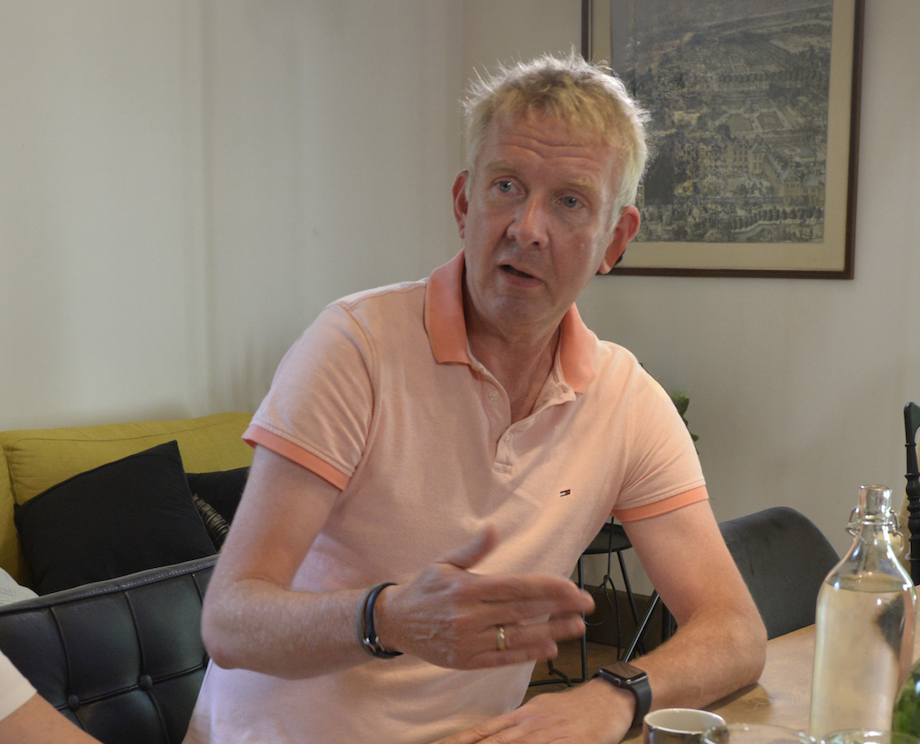 Bust As soon as you set rules, you also get discussions about what does and does not fit within the rules. You would prefer to have the conversation. By including everything in general rules even more, you run the risk of overlooking the attention for individual needs.
Heemskerk You can provide information about what boundaries you set.
Timmermans When people start with us, things like DE&I and aggression with customers are subjects of the basic training. That makes it clear to everyone that the company finds these important subjects, that you can go somewhere and that things are discussed. We also have an internal confidential counselor.
Heemskerk Not everyone wants an internal confidential counselor. That is someone from the team. That is why we would like to see companies also have an external confidential counselor. During the last negotiations for the collective labor agreement for facility contact centers, employers were not in favor of that. As far as FNV is concerned, that is something for the next round of negotiations.
Razac Change has deliberately chosen an external confidential counselor. Of course, there is an HR team that you can have a chat with. But the confidential counselor is not present on the floor and that works well. It is not used much and you pay for it monthly, but if something does happen, I think you are happy with that choice. And as for contact with customers who overstep boundaries: that happens often. Employees sometimes tend to think that it is part of it, but it is definitely not OK. In such a situation, employees can step out of the line for a while, they are talked to, they can possibly break off their shift and go home. And what certainly helps: at Change, managers or directors do not sit in closed offices, but among colleagues on the work floor. The threshold for starting a conversation is then much lower.
The Oliveira Marreiros Seeing aggression in customer contact as something that is part of life is worrying.
Razac Employees may tell the customer that they feel disrespected and indicate that they are going to end the conversation.
Heemskerk Some contact centers have a rule that you should never end the call.
Razac That's very old-fashioned.
Timmermans As an employee, you can simply announce this politely: if you continue like this, I will stop the conversation. I have also experienced that customers were blocked. If customers really do not behave, you are allowed to take a stand and protect your people. Then just one customer less.
At the beginning of this discussion it was noted: as an organization you have to move quickly enough with society when it comes to DE&I. What can leaders and managers do in this area?
Razac Start with the presence of management on the work floor. That will immediately take your organization a lot further. I do think that much more needs to be done. How do you deal with differences? How do you ensure that you are interested in individuals and can thus better utilize their talents?
Bust Ultimately, it is a political discussion about equal opportunities and education. Employers have a responsibility to catch up, but we as a society also have a responsibility, certainly with regard to inequality of opportunity.
Timmermans It should be higher on the agenda. For me, DE&I was much less of an issue ten years ago than it is now. I was more 'one of the guys' then and I didn't always help women forward. When I had a daughter - I already had a son - I realised that things weren't as equal in the world as I thought. It only really started to matter to me when I was fed and it became important. When someone says to me 'what can we do now'? my reaction is: if everyone says that, nothing will change.
Bust In any case, you can work on making prejudices clear. From our own research, we have found that the decline starts from the moment employees approach 55. For example, less is invested in it. It becomes more complicated to be invited for a job interview. I hope that we normalize continuing to work after retirement.
Heemskerk Sometimes it is stipulated in a collective labour agreement or company regulation that working is not allowed. And working has an impact on regulations regarding illness and unemployment.
Bust Many sectors still use functional retirement age: after a certain birthday you are no longer needed. It is actually beneficial to use people who continue working: you no longer contribute to the pension build-up and continued payment in case of illness only applies for six weeks. There are good examples of seniors between 70 and 80 who continue working even longer - often in a different field of work than before.
A whole other topic that was touched upon at the beginning: AI and DEI. How do those two relate to each other?
 The Oliveira Marreiros First of all, I would like to say: there is still a lot of uncertainty about how AI will develop. Let us above all adopt an investigative attitude. One of the likely trends is that simple customer contact will be automated and that the work that remains will become more complex. That affects the diversity in the contact center: for whom will there still be work in the future? Another point is AI tooling such as automated quality monitoring. What does that mean for vulnerable groups? Are these types of tools suitable for people who still need to grow in self-confidence?
Bust It is mainly executive work in customer contact that is changing and this is mainly affecting the lower end of the labour market, so to speak.
Heemskerk AI is on our radar. We believe it is important that employees are trained in AI, because it requires different competencies. And involve your employees in the process. Certain tasks may disappear, but other work will come in its place. If AI can help to work even more efficiently and therefore make it easier to make a four-day working week possible, we would of course be happy about that. And AI will have to be fed by diverse teams and information that takes diversity into account.
If you could turn one knob to amplify DEI, what would it be?
Razac No offices for managers. I have seen the effect and it surprises me every time. But also: just talk to each other and take action.
Heemskerk The most important thing is: provide more information as an employer. Show what you stand for. Many employees do not dare to ask questions.
Timmermans I would like to see maximum diversity at all levels in every company in the world, so that the rest changes by itself.
Bust Awareness of the impact of bias on our daily work could be improved.
The Oliveira Marreiros Don't fill it in for the other person, but really listen after you have asked a question and ask what motivates the other person.
 The Coach House Conversations – Trade association KSF and trade magazine Ziptone organize a number of round table discussions each year on current topics in the field. The discussions take place in Doorn and are led by Tom Jessen; Ziptone reports. Previous themes so far: the affordability of customer contact, the development of the profession en considerations and dilemmas when offshoring to Suriname.


Also interesting
-
In Koetshuisgesprek #6 we explore what AI has actually brought to organizations, customers, and employees.
-
AI does not replace customer service representatives. However, AI does take over parts of their duties. What does this mean for their profession?
-

About 20 percent of people have a brain that functions differently from what we label as 'typical'.