
Customer contact managers like to claim that customer service contributes to brand value. But then they often opt for digitalization, automation, self-service, outsourcing and/or offshoring. To what extent should they keep the boardroom and shareholders happy with low costs? And to what extent are contact centers given the space to exceed customer expectations?
Discussion leader: Tom Jessen
Image: Soraya Ebrahimi
Text: Erik Bouwer
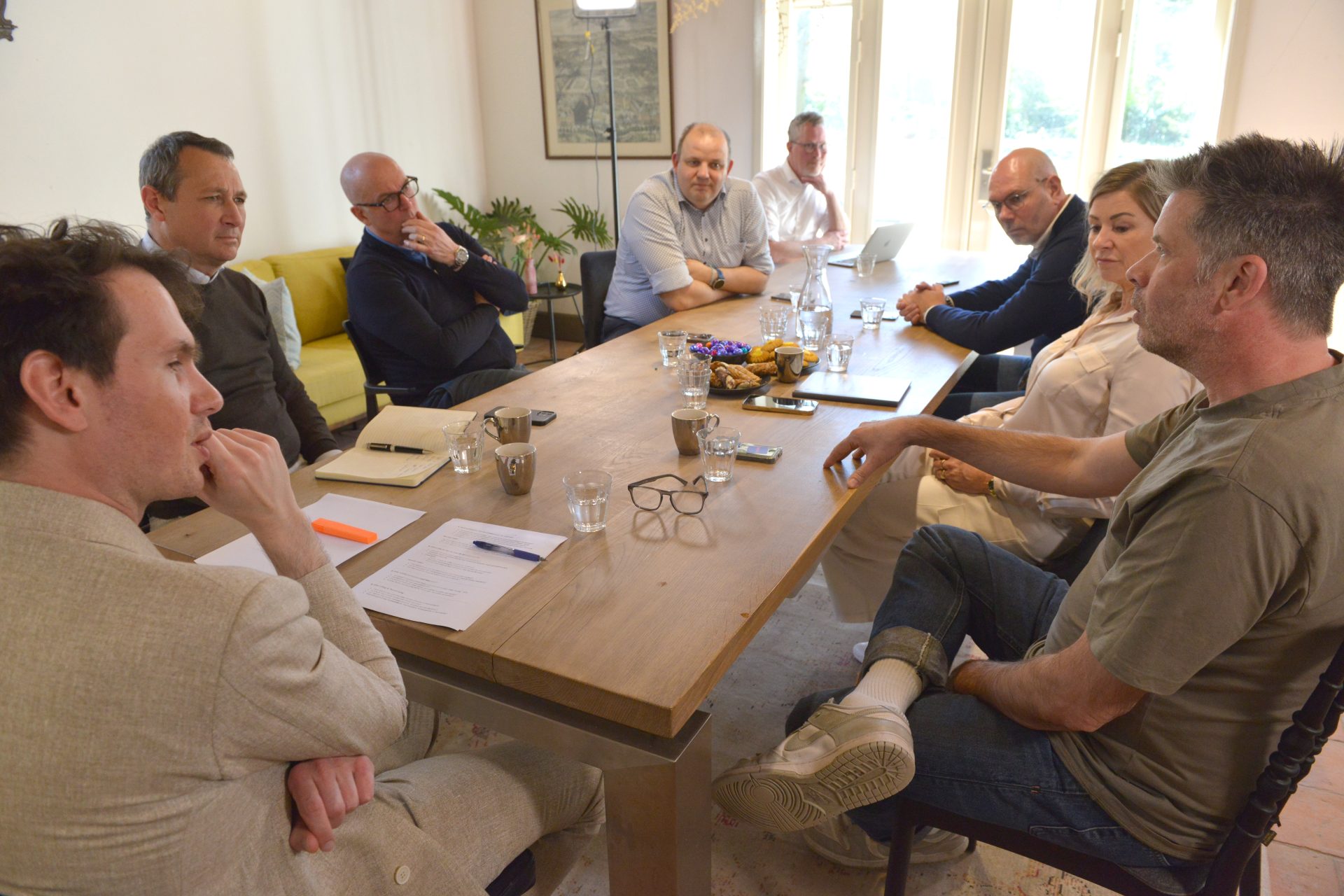
The participants (from left to right): Tom Jessen (conversation management),Wilco Mol, Vice President Customer Service KPN; Aaron Post, independent consultant and chairman of the KSF expert group data; Josette Poels, CEO and founder of facility contact center YellowRock; Remko Smith, head of guest service at Landal; Yves van Vaerenbergh, professor of customer experience management at KU Leuven and co-founder of consultancy firm Kalepa; Bob Mols, CEO of facility contact center Yource.
How would you describe the Dutch service culture?
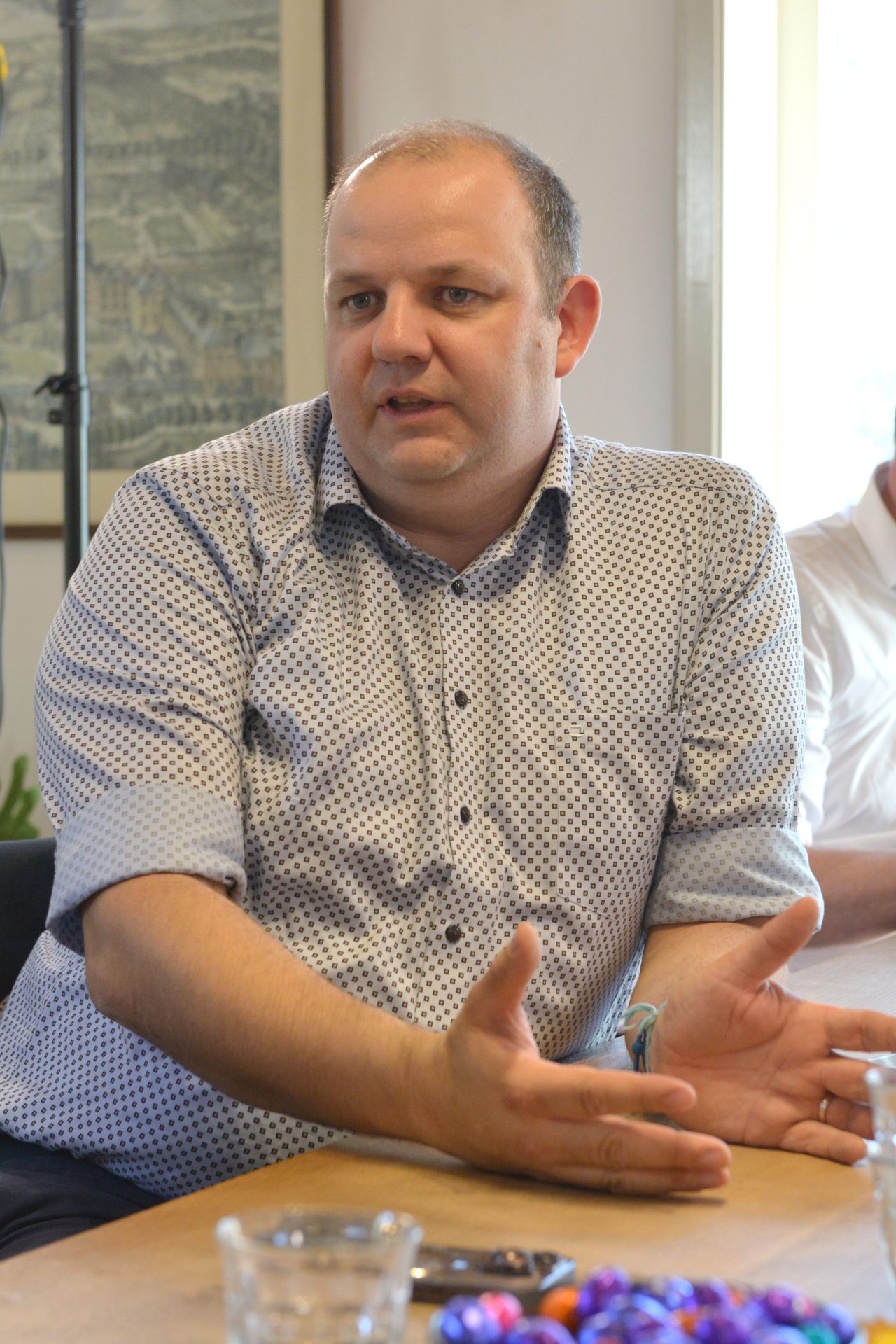
Yves van Vaerenbergh, KU Leuven/Kalepa
From Vaerenbergh There are similarities between the Belgian and Dutch markets. The culture is good. Is it excellent? No. I think the Dutch have a stronger service mentality than the Belgians. The hands-on mentality of the Netherlands contributes to that.
Poels The Dutch are Calvinistic and not very helpful. And we also believe that customer service should not cost too much. The Dutch are quite rational and highly educated and that is reflected in our service orientation: not from the heart. People should not be ashamed of the fact that they work in the service sector. It does not make you less, you add something.
Mol In the area of hostmanship we can also learn something from Austria, for example. Within the Netherlands we do have to deal with regional differences in customer experience.
Post Dutch customer contact professionals are passionate about their profession and know how to run the operation. But this focus on the operation is also a limitation. For example, many contact center managers find it difficult to draw up a business case. There is usually enough data and people available. Within the KSF we are working on the question of how contact center managers can be more effective in this area towards the boardroom.
Smit When I started at Roompot, I saw that the guest service conversations were all of high quality. Customer service almost always starts with friction; with guest contact, it is different. Maybe that is part of the solution: removing more friction. For example, by acting proactively instead of reactively - something that is unfortunately not possible everywhere.
Moles The Dutch are indeed pragmatic and we are good at service. But what we need to work on is exceeding expectations. We need to encourage that in the support teams and managers: stimulate, give space, focus on quality instead of costs. It doesn't work if you say: you have to exceed expectations, but that can take a maximum of 500 seconds. And we grew up in a culture that says 'just act normal, that's crazy enough'. You can also see that in the way customers respond to the NPS question: the most brilliant conversations get an eight. The NPS ranking doesn't work in all cases if you look at down-to-earth Dutch consumers.
From Vaerenbergh Customer focus is partly genetic. So you can achieve a lot with the right recruitment: 'hire for attitude and train for skills'. I recognize the frustrations of companies that do not get further than an 8 on the NPS. But NPS was already debunked in 2007 as a valid metric for customer focus or customer satisfaction or whatever: too simple for a complex set of factors.
Poels We have to make customer satisfaction measurable, otherwise we will not convince the boardroom that customer contact may cost money.
Post With NPS, you mainly want to know what is behind the sevens, eights and nines. What is the value of a customer? What about churn or customer lifetime value? You can use analytical AI instead of generative AI. The former has been around for a long time, but many managers do not know that. Then you can also build your business case much better.
Not enough space to exceed customer expectations: how do we solve this?
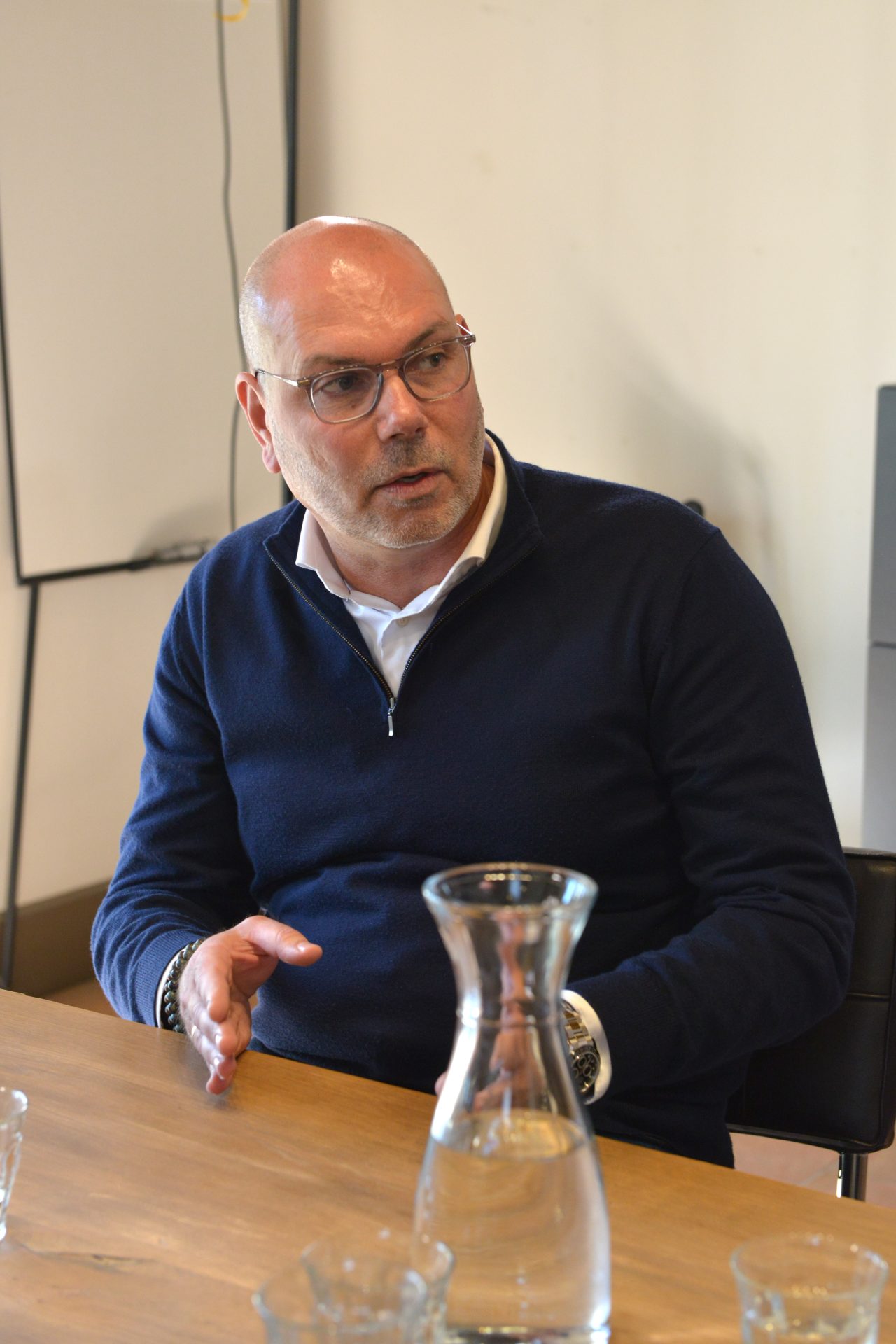
Wilco Mol, KPN
Moles We will have to create that space together. In the old customer contact economy, the task was to help the customer properly in one go within a certain average conversation time. Fortunately, that has changed.
Mol You can connect everything that is measurable. That also gives you the opportunity to make a difference through personalization. But achieving that is a step-by-step process and takes a lot of time. And you will have to stay away from the discussion about cost centers. We are a customer company, we want to retain our customers. By linking turnover, absenteeism and employee satisfaction surveys, we know, for example, which target groups on the labor market we should avoid. And by personalizing, we can increasingly rise above the idea of a commodity through the customer conversation. This thinking from the customer base is part of KPN's DNA. For example, we know for which customers the churn risk is greatest. Preventive and proactive work has led to less churn for us: we still have a 'save' department, but the real save conversations have become fewer and fewer. The shareholder also appreciates the fact that we focus on customer retention instead of just on acquisition.
Post If you can translate churn into tasks for the customer contact center, you can also determine the contribution of the contact center to retaining future revenue.
Are there lower and upper limits to customer service?

Remko Smit, Landal
Smit At the time at UPC – a merger product of eleven companies with many process problems – we received powder letters, burning media boxes came through the windows and customers stood at the counter with baseball bats. We investigated why that happened. It is comparable to road rage: you are on your way to your destination but are completely stuck in traffic, you have no information and no influence and no one takes action for you. That provokes aggression. Minimal customer service also means that a customer has control and trust in a good outcome. As soon as it is no longer acceptable, everything collapses. If the workload increases to such an extent that employees become indifferent, employees take even more time and you fall short even more. If one domino falls, you are gone. You have to know what you are doing; your forecast and your schedules have to be correct. Your inflow has to be in order. It is a whole chain of successive steps. And it is not just about good processes, because there are also all kinds of exceptions to the processes.
From Vaerenbergh It varies from company to company and from customer to customer when service becomes too bad. However, the basic expectation usually comes down to 'be friendly, listen to me, solve my problem, make an effort for me'. As soon as customers experience that companies really make an effort, you are already moving towards excellent service. When things go wrong in customer service, top managers often look down, to the employees. But that is a wrong reflex, you should look at the management and the top management. It is their way of acting that determines what happens on the work floor.
Poels The most important thing is that you have employees in-house who love the work. They must also have the mandate and the right tools to solve customer dissatisfiers. That is the lower limit as far as I am concerned. As a manager, you must be aware of what 'exceeding expectations' means. And we need data.

Bob Mols, Yource
Moles For facility contact centers, it is not so much the internal management that you need, but the outsourcer as a partner to ensure that you can manage on quality. This will reduce your costs. But for that you need the entire chain and that is a challenge for facility managers. Clients often have budget restrictions. We understand of course that we do not get a blank check, but you have to explore together how you can add value and what is needed for that. Too little budget for a certain amount of work means that we will warn in advance that we will not overload our employees, but that your accessibility may decrease.
From Vaerenbergh When I hear this, it is still driven by costs. The question is how you are going to demonstrate the returns.
Moles If you flatten it out, customer contact is indeed viewed as a cost center. The challenge is to demonstrate with analyses where you contribute to the objectives of your client, who for example wants to be recognized with a certain brand value.
To what extent is there more focus on costs, because they are easier to measure than revenues?
Mol With us, the revenues are clearly visible. We know the OPEX and we know that with us the added value is 150 percent. For example, we know what the savings are if one of our customer experts can prevent the deployment of a mechanic. We also know what customer contact yields if a customer extends or purchases more products.
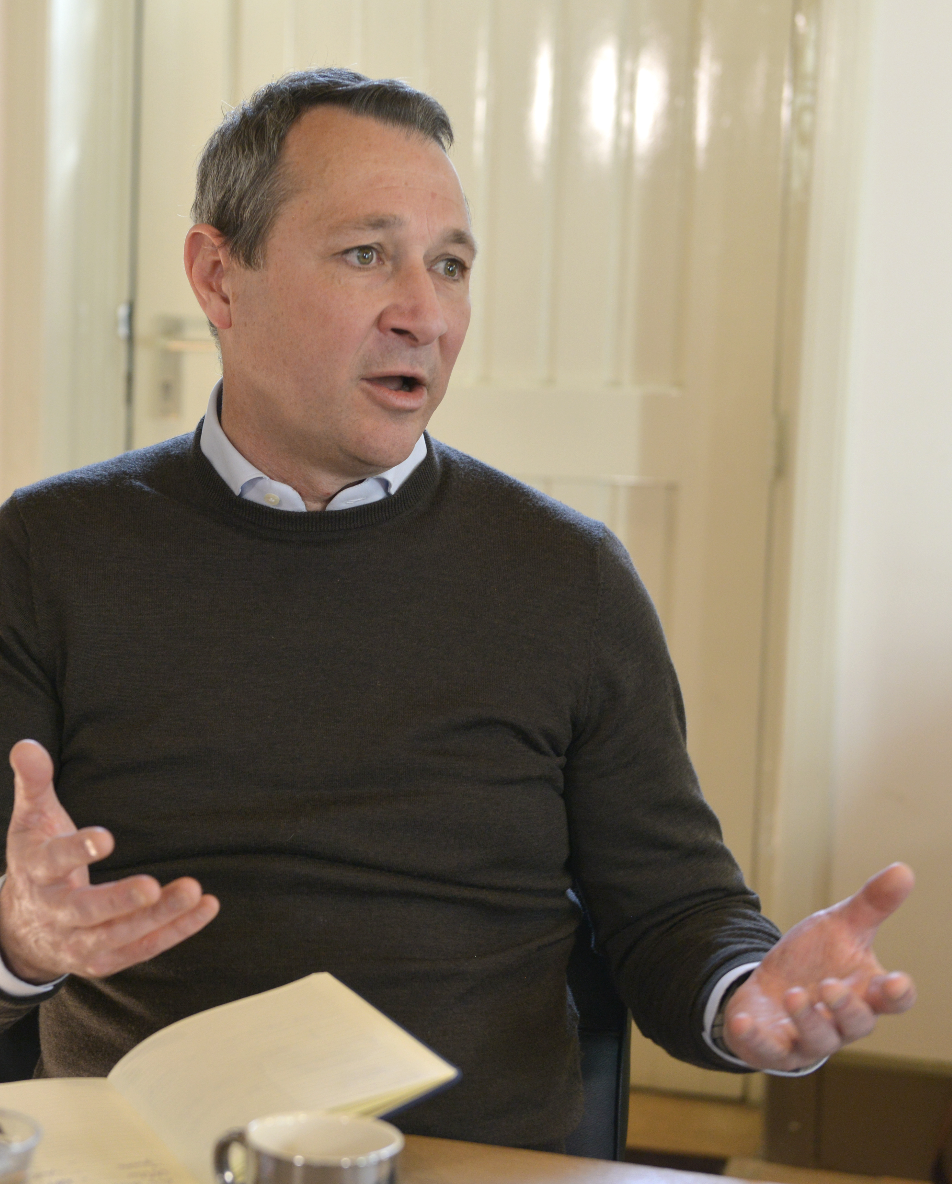
Arnon Post, KSF
Post As with in-house contact centers, you will have to work with different departments of the client, so that you can gather information. The KSF Trend Monitor shows that outsourcers have to provide more information if they expect more from their partner than just 'lower costs'.
Moles We see a great deal of willingness among most of our partners to have discussions about growth, quality and brand value.
Poels Good clients recognize the importance of these matters. They let us think along about the entire customer journey. That way we can offer added value. But we do not always have insight into all of our customers' figures.
From Vaerenbergh The biggest contribution to profit through the contact center is avoiding churn. You can calculate exactly what a customer will bring in. If the customer leaves, you lose that money. That gives you the ROI of customer contact. By looking at customer contact in this way, you arrive at high amounts of future turnover that is permanent. And that is exactly what shareholders find important.
Mol My view is that we in the Netherlands are discovering that customer contact is becoming increasingly valuable. We are no longer striving for 'less', but for more customer contact - we do want more personalized digital contact.
Smit Our customer contact is already a value center, because we generate turnover through bookings. But our product is vacation, that is customer experience. We sell customer experience. We want to help our guests as best as possible where necessary and make their stay as nice as possible. Customer contact is friction in my opinion.
Poels The more contact moments, the more the customer service employee has the opportunity to create more fans of the brand. Exceeding expectations? Then you still really need a human on the line. Of course, that applies less to a question like 'where is my package' - that's where AI can play a role.
Mol I think AI can do much more, also as a reinforcement of customer contact employees. But you will have to do your preliminary work carefully to increase the chance of sustainable success. Develop yourself, keep in touch with the market, do pilots, also together with partners. And sometimes things go wrong: eight years ago, for example, we already told employees at the beginning of the conversation what they could do with a customer in terms of up- and cross-selling. Our data was not in order at the time, which meant that the employees' trust disappeared almost immediately. But automated summarization was recently rolled out together with them and was very successful.
From Vaerenbergh It is often said: AI does not work well. That is a fallacy: it is the organization that is not yet ready to work with AI.
Moles And don't forget the intermediate form: the employee supported by AI.
From Vaerenbergh Soon, no employee will work without AI.
Post From what I gather from conversations, the majority in this field expect that within three years we will largely rely on agentic AI.
Mol There are already companies that are fully committed to agentic AI, without employees.
From Vaerenbergh I see a lot of techno-optimism. We can make bots very reliable, but it's the last part where things can go wrong. A fully agentic AI contact center within three years? Forget it. With large volumes of customer contact, the impact of AI failures is a huge risk. Large companies also discover that they no longer know what their customers are doing, because they haven't spoken to some customers for two years. Some companies deliberately organize human contacts as a counterbalance to large-scale digitalization. You can then route those types of contacts to a human employee, to offer them the luxury of human contact and thus create added value.
How is the budget for customer contact determined?
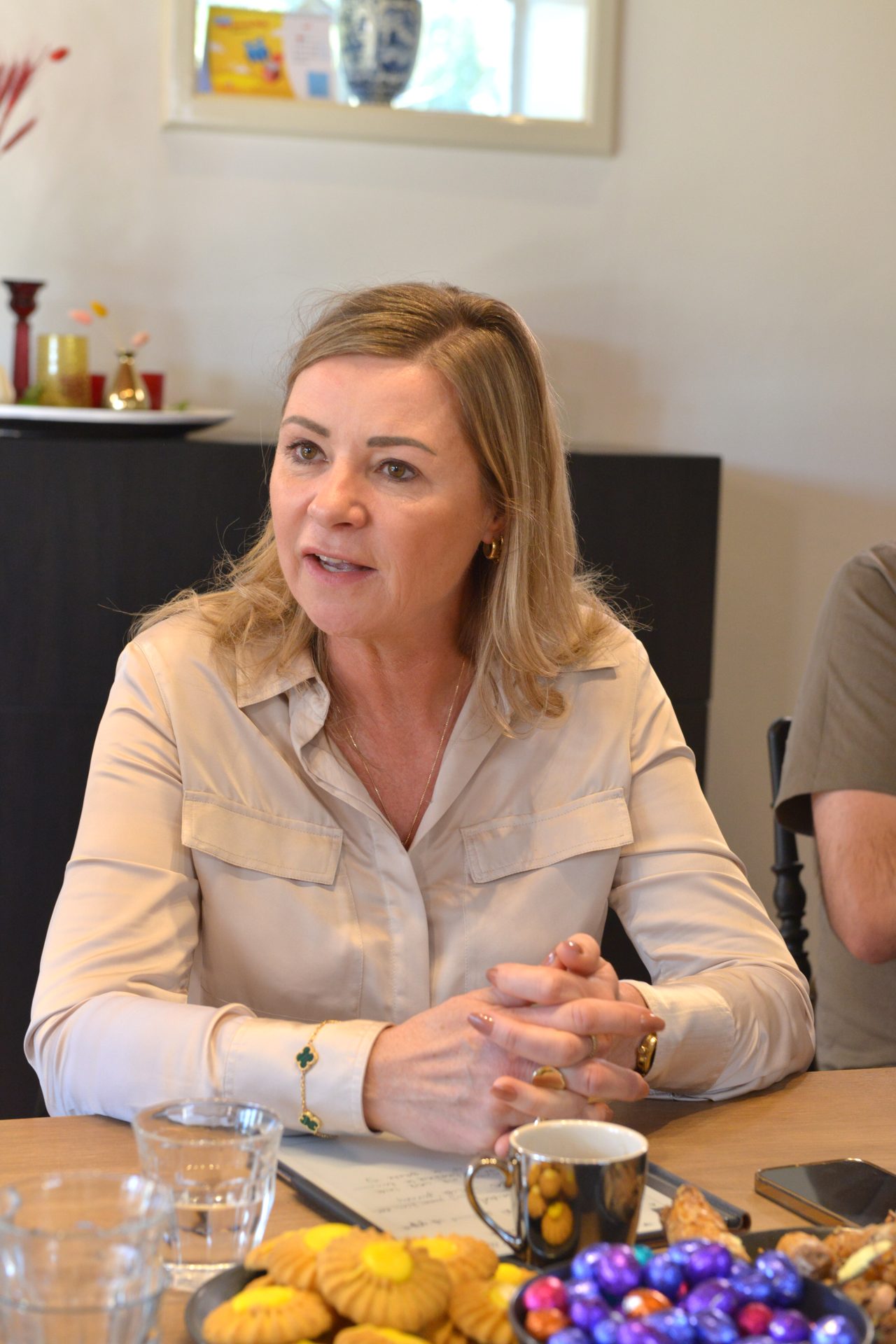
Josette Poels, YellowRock
Poels On our side, that is built up from costs and from what we need to ensure continuity. On the customer side, that is often 'preferably less'. Of course, it starts with what the customer is willing to pay for it. If you can make it true that customer contact contributes not only to turnover, but also to brand experience, then that is an advantage.
Smit We budget based on turnover, think of the number of overnight stays, which you can translate into traffic. We have to organize that a little bit smarter every year, which makes the budget relatively a little smaller.
Mol For us, the main objective is to increase the quality of customer contact and to remove 'waste' from customer contact, so that costs decrease. In other areas, we can expand customer contact. Of course, we consider annual plans and negotiate with the partners with whom we have been working for years.
Moles At Yource, the volume is of course the starting point. The place where you handle it also plays a role. Where we used to have bonus/malus arrangements, there is now more and more room for value-adding components.
From Vaerenbergh There is a great lack of knowledge among executives about what customer contact yields. They primarily think of market share and brand value; they find customer contact less interesting. But there are four levers for shareholder value: market share, advertising efforts, brand value and customer value – think of customer satisfaction. Research shows that investing 1 euro in customer relations yields 18 times more than advertising and is six times more effective than increasing market share. The latter does indeed generate more customers, but new customers are price-sensitive and can quickly disappear. Investing 1 euro in customer contact is also twice as effective as investing in brand value.
And finally, what should we collectively stop doing in customer contact?
 Poels Viewing customer contact as a cost item. That requires a change in mindset among clients. And among employees in customer contact, who start this work with the right attitude. It is a wonderful profession. That is why I also think that there should be a national day of the customer contact employee, with which you as a sector can get into the national media. The national customer contact week is too internally focused.
Post What do we need to stop doing? The whining that it’s just expensive. Then take the step towards change. Operational managers still struggle to think in terms of revenues. There’s AI illiteracy, but there’s also financial illiteracy.
Moles If the customer contact employee is well supported by a knowledge assistant, they don't need to know how it works. We need to teach them well to ask the right questions, so that AI can summarize the conversation well, and we need to make sure that employees trust that this works well. But speaking of stopping: I would like to start with a balanced dialogue about AI. For example, someone recently said about this sector: in two years, 50 percent of the jobs will no longer exist. That doesn't help. What does help is if you say 'in two years you will have a much nicer job because you are helped by AI.'
Mol AI is really cool, we should definitely continue with it. We want employees to realize that if you use it, your work will become more fun.
Smit We need to stop using screens. Employees who manage customer contact employees should no longer have screens.
From Vaerenbergh I would like to see a sector that takes the lead. You have a lot of data and a lot of interactions, that is worth gold. The customer service department can play a very big role in developments that are coming our way. We still have few robots in stores, but they are coming. IT or marketing will claim that, but the robots must all be trained in customer contact. The same applies to product development, where customer service can play a much bigger role. That can shorten the development time and limit costs. I see little leadership in customer service departments. Often it is 'tell us what we have to do and we will do it' instead of 'this is what we can do and this is what we are going to do'.
 The Koetshuis conversations – Trade association KSF and trade magazine Ziptone organize a number of round table discussions each year on current topics in the field. The discussions take place in Doorn and are led by Tom Jessen; Ziptone reports. Previous themes so far: the affordability of customer contact, the development of the profession en considerations and dilemmas when offshoring to Suriname.


Also interesting
-

When is customer contact 'affordable' – and for whom? What can you do as a contact center manager with the 'polluter pays' principle?
-

A British reporter cloned her voice. With the cloned voice she was able to enter both banks where she had an account,…
-

The eleven experts warn against hasty implementation, without looking at existing customer contact and channel strategies.