
 Combining a compact conference program with a trip to Africa is only possible at Beekse Bergen Safari Park. This year's Content Guru knowledge event focused on customer experience as a hard-nosed business, adding value to customer contact at Libéma, and a box of "can't do."
Technology offers increasing opportunities to serve customers better and faster, but 'more digital' has the pitfall that customers lose the emotional connection with a brand or company.
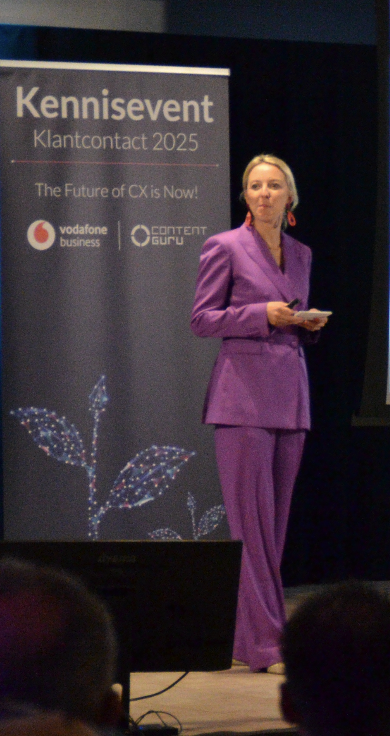
That emotional bond is good for loyalty, according to Dominique de Groot, originally from the hospitality industry. She opened the Content Guru knowledge event. This time, the location: Safaripark Beekse Bergen. This is part of Libéma, a group that includes Beekse Bergen, Aviodrome, and a number of conference venues.
"Consumer decisions are made 70% based on emotional factors," says De Groot. Emotion is what we remember after an experience, and a positive final experience is simply "hard business."
Who has ever had a 9+ experience?
Customers who struggle with all the self-service options will call. That's where you can make a difference. According to De Groot, technology implementations often overlook the need to prioritize an optimal customer experience. This is different from focusing on cost savings. Consumers also look for features like "fast," "simple," and "personalized" when it comes to chatbots and self-service. As is well known, the bar is set high: companies like Coolblue, Spotify, and Bol.com are the benchmark for consumers. When De Groot asks the audience of 150 guests about a 9+ experience, only three people raise their hands.
Making a difference is different from achieving first-contact resolution. Anyone who wants to make an impact with the customer must combine emotion and action. In other words, in moments of truth, go the extra mile to impress the customer. This starts with what you say and how you say it. De Groot offers a practical example: don't say "no problem" but "you're welcome." She also draws attention to music on holdWhat do you play there? Music that excites customers or makes them feel more zen?
A thousand animals
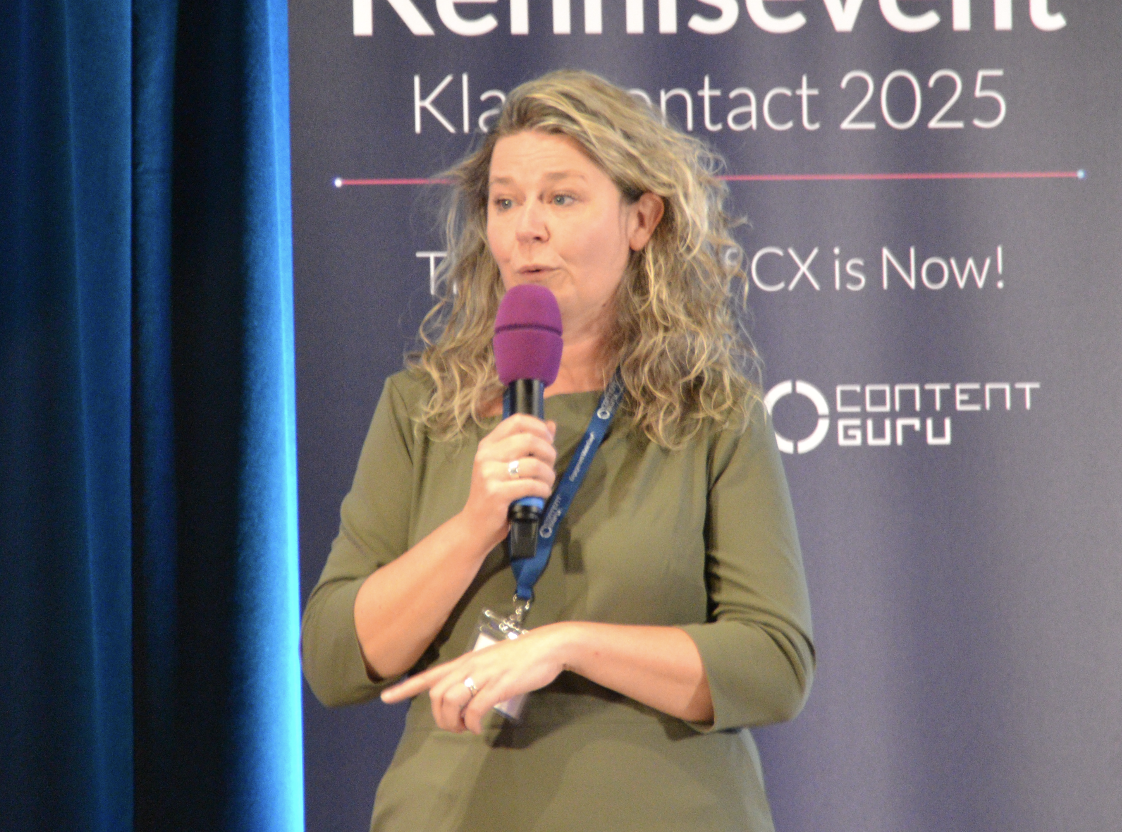 Miriam van Riel, commercial manager of holiday parks at Libéma, provided a glimpse into daily operations. Beekse Bergen offers accommodations in addition to a thousand wild animals, including okapis, zebras, and giraffes. Libéma's KCC serves clients of all brands and comprises 15 employees. The KCC handles the pre-arrival process; the locations themselves provide service during the stay. But there are certainly similarities: the KCC relays messages to the locations to personalize the stay where possible. This process isn't set in stone; it's also about trusting that a colleague will pick up on a signal.
At Libéma too, the KCC accounts for a significant portion (20%) of bookings (an example of a value center, just like at Landal). Revenue per booking is also 5% higher on average than with online bookings. Van Riel's message about leadership: look at gorillas. There, newcomers are given plenty of room to adjust, but if it doesn't work, a clear decision follows.
What do agents see as bottlenecks in customer contact?
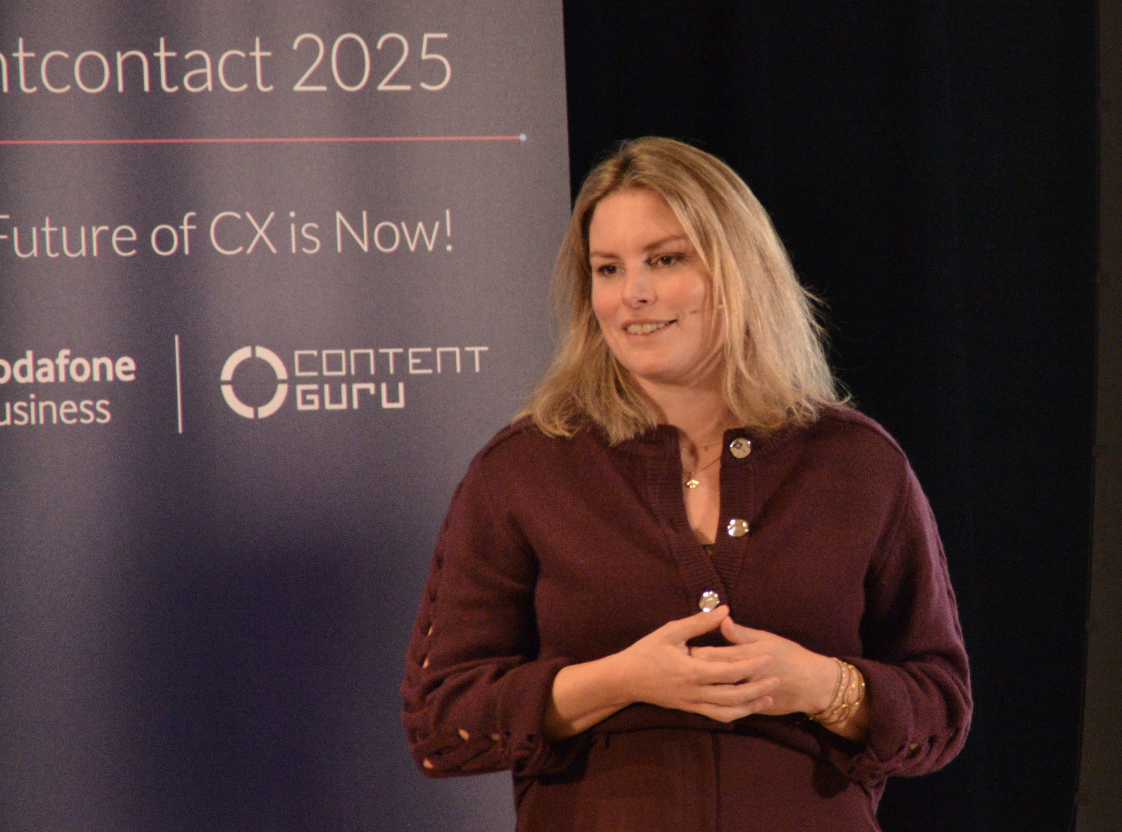 At VodafoneZiggo, they take the customer contact value matrix as their starting point: customer contact that's valuable to the customer, and/or the organization itself, is ideally suited to people who can make a difference. But to achieve this, you have to retain them and also provide them with effective support. "Agents are eager to solve problems, but sometimes tools or processes get in the way, or they lack the mandate," says Sanne Zwinkels en Roger Becker VodafoneZiggo. Unfortunately, the details of how the mandate works remained largely undiscussed during their presentation at the knowledge event, but the company has taken the tools to the next level with great enthusiasm.
According to Zwinkels and Beckers, employees were asked about their perceived bottlenecks and needs. Beckers: "AI is often about efficiency, but whether it actually works depends primarily on the employee who determines whether it's meaningful and works well enough. VodafoneZiggo only chooses to scale up if it receives two positive responses."
You shouldn't put the box marked 'can't' too far away
 Smart routing (effectively connecting customers, intents, and employees) is one of the building blocks, but the use of agent assist also plays a significant role. VodafoneZiggo was an early adopter (it started several years ago), but was unwilling to take any risks then and now. Therefore, AI will first be properly developed as an internal application.
Before, during, and after the call, every effort is made to shorten and automate the customer contact process. For example, by having AI examine two invoices: why does the customer pay more or less? Or by using real-time speech analytics in conjunction with the knowledge base: what does a red light mean in the context of this call? As we previously established: VodafoneZiggo has agent assist elevated to an art.
AI offers possibilities today that weren't there yesterday. "What you dismiss as an option today suddenly becomes possible tomorrow." Beckers' advice: don't put the "can't do" box too far away.
The future of work within 1000 days
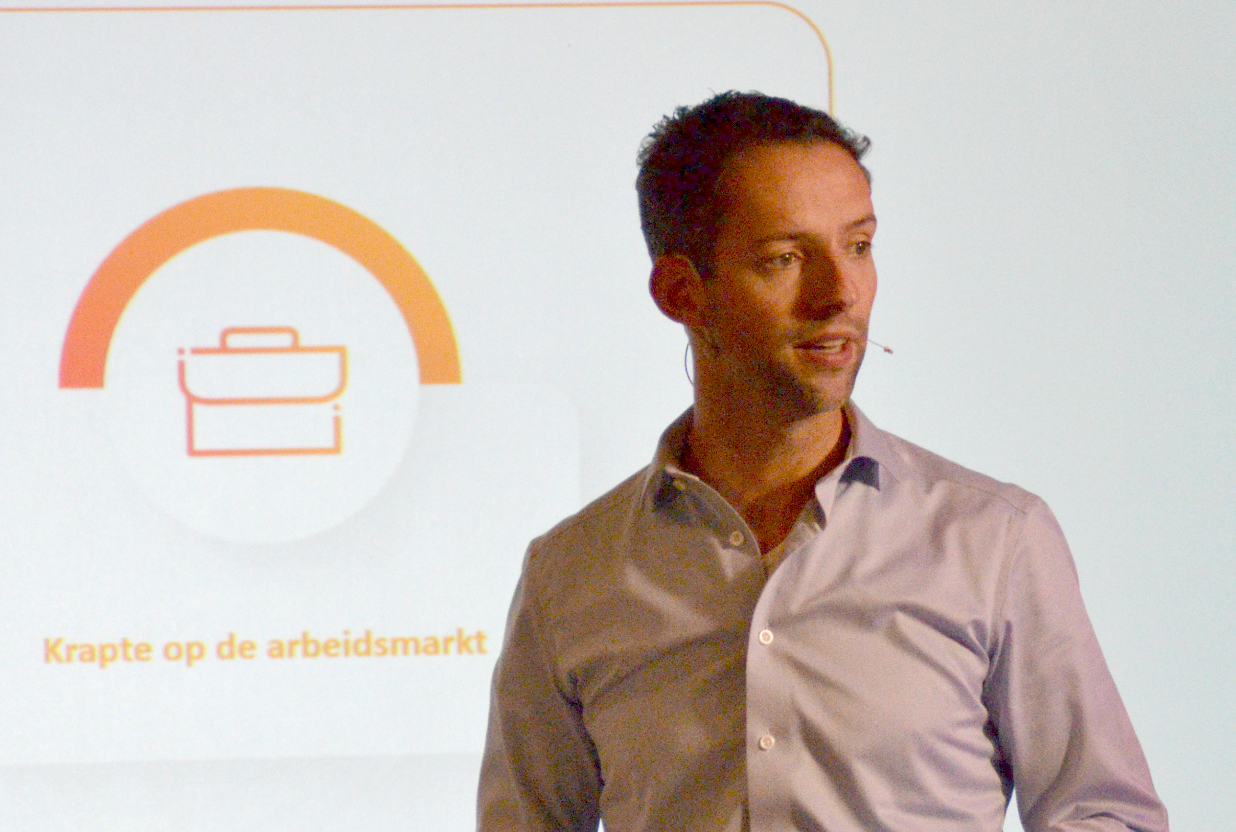
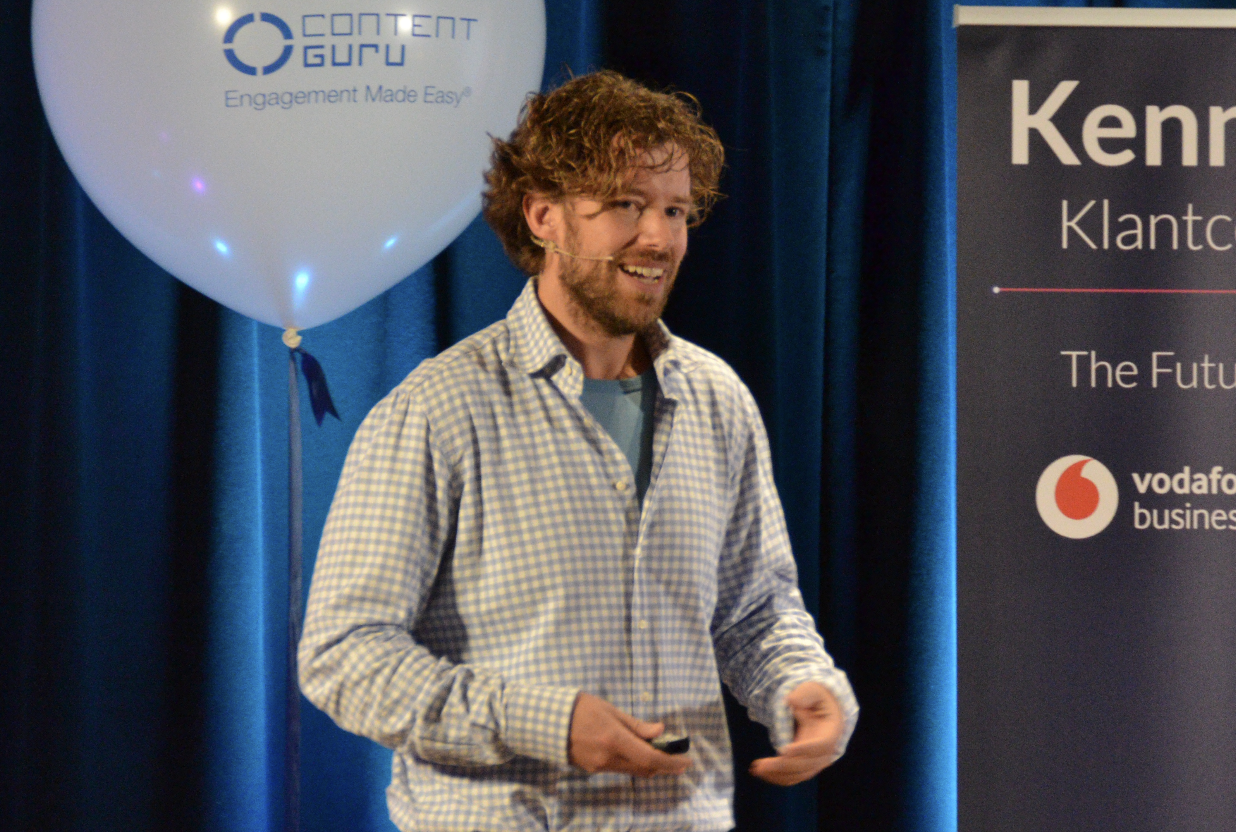 Job van den Berg is increasingly appearing on stage and in the media. With his above-average baud rate, which is definitely 1,5 times higher than the average podcast, he guarantees high information density. After his umpteenth visit to China, he attempted to outline what the future of work will look like in the next thousand days at the Content Guru knowledge event.
The introduction of new technology always encounters resistance, in all its forms, and the customer contact sector is no exception. But when you hear that China has rolled out a five-year plan to win the AI race, you can be sure that resistance won't stop change. On the contrary, what you call "disappointing" or "mediocre" today (think AI) could easily be labeled "astonishing" a few months later or spark a new public debate.
Humanoids
Van den Berg reiterates his point: adaptability is one of the most important skills of the future, and he mentions both learning and unlearning. He also expects that within six to twelve months, "humanoids" will be running around in your household. What he didn't mention: a decent humanoid robot can easily cost tens of thousands of euros, and most demos don't go beyond predefined tricks, like doing a somersault.
In recent years, China has transformed from the world's factory into the world's R&D lab. But in the US, AI is already being deployed extensively. Jobs are changing rapidly there, which has also sparked the discussion about entry-level jobs, says Van den Berg. How do you build domain knowledge and experience if you can't start learning at the bottom?
By the end of next year, agentic AI will be your colleague
Van den Berg is convinced that AI is getting closer to doing things instead of just communicating or thinking. Every company will initially use AI to cut costs. But that doesn't necessarily contribute to your competitive advantage; quite the opposite.
He encourages his audience to start with AI. "I can't do this" is outdated. Dig deeper into language models and prompting, delve deeper into reasoning models and applications. The longer you wait, the further behind you'll be, because AI is developing rapidly. Van den Berg expects agentic AI to be a peer by the end of next year.
(Ziptone/Erik Bouwer)


Also interesting
-

The upcoming edition of Conversational Conference will focus on how organizations can make automated customer contact work well.
-
Value-driven routing of customer interactions is increasingly the long-term goal. That and more was discussed at the Knowledge Event…
-

Tech watcher Remy Gieling will speak about agentic commerce at the upcoming edition of Content Guru's Knowledge Event.