
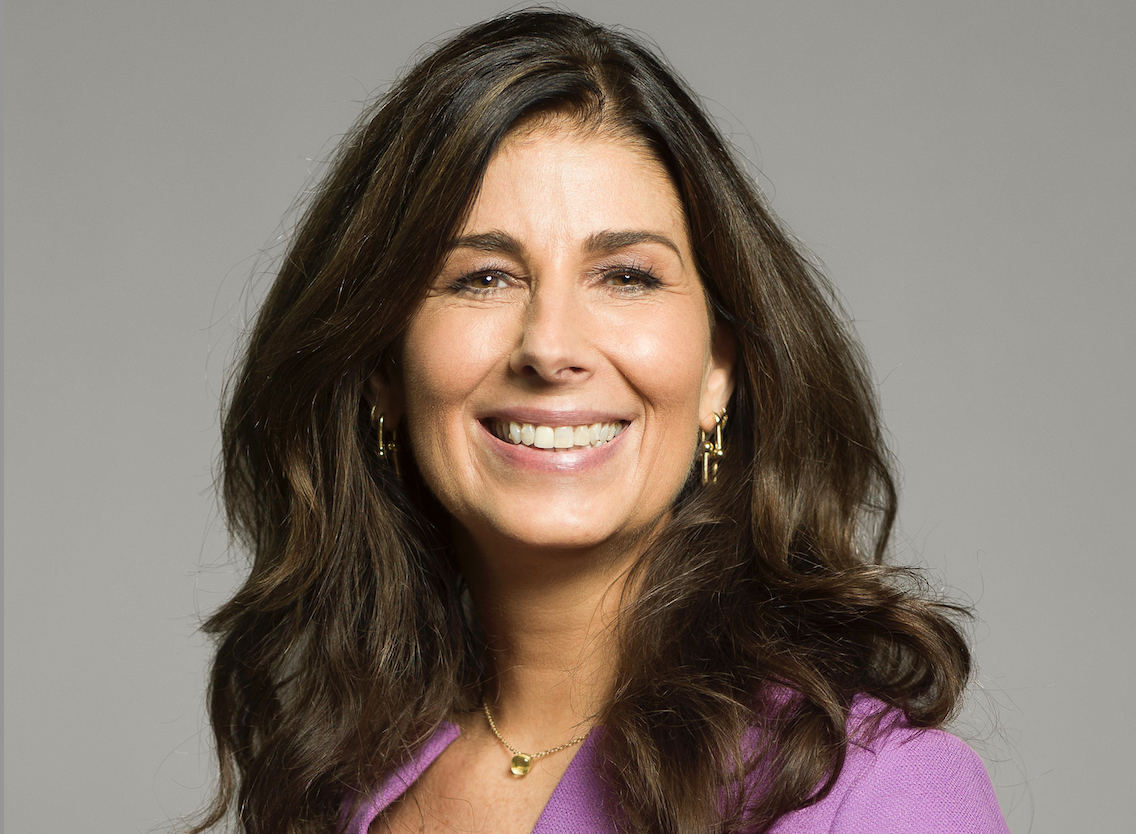
 Rabobank sees the content of functions and roles changing due to the arrival of AI, including in the contact center. The bank calls for attention to reskilling but is also mindful of adjustments to job evaluation.
Hilde van der Baan and Gijs Linse (both from A&O Shearman) spoke for Management Scope with Janine Vos, CHRO and board member of Rabobank, about the enormous consequences of the digital age for HR and the workforce.
Vos, ranked 13th in Management Scope’s Top 100 Corporate Women, speaks out on AI readiness, among other things. “Every job will soon have an IT or data component,” she says regarding Rabobank’s digital transformation. According to her, the current transformation driven by AI is different from the previous one. “I think it is mainly moving faster, and that we had more time back then. Moreover, the world is more unstable in several respects now. That means you have to make decisions faster.”
AI readiness and human readiness
Vos believes that the importance of human adoption of new technology is still underestimated. “There is a clear distinction between ai readiness en human readiness (…). The technology is not the problem. A great deal is possible, and even more will be possible in the future. The question, however, is whether people are ready for it.” Part of human readiness is maintaining a critical perspective, meaning continuing to think for yourself and forming your own judgment. Only by understanding AI itself can you make better decisions, according to Vos. “But the skill of the future is being flexible and capable of moving along, of adapting.”
Reorganizing functions
The current digital revolution also has implications for the field of HR. According to Vos, this creates the need to scrutinize the entire job architecture—the job framework containing all job profiles. “No one was ever interested in that before, but soon it will be of great strategic importance. Because you will need that job architecture to determine who has access to which data. Every job will soon affect the entire chain. You really need to have that mapped out very clearly.”
Contact center functions are changing
Vos also raises the question of what leadership entails if you will soon have agents or humanoids. will manage. “How do you compare a human to an AI tool that never needs a break? We are also re-evaluating job evaluation. I see in our contact center right now that people are doing some work at a scale 6 level, but soon they might be doing machine project management at scale 8. We have to restructure everything. I am doing this together with our CITO, Alexander Zwart. We work together, give presentations together at our leadership events. So at Rabo, we are no longer looking at HR in the classic form. No longer as a silo, but truly from a broad perspective.
Reskilling as a skill
Vos is concerned about people's ability to reskill. “I think we don't think enough about that in the Netherlands. People who keep learning and developing will be the winners of the future. But I don't know if everyone can keep up. We will have to reskill people. But there are limits to it. reskill“We have a rule of thumb that we can reskill people to approximately two roles alongside their current position. A product owner is unlikely to become an AI scientist. But an engineer might be able to do so.”
Is human customer contact here to stay, or…?
Vos believes that a lot of human work remains. “People still enjoy talking to other people. So, in customer service, you can still get a real person on the line. Especially when people get angry or emotional. Precisely in a world where more and more is being automated, offering personal contact can also become a conscious strategic choice that distinguishes you as an organization. But developments are moving very fast. AI is getting better and better, and possibly AI will soon be able to handle angry people better than a flesh-and-blood employee.”
Read the full interview with Janine Vos in Management Scope 06 2026.


Also interesting
-

Premature deployment of GenAI chatbots and virtual agents for customer contact will lead to increased consumer skepticism, according to Forrester.
-
Labor market shortage? That's not only old news, it's also no longer an argument. Contact centers are mainly concerned…
-
Are your customer service representatives sufficiently equipped to assess whether AI answers are also correct?