
In October this year, Ziptone visited various facility contact centers in Paramaribo. The last in line is ContactCare, which has chosen a different and striking location. Christopher Gits – who once started as an agent himself – shows us around and tells us about the special role that employers have in Surinamese society. Also in customer contact.
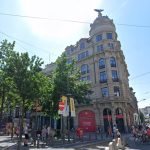
 The building where facility contact center ContactCare is housed is different from (almost) all other contact centers. The perfectly restored building fits well with the address – Heerenstraat 32, Paramaribo; inside it feels compact and looks like a living room. ContactCare's choice was complimented by ambassador Walter Oostelbos, who has been posting about a historic building on Instagram almost every day for over a year now (see the end of this article).
DIRECT Customer Contact also recently opted for a historical building chosen.
Before we take a tour of the wooden building that creaks here and there, Christopher Gits (manager operations ContactCare Suriname) explains why he started almost three quarters of a year ago has chosen ContactCare. “At Alembo I learned how important good employers are to keep people happy at work. That often comes down to small things: for example, the decoration of this interior” (Gits points to paintings on the wall) “or our kitchen, where bread and sandwich fillings are always in stock. We never ask 'didn't you bring bread from home'.”
Longer opening hours

Christopher Gits – operations manager ContactCare Suriname
ContactCare serves four clients from Suriname and is operational from 8 a.m. to 1 a.m. the next day, Dutch time. “We work a bit longer at the end of the day. That is because we have clients in the mobility sector. Dutch clients who still have to go home at night can count on support.”
In addition to providing customer contact services, ContactCare is also working on a pilot in the area of WFM-as-a-service. “We now mainly function as an overflow or flexible shell for our clients. But we can do much more to add extra value for our clients. The shortage in the Netherlands is not only with the agents. In Suriname there is sufficient knowledge and capacity.”
Staff and management are scarce
The latter seems to conflict with what other BPO players have mentioned: staff and management positions are difficult to fill. Gits: “It is true, team leaders are currently hard to find. By hiring permanent team leaders now, we are getting ahead of our growth, so that we are ready for when things get busier. And things are growing fast here. We believe in investing in people, more than in flying in managers, which is also what you see happening in Suriname. We have not been in business for very long, but cultivating middle management ourselves is high on our agenda. I started as an agent in Suriname ten years ago. Within a year I was a team leader and shortly after that senior team leader. A lot depends on your own ambition.”
Small network
“Companies that are frustrated that their managers leave after they have invested a lot in them, should also realize that they have benefited a lot from these employees; otherwise they would have left much earlier. It really goes both ways. Someone stays with you partly because of the opportunities for growth. Moreover: you also invest in the industry, because people do not simply leave this field. I once started as an agent at Telenamic, part of Xerox, which eventually became part of Webhelp and is now Concentrix.”
Suriname is also small, according to Gits, which means that many managers know each other or have even been colleagues: “You keep running into each other everywhere. That is also one of the reasons to set up the Association of Contact Centers Suriname. You can keep talking in small groups, but it is smarter to involve everyone. At the VCCS, important questions were put on the table: what do we actually think of the sector in Suriname, are there things that we can tackle together?”
A good hourly wage, but also flexibility
 In our conversation with Gits, we cannot avoid the subject of employment conditions. Suriname is a location with a wage cost advantage, price remains an important element for outsourcers to opt for a facility contact center, and differences in offshore rates are a potential bone of contention on the Surinamese market. In the area of employment conditions, a lot has improved in recent years, says Gits, the wage is now higher than ten years ago. "Six years ago, the hourly wage was around 1,73 euros."
Gits believes that the need for flexibility among employees is underexposed in the discussion about wages. “One person wants to work full-time, another prefers 30 hours. Some employees want to keep time free to go to school in the afternoon. This sector can offer that flexibility and makes it more attractive than many other sectors. Many employees take a short nap in the afternoon and then continue with the rest of their day. Employees can also opt for many additional hours.”
No social safety net
What potential Dutch clients may not realize: in Suriname, there are no social arrangements such as health care allowance or rent allowance available. Or as Gits puts it: “In Suriname, part of the financial pressure of employees is placed on the employer: employees say here when they can’t get by. We don’t want to be deaf to that. Other employers may not like it, but we look at the situation of our employees and what we can do. In addition, we are, for example, setting up a facility where study grants become available for employees. In Suriname, there is advertising for taking out a personal loan for the purchase of school supplies. You can also choose to let the wage cost advantage benefit employees at this point. This concerns things like school trousers, a school sweater, pens and pencils and a bag. Of course, the policy you implement must be scalable.”
Maximum profit or maybe a little less?
Gits further explains that the confidential counselor from ContactCare comes by every now and then to provide information. “She explains how important it is to save, especially if employees earn more in one period than in another. And she also pays attention to gambling, for example, which is a problem in this country.”
Ultimately, as far as Gits is concerned, it is about what you find important as a company: do you go for maximum profit or do you accept a somewhat lower profit? “In Suriname, employees expect different things from their employer than in the Netherlands. Think of a treat on your birthday or a trip. We also invest time and money in this, ContactCare wants to be at the heart of Surinamese society.”

Walter Oostelbos on Insta
Starting a contact center in Suriname, how difficult is it?
The VCCS wants to improve the visibility of the sector in Suriname, among other things. How difficult is it to do business if you are not at the top of the priority list of government institutions? Gits responds: “Jasper (Meerding, ed.) decided to set up something in Suriname himself and then figured everything out himself. How does this work, how does that work? Permit here, permit there. If you are familiar with this area, you know that there is a lot of bureaucracy. That does not only apply to contact centers and not only to the government. Here, for example, you have to tell the bank where your money comes from; or if you want to withdraw money, what you are going to do with it. Know your customers is regulated differently here than in the Netherlands. The realization that in a modern society certain things have to be more efficient or faster is gradually increasing here. Quite a few permits have already been abolished in the past fifteen years. Yes, entrepreneurship sometimes costs blood, sweat and tears, but once it's up and running, it's up and running."
Growth spurts
Meanwhile, the first ContactCare building is already becoming too small with around 90 employees, says Gits. “Growing is done smartly: quality comes first. When a new colleague comes to work here, there must also be sufficient support available. For example, to let someone grow. This company wants to be a little different in society. That is also the reason why this building was chosen. There is a lot of decay in Paramaribo and with this we have made the city a little more beautiful.” (Ziptone/Erik Bouwer)


Also interesting
-

BPO service provider ContactCare has opened a new location on Dr. JF Nassylaan in Paramaribo.
-

The new location is smaller than the previous one, but the number of workstations in the office is no longer the determining factor for facilities…
-
This summer, facilities contact center ContactCare is expanding with a new branch in Antwerp.