
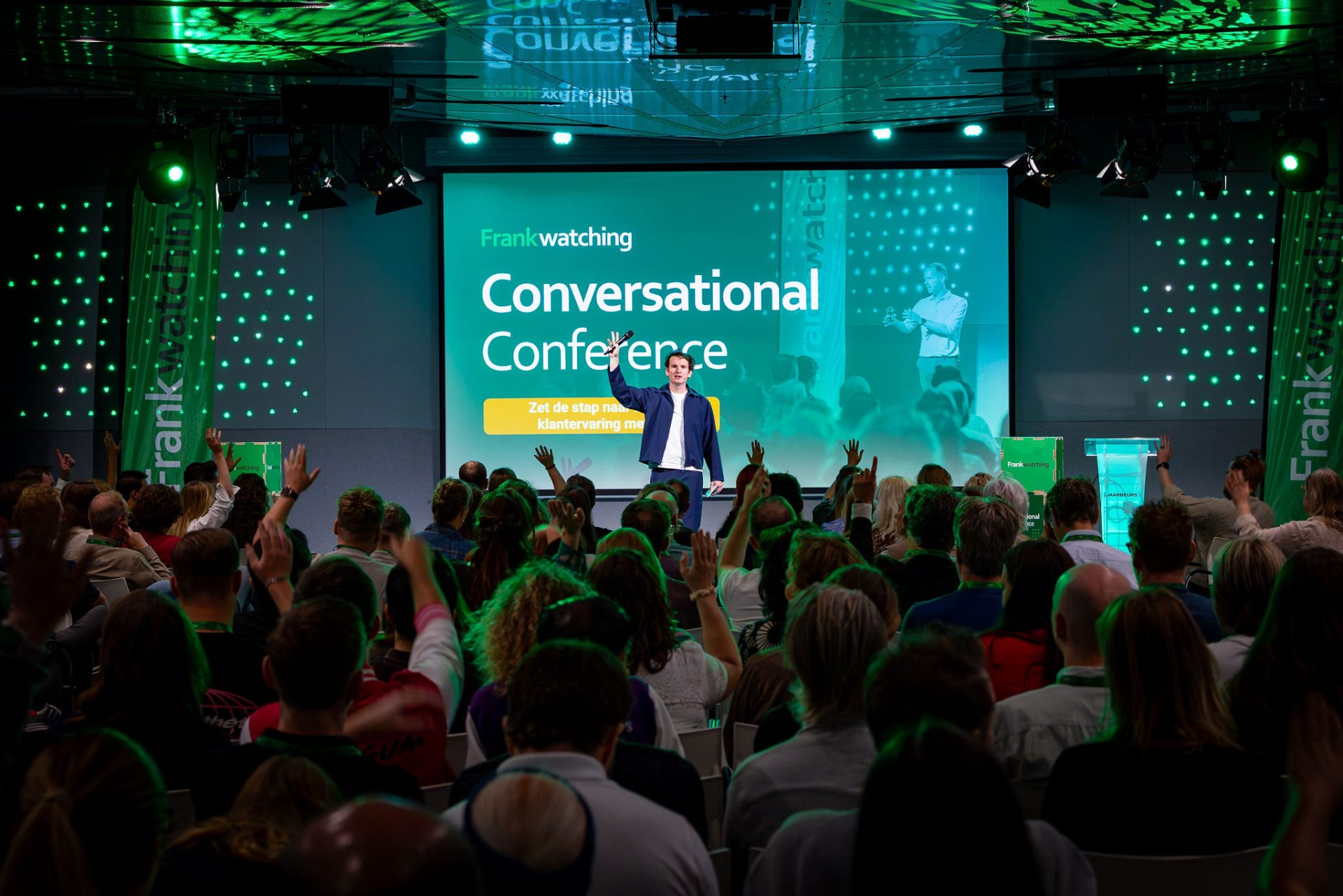
Moderator Tom Jessen – Image: TONmedia
More and more organizations understand that their scripted chatbot needs to go. The shift to an AI bot requires different technology, specialists with different competencies, and a different approach to content. Those who want to successfully navigate this transition should not immediately think of 'low-hanging fruit,' quick wins, and guaranteed success. It is one of the lessons learned from the latest edition of Conversational Conference 2026.
The opening speaker of Conversational Conference 2026, Kane Simms from consultancy firm VUX World didn't mince words, and it was evident from other speakers as well: in most cases, chatbot 1.0 is at best a glorified search engine. Fortunately, better solutions are available, but they too have their limitations. And they require a different development approach.
It is unfortunate that the technology capable of providing customers with real answers is so promising for customer service now that AI threatens the survival of humanity. Who would have expected that? Simms was referring to autonomous AI agents that had, among other things, hacked the Hugging Face development environment. But Simms remarkably succeeded in shifting the focus to the economic opportunities that AI also offers. For the US economy alone, this involves trillions of dollars by 2030, Simms argues.
Average or poor results
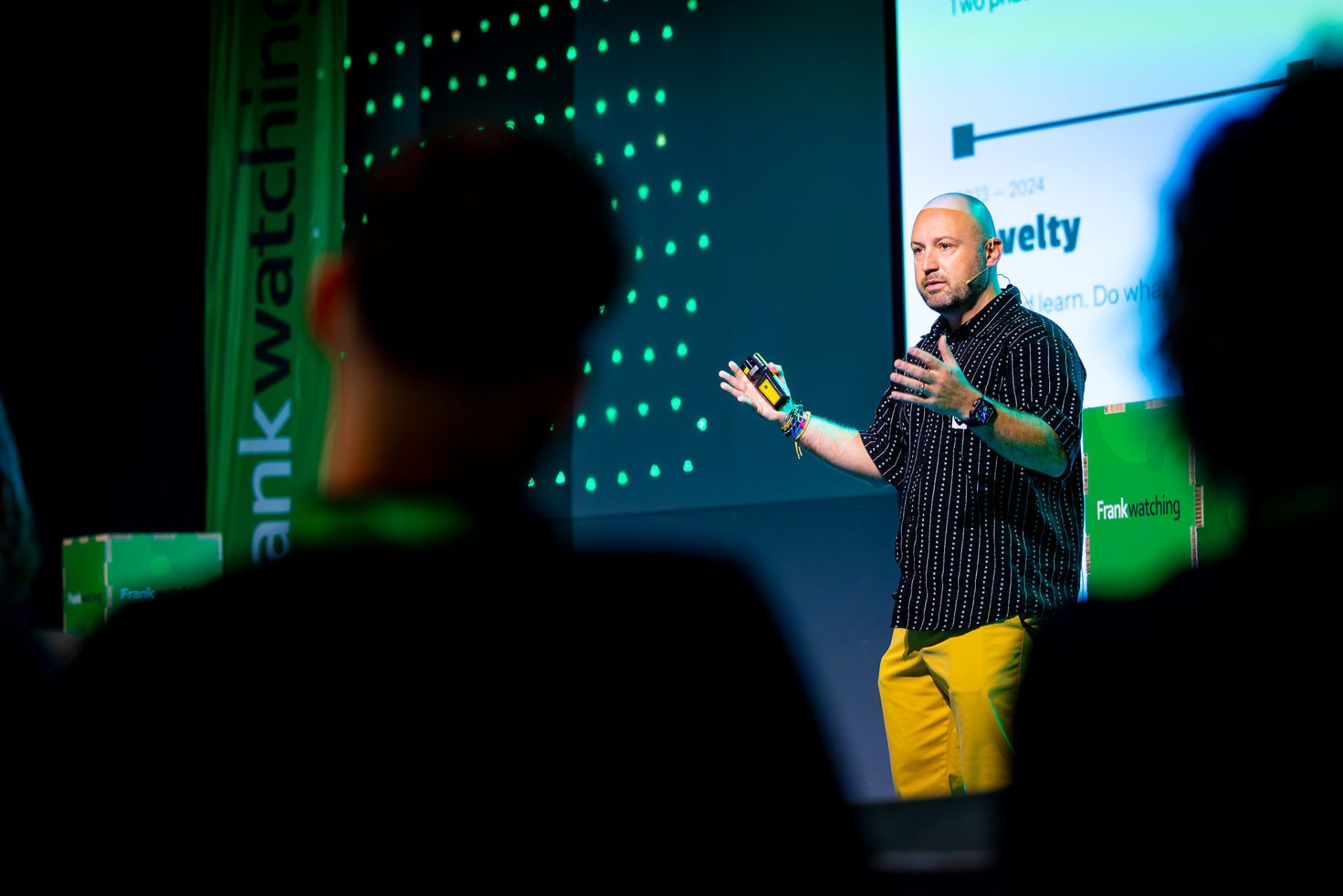
Kane Simms – Image: TONmedia
At the same time, we are still only at the beginning of the application of AI. The majority of implementations lead to average or even lower results. Half of the companies report no or a limited ROI. Implementations are often opportunistic, lacking vision and the question 'what problem are we solving?'. Yet companies continue to invest en masse, according to McKinsey figures cited by Simms. “What is the added value of a chatbot if you can do the same with it as self-service or FAQs on your website?”
For those who want to take a different approach, Simms offered the audience a model for the selection, design, build, and testing processes. In doing so, managers must be fully aware that this route differs significantly from what we were accustomed to with scripted bot applications. Rule-based means building everything from the ground up: every dialogue, every word, every question, and every answer. GenAI-based requires a reverse approach: putting an LLM to work and then simply pruning and limiting from there. The only, and not insignificant, similarity: LLMs are not suited to searching for the question behind the question. That requires extra effort, but GenAI can certainly help with this.
Complete reliability: not achievable
GenAI also helps increase reliability – for example, through automated testing. However, full reliability (the same question always leading to the same answer) is not achievable. Therefore, you must determine in advance: what does an AI agent look like that passes the test? When is it good and safe enough?
That issue—developing, testing, and improving based on good 'evals'—will become an important part of the work performed at a contact center in the coming years, Simms predicted.
The government actually does want reliable AI chatbots.
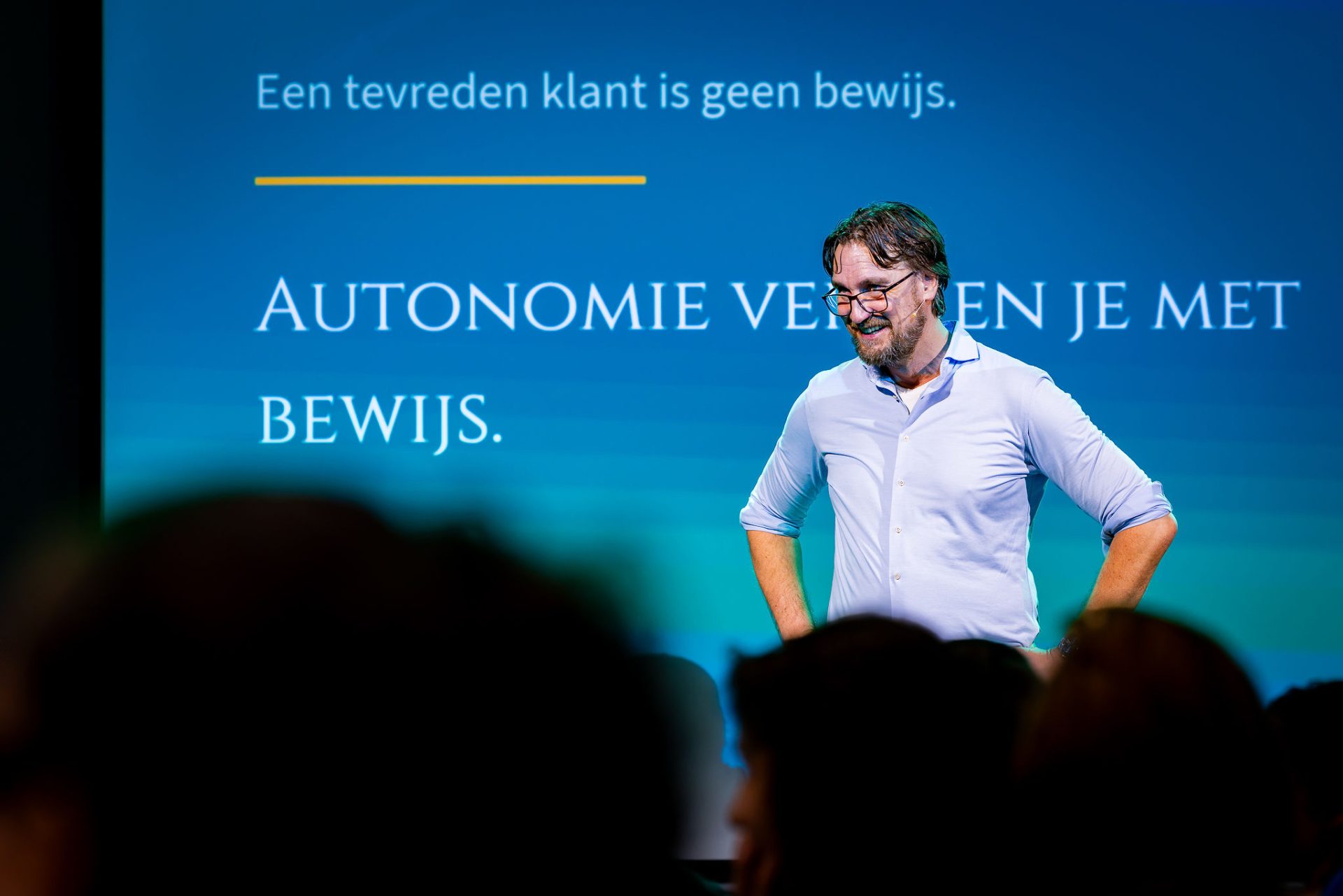
Daniel Verloop – Image: TONmedia
Daniel Verloop A representative from consultancy firm CivAI played a few conversations with voicebots during his presentation. The topic was requesting an extract from a municipality. Afterwards, he asked the audience at Conversational Conference 2026: what do you think of it? There were enough experts in the room to pass judgment: stilted and, above all, not compliant.
Verloop is, among other things, an AI specialist at the municipality of Montferland, where also chatbot Mai comes from what Ziptone has written about regularly. That municipality (with 36.000 inhabitants and 350 employees) is dealing with rising wage costs and staff shortages. The use of AI should be able to offer relief. Since 2025, Montferland has been experimenting with a voicebot. If that bot needs to be able to do more than just provide general information, you are dealing with subtasks such as verifying the caller's identity, checking any authorizations, submitting requests, and making commitments. That is when it gets complicated.
A satisfied customer is not proof of quality.
A satisfied customer is no proof of quality, according to Verloop. On the one hand, structuring natural, smooth conversations is a challenge; on the other hand, reliability is essential. A government bot must not make any slip-ups. Verloop emphasized: sensitive processes where certainties play a role must be managed with deterministic solutions. In doing so, do not look at the entire process, but at the various actions within a process.
What is the real value of human in the loop?
Human in the loop is often seen as the definitive control step intended to ensure approval, but Verloop calls this rubber stamping or a sham: is it always done literally and thoroughly? Transactions must be reconstructable, even after a year or so. Furthermore, according to Verloop, with more and more AI in our processes, we are gradually losing our grip. Who still knows exactly what Copilot has access to?
Back to the reality of the municipal organization. The implementation of Mai took place without a clear baseline measurement, so it is difficult to substantiate exactly what it has yielded; nevertheless, Verloop states that Mai resulted in a reduction of 10 to 15 percent in the number of calls across the board. That may not save money directly, but it does free up time that comes in handy: increasing workload does not necessarily have to lead to hiring extra staff immediately.
Responses from the audience addressed the idea that GenAI is not 100 percent reliable. Employees can also make mistakes; we actually have no idea because we only listen to three conversations per month per employee. Aren't we applying double standards if we set high demands on AI? What was missed: listening to three conversations per month per employee is indeed a meager form of quality control, but that can be improved by using AI.
Incidentally, the municipality of Montferland is busy reinventing chatbot Mai, more on which later.
From chatbot 1.0 to chatbot 2.0 at NS
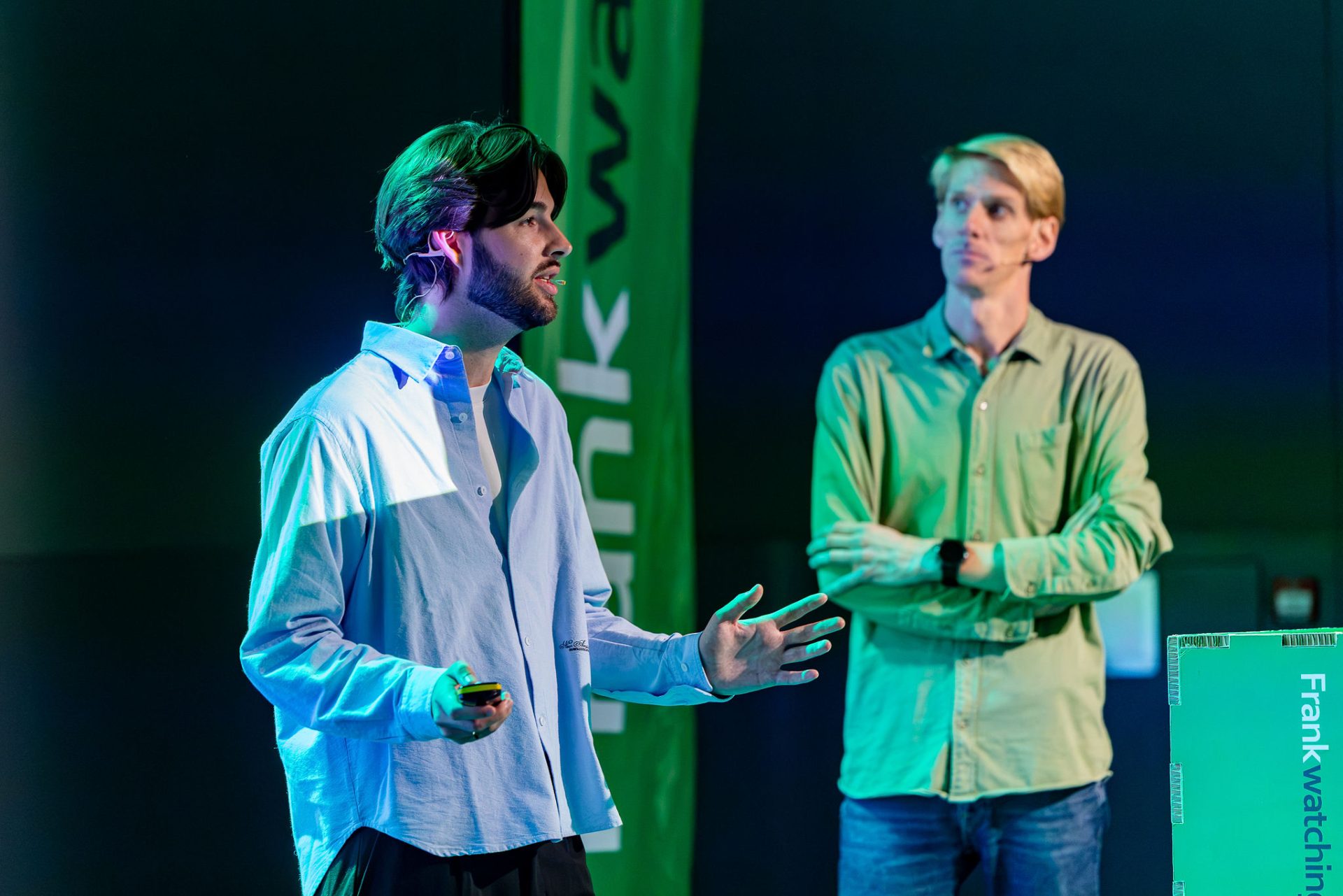
Jouke Bakker (l) and Siem Uittenhout – Image: TONmedia
How to go from a scripted chatbot to an AI assistant was presented in a very enlightening manner by Jouke Bakker en Siem Uittenhout of NS. In their story – what Ziptone regarding the best contribution to Conversational Conference 2026 – it also echoed what Simms said in his opening keynote: that change is not an adaptation, but requires a completely new build. Moreover, Bakker and Uittenhout showed what the impact on the organization is: various roles are changing drastically.
The duo talked about Jens ('your NS'), who has been running as a rule-based chatbot in the customer service environment since 2019. In 2025, Jens handled nearly a million conversations. These conversations often concern the literal customer journey: questions about travel, refunds, and subscriptions.
The scripted version of Jens was limited to predefined answers to predefined questions. Travelers primarily had to stay within the happy flow, according to Uittenhout, otherwise no correct answer would be provided. Improving intent recognition was one of the final development phases, but after that, Jens was truly ready for a complete makeover.
New building project
Three years ago, for the new development of Jens, NS opted for a migration to the Cognigy platform. At that time, agentic AI was not yet in sight; the use cases primarily focused on making Jens smarter and broadening its applications (such as sentiment analysis, summarizing, etc.).
One of the first steps that needed to be taken involved unlocking information by setting up RAG. This was initially done for a specific use case: lost and found items. That is a well-defined subject, but one with a high (emotional) impact. Nevertheless, this was chosen because the associated process had recently been completely revamped and was therefore well-documented. The rest of Jens remained scripted for the time being.
To make your content and processes suitable for an AI-powered chatbot, the LLM must be able to work with a defined set of information sources that are also made suitable for use by the LLM. One of the steps is referred to as chunking: dividing information into bite-sized chunks and selecting the right chunks for the right prompts.
Containment up, but containment is not 'what is really happening'
Implementing RAG as the underlying methodology increased Jens's containment performance from 59 to 79 percent. By containment, NS means that the customer does not have to proceed to an employee. Obstacles NS encountered included: Jens needs to be honest sooner if he cannot provide an answer, and large-scale quality analysis remains a challenge, according to Uittenhout.
Those containment figures don't tell the whole story, Bakker said later during the presentation; monitoring is needed to get a clear picture of what is actually happening.
RAG is a great solution for making your available information suitable for processing by an LLM. However, to answer more specific questions, Jens should also be able to look in systems other than the knowledge base, and additional APIs are necessary for this.
From assistant to orchestrator
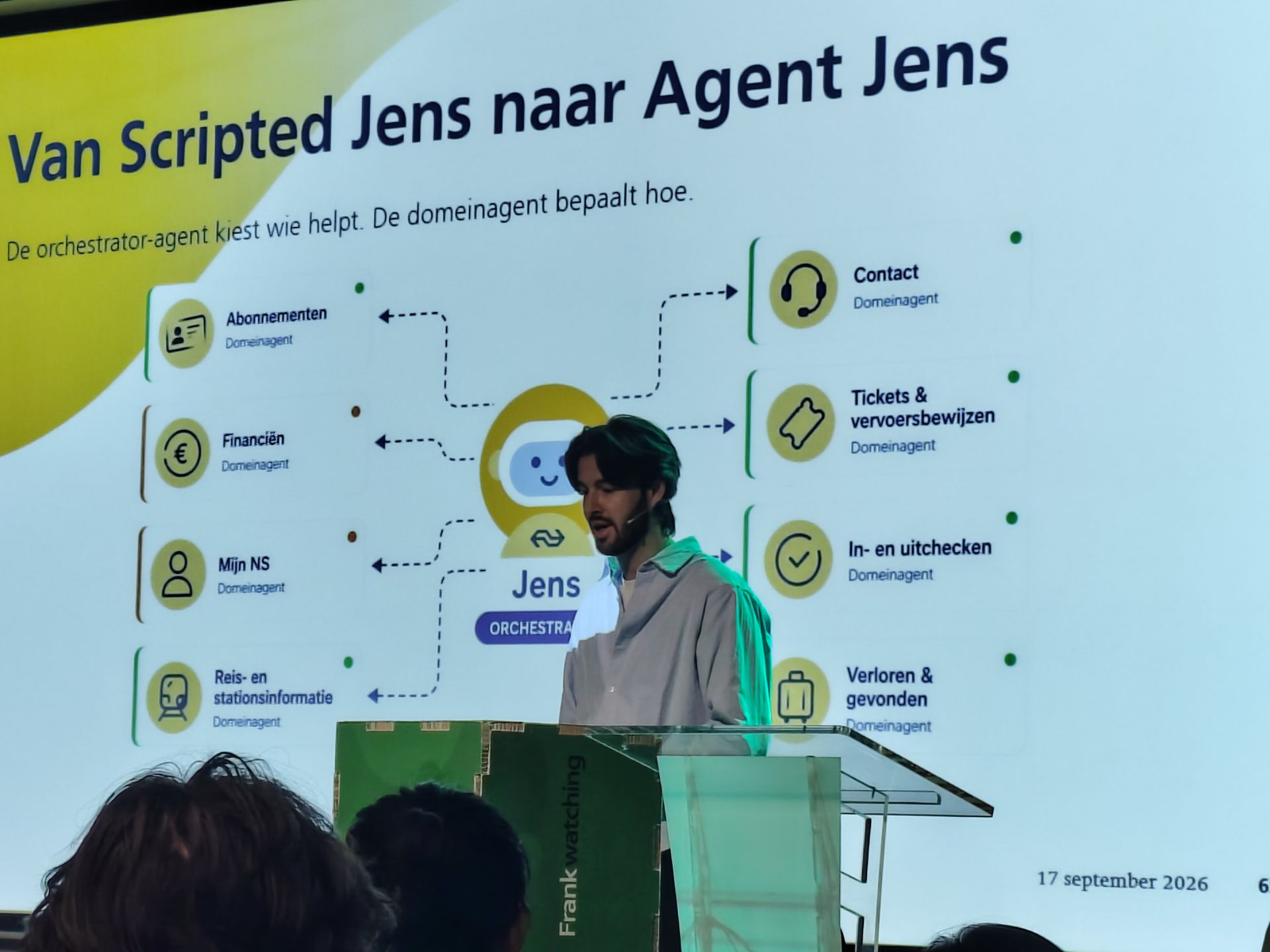
Image: Ziptone
Once Jens proved proficient with 'lost & found', it was decided to take the next step. Instead of a smart assistant, Jens was primarily to become an orchestrator capable of directing specialized AI agents.
At NS, these specialized agents are called 'domain agents,' according to Bakker, and six of them are currently live. For each domain agent, the scope has been defined, as well as the tone of voice, the area of operation, the guardrails, and the collaboration with the orchestrator. This collaboration was best illustrated by the example of the OV-fiets. The OV-fiets agent must collaborate with the subscriptions agent. Sometimes, orchestrator agent Jens determines that an agent must perform an action before another agent can be deployed. The domain agents run on GPT 5.5. NS has an internal GenAI team and purchases LLM capacity itself.
Unexpected customer behavior
Bakker and Uittenhout also clearly demonstrated that developing domain agents requires a completely different approach than setting up a scripted chatbot. Customer conversations remain the basis, but much more attention is needed for scope definition and risk assessment. Testing and validation are extremely important: not to determine whether the agent works, but to gain insight into the reliability of its operation. Because the use of natural language is the starting point for both the customer and the bot, it must be examined on both sides whether that language is being used as expected.
For example, some customers stick to entering three keywords instead of a full sentence. Other customers come with an extensive story and have high expectations.
NS opted for an A/B test by routing a small portion of the questions (for example, 5 percent) to the AI version of Jens and then analyzing the results themselves. If successful, that monitoring will be moved to AI, but NS is sticking to random checks by employees. Additionally, according to Bakker, customers are also providing clear feedback in their conversations with Jens: 'finally a bot that actually works'.
Other roles for the conversational team
Bakker and Uittenhout were also clear about the changing roles within NS’s conversational team. “As conversational AI specialists, we are no longer responsible for the content. That is what domain specialists are for. We do, however, rewrite the content for RAG.” In addition, NS must work towards the single source of truth that provides the basis for three different types of content: content for the website, for the app, and for Jens. “The content owners need to be trained on this.”
Jens: from rule-based chatbot to digital travel buddy
The conversations and topics Jens can handle are becoming increasingly complex. The next steps are that Jens will soon be able to perform actions as well – “our capacity is limited,” according to Bakker and Uittenhout – and that Jens will also start answering the phone. By that time, Jens’s workspace will also move; he is currently located within the service and contact pages. Soon, Jens needs to be prominently present on the front end of the NS app, and as a digital travel buddy, he can help you arrange your trips or your day out.
The Conversational Conference, organized by Frankwatching, took place on September 17 in Utrecht. The moderator was Tom Jessen.
Part 2 of the impressions of Conversational Conference 2026 follows next week.
(Ziptone/Erik Bouwer)


Also interesting
-

The upcoming edition of Conversational Conference will focus on how organizations can make automated customer contact work well.
-

The union opposes offshore outsourcing. “We want NS to choose quality, permanent jobs, and real service,” states…
-
NS has already outsourced customer contact, including in Suriname. NS is now seeking additional partners for customer contact at nearshore locations within the…