
When is customer contact 'affordable' – and for whom? How do you eliminate customer contact that doesn't add value to anyone? As a contact center manager, can you work with the 'polluter pays' principle? And how do you ensure that your brand promise is in line with the organization of your customer contact? This and more were discussed in the first edition of a series of round table discussions that the KSF organizes together with Ziptone.
Discussion leader: Tom Jessen
Image: Soraya Ebrahimi
Text: Erik Bouwer
The participants (from left to right):
Mark ten Oever, independent consultant
Ronald van Schijndel, CEO Concentrix Netherlands, Suriname and Curaçao
Laila de Rooij, director of Valuable Customer Contact Chamber of Commerce
Evita Sorry, manager of customer contact department PMT and Merchant Navy at MN
Ramon Delima, global director customer service TUI group, chairman KSF
Doortje Maris, manager support members service center ANWB
Discussion guide: Tom Jessen
Let's start with the question: what do you mean by affordable customer contact?
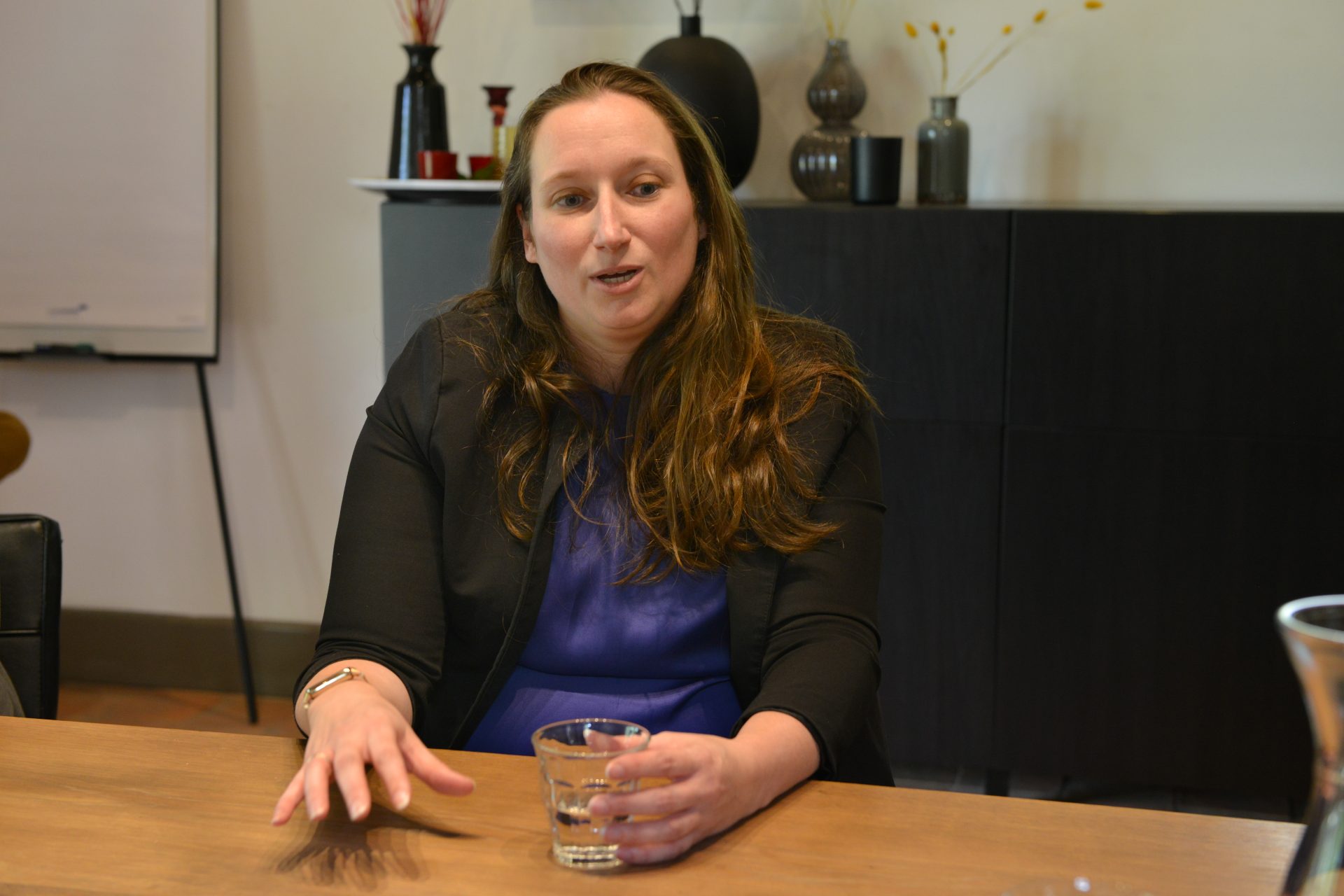
Laila de Rooij, director of Valuable Customer Contact Chamber of Commerce
De Rooij That is a good question. Our definition is quite broad. It is affordable for us if we provide really good services with added value that the entrepreneur is satisfied with. We have two types of customer contact: regular and entrepreneurial advice. In the latter case, the service may cost more. We also focus strongly on what our customers can do themselves. There are still many opportunities to further digitize processes. 40 to 60 percent of our customer contact is caused by ourselves: there is still much room for improvement in that area.
Pomegranate Our focus is mainly on it affordable maintaining customer contact, while the company wants to grow further. We will have to investigate where the customer contact comes from. In our opinion, questions about confirmation of a reservation are not necessary: we must communicate clearly. If customer contact employees spend an average of one minute per conversation searching for information, then that minute is unnecessary. If you can solve this with technology, you give a minute back to the customer and make the employee's work more pleasant. Our contact-to-book ratio was initially 2,2 over the entire booking and trip. Based on benchmarks, that was too high and we have already managed to improve by 15%.
Marijs How did you do that?

Ramon Delima, global director customer service TUI group, chairman KSF
Pomegranate Look at why contact is being made. We rarely say 'please call us', we prefer to wish someone a pleasant journey. We have moved away from the anecdotal 'there are a lot of calls about payments'. The employees had known for a long time that the online payment process did not work optimally. But until recently, this was not listened to. It helps if you can link numbers to it. About 10 percent of our contacts are directly related to payments. Then you also know what the costs of that customer contact are, say 800.000 euros per year. We then go to the financial department to discuss improvements in the online payment process. Previously, the argument was often that improvements cost time and money. Now we can say what savings are involved and then something like this will be higher on the priority list. It also shows that you can save costs and increase customer satisfaction. Because our customers have better things to do than calling about a credit card transaction that is not going well.
Marijs Our customer contact is affordable if our clients want to pay us. The ANWB has various business units that use the member service contact center. We calculate this neatly on the basis of p times q. For us, it is the polluter who pays: if the ANWB energy app shows strange graphs, calls are made about this and we make this clear, also during conversations with clients. Then we determine which processes can be improved. We have a contact reduction program: we have insight into what waste calls are and which calls are valuable. Right now, I estimate, the ratio between the two is about 50/50. A few years ago that was still 60/40. So things are moving in the right direction, as a result of intensive discussions about the causes of customer contact. What works well, for example, is collaboration around online member retention. An important reason for cancellation is death, for which we have set up an online death service desk that makes it easier for the customer and in which all relevant parts of the ANWB are connected. But zero percent waste calls, that is not realistic.
Sorry Who decides whether it is a waste call: the ANWB or the customer?
Marijs You can change your address online, but not every customer uses the online option. The challenge is to promote that.
Van Schijndel At BPOservice providers determine to clients what is affordable. Until a few years ago, we were mainly asked to provide flexibility. But then you are not actually helping to improve processes. Even now we often see that within organizations the different departments do not work together as a chain. This contributes to customer contact that you would rather avoid. It is important for a BPO service provider to be able to make the costs transparent and to get the attention of the decision makers.
Is customer contact purely an operational process?
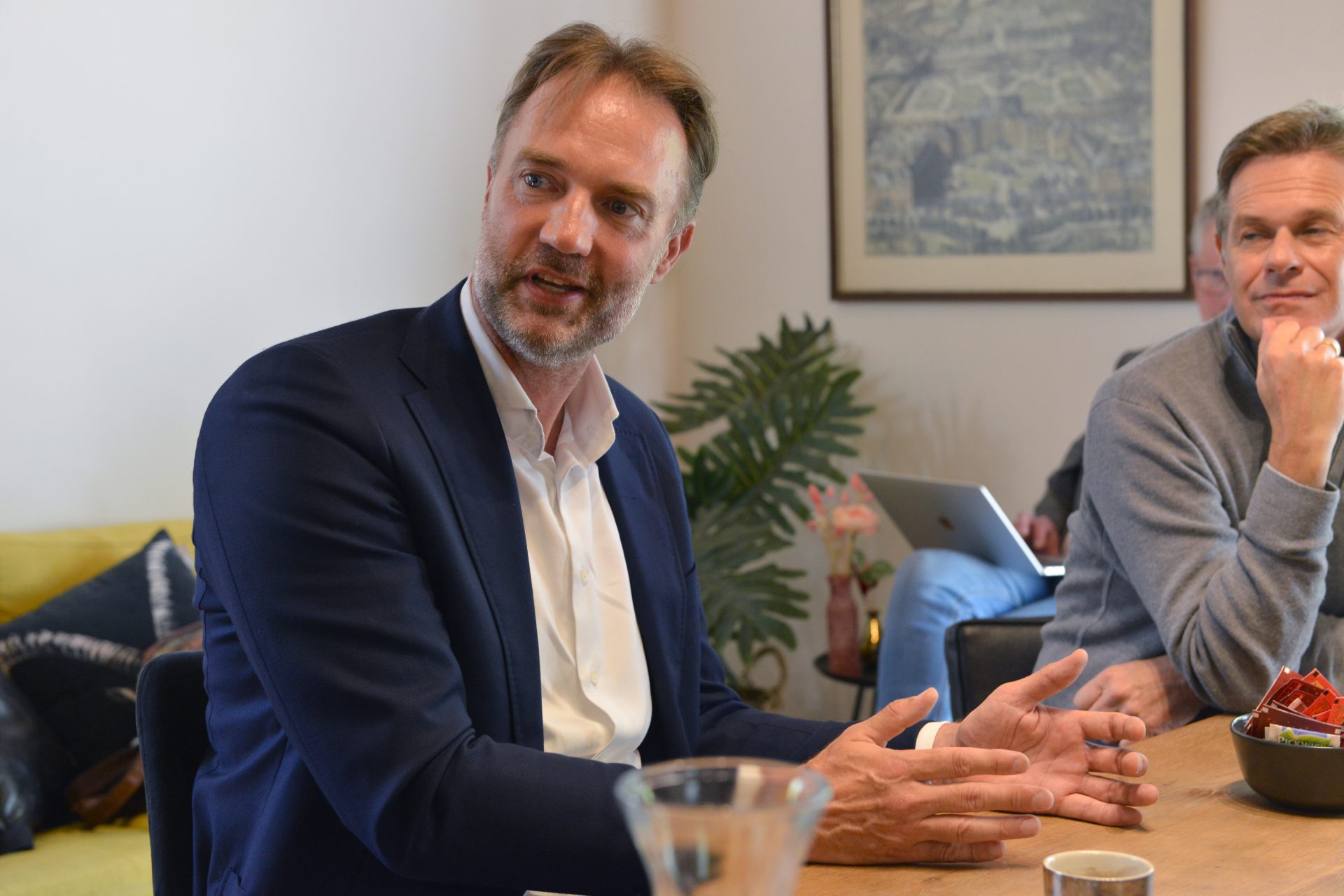
Marco ten Oever, independent consultant
Ten Oever It is more than an operational process, because it is an essential part of your image. As a company, you must fulfill your brand promise and shape your customer contact based on this. If you see customer contact as a cost item, you avoid this challenge or you are only concerned with cost savings. I was responsible for XS4ALL's customer contact organization for five years. There I saw that the vision on customer contact determines the image of your brand. You can also do everything we've discussed here so far from that specific perspective. XS4All's brand promise was to provide the best customer service in the IPS market. The decision was made to first do what was best for the customer and only then to look internally at how you could earn money from the customer. In many companies it is the other way around. At XS4ALL, for example, no communication went from marketing to the customer without customer service having looked at the impact on customer contact.
De Rooij Our brand promise is 'support for entrepreneurs'. We have translated this into service promises that are in line with our brand promise. We are now rolling this out internally, for example by enabling employees to be 'reliable' and 'helpful'. We involve other departments in this through a separate team. This has various disciplines on board and extends from customer contact throughout the entire organization. Consider IT automatically providing confirmation when a customer has requested a change, so that it is clear that the change has been implemented correctly. Or think of workshops that we organize for different departments. We also measure how our customer contact and our brand are perceived.
Sorry Our customers are required to participate in certain schemes. I am not primarily concerned with cost savings. In fact, we look at customer contact from a completely different perspective: how can we offer the pension participant, who calls us an average of 1,7 times, as much value as possible at those times? From a process perspective, there may be customer contact that we would rather not have. But when our participant makes contact, I don't think it is up to us to determine whether that contact is waste or not. Apparently the participant needs us at that moment. Of course I am dependent on the space that our clients provide for this. We currently only have agreements about accessibility and customer satisfaction – the former is a prerequisite for the latter. We have dropped other KPIs. If, in collaboration with the WFM team, I can substantiate why I need more people, our clients will trust that we are making the right choice. And no, that is not the same as carte blanche.
Pomegranate But when does customer contact become too expensive?

Evita Pardon, manager of customer contact department PMT and Merchant Navy at MN
Sorry It will become too expensive if our accessibility becomes too high. That is why we also work with a flexible shell to absorb peaks. Life events are often the reason to call us. Then we can add extra value. Starting point of the Wtp is that participants are given more space to make more choices and also feel more involved. But this will differ per participant, even within an industry. For example, we are dealing with low literacy. We want someone to look us up digitally, but if someone doesn't understand, we prefer someone to call. On the other hand, I am aware that every contact that we have caused ourselves or where we could have done better, has a direct impact on the cost per participant.
De Rooij Do you do anything in the field of low literacy, for example teaching employees how to deal with vulnerable groups?
Sorry A large part of our conversations is about clarifying the question behind the question. Some of the people who contact us often do not understand their own question. We write our texts at B1 level and do everything we can to make it as understandable as possible.
Ronald, what do you currently consider to be the biggest bottleneck for contact center managers?
Van Schijndel The tightness on the labor market and rising wages. I also see this reflected in our clients. The salary of customer contact employees has increased explosively in the past two years. Technology can make customer contact cheaper, but nowadays there are many options and making choices is not easy. Employees are asked to acquire a lot of knowledge in a short time. This information must therefore be readily available. I am sometimes shocked by the quality of the current knowledge bases, but I expect that many major steps can be taken in this area in the near future.
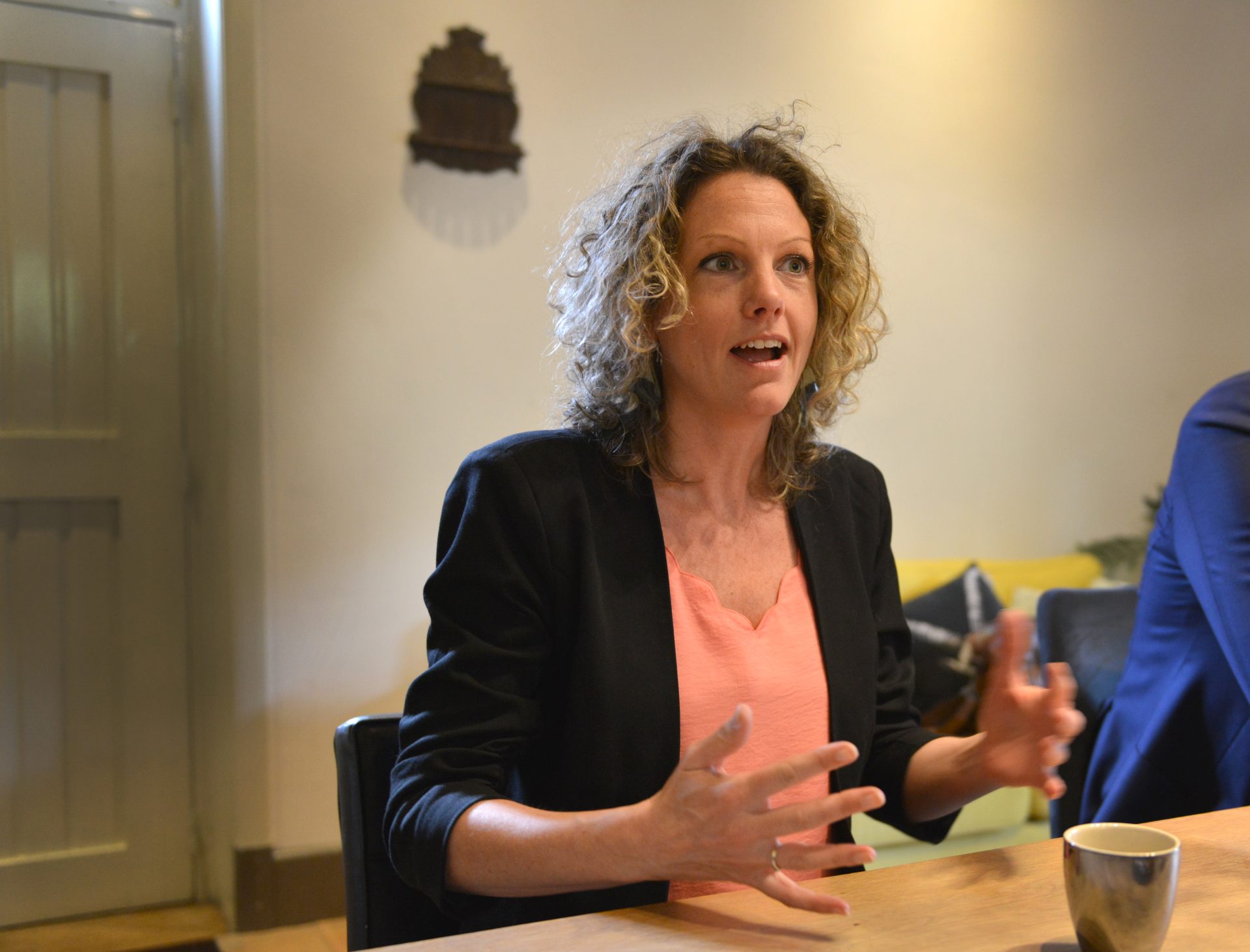
Doortje Marijs, manager support members service center ANWB
Marijs We are now fully engaged in AI. You can easily request a change of address with a voicebot. That should start working this quarter. We also develop our own ChatGPT. This means that different types of systems must be examined per customer, per question and per product, taking into account legal rules. How to make all this scalable is a challenge. It's nowhere yet proven technology. Employees still have to search a lot, so here is a starting point for keeping customer contact affordable and maintaining job satisfaction. We train employees extensively in searching for information, but we prefer to make it as easy as possible. And many employees drop out because of the high level of knowledge.
De Rooij We are busy purchasing a new customer contact platform. Once that is implemented, I expect we will do more with AI. We are already conducting experiments within the knowledge base and the website to provide employees with targeted information. I also see opportunities in automated summarizing and logging, but as far as I am concerned, this technology is supportive for employees, also to keep them happy at work.
Pomegranate We have experienced technology waves in this field before, but the current wave is really going to put customer service on the map. For the first time, discussions are visible at board level: should we invest in customer service technology or in marketing? Before, we didn't even appear on that list.
Sorry We work with a customer contact system from Pega where AI functionality converts conversations into text and makes suggestions for drafting emails. Our first experiences are positive, we are still working on introducing this technology.
Ten Oever A new era is coming. We have been saying for about ten years that technology is changing our profession, but the pace of change is now a lot faster. Companies are now choosing platforms that can deal with these changes. The learning curves can become even steeper if customer contact professionals exchange more information with each other. We can use the institutes we have for this even better: really learning from each other in a safe environment. I have benefited greatly from those kinds of exchanges in the past.
Then finally. How can the customer contact manager improve the relationship with the board?
Ten Oever It starts with understanding your own business and being able to explain where the costs are. You need to understand the entire organization to understand the impact of components on customer contact. And you need to understand how you can help them help you. No, you are not asking too much of the customer contact manager; it's your job. Understanding what's happening in your business is an essential part of this role.
Pomegranate For a long time, the customer contact area had the feeling that it was not being taken seriously. That's a bit of a chicken/egg issue. If customer contact managers want to have a voice on the board, they must also play the corresponding role. So don't think from that operational shower drain, but position yourself as the gift to the organization. We can indicate exactly where in the company the 'waste' is located.
Ten Oever And you must be able to put yourself in the perspective of others at the table.
Sorry What can help with this is allowing employees to grow from within the customer contact organization. That is one of the reasons why we work with students. At MN, for example, former customer contact employees move on to marketing and communications. Those growing people indicate to their managers: our participants do not want this, I have spoken to them on the phone. For us, a concept such as customer needs seeps through the entire organization. Explaining what customer interests are is not something that should only come from the customer contact department.

Ronald van Schijndel, CEO Concentrix Netherlands, Suriname and Curaçao
Van Schijndel The risk is indeed that customer contact managers remain too operationally focused. The trick is to deduce the main points from the large volumes you deal with in your services and get them across. It helps if you don't push it too hard. In 2015, we were in discussions with a major player in public transport to see if part of their customer contact could be moved to Suriname. That was quite sensitive. The question was also how we could provide employees in Suriname with sufficient context. We had two Surinamese employees travel to the Netherlands and made a video of how they organized their own train journey from Schiphol to the head office of this carrier. That became a very educational video for everyone involved: it came to life and provided new perspectives for management and directors. In addition, as a contact center manager you must be able to bring an NPS or customer satisfaction score to life based on customer examples.
De Rooij We also share customer experiences in management. In addition, the various management members are responsible for digitalization and for reducing customer contact - their department has a share in customer contact. I still bring a lot of data and experience here. But it helps our COO to drive improvements more easily. Consider abolishing the process whereby you have to pay 1 euro cent when making a change due to the authentication of the applicant. An improvement initiative is to increase the security level, so that this transfer is no longer necessary. Everyone happy.
Marijs We also explain customer signals and board members listen along. But what Ramon says is correct: the time is now. An exciting period has begun. Executives have very high expectations of AI. ANWB is still growing, but allowing customer service to grow along with it is not feasible given the labor market. We will have to invest to maintain the status quo and to cope with growth. I definitely believe that AI will support the employee, but the biggest challenge is how we make AI work in the existing IT landscape.
(Ziptone/Erik Bouwer)
The Koetshuis Discussions – In 2024, trade association KSF and trade magazine Ziptone will organize four round table discussions on current topics in the field. The discussions take place in Doorn and are led by Tom Jessen; Ziptone reports. Topics on the agenda include the affordability of customer contact and the development of the profession.


Also interesting
-

Voice training for agents is often neglected, while their performance can only be heard thanks to the use of their voice.
-
Zaturdag will work at Customer Contact.nu as a consultant for customer contact professions.
-

Duijvestijn previously worked at Cvision, TMG, Santander and Mastermind, among others. He was also a board member of KSF and Stichting ITO.