
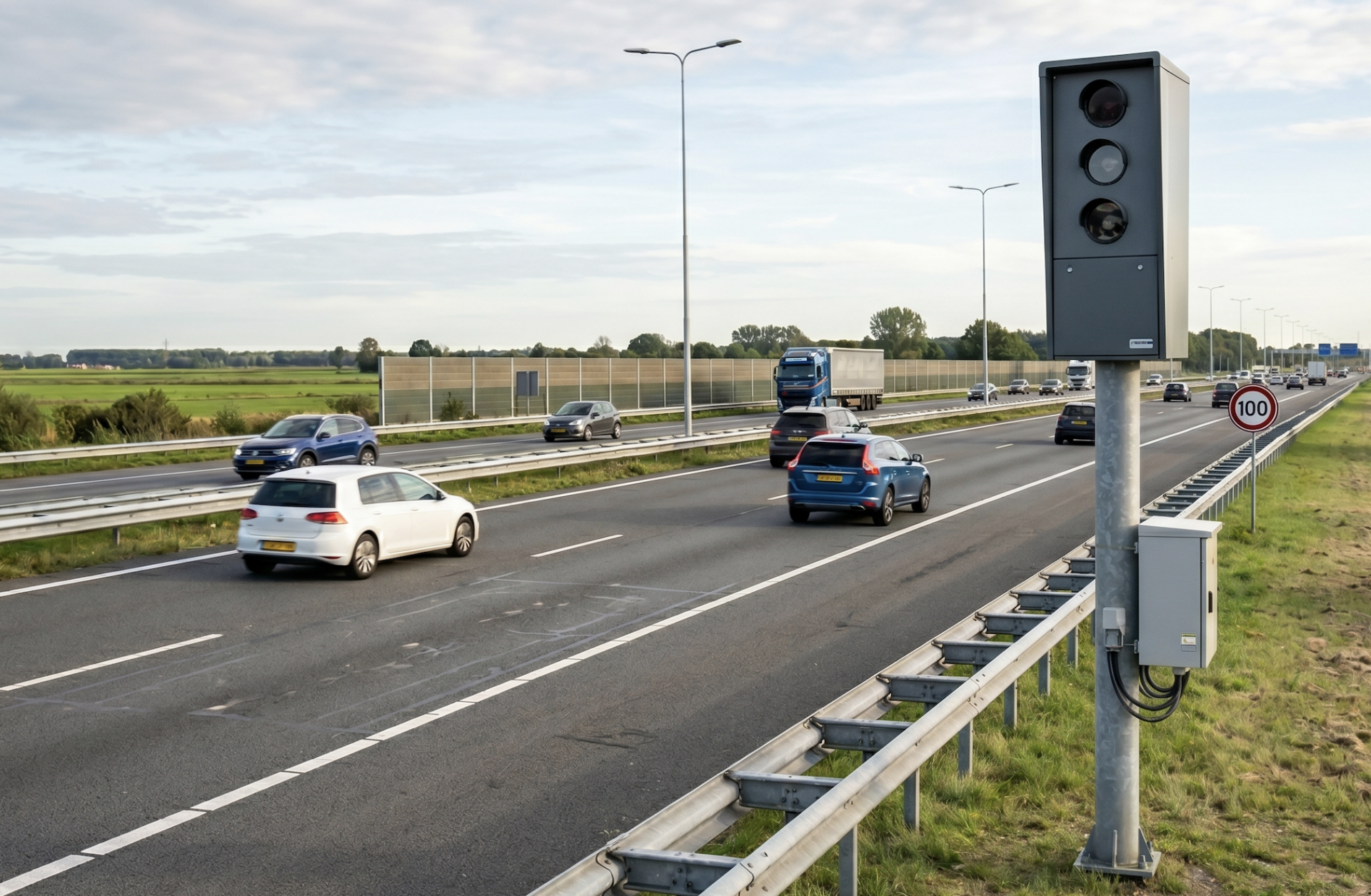
Image: Ziptone/Gemini
There was a time – and it wasn't even that long ago – when the traffic manager walked around the customer contact center like a kind of human speed camera. Not always well-liked, but certainly necessary.
He (or she) had an overview, a cup of coffee, and above all: rules. Lots of rules. A break at 10:00 means a break at 10:00. Not at 10:01. And if you went at 10:01 anyway? Then you heard about it immediately. Immediately as in right away, but also immediately as in bluntly.
De traffic manager was the police officer of the floor. Although he or she preferred to call it the enforcer of schedules. It was a role that kept one eye on the dashboard and the other on the floor. A remarkable person, but with the power to shift your lunch from 12:00 to 13:00 “in the interest of the service level”. The word autonomy appeared in his or her dictionary about as often as “free afternoon for everyone”.
Fast forward to today and tomorrow
We see and hear it everywhere: the playing field is changing, continuously and ever faster. The customer expects immediate service. The employee expects trust and autonomy. And the organization expects… well, actually, everything at once. In the midst of that hurricane of expectations, the traffic manager still stands. Only the whistle has been exchanged for a baton. The police officer must become the conductor.
The arrival of AI is changing customer contact across many different domains, including traffic management. While the focus used to be on making adjustments and repairing the damage, it is now shifting towards interpretation and facilitation. AI-powered WFM tooling predicts peaks and valleys based on relevant live metadata and might even consider the mood of your customer service representative on Thursday morning.
The classic reflex – “I must intervene” – is giving way to a new reality: the system often knows better. And that is where the problem lies.
After all, how do you bring along someone who was successful for years by maintaining control, enforcing rules, and correcting deviations? Someone who built their career on minimizing uncertainty now enters a world where uncertainty is a knob in a system that you can turn.
The first reaction is often predictable: digging in their heels. “That system doesn’t understand our business.” “AI can’t account for Piet, who always comes back late from his break.” “We are not a standard contact center.” And to some extent, they are right. Technology is not a miracle cure. AI does not solve everything, and certainly not without human context.
And now what?
The challenge, therefore, lies not in replacing the traffic manager, but in reinventing the role. Not making it less important, but actually more important. Just important in a different way.
The new-style traffic manager is not an enforcer, but a director. Not someone who monitors every movement, but someone who makes the interplay work. Someone who understands how AI works, but also where the limits lie. Someone who uses data, but takes into account and understands the story behind it. Someone who doesn't say, "You have to answer emails until 12:00," but asks: "What do you need to be at your best, and how does that fit into the bigger picture?"
It sounds like a beautiful, alluring prospect. And it is. But it demands quite a lot.
From organizations, to begin with. Because you cannot expect someone to transform from a traffic officer to a conductor overnight without support. Training, coaching, room to experiment – these are not luxuries, but prerequisites. And perhaps even more important: psychological safety. Because making mistakes is part of the process in a world where not everything is predetermined anymore.
But it also demands something of the traffic manager themselves. Curiosity, for example. And the willingness to let things go. The latter is perhaps the hardest. Giving up control feels uncomfortable, especially if you have been judged for years on identifying deviations and reacting to them.
Yet that is precisely where the key lies. For the more you cling to the old model, the greater the frustration becomes. For yourself and for the organization.
From dashboard pusher to performance architect
And then there is the new generation: the traffic managers now rising up in a world where AI is not a threat, but a matter of course. For them, the question is not “can I trust this?” but “how do I get the most out of this?”
That calls for a different job profile. Forget the classic vacancy text with bullet points like “stress-resistant” and “can switch gears quickly.” That all remains relevant, but it is no longer distinctive. The traffic manager of tomorrow thinks in scenarios instead of schedules. Quickly sees causal relationships and acts on them. In short, less of a dashboard pusher, more of a performance architect.
And yes, that clashes with the image of the past. But let's be honest: that image wasn't always the be-all and end-all either. After all, how effective was that strict hand on the break policy actually for employee engagement? How sustainable is a culture of control in an era where employees have freedom of choice?
Perhaps the transition from police officer to conductor is not only a technological necessity, but also an opportunity to finally mature the profession.
The rules of the game have changed. And adapting is not a weakness, but craftsmanship.
So to all traffic managers with 10+ years of experience: you are not redundant. On the contrary. Your experience is worth its weight in gold. You know the dynamics, the pitfalls, and the reality behind the numbers. But the rules of the game have changed. And adapting is not a weakness, but craftsmanship.
And for the organizations: stop looking for the stress-resistant bogeyman. Look for people who can see the big picture, who embrace technology, and who understand that customer contact ultimately remains human work – even as AI plays an increasingly louder part in the orchestra.
For one thing is certain: the music does not stop. The only question remaining is… who is standing in front of the orchestra?
(Ziptone/Mark Elschot)


Also interesting
-
The Dutch Council for Refugees will largely cease supporting asylum and family reunification applications as of December 1, 2025. The IND contact center has been scaled up.
-
Completely reversing the work-from-home option isn't a solution to a leadership problem. It's a missed opportunity.
-
Customer contact is an important part of the care process. You only realize just how important it is when you don't get an answer to your…