
Recently, the 'soft launch' of took place in Suriname. Crisis hotline 114The Mind Matters Foundation, also the driving force behind the collaboration with the Dutch helpline 113, contributed to the relaunch. Ziptone spoke with Eva Stroo of Mind Matters about both helplines.
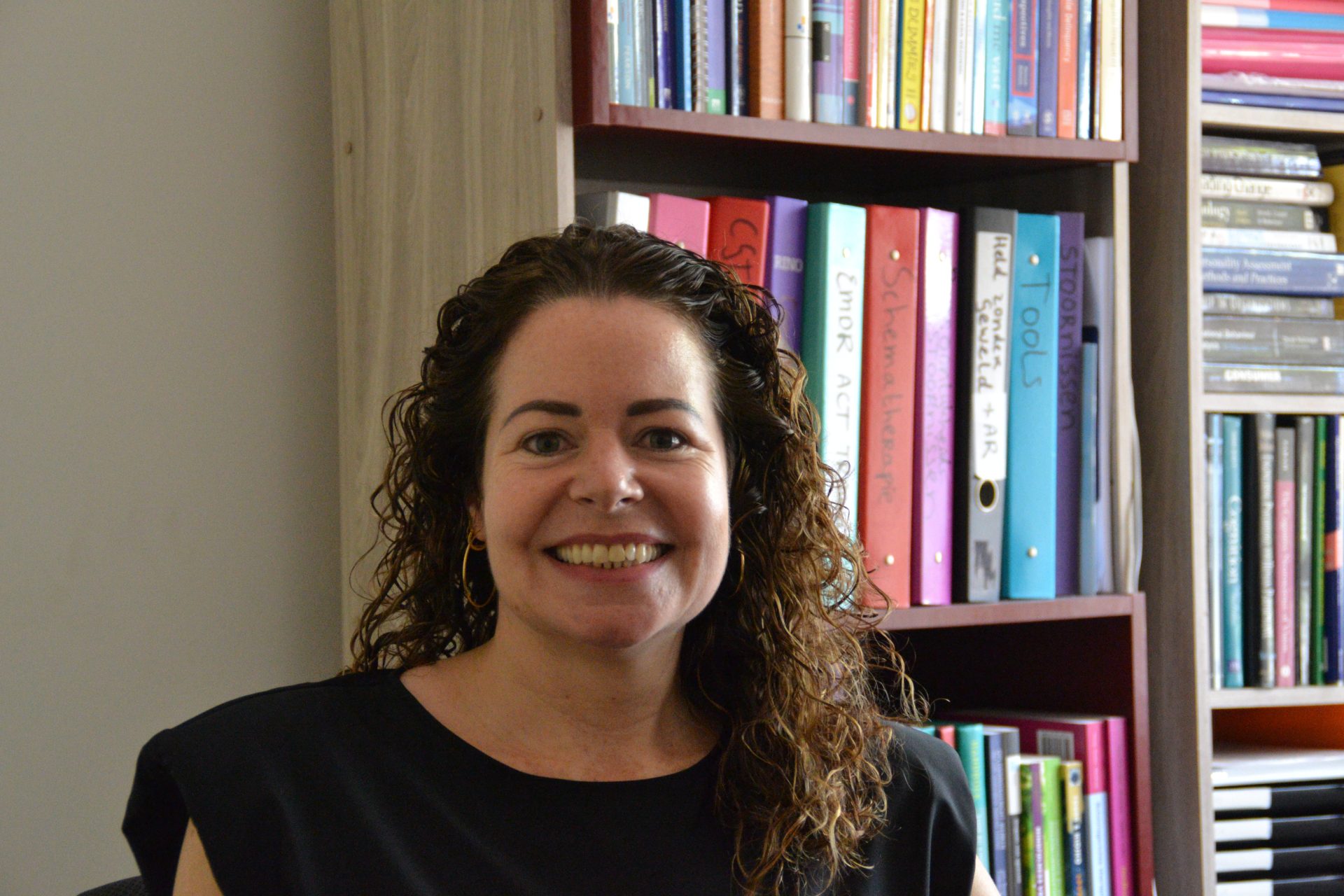
Van Stroo, Mind Matters – image: Ziptone
Mind Matters started in Paramaribo in November 2021 with the answering calls from the Dutch 113 Suicide Prevention. Initially, they worked with three counselors; now, twenty shifts a day are covered by a total of fifty employees. “It is getting busier and busier,” says Eva Stroo of Mind Matters. “We work seven days a week.”
To ensure everything runs smoothly and to maintain high quality, there are six floor managers, an operational manager, and a people & process coordinator. Space has also been expanded within the existing building.
Relaunch for Crisis Helpline 114
The 113 line is only accessible to callers from the Netherlands – after all, that is where the funding comes from. But Suriname itself also needs a helpline. The Surinamese Crisis Helpline 114 had existed for some time, but was discontinued at some point due to financial and technical problems. The current relaunch Stroo therefore calls the launch of Crisis Helpline 114 a great start. “This country ranks fifth worldwide in terms of the number of suicides. Psychologists are difficult to access here: there are waiting lists and it is barely affordable for most Surinamese people. Talking about emotions is still a major taboo in this country. Crisis Helpline 114 is accessible to everyone and people can call anonymously. I really hope this will make a difference.”
Train extensively
“Deputy Minister Raj Jadnanansing of the Ministry of Health, Welfare and Labor has pushed hard for the reopening,” says Stroo. “The lines of communication are short here; he is well informed about what we do at Mind Matters.” That is why Stroo’s organization was also involved in redesigning the helpline.
Mind Matters has trained the first cohort of employees – two groups with a mix of experienced staff and students of psychology, sociology, and public health – for six days per group. “Following this, we will coach these employees for another four months. In addition, we are providing a train-the-trainer program so that 114 can continue on its own afterwards.”
It is essential that the financing is now better organized and falls under the ministry. “There is now a good foundation with good facilities. I am confident that it is now designed to be sustainable.” Technical and financial support has also come from the Pan American Health Organization (PAHO) and the World Health Organization (WHO), as well as a number of national partners, including the Surinamese telecom company Telesur. In addition, the Dutch 113 has funded the training of the second group of employees.
Broad scope of work
The service area of the Surinamese 114 line is broader than that of the Dutch 113. “114 is a general crisis line,” explains Stroo. “So you can call about substance abuse, domestic violence, and certainly also about suicide. Currently, this is only possible by telephone; there is no chat channel yet.” Helpline 114 is open from 7 a.m. to 22 p.m., divided into two shifts, currently with three staff members in each. The Crisis Helpline must first see how requests for help come in during the coming period and possibly adjust its approach accordingly.”
Pressure on the labor market
Getting the first two groups of counselors for 114 on board did not happen automatically, however. The downside of government funding is that the pay for these employees pales in comparison to the wages offered by outsourced contact centers, for example. Around 10.000 people currently work there, according to a recent estimate by recruitment specialist Hofstad Search. The outsourced sector therefore extracts a lot of talent from the market that is subsequently unavailable for a societal role. “I also sometimes hear: you run a call center, but social work is really a different ball game,” says Stroo.
The official launch of Crisis Helpline 114 in Suriname will follow in the middle of this month. “That will generate more awareness and may subsequently require an increase in staffing,” says Stroo. “Deputy Minister Jadnanansing is still working on further funding. And some technical matters still need to be arranged. So help is welcome for 114.”
(Ziptone/Erik Bouwer)


Also interesting
-
Suriname has relaunched the national mental health crisis hotline, accessible via one central and free telephone number.
-
The discussions about working conditions, the availability of talent and the sustainability of growth are becoming increasingly visible.
-

TP sees the Surinamese service culture as a strategic advantage in a market that is increasingly digitalizing and automating.