
Good data management and well-thought-out processes are success factors for the use of AI in customer contact, as was shown by two very different practical examples around AI and chat. Impression of day 3 of the CCW congress.
On the third day of the CCW2025 conference, the audience was treated to stories from, among others, YouTuber Alicia Joe. Her promise was to talk about 'service content', but she failed to make the connection with customer service. While in this area the examples are there for the taking, in her home market of all places. Siemens, for example, makes super handy support videos for their coffee machines, which can help you prevent service questions and suppliers also participate in these types of videos. The presentation of clothing brand Brax – which wanted to become a 'Love Brand' – was also not very relevant for customer service.
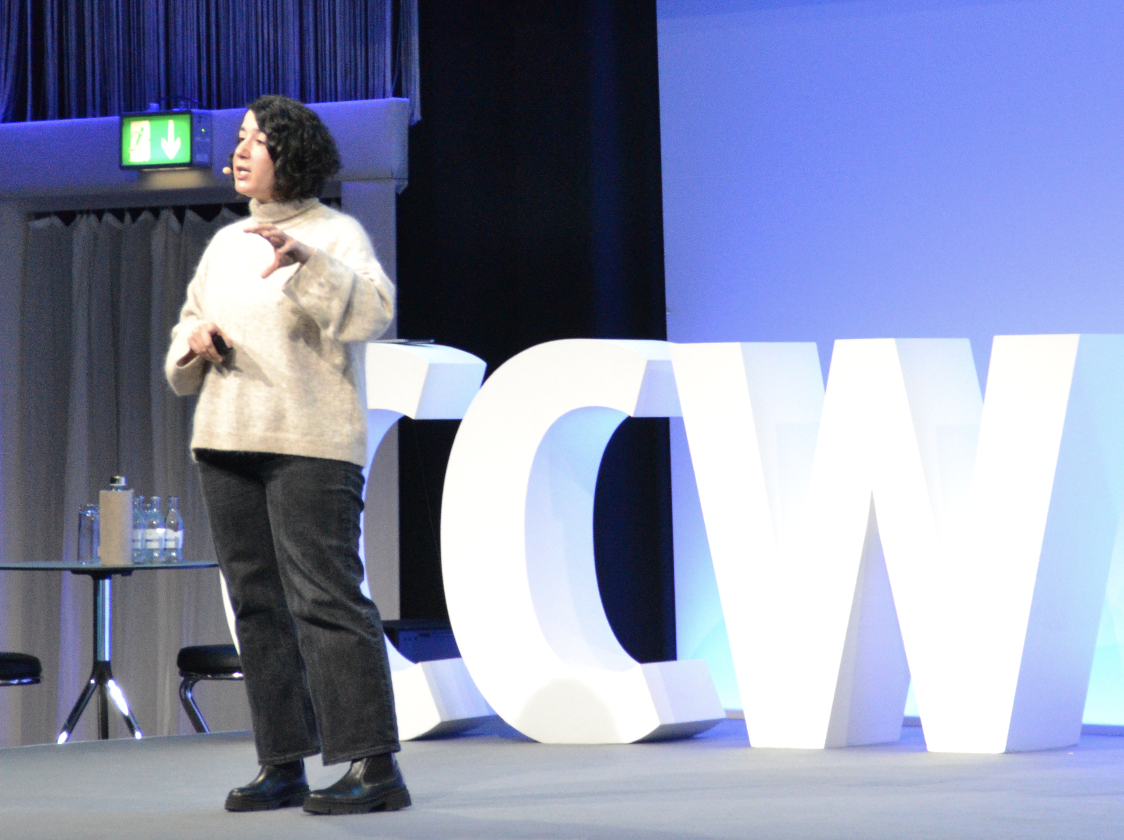 Fortunately, there was also a successful presentation of Faridah Shatanawi (associate director error recovery at HelloFresh Group). HelloFresh works with a short supply chain, which means that ingredients reach the customer faster and the company can make a higher. She explained how the global market leader in 'integrated food solutions' deals with customer contact. Cost savings also contribute to the margin there, it became clear.
10,5 million customer interactions annually
HelloFresh delivers over a billion meals per year (2023) via multiple brands, which is accompanied by 10,5 million interactions per year. Customer contact is done in ten languages via HelloConnect, an in-house BPO or captive in the Philippines. The company also works with external partners.
Shatanawi discussed the chatbot, real-time translation of live chat in combination with offshore customer contact and quality management; in all three cases AI plays an important role.
HelloFresh’s chatbot is there to provide customers with 24×7 support. The chatbot handles 40% of the questions, so that – a frequently heard argument – customer contact employees have more time for the more complex questions that come in via other channels such as live chat. The chatbot also takes customers to the right place in their own account, where they can immediately arrange matters such as updating meal boxes, moving deliveries and cancelling orders.
Chatbot as 'overflow'
If the (multilingual) bot recognizes complex problems, it switches to live chat itself. For HelloFresh, the chatbot also provides flexibility: during busy periods, such as around the holidays, it absorbs the blows. The Scandinavian languages were a stumbling block during implementation. Intent recognition in particular proved problematic there, AI needs to be trained more, which requires manual work or 'hard coding'. This was not necessary for Dutch (and English).
Real-time live chat translation from Manila
Secondly, HelloFresh uses real-time translation in live chat. The company started this 2,5 years ago, with a team of 8 employees in the Philippines and with live chat with Dutch customers. The questions are translated from Dutch to English, after which the agents in Manila give an answer that is then translated back into Dutch. This method has now been scaled up to 100 employees and multiple languages, which results in significant cost savings. This facility also contributes to flexibility.
Copilot and AI analytics
Thirdly, HelloFresh has started using Agent Copilot. The AI-driven assistant supports agents in real-time during live customer contact by providing answers and solution proposals. FAQs, SOPs and knowledge bases are used for this. The Copilot is also used for the automated creation of summaries.
Finally, HelloFresh started working with Chattermill's analytics solution to convert customer feedback into actionable insights that can increase satisfaction and loyalty. Sentiment is measured in real time across all channels (voice, chat, social media), and other processes such as agent performance, delivery issues and product complaints are also included. The insights are used to improve processes and to coach and train agents. For example, agents in Manila were instructed that they can communicate 'directly' during live chat and not be afraid to use short sentences - this does not negatively affect CSAT or their rating, according to management. Working with direct customer feedback initially caused resistance within HelloFresh: collecting feedback and doing something with it requires that you are open to the fact that mistakes can be made.
Outsourcing and EU partners
One of the parallel tracks was about partner management in outsourcing, nearshoring and offshoring. Locations and names of service providers are avoided; instead, partners in EU or non-EU countries are discussed, a distinction that is currently questionable.
 Supermarket Lidl, which operates internationally, has a total of 14 million customer contacts and 20 million interactions in the online environment each year. These are mainly handled locally, by customer service partners in the various countries where Lidl is present, explains Timo Reustle (Consultant Customer Care International at Lidl). The company found that there was a lack of a clear quality policy in the area of customer contact. As a result, the various service providers were also managed and rewarded in different ways.
New Standard? Redesign Everything
The company therefore decided to start from scratch with both policies and systems for all countries and for all external service providers. As an extension of the core system Salesforce Service Cloud, Leaptree was chosen as a QM tool. This solution shows users where the priorities lie, at the level of employees, teams and countries. In addition, Lidl decided to go for four different evaluation approaches for calls, live chat, e-mail and socials.
Quality has become part of all contracts with service providers, including bonus/malus arrangements. Lidl is the one who checks the customer processes of the external employees. Service providers are free to carry out additional evaluations themselves. Reports are made available by Lidl at employee or team level.
'Quality assessment remains subjective'
Reustle has learned clear lessons. One of them is: take sufficient time to coordinate with all stakeholders. Invest in job shadowing (looking over the shoulder) of assessors so that it becomes clear where there are differences in the thinking about quality in the various countries and among professionals. Is assessment aimed at improvement or at determining whether someone meets the standard? Another lesson learned: even if you make assessment criteria explicit, assessing quality is always subjective. And finally: implementation will proceed better if you deal with it flexibly – if only because you will encounter unexpected obstacles along the way.
Improvisation and chatbots: not an ideal combination
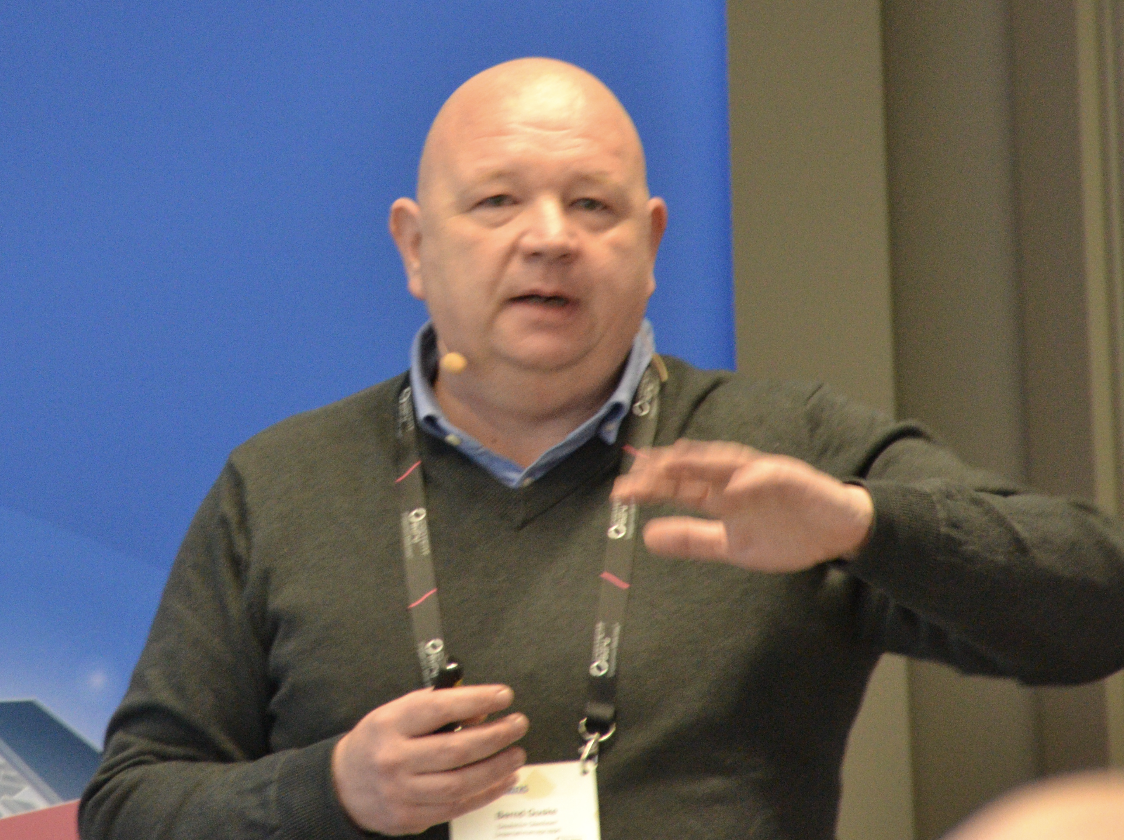 Bernd Guske, responsible for service operations at Deutsche Glasfaser Unternehmensgruppe (a company that provides fiber optic connections in Germany), gets a thousand new customers every day. Some of these customers have been waiting for a long time; new customers who are onboarded often have questions. Of course, customer service cannot grow as fast as the number of customers. The fiber optic company works with five different facility partners, but Guske has a strong opinion about outsourcing: “Service providers must be scalable and deliver good quality at low costs – that has been the principle for years, but of course it doesn’t work that way.”
He prefers to speak – in the case of his own employer – of outtasking rather than outsourcing. “We assign tasks to someone else, we do not move entire processes. We are still developing too much for that and we want to keep control.” Or what Guske says between the lines: outsourcing requires that you have a well-developed policy; and it sets limits to your own flexibility.
Sense and nonsense of an AI strategy
Because processes are regularly adjusted at Deutsche Glasfaser Unternehmensgruppe, the introduction of AI as a tool is also a step-by-step process. Jargon and a strong dependency on chain partners, of which not all data is standardized, usable or available/accessible, form obstacles to a rapid and broad introduction.
In addition, processes and planning of chain partners can deviate from what was agreed. In the fiber optic business, a lot of improvisation is done and that is not the ideal basis for an AI-driven chatbot. Moral of this story? For a company like Deutsche Glasfaser Unternehmensgruppe, there is little point in setting up a heavy, well-thought-out AI strategy. Working step by step is the best approach. (Ziptone/Erik Bouwer)


Also interesting
-

Alorica Clear is being expanded with Real-time Voice Language Translation, which eliminates language barriers during live customer interactions.
-

Sudden fear that technology like AI will take your job? You might be suffering from Kasparov syndrome. The good news:…
-

According to Chinese astrology, 2024 is the year of the Dragon. Or did someone make a math error? Because it is…