
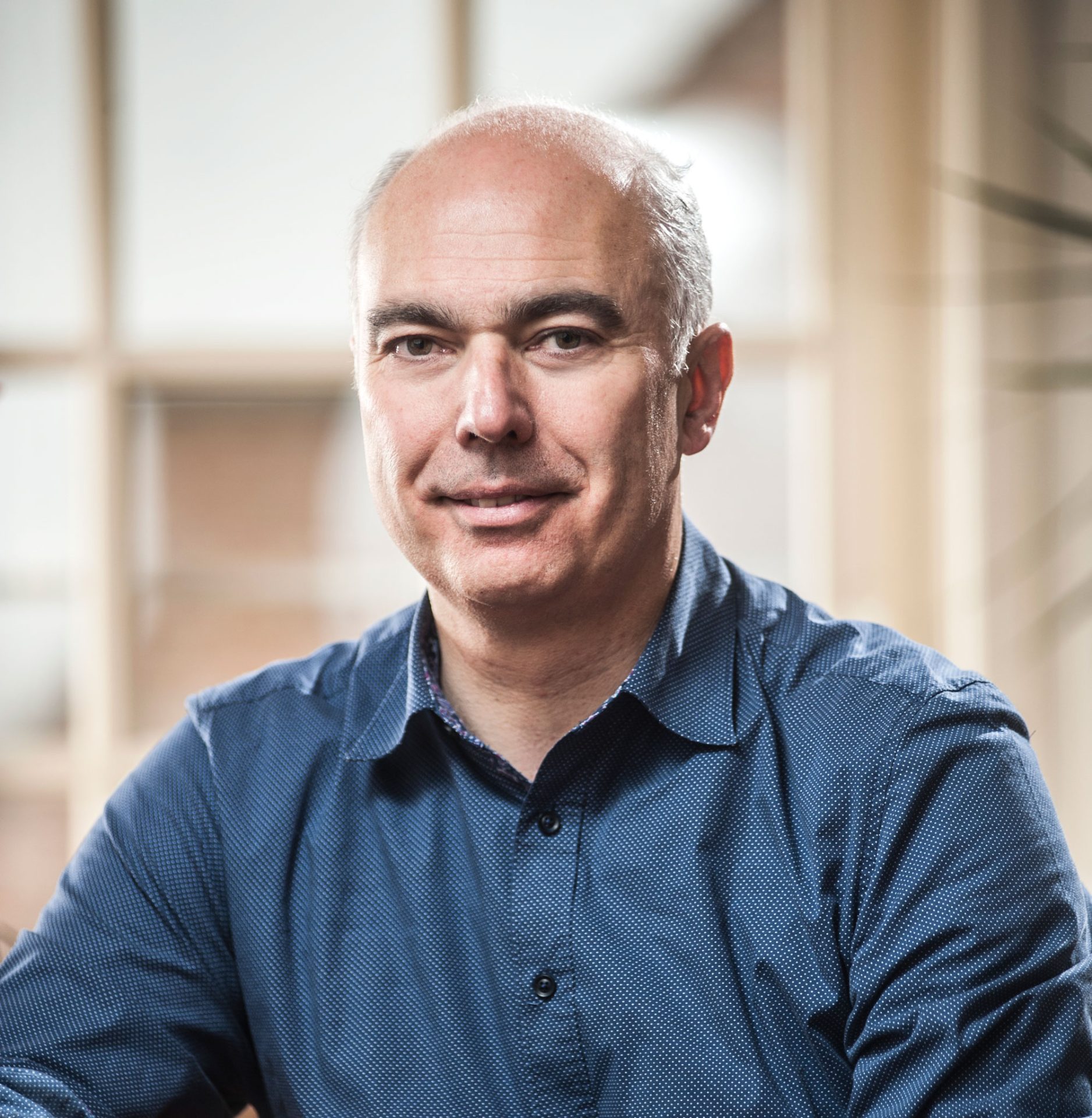
 Koen Kas – futurist, healthcare expert, and keynote speaker at the upcoming Customer Contact in Healthcare conference – likes to push boundaries. Not towards the impossible, but towards the future. As far as he is concerned, structuring customer contact begins with looking at the care process differently. Kas has a series of inspiring examples.
You have conducted medical research, written books, and advised hospitals in various parts of the world. The sum total is that you have strong views on how we view medical care.
“That is right. We wait until we get sick and then try to correct the situation. That is like trying to mop up water with the tap still running. But that model is not the norm everywhere. About fifteen years ago, I was in China, where I learned about a medical system that has existed there for more than 2000 years. In that system, the doctor is paid to keep the patient healthy. If you get sick, you stop paying. That is the ultimate form of value-based healthcare. It would be my ideal to build something like that here as well. But that requires a radical change, and the chances of success are limited.”
You don't achieve such a shift with technology. To do so, it requires embracing a different mindset. I am that person. delight thinking start calling it. By that, I mean creating experiences you didn't know existed. That usually creates a wow experience, and that ensures you have attention. With a wow experience, your customer will return quickly. Or you have more effect or impact.”
Koen Kas He is a healthcare futurist, delight thinker, opinion leader in digital healthcare, curator of the database of all certified digital health apps and AI tools, professor at Ghent University, and international keynote speaker. He has written books on topics including preventive, ultra-personalized, and predictive medicine, digital twins in healthcare, and holistic care, art, and AI companions that help people stay healthy naturally.
I have a background as a biomedical scientist and worked in cancer research for a number of years, particularly with childhood cancer. One of the initiatives taken during that period was sending the young patients away to a camp, 'Camp Delight'. That raised questions: is our healthcare here 'delightful'? Are we treating our patient in the right way? Are we customer friendlyCan we remove friction?
'Delight' sounds like five-star service, the Chinese model sounds like a paradigm shift. What is the relationship between the two?
“That five-star service already exists in healthcare. In Clermont-Ferrand, there is a hospital with a wine list like in a Michelin-starred restaurant. In Helsinki, there is a children's hospital with a large digital aquarium. Fish swim there that are drawn by the young patients. The children can choose their own avatar, which is then used as a nickname for appointments with doctors. Or think of a hospital bed in the shape of a race car.”
Great ideas, but are they also feasible and affordable in a healthcare sector that is overloaded in virtually every respect?
“Our current healthcare system will remain unaffordable if we are unable to address the growing aging population and the continued increase in chronic conditions. For every hundred euros, we spend nearly 98 euros on our last two years of life and less than 2 euros on prevention. But in the years leading up to that, we do hardly anything about prevention. That is unsustainable. It is precisely by shifting parts of care surrounding illness to prevention and by creating a new customer experience—which also includes: how do I prevent becoming a diabetic patient?—that we will succeed in keeping the model affordable.”
“An example. One of the assignments you can give your diabetes patient as a doctor is to ‘learn to eat differently.’ But that won’t work on its own. I imagine a kitchen island in the hospital where a Michelin-starred chef gives cooking classes, teaching you to approach your health in a completely different way. That chef is paid by a supermarket chain – where the patients can buy healthy food. The difference is: do you have a patient with a disease, or do you have a client you are teaching to manage their health?”
In addition to treatments, healthcare involves other elements. Consider data exchange, scheduling treatment appointments, the search for the right advice, or the right location. How do you view these?
These matters have been improving steadily in recent years. Hospitals are paying increasing attention to eliminating friction that exists even before you reach your healthcare provider. It helps if you let hospital management make that journey themselves. After all, they park their cars somewhere else at the start of the workday: at the staff entrance. How easy or difficult is it for your patient to make, change, or cancel an appointment? There are extreme best practices, such as an experiment we conducted in a Brussels hospital to pick up the patient at home for treatment.
 One of the biggest sources of stress for elderly people who need to be admitted is caring for their pet. At the University Hospital in Brussels, a kennel is provided. The patient is allowed to bring his or her dog to the hospital. This reduces stress, and on average, that patient can go home a day earlier. What applies to the pet also applies to relatives such as a partner; who keeps an eye on them? Someone can visit a nearby museum with that partner. For that, you can weer Establish relationships with schools where people are trained to interact with patients. Just turn it into an internship. Another example. AZ Groeninge in Kortrijk is the first hospital in the Benelux to receive the Gault&Millau label for patient meals, a so-called "toque" or chef's hat.
Why should customer contact professionals from the healthcare sector come and listen to you at the Customer Contact in Healthcare conference?
We are entering a time when the hospital is evolving from a place for care during illness to a place that is with you as an individual 24/7. More and more hospitals are starting to monitor their patients remotely. The hospital is coming to the patient – via digital means – instead of the other way around. If we send a package from Amsterdam to Barcelona, we consider it normal that we can often track it in detail. For the greater part of the year, a patient is left to fend for themselves. A hospital has much to gain by providing personalized remote guidance.
“The audience attending the Customer Contact in Healthcare conference can count on a range of tools that contribute to the development of a better healthcare provider. Adopting a different approach as a healthcare professional also plays a role in this. One final example. A tool has been developed that makes veins visible, which is handy for blood draws. The reactions from healthcare professionals were: we can almost always find those veins ourselves. But that is not the point. The point is that the patient is reassured precisely because those veins are clearly visible. So it is not about you as a professional, but about the patient. Digital technology can help make the doctor more accessible to the patient. That is what I want to convey to my audience: by incorporating elements of 'lifestyle medicine' into your current practice, you can become a much better healthcare provider.”
(Ziptone/Erik Bouwer)
Koen Kas speaks at the congress Customer Contact in Healthcare op October 6, 2026 in Zeist. Readers of Ziptone receive 50 euros discount on a ticket if they use KRT50ZPT as a discount codeZiptone is a media partner of CKC Seminars.


Also interesting
-

Every healthcare institution has customer contact. Now there is also a new conference specifically for customer contact in healthcare.
-

Premature deployment of GenAI chatbots and virtual agents for customer contact will lead to increased consumer skepticism, according to Forrester.
-

That annual Christmas dinner... it's surprisingly similar to the WFM meeting in a typical customer contact environment.