
 The G4 – the four largest cities in the Netherlands, together home to over 2,5 million inhabitants – all have extensive customer contact with citizens and businesses. What are their local challenges, and what choices do they make in the process? Ziptone takes a tour of Rotterdam, Amsterdam, The Hague, and Utrecht.
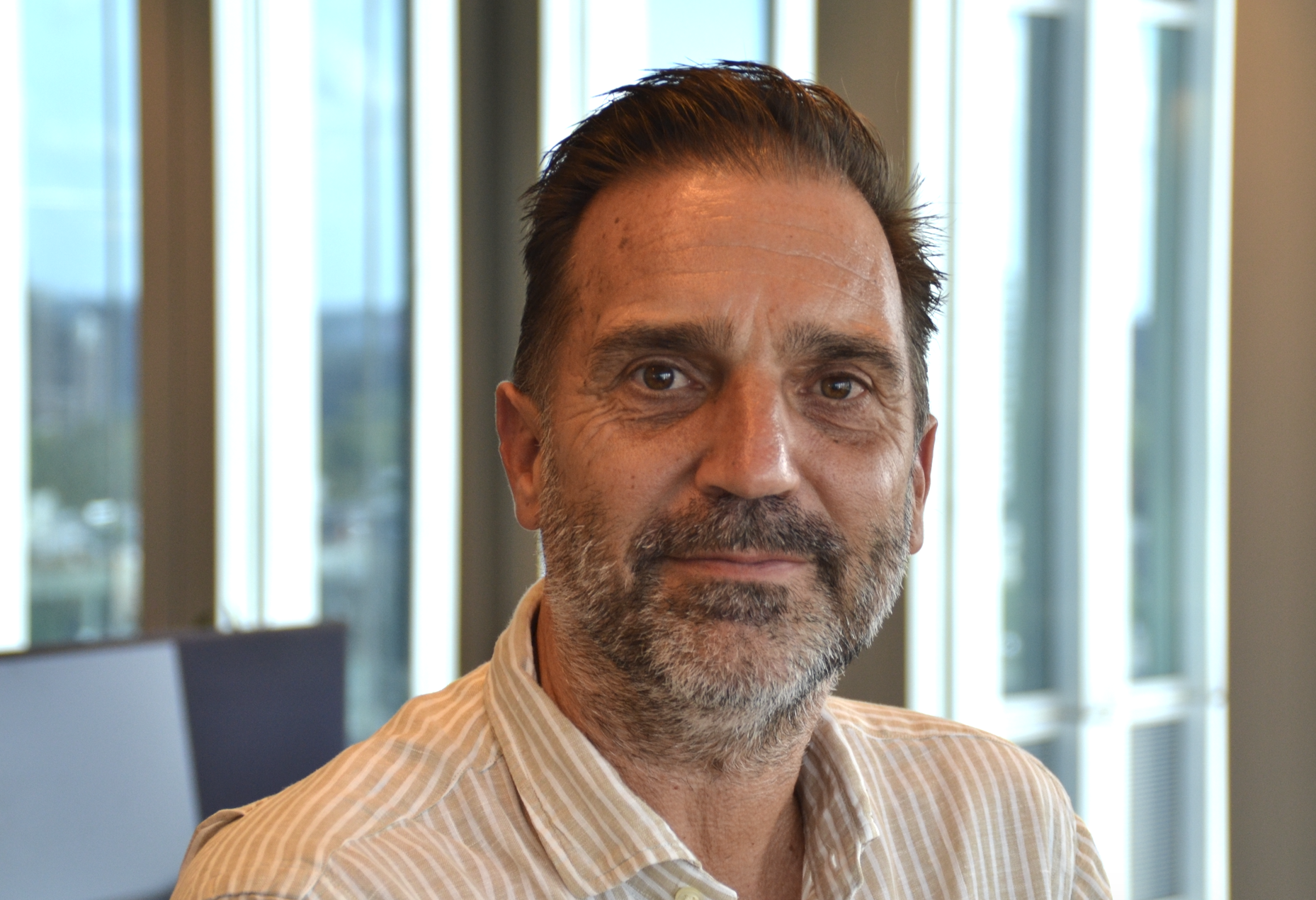
Should a municipal customer contact center primarily be an employment project or a service provider? In Rotterdam, the course has been shifted in recent years, as became apparent during a conversation with Milko van Aalst, department manager of the Customer Contact Center of the Municipality of Rotterdam. Not without success; citizens are helped faster and are more satisfied.
When Van Aalst joined the Municipality of Rotterdam in 2020, his assignment was to bring service delivery back 'inward'. In the years prior, the KCC had been housed in Ro!Entree BV, a subsidiary of the municipality.
We have been a Customer Contact Center (KCC) within the municipality since January 1, 2024. The objective of Ro!Entree – active since 2008 – was to get people with a distance to the labor market back to work.
Van Aalst does not want to say that public service delivery in the past was not good. However, perspectives have changed: the KCC is no longer seen as the place where reintegration activities should be housed.
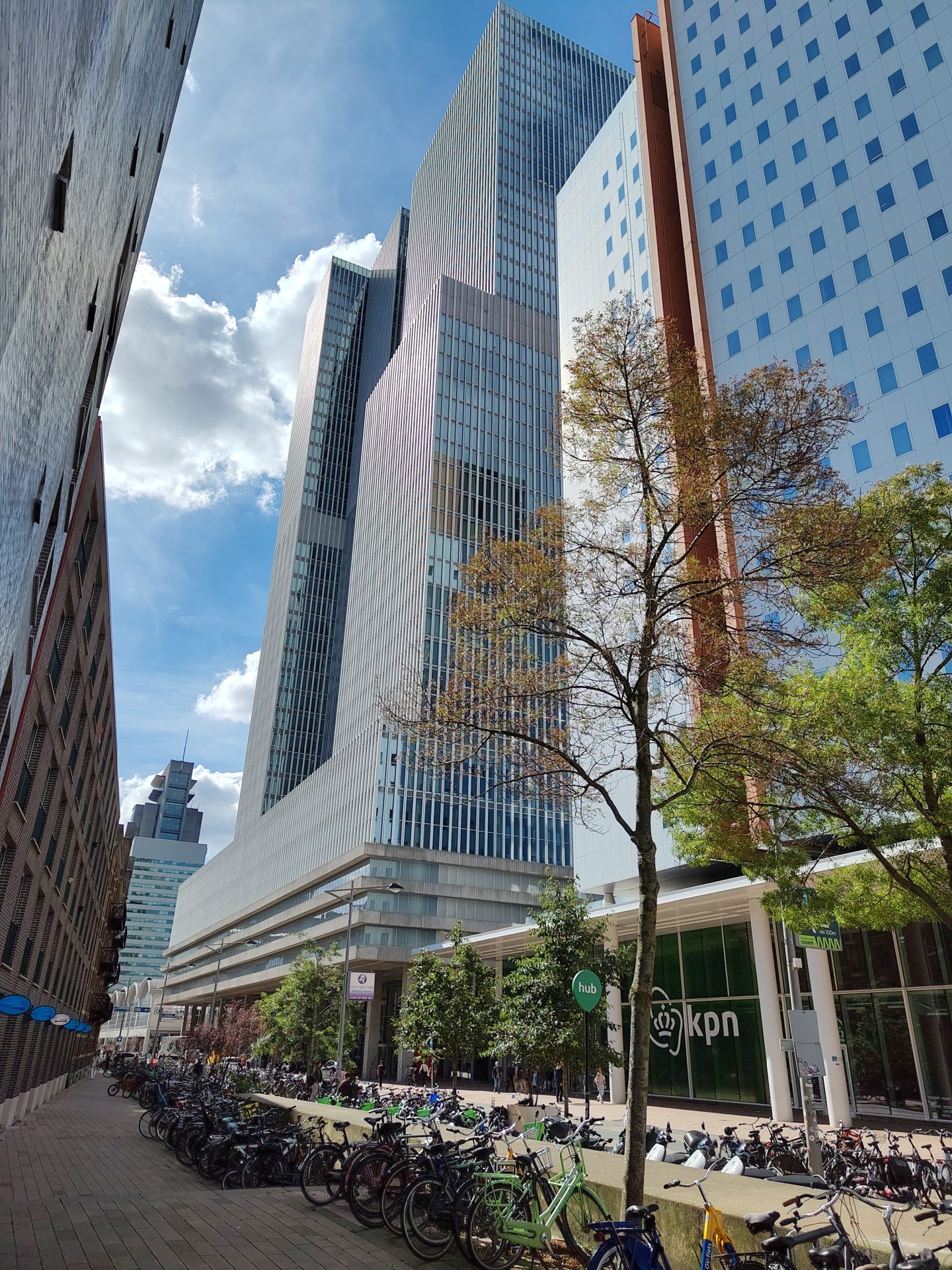
The Municipality of Rotterdam is located in De Rotterdam, among other places.
Rotterdam (reachable via telephone number 14010) has 674.485 inhabitants. The 14010 Customer Contact Center (KCC) has 220 employees (163 FTE), one-third of whom work at the office and the rest from home. On working days, the KCC is reachable from 08:00 to 20:00; on Saturdays from 09:00 to 17:00. Webcare is also available on Sundays. For urgent matters and emergencies, the Municipality of Rotterdam can be reached 24/7 via the City Management control room.
- 1,1 million calls per year
- 100.000 reports for webcare (Rotterdam is present on LinkedIn, Instagram, Facebook, X and YouTube)
- 30.000 live chats (often after chatbot contact)
- 40.000 responses via web forms
- 5.000 conversations via the neighborhood hubs (since 2025)
- 84% first-time fix
- Service rating: 7,6 (was 6,5 in 2020)
Seventy percent outflow
Ro!Entree was, however, successful as a reintegration company. Of the approximately 200 customer contact employees, 140 left annually, according to Van Aalst. “But the objective – that someone must move on to another job within two years – increasingly clashed with the demands placed on the service provision. Some changes to job roles and remuneration had already been implemented so that the Customer Contact Center could reap the benefits of experienced employees for longer.” Moreover, only telephone customer contact was handled by Ro!Entree; other channels were managed by the municipality itself.
“Client contact has increased in scope and complexity over the past few years,” explains Van Aalst. “There arose a need for a better balance between service provision and reintegration goals. The distance to the municipality also became increasingly smaller. The requirements for new entrants became higher; it became increasingly difficult for our colleagues at Work & Income (W&I) to provide people with the right entry-level qualifications. The tight labor market became a serious obstacle during those years,” says Van Aalst.
Customer contact back inside
Matters such as HR, technology, and privacy were examined, and it became clear that it would be better for the KCC to become part of the municipal organization again. “Since the beginning of 2024, employees have once again been civil servants and take the oath of office.” Following the integration, the KCC has grown slightly in size, partly due to the addition of the municipal content team and the Public Responses team. Since the integration, turnover has more than halved: it is now around 30% on an annual basis, equal to the benchmark.
Local color and the mat day
What are the local circumstances that Van Aalst’s team needs to respond to? Van Aalst: “Rotterdam is a large city with a lot of diversity. We must ensure appropriate and accessible contact channels for everyone. Rotterdam has approximately 90.000 people with low literacy skills. Around 5000 conversations take place annually in the 39 neighborhood hubs, with KCC employees present in 22 of them. That channel does not immediately lead to fewer phone calls, but it does have its own target group. And of course, Rotterdam experiences periodic peaks, such as the ‘mat day’ when the municipal tax assessment arrives, or the payment of holiday allowance to benefit recipients in the month of May.”
The KCC can handle all scripted inquiries that do not require in-depth specialized knowledge. As soon as the cases involve personal or complex files, calls are forwarded to second-line specialists. Examples include permit matters, specific income issues, or leasehold matters. “In certain cases, employees can indeed view files. They have access to a knowledge base and to twenty different systems. The integration of the KCC was also intended to contribute to higher citizen satisfaction. Our first-time fix rate has increased from 66% in 2020 to 84% in 2026. This is primarily due to the unlocking of systems. Employees can also request payment arrangements for citizens, after which a specialist reviews the request and arranges a settlement. The chain and turnaround time have been shortened.”
Fewer calls, but the cause is unclear
The number of incoming calls has decreased significantly since 2020: from 1,3 to 1,1 million calls now. No single cause can be identified for this decline, says Van Aalst. “Many initiatives are at play: making our letters clearer, improving the websites, the introduction of a chatbot on the website. Across the various channels, we still have about 1,3 million contacts per year.”
The introduction of the neighborhood hubs—since last year, a pilot with two hubs has been converted into a permanent solution with 22 hubs—also does not lead to changes in channel usage. “If you were to abolish the neighborhood hubs, that might not immediately lead to 5.000 extra calls. The hubs do, however, meet a need.”
Customer signals
For the KCC itself, this means that fewer calls are being transferred to the second line. “That leads to a lower burden on the underlying departments.” Further optimizing the first-time fix is an ongoing process that process managers are working on, says Van Aalst. “They look at customer signals and what KCC employees say, and incorporate that into the meetings with the clusters within the municipal organization.”
This often involves access to information that can increase the efficiency of employees. Van Aalst gives an example: “By offering KCC employees access to the so-called counter portal for municipal taxes, the first-time fix rate for tax inquiries increased from 85% to 93%. Furthermore, complex questions can now proceed directly to the third line, instead of the second line as an intermediate step.”
Avaya as a platform
The choice of 14010 regarding contact center technology is noteworthy. Due to the dismantling of Ro!Entree, which, according to Van Aalst, operated to full satisfaction with the (Rotterdam-based) CCaaS platform QandaGo as it worked, connecting to the Municipality of Rotterdam's technology was the obvious choice.
“Since August 11 of this year, the KCC has been using Avaya’s CCaaS solution, which is already a supplier for various departments of the municipality. Maintaining two platforms was not an option. The ICT organization made the decision regarding Avaya as the platform for the KCC. The KCC only assessed whether it offers sufficient functionality.” This also settles whether Avaya, which is American and a slightly unpredictable supplier, is a smart choice.
Towards a better chatbot
The Municipality of Rotterdam is restructuring; for customer contact, there will be a clearer separation between implementation and policy. The latter department is considering the customer contact strategy and channel management. The chatbot also falls under this.
 The current chatbot, Gem 1.0 has its limitations“With a rule-based chatbot, you are generally done talking fairly quickly. We do not know to what extent the current version of Gem contributes to call reduction. However, we do expect that we will be able to handle more questions with the transition to version 2.0. When you see how good the answers are that come from the knowledge base via generative AI, it is inevitable that more citizens will receive an answer via the improved chatbot and be done with it,” says Van Aalst.
However, Van Aalst refrains from making a prediction regarding savings for the AI-based successor. “Moreover, you also have to take into account here that a significant portion of our target audience will not use such a chatbot. You can perfect your digital service delivery, but there is a group that prefers to call.”
Agent Assist is being rolled out
The KCC also deploys other AI applications, primarily to support employees: think of querying the internal knowledge base instead of going through search results in a Google-like manner. That alone accounts for a reduction of 25 seconds per call, says Van Aalst.
That does result in a concrete saving, as we have calculated: with 1,1 million calls, that is approximately 7500 hours per year, or two hundred thousand euros in cost savings.
There is also room for more proactive service at the KCC, Van Aalst believes. “We have run successful pilots involving early warning of potential payment arrears, in collaboration with other agencies. You call citizens to offer help or to start a conversation. That is something we could intensify if we have time left over due to automation.”
From 'fail' to feedback
Together with customer contact service provider Huxam, work is underway to expand AI applications within the KCC. For instance, the KCC is currently setting up AI-based quality monitoring. “Until now, our coaches listened to five calls per month per employee, partly based on the COPC methodology, which resulted in a 'fail' or an 'OK',” explains Van Aalst. “That is typically American and actually no longer fits well with how we work here, certainly not with experienced staff. Moreover, it was a time-consuming model in which less than 1 percent was listened to.”
Van Aalst states that the technical pilot has been successfully completed and that 14010 is now working on the governance aspects. “In the new model, all conversations are recorded, transcribed, anonymized, and analyzed. We have created models based on our quality manual: what constitutes a good conversation? The model primarily offers opportunities for improvement. With this approach, you can review many more conversations per employee. This means focusing less on incidents and more constructively on the big picture and areas for improvement.” A dashboard for customer contact employees is also one of the action points, as is – eventually – the introduction of automated summarizing.
(Ziptone/Erik Bouwer)


Also interesting
-

Employees of the Municipality of Utrecht's Customer Contact Center are highly sought after by other departments. However, coming to listen in for an hour is problematic.
-
Avaya has ended the sale of Agent for Desktop as of July 20, 2026. Existing customers can still upgrade until October…
-

The fact that the municipal chatbot Gem does not function properly is taken for granted by the developers, who are responding to research results.
I found Ro!Entree to be a noble initiative that offered many people perspective. Why couldn't that still go hand in hand with professional services?