
The new Balanced Labor Market Act makes flexible labor more expensive and more difficult to organise. It will therefore become even more attractive for organizations to look for opportunities to increase their own flexibility and thus be less dependent on hiring flex workers. Or are there also possibilities to limit your need for flexibility? Eight perspectives viewed from the perspective of care and customer contact.

 Look in this article Inge van Outheusden (consultant at PlanMen) and Rens Sins-Vossen (outsourcing manager/manager PlanVille, part of PlanMen) together on the best practices in the field of flexible deployment of personnel.
They each do this from their own area of expertise: Inge mainly works in the healthcare sector and Rens is active in the customer contact sector. Together they look at flexibility from eight different angles. Finally, they give a number of tips for a new approach to planning.
Customer contact vs care
By way of introduction: just as with customer contact, the supply of work also fluctuates in healthcare. The number of clients and the care needs of clients vary. The demand for care is partly predictable, for example by seeking coordination with general practitioners and hospitals in elderly care. Moreover, the need for care is largely concentrated around certain time blocks. In addition, flexible deployment is essential because the demand for care does not decrease during holiday periods, but staff also want to be able to take time off. To organize the necessary flexibility, healthcare institutions often use shell models. The workforce then consists of permanent and flexibly deployable employees with different contract forms. They also use flex desks and pools of employees.
Adjust the organization of work
Inge: “Due to the tight labor market, many healthcare institutions have been 'kind' to their employees in recent years. If you don't want to start work at seven, but at eight, you can. In addition, the burden of care has increased. The government would like clients to live at home longer, so the nursing home receives relatively more elderly people with serious health problems. The client is also becoming more vocal. But if all clients would like to be washed at seven in the morning when no staff is available, choices will have to be made. Furthermore, in many organizations the amount of time that has to be spent on administrative tasks has increased significantly. Although healthcare professionals realize that proper registration and reporting play an important role in collaboration and quality assurance, they mainly want to spend as much time as possible on healthcare, because that is their profession.”
Rinse, Face Wash: “If the staffing in a call center is not up to par, the customer has to wait longer. That is annoying and sometimes customers hang up or you create repeat traffic, but the planning generally does not cause such problems as in healthcare. 'Let it wait' can have serious consequences there. In healthcare, you therefore have only limited options to influence the supply of work. For example, by not taking on new patients and clients and by using a waiting list.”
Reduce the need for flexibility
Inge: “Work agreements regarding planning often lag a few years behind reality – it takes a long time before agreements made earlier are revised if, for example, the range of work has changed. People attach great importance to their 'rights' and have of course adapted their private lives accordingly. As a result, planners in the healthcare sector have to spend a lot of time planning: how do I ensure that I have a correct schedule every day?
Rinse, Face Wash: “Here you see an important difference with a call center. That is much more predetermined. Schedules are not set for months and the required staffing is regularly recalculated on the basis of historical data – in professional organizations this is done almost on a daily basis.”
Adjust work processes
Rinse, Face Wash: “If you have exhausted your options for managing the workload, you can still look at peaks and troughs. In every organization time is spent on consultation, training, leave, projects, you name it. The moment you have peaks and troughs in the gross workload, you can see whether you can move activities during the peak to a trough. In the first instance, these are activities that do not contribute to the primary process. For example, the call center is increasingly using e-learning during off-peak hours. Sometimes projects are set up that last, for example, a year and on which someone is deployed for 25% of his working time. You could also say that you do not make people available for projects during the busy months – such as the holiday period.”
Inge: “In healthcare, almost everything that does not need to be trained in class is already offered online. In many organizations, gains can still be made by taking a much more critical look at activities during peak periods, such as the summer holidays and the holidays. There, for example, leave is tried to solve with the hiring of flex workers. Take the professionals along in this process: where is the peak, what is happening at that moment. Does all that have to be done at that moment or can it be done at another time?
Increase flexibility: switch roles
Rinse, Face Wash: “In a call center it is quite common to have people with a certain position work in different roles, or give them different tasks depending on the workload. Think of handling different categories of telephone calls, answering e-mails or working with webcare. Previously, call centers often had small specialized teams, each of which had limited capacity. The smaller the team, the more inefficiency. Years ago, in many call centers they already started with the transition from specialists to all-rounders who have all the skills in house.
Inge: “In healthcare, employees are classified from level 2 to level 6, among others. A level 2 employee is not allowed to perform tasks such as wound care or administering medication. You cannot remove the differences between the levels with a few weeks or months of training. Strict requirements are set for the quality of care. Deploying the nurse for the tasks of the helper also offers no solace, because then the shortage of nursing capacity becomes even greater and you use an expensive employee for relatively simple tasks.”
Increase flexibility: work at home or at another location
Rinse, Face Wash: “Forward-thinking companies in the customer contact sector allow employees to work from home. That is of course impossible for the provision of care, but are there parts of the care process that you could do at home?”
Inge: “There are not many activities in healthcare that you can do from home. Reporting tasks should preferably be carried out shortly after the provision of care. Then information is still fresh in the memory and the file is also immediately updated. If you postpone that for half a day, the next care provider from the evening shift can work with old information. Other tasks are suitable for working from home, so that you can include this in the schedules: for example, preparing working groups and working with focus areas. Someone who keeps track of the latest insights in a certain area on behalf of the team can easily do this at home or during off-peak hours. There are still opportunities there. Hiring people to work at a certain location – a neighborhood, a floor, a department – is no longer possible. The employer must be able to schedule someone at a different location if the situation requires it: location flexibility. There are, however, more and more healthcare institutions that work with teams with 'flying keeps' for level 2 helpers, for example. Another solution that contributes to flexibility: one of the five nurses has no regular clients, but absorbs the peaks in the planning – the circulation service.”
Increase willingness to work flexibly
Rinse, Face Wash: “It always strikes me that the people in healthcare are very passionate, but many of them are also stuck in patterns. Everything seems to be based on regulations, collective agreements and acquired rights. In the contact center, agreements are made that can be deviated from if really necessary. Often something extra is done at a predictable peak: pizzas are delivered or a bonus is paid. A lot of space is taken to work with incentives. Can healthcare still add attractive incentives to seduce people? You can agree that different rules apply in case of calamities. In the contact center sector, for example, it is considered that employees can be called up. At the new one Balanced Labor Market Act the rules regarding the calling of on-call workers are changing. An employment contract often includes something about these types of calls, which should not occur too often. Often the circumstances are described and also the allowances: regular salary or an allowance.”
Inge: “There seems to be no money for that in the healthcare sector. But I think that if employees better understand where the work supply comes from, more flexibility will probably also be offered if needed. Why can't you get Wednesdays off? There is a whole process for this with all kinds of factors. Now employees have no idea and just want to have Wednesdays off. That insight is often lacking – and not only among the planners. Planning should be a joint responsibility and understanding patterns can help. But a nurse standing on the floor has no time at all to create joint responsibility.”
Making the planning process more transparent and more individual
Inge: “In recent years, a lot of attention has been paid to encouraging self-rostering. Influencing your roster is even part of the collective labor agreement for elderly care. Self-scheduling can indeed increase the willingness to adopt a flexible attitude, but on the other hand you will impose the set frameworks on everyone. You will then have to define fair distribution of services. Because one prefers to work in the evenings and the other does not want to work on weekends. You can, however, make filling the planning transparent, so that it is clear how that process is progressing.”
Rinse, Face Wash: “The contact center sector has also experimented a lot with all kinds of forms and variants of self-rostering. In one of my projects, services that were less popular were given extra points. Subgroups in the workforce may view less popular times differently than most. Ultimately, you end up with an individual approach: what are the preferences of employees? If you match those preferences with the work on offer, you will also know where your shortages are in the planning. You make the entire group responsible for anything that has not been filled in.”
Invest in planning professionals
Inge: “In many healthcare organizations, someone from the work floor is put forward as a scheduler. A district nurse, for example, gets four hours a week to do the planning, because this professional is expected to know the processes. In practice, this planner is driven by the issues of the day. Think of short-term issues such as illness and leave, which undermines the attention for the longer term. There is rarely time and attention for printing reports, making analyzes and forecasts, or arranging coordination with HR. Knowledge in this area is also often lacking. Most healthcare professionals are not business-savvy – even if they have progressed from a healthcare function as a planner. This often leads to you being constantly solving a puzzle with very limited resources.
There are only a few healthcare institutions where capacity managers, WFM specialists, planners and schedulers each have their own task. The costs for PNIL (non-salaried personnel, ed.) are often high because the planner cannot substantiate the need for the influx of new employees to HR or finance. So the employment agency is called – which leads to two to three times higher costs, which are often not budgeted for. Although it is different from 'making your team flexible', it can still contribute to flexibility: take planning out of the team.”
Rinse, Face Wash: “In the contact center world, the planning functions are indeed divided in larger organizations. The capacity manager for example, looks at the long term, working closely with recruiters, trainers and the manager. There is also someone who takes care of the daily planning. In addition, there are often schedulers and traffic specialists who adjust the schedule during the day or ensure that the work is properly distributed among the employees present so that everyone does the right things.”
Inge: “I would advise everyone in the healthcare sector to separate day management from the person who draws up the rosters. You can indeed gain a lot by organizing the planning process at different levels instead of placing everything in the hands of one person.”
Finally: considerations and tips
Rinse, Face Wash: “In healthcare, it seems as if staffing is an established fact. Managers indicate in discussions about this that the formation was determined last year.”
Inge: “That's not too bad, but there is often a lack of insight into the difference between budget and consumption and the causes of that difference. If you don't have time to look at that…. Managers don't care enough about that. In call centers is often a WFM team, but that does not exist in healthcare. In recent years, healthcare has become more professionalised. But in terms of planning, there is a backlog in terms of development.”
Rinse, Face Wash: “It is certain that planning in healthcare is a lot more difficult than in the call center sector. But the realization that flexibility has two sides has not sufficiently penetrated. How much flexibility do you need and on the other hand how can you limit the need for flexibility. How do you smooth out the peaks and troughs better?”
Inge"Indoor the team gains the most from the scheduling process: opt for a distinction between the tactical planner and the operational planner. The tactical planner makes analyzes and capacity plans, he will exert influence, he thinks up scenarios. The operational planner takes care of the schedules on a daily basis. Make the planners own the entire planning process, not just the tail end. Give employees insight into what is happening in terms of supply and demand and give employees the responsibility to solve it together.”
Rinse, Face Wash: “Specify clearly frames, because influence is different from freedom. Those frameworks are often sharp and clear in the contact center. Establish these frameworks in collaboration with the employees. Even if they may not always be favorable, people will at least understand why they are the way they are.”
Also read: How productive is one FTE?
Text: Erik Bouwer/Ziptone


Also interesting
-
Customer contact is closely intertwined with care processes and business operations. There are plenty of challenges, as became apparent during the first Customer Contact in Healthcare conference.
-

The role of the traffic manager in the contact center is changing: from dashboard pusher to performance architect.
-
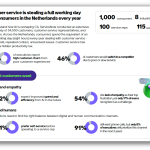
Dutch consumers spend an average of eight hours annually on customer service: waiting, calling back, problems that are not resolved.