
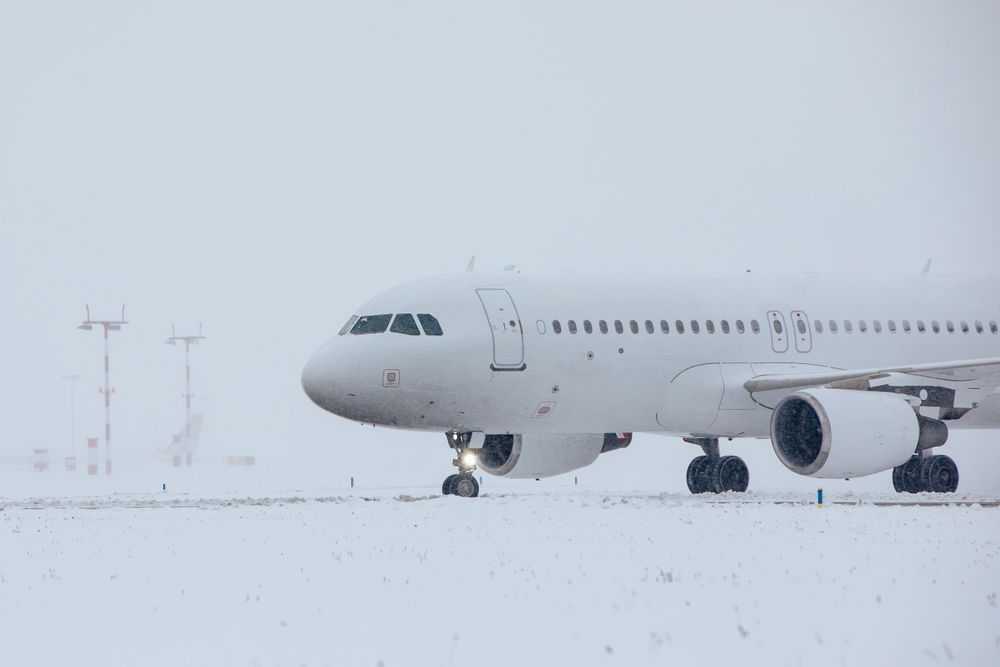
 A few wintry days and chaos and crisis quickly reign supreme. Cynthia Mak watches with amazement. Do organizations give enough thought to crisis communication?
With every snowflake that falls in the Netherlands, a talk show host appears, asking critical questions to a guest about the poor preparation for winter weather. At ProRail, the question arises whether we shouldn't simply heat 100% of the switches. KLM is asked whether they even have a scenario ready for seven days of winter weather. Why do the Scandinavian countries and Switzerland manage to cope with snow? Why is the Dutch infrastructure completely shut down, without an Elfstedentocht to compensate? Why don't stranded travelers receive an apology, along with their bottle of water and cookie?
Society-disruptive
The wintry weather of January 2026 produced idyllic scenes. Sledding to school, snowball fights with the police, but also: canceled flights, cancelled trains, stranded travelers, slippery morning rush hours, and dumpsters that weren't emptied. You could call it socially disruptive, but it wasn't bad enough for the KNMI (Royal Netherlands Meteorological Institute) to issue a code red alert.
At Schiphol Airport, it was a code red alert. 300.000 passengers were stranded. Passengers didn't know what to do. The information boards and airline apps provided insufficient information, or perhaps information travelers didn't want to hear ("Your flight has been canceled"). Camp beds were unfolded, and travelers complained en masse on LinkedIn that KLM customer service was unavailable and that there was now considerable uncertainty about the status of their trips and/or the location of their suitcases.
Substandard communication
On Pauw & De Wit, KLM CEO Marjan Rintel, after some persuasion, accepted the talk show's invitation to join the show and explain herself to the Dutch public. The conclusion? Communication with passengers had been substandard. This was also the conclusion of MAX Ombudsman Jeanine Janssen the day before.
In itself, that was a no-brainer. In every chaos, disruption, or upheaval in society, communication with the customer (citizen, traveler, consumer, buyer) is the neglected child.
The last time the Netherlands was so disrupted by winter weather was in 2021: Storm Darcy. Its white snowflakes turned the entire country into a red alert. Temperatures dropped to minus ten degrees Celsius. All rail services were halted, flights from Schiphol and Eindhoven Airport were canceled, and newspaper deliveries stopped.
Murphy's Law
Why aren't organizations able to provide customers with accurate information during a chaotic situation? Isn't there a scenario ready for seven days of winter weather?
Misfortunes always come in threes, and what can go wrong, will go wrong. A snowstorm in itself isn't a cause for disruption. But when an IT system fails, capacity is insufficient, drivers drive en masse into the morning rush hour and block the roads, infrastructure is inadequate, procurement policies are inadequate, and no one knows exactly what the next step is, then you have a good cocktail for chaos.
And this isn't new either. Storm Darcy came on top of the coronavirus measures. Lockdowns were introduced, tightened, extended, or upgraded with a curfew. With the exception of supermarkets and Jamin, purchases could only be made via Click & Collect. Snow fun was only possible while maintaining a distance of one and a half meters, and vaccination centers closed their doors as a precaution.
So many moving parts paralyze communication like a dead beer. Because what do you say when you know what doesn't work, but not yet what is possible?
A constant in the chaos
Poor communication is the only constant during chaotic situations. That's precisely where preparation should lie. We don't know what chaos will occur next. We do know that chaotic situations will occur more often. What we've also known for a while is that people in chaotic situations need to be heard and seen. That's really nothing new.
Just as it is nothing new that there are problems with parcel delivery companies around the holidays, that telephone lines can go down and that a pandemic can break out.
Chaos doesn't require perfect answers, but a visible presence. Organizations that don't have a scenario for this in 2026 aren't surprised—they're unprepared.
(Ziptone/Cynthia Mak)


Also interesting
-

For Cynthia Mak, a customer contact interaction is no longer an experience from a consumer perspective.
-

Being more accessible, responding faster, and offering customers even more service: that seems to be the standard for all companies. How self-evident is…
-

A digital bitterbal: the lingerie store you love is replacing personal shoppers with the Bra Size Scan. Sounds innovative, right?