
Sustainable customer contact: is that the most effective conversation possible or is it a conversation that does not take place? Every call costs time, money and raw materials and causes emissions. Digitization does not solve this problem. In 2033, contact centers will be held accountable for CO2 emissions. How do you prepare for that?
Sustainable production goes beyond just 'smart (re)use of energy and raw materials' or reducing your CO2 footprint. The UN's 17 sustainability goals form a good framework for taking all facets into account, including human rights, good jobs, sustainable economic growth and fair distribution of prosperity and health; including care for the environment, affordable clean energy and safety.
2024: report kilometers
Governments are increasingly imposing stricter and more extensive requirements on the way in which companies must account for themselves in a transparent and auditable manner in these areas. That is part of Corporate Social Responsibility and it starts with emissions. From 8000, companies and organizations with more than a hundred employees - approximately 2024 companies - must report to the Netherlands Enterprise Agency (RVO) how many kilometers their employees travel for work. By now listing this per company, the government expects to be able to learn better whether the Netherlands is on the right track to achieving climate goals.
 Register emissions from business processes
The idea is that if this group of Dutch companies is not on track before 2027, the companies will be imposed individual obligations based on a “legal standard”. The registration of emissions related to your business operations continues to evolve. Scope 1 is the emissions resulting from your own direct energy consumption. Scope 2 is about the emissions related to the energy you purchase. Anyone who works with Scope 2 takes a critical and innovative look at energy consumption, generation, recovery and storage. Scope 3 is about emissions in the chain you are part of. This concerns the CO2 that is released during all steps of your own purchasing and sales process. Here the theme is reuse of raw materials, but also quality and lifespan of products, and issues such as human rights and risks. Scope 3 will become a mandatory part of your annual report.
ISO 26000, CSR and other standards
The customer contact area is not at the forefront when it comes to sustainability initiatives. A few examples stood out in 2023: VANAD Engage's initiative to create a Sustainable Employability Score (SES), a B-corp certificate (bol) and reaching a step in the CSR performance ladder (part of ISO 26000) by Pegamento. Great Place to Work recognitions do not always align with sustainability goals; For example, sometimes they are at odds with the pursuit of maximum shareholder value, where high turnover and absenteeism are accompanied by enormous waste of energy.
Carbon Footprint per Customer Interaction (CFpKI)
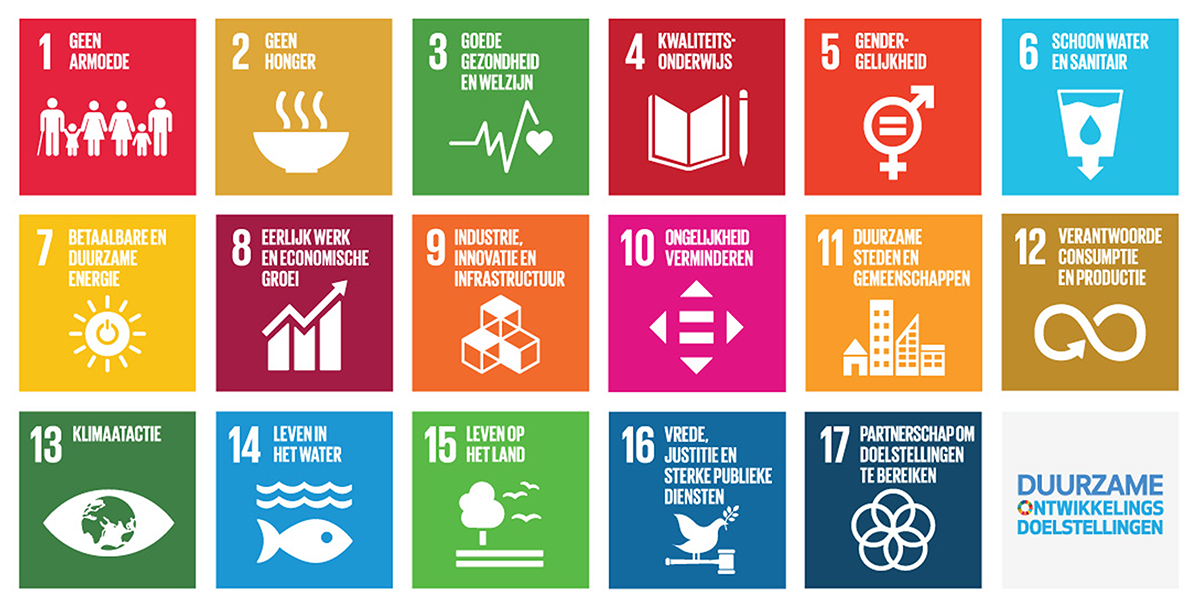
The UN's 17 ESG goals
What can we expect for 2033? We at Ziptone predict that by 2033, your organization's stakeholders will expect transparency about the ESG performance of your customer service process. One of the emerging measures is the Carbon Footprint per Customer Interaction (CFpKI), a measure of the ecological footprint resulting from customer contact activities. But outsourcing to low-wage countries also deserves attention. How is payment made there and how structurally do near- and offshoring contribute to ESG goals?
CFpKI is a quantitative indicator that expresses the amount of greenhouse gases emitted per individual interaction with a customer. The idea is to calculate how much energy is used for each customer interaction, and then convert this into a CO2 equivalent. This includes data center energy consumption, hardware used, and even customer service agent energy consumption. Ideally, the CFpKI also looks at the ESG performance of your partners and suppliers.
Why measure CFpKI?
Why should you measure CFpKI? It makes you aware of the environmental impact and if you manage to reduce the CFpKI, this contributes to lower costs. Moreover, it increases your attractiveness as an employer: you can show that you are consciously working on ESG goals. In the long term, increasingly higher legal requirements will be imposed on sustainability reporting. Those who start on time will be better able to meet the requirements.
How can you measure CFpKI?
- map all the resources needed for a customer interaction: from servers for applications to desktops and laptops, from lighting to climate control in the contact center;
- measure or map the energy consumption of these resources based on usage and energy consumption specifications;
- use recognized CO2 calculators to convert energy consumption to CO2 emissions;
- divide the total emissions by the total number of interactions with customers (from calls and emails to live chats and chatbot interactions);
- monitor the CFpKI and see if the ratio becomes lower or higher; keep an eye on other KPIs. A better CFpKI will not be sustainable if customer satisfaction decreases;
- set goals for a feasible reduction by looking at what can be improved per resource.
If you want to know more, you can visit all kinds of benchmarks and dashboards such as: Msci, ecovadis en Carbon Disclosure Project (CDP). There is also a local initiative in the Netherlands, the CO2 performance ladder. These types of dashboards look at the entire business operations, the way in which objectives are formulated and the progress that companies are making. (Ziptone/editors)


Also interesting
-

The recent commotion about the messy tender of the municipality of Amsterdam diverts attention from the real problem: lack of…
-

As part of AWS Connect, the solution can help with compliance, self-service, personalized service delivery, and system integration.
-

We at Ziptone like to join the list madness. In our opinion, these are the ten themes that really…