
Anyone who listens to the stories about the German customer service cannot help but conclude that the biggest challenges are not in technical innovation, but in social innovation. German contact centers have to work differently and there are several reasons for this, as became clear during Innovationstag, the kick-off of CCW2025 in Berlin.
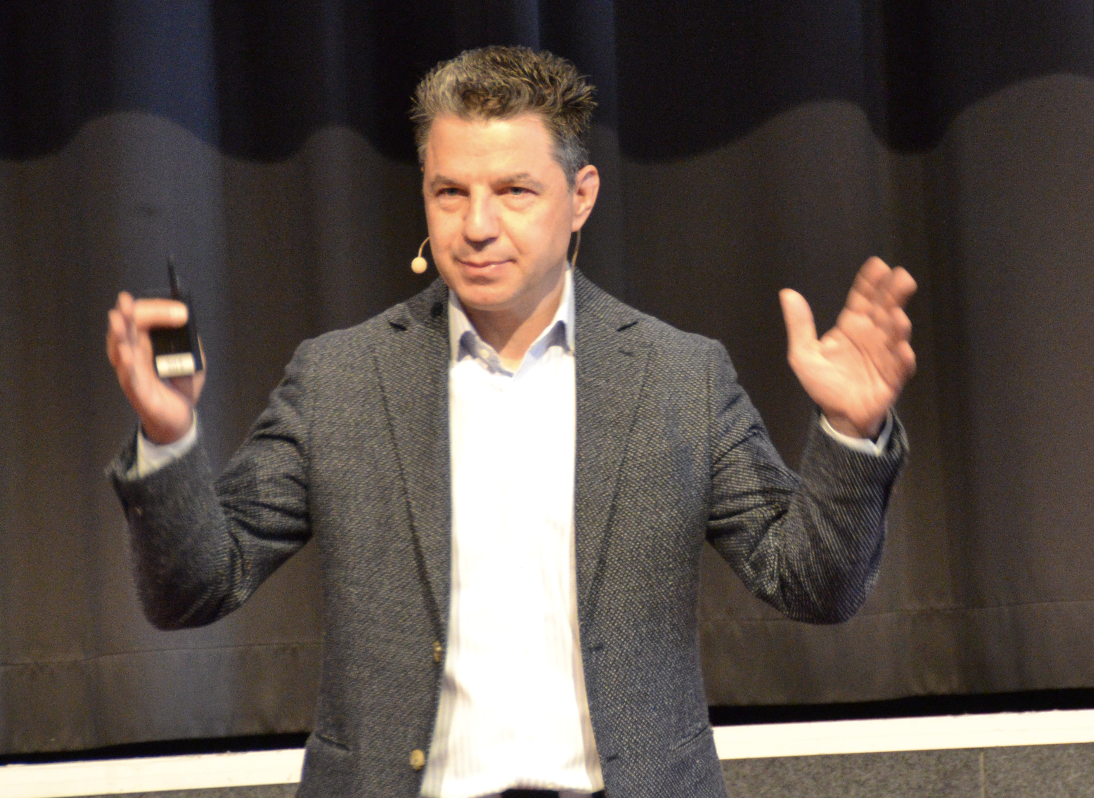 Evangelos Avramakis from insurer Swiss Re started somewhat predictably with real pictures of the Nokia 3210. According to Avramakis, the transition from Nokia to the iPhone is comparable to the transition we are currently experiencing: AI is the prelude to (again) major changes. AI ensures that consumers can choose to personalize products (think of designing your own sneakers).
Avramakis also referred to the virtual influencers that are emerging here and there, including synthetic voices that are indistinguishable from the real thing, such as those offered by Sonantic.
The speed of developments in AI is increasing and that is increasing the pressure. In Germany, the fear of losing jobs is taken seriously. On the other hand, there are opportunities and Avramakis uses innovation in the automotive sector as an example. In 2030, 25 to 50 percent of automotive profits will be generated by services – not by selling and servicing cars, says Avramakis. Most car brands already have ChatGPT or a virtual assistant on board. With an agent in every car, car brands will no longer need a contact center, jokes Avramakis.
Europe needs to wake up and move faster
In the second part of his keynote, Avramakis becomes more serious. Where Apple stopped developing a self-driving car after ten years, the Chinese are already making self-driving cars that reach level 4 (on the scale of autonomous vehicles). Avramakis tells his audience that Europe needs to wake up and become faster. He even complains about the bad software of his Volkswagen ID7. How is this possible, it is a German product after all? Key concept for the coming period: 'connected intelligence'.
6,6 million letters
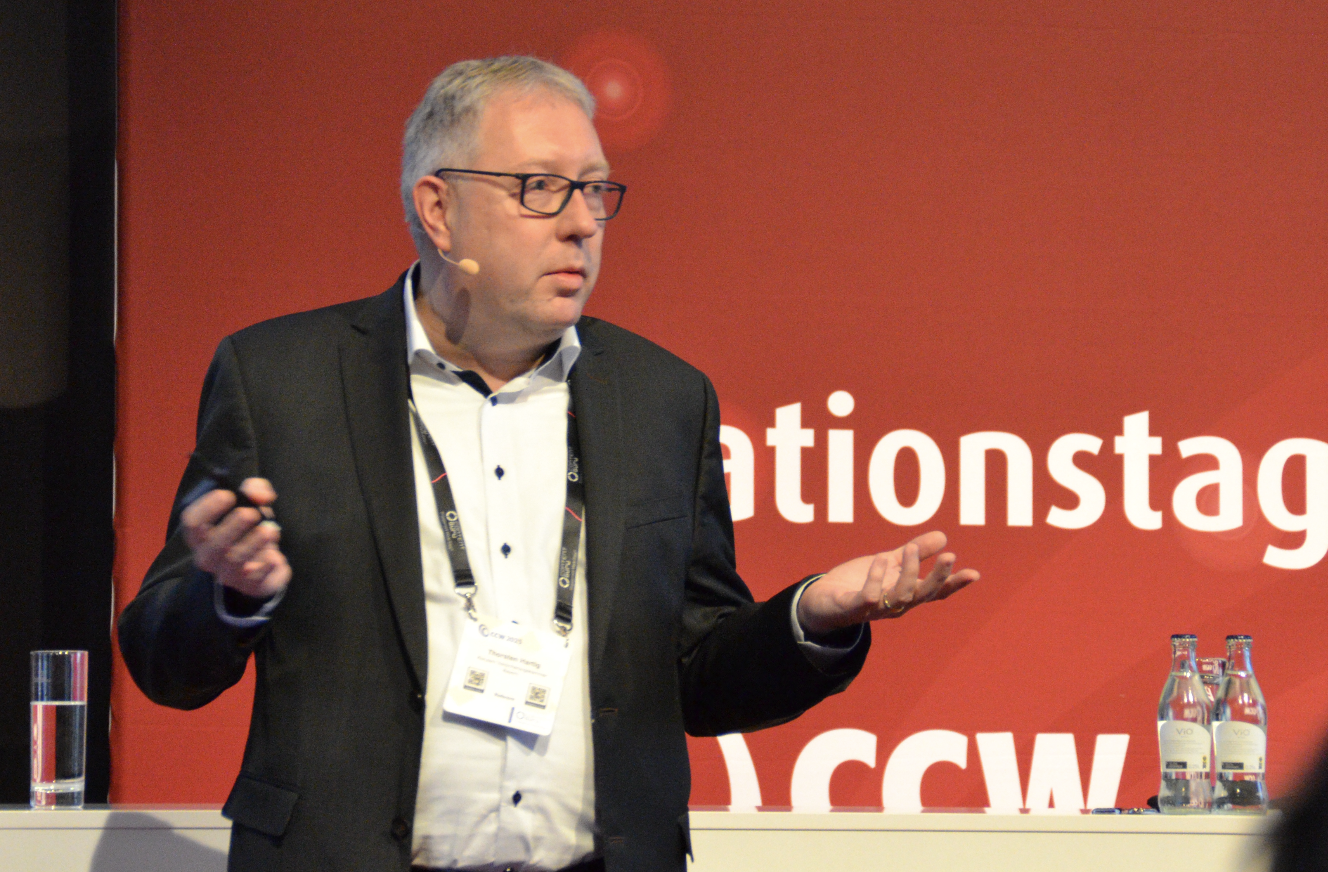 That (German) organizations need to take action was also clear from the story of Thorsten Hartig, COO at Konzern Versicherungskammer, a group of insurers. The company with 7.000 employees processes 4 million calls annually, but also 6,6 million pieces of mail. Serious volumes that explain why employees were allowed to choose after their training until recently: do you want to handle telephone or written contacts?
Although the customer wants personalization and digital channels, despite gradual digitalization, not fewer but rather more calls are coming in. Yet Hartig literally says that the classic contact center is dead. The insurer has set up a renewal program that consists of several components and that should contribute to the shift from 'service to solution'. For example, the contact center must move to the cloud version of Genesys - 'we are working on that now and it is an extremely complicated process'. The option of 'telephony' or 'written customer contact' is also gradually being abolished, making agents all-round. Or as Hartig puts it: "We now have service employees." That is not innovation, but a catch-up.
'Raum/hierarchy-zuordnung aufgelost'
Konzern Versicherungskammer is also working on knowledge management. Employees have to look in multiple systems, especially for questions about reimbursements for medical expenses: what is the treatment, who is the healthcare provider, is this covered, up to what amount, and has the customer already used up his own risk? Furthermore, mobile working has been introduced, as have flexible working hours, and in addition, the 'Raum/hierarchie-zuordnung aufgelost' has been lost. In other words: employees are no longer entitled to a fixed workplace, even if they are higher up in the hierarchy. Yes, that initially caused resistance.
Fear of job loss
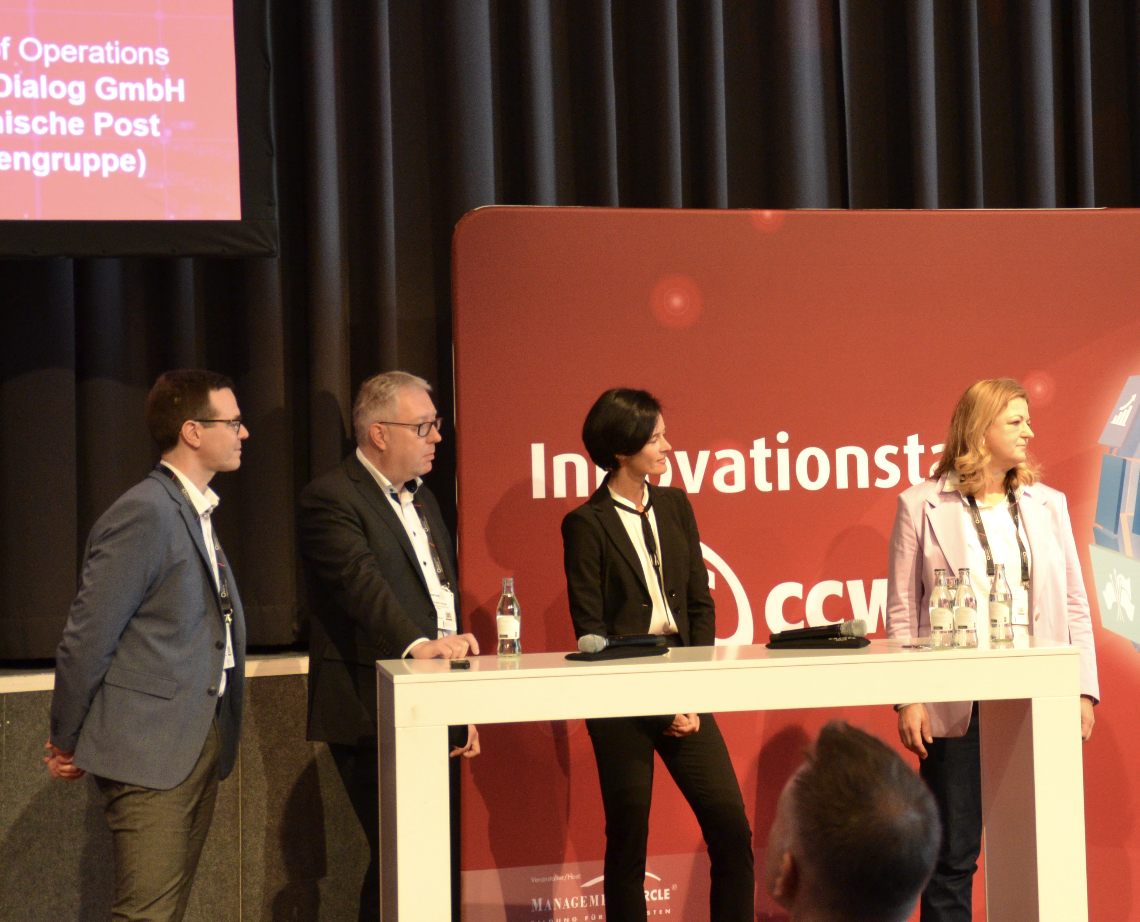 Not only is changing employee functions a sensitive issue, AI and the fear of job loss also go hand in hand in Germany, as can be seen from several presentations. Only Melanie Bielefeld (Photo: right), head of complaints and lawsuits at TUI Customer Operations GmbH, was clear: at TUI, the future lies in a combination of human employees and AI. “We have difficult conversations and it is difficult to find people for that,” she said during a panel discussion. Topic: what needs to happen internally to innovate?
Split shifts at TUI
In order to be more attractive as an employer, TUI has introduced hybrid working, including split shifts, so that employees can pick up the children or do sports in between. But employees are now also more closely involved in the organization of the work. Ten years ago, you could still give young employees an assignment; now they come with questions first, says Bielefeld. Ensuring better insight into the employees' own contribution to the process as a whole also helps. TUI did encounter a drop in productivity. There is an overview at the office; at home, employees think that they can quickly empty and load the dishwasher in between, says Bielefeld.
Fewer people available
Also Corinna Kaussen, head of operations at Digital Dialog GmbH (part of publisher Rheinische Post Mediengruppe) believes in involving employees more, also when it comes to implementing tools such as AI. The publisher has introduced a camera requirement for employees working from home.
At Konzern Versicherungskammer, the use of AI – or innovation in general – is a dire necessity. At the insurer, 1400 of the 8000 employees will retire in the next five years. We cannot solve this with new employees alone, says Thorsten Hartig.
The DHL voicebot
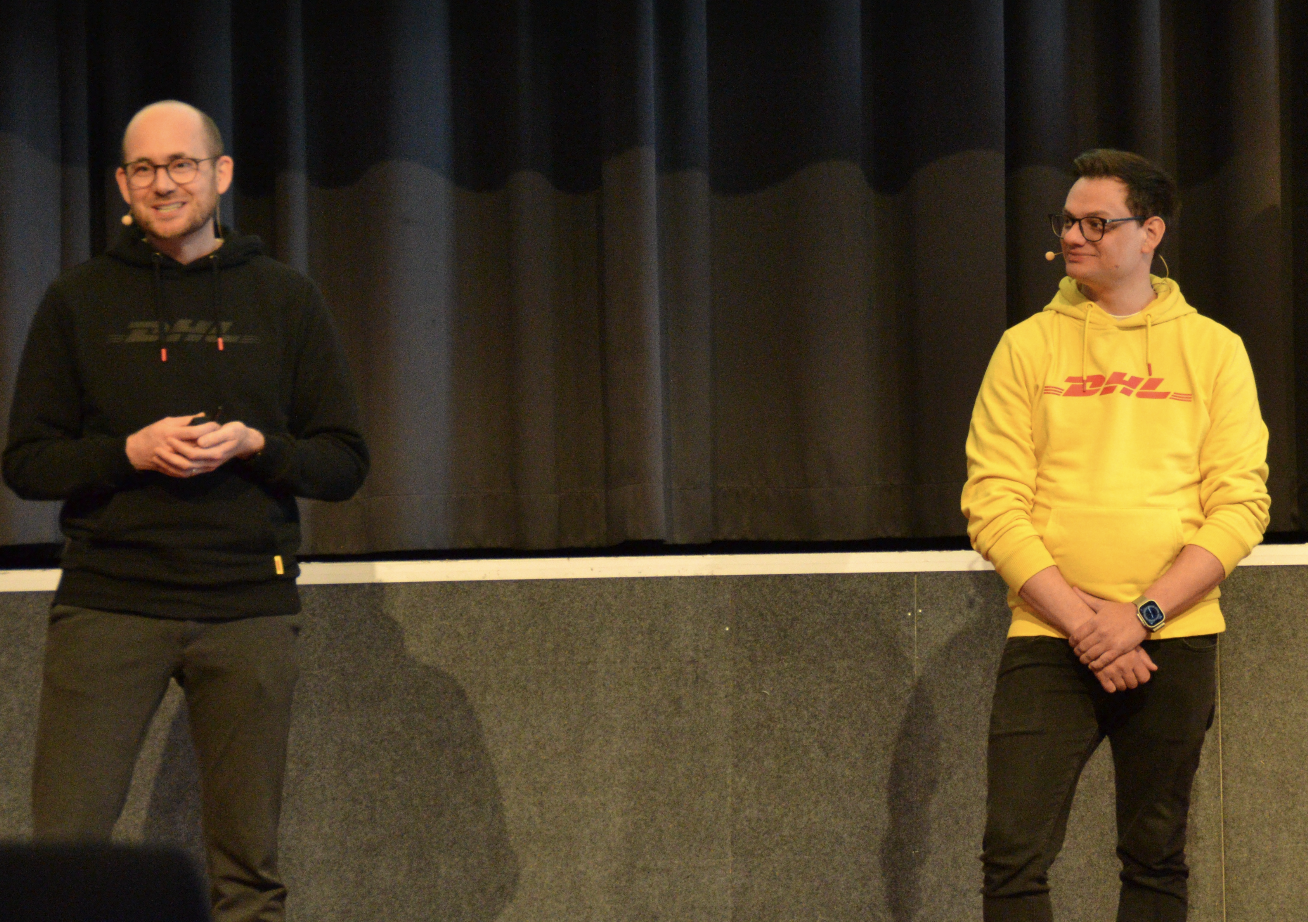
Jonathan Zaiß and Denis Ziegenfuß, DHL Germany
In the last contribution of the Innovationstag, Sascha Poggemann, founder and CEO of AI company Cognigy, after a short introduction, two gentlemen from DHL are speaking. In Germany, DHL is the market leader with 15 billion shipments annually. The company is aware that the happy flow is essential for both senders and recipients. For senders, the costs are the most important, but despite declining volumes for letter mail and rising costs, DHL still delivers the 'best customer service in the industry'.
German consumers like to call DHL to ask where their package is. Automating this question is the starting signal for DHL for a series of AI initiatives. DHL needed four months to set up a pilot for a voicebot together with partner Cognigy; seven months later (and after a lot of fine-tuning) the voicebot was able to handle 100 percent of these calls.
After some hesitation, he says Jonathan Zaiss, head of crm solutions at DHL Post & Parcel Germany, that the voicebot handles about a quarter of DHL's total call volume by automating the 'whereismyparcel' question. (Ziptone/Erik Bouwer)


Also interesting
-

Food for thought is being handed out at CCW Berlin’s Innovationstag. What to think of agentic AI as a virtual store manager at…
-
On the stage of CCMA Digital Conversation 2026: including ABN Amro, Eneco, VGZ, Univé, Lebara and the Norwegian Posten,…
-

The Customer Service Federation is once again organizing a comprehensive and practical program in February 2026 around CCW 2026 in Berlin.