
 Anyone who notices that large amounts are unintentionally debited from their own bank account can easily panic. NRC and NOS showed that reporting fraud at Bunq is a frustrating affair. Other banks focus on quick telephone contact, but not all banks provide clear information about this.
After consumer program Kassa sounded the alarm last month about the poor telephone accessibility of the Bunq internet bank, NRC and NOS have now also published an extensive article. This paints a worrying picture. Bunq customers who see in real time how more than a ton of bank credit disappears from their account cannot reach the bank. How does reporting fraud at other banks work? Ziptone listed it (see below).
NRC raises the question in the article how safe Bunq is; In recent months, a “remarkable number of Bunq customers” have lost their savings due to a scam. The amounts stolen range from several tens of thousands of euros to more than 100.000 euros. Kassa stated last month that at Bunq, a relatively small bank, customers suffer relatively much damage when it comes to criminal acts on consumer accounts, as can be seen from reports to the Fraud Help Desk.
Link in a text message
The cause of the bank fraud lies primarily with Bunq customers who click on a hyperlink in a false text message requesting an update to the security. When customers click on this, they are almost immediately contacted by telephone by a criminal pretending to be a bank employee. While customers are literally kept on a string, large amounts are siphoned off via multiple transfers. If customers see this and try to call Bunq, they will be taken to an answering machine via an SOS number. The alternative is a chatbot. Customers desperate for answers and solutions even travel to the head office in Amsterdam in the hope of speaking to someone in person.
“Automated SOS telephone line” and a form

detail of Bunq web page
Bunq emphasizes that security is a high priority and that they use advanced technologies to protect customers. According to the bank, customers can block their accounts themselves via the app and all communication with customers is handled in English by employees in Turkey and Bulgaria. However, former employees have indicated to NRC that at Bunq, convenience rather than safety prevails in the design of the processes. On the other hand, reporting fraud ('I am a victim of fraud') has to be done quite laboriously via a online form.
The Consumers' Association finds it unacceptable that the internet bank is inaccessible to customers who fall victim to criminals. “That is simply not possible,” says spokesperson Joyce Donat The Telegraph. “If you are in complete panic because a huge amount of money has disappeared from your savings account, you should be able to get a live person on the phone. That is not possible at Bunq, that is their policy.” The association has now contacted Bunq. "Apart from the question of whether people were stupid by clicking on a link and whether they will see anything in return, we want to talk about the structure of the bank's customer service."
How do other banks help report fraud?
Other banks take extra measures to prevent large amounts from being transferred one after the other and have better organized accessibility in the event of fraud, according to an inventory by Ziptone. But there are also differences: not every bank takes into account issues such as time differences or customer panic when communicating how to report fraud.
Ziptone lists the fraud reporting procedure of various banks, starting with a Google search with the name of the bank plus 'report fraud'. We limited ourselves to reporting checking account fraud, so we did not look at credit card fraud. We also did not check whether IVRs and other delaying facilities are used during telephone contact.
At ABN Amro Bank you have to click through various web pages, but then you can call from the app (via a QR code) or outside the app. It is reported that assistance with a call from the app is faster. There are three specific telephone numbers available: a number for office hours, a number outside office hours and a number for calling from abroad. This means the bank can be reached 24×7, but people who call in panic from abroad run the risk of calling the wrong number due to time differences.
Also with ING you will be quickly redirected to a specific telephone number. ING has a general emergency number that is available 24×7. It is explained that help is provided immediately, but that this is faster if you call from the app.
Rabobank proudly supplies first the fraud check online and then the fraud alarm line. One specific number is offered that is available 24×7.
ASN provides a web page who invites you to contact us directly. But then it gets messy and confusing: “On working days, ASN Customer Service is happy to help you via telephone number: 070 – 35 69 335. Available from 08.00 a.m. to 18.00 p.m. (Monday to Friday). Outside office hours you can also call 070 – 35 69 335. You will then hear a tape. Listen to the instructions to be connected to a security employee (24 hours a day).”
On the ASN pagecustomer service there is an emergency number that is available 24×7, but that is the same general number mentioned above. The ASN website has a hard-to-find search function that responds with a chatbot, but when the word 'fraud' is used, only general information comes up at first and no telephone number.
The People's Bank comes alone with the advice to send an email or contact customer service. The search function presents five unusable search results.
Social Media, Volksbank's main brand, on the other hand, comes with a targeted web page with a (general) telephone number. It does not state whether that number is available 24×7. On the customer service page it is stated that the same number (030 – 633 30 00) is only available at certain times. If you scroll further, you will find an emergency number: 030 – 633 30 00, the same number as that of customer service. It now says that it is available 24×7. That causes confusion.
At KNAB you must first enter a search query. For the search term fraud, a specific telephone number is presented in the results, but it is not clear whether the number is available 24×7.
At Bunq Callers who call the SOS number will hear an automated message, according to Checkout. “Thank you for contacting us. We have received your message and one of our guides will contact you within 4 days. We can best help you if you formulate your request in a complete sentence, for example: 'How can I activate my card?' The more details you provide in your question, the faster we can find a solution for you.”
Conclusions
Not all banks make it easy for their customers. They do not always communicate clearly about which numbers function as emergency numbers and what their accessibility is. In some cases, regular customer service numbers are presented as emergency numbers; If specific opening hours apply, customers calling from a different time zone must decide for themselves whether they need to use an alternative number. The question is why banks do not use a special and unambiguous 24×7 emergency number and why the supervisor DNB does not impose any requirements on this. Emergency numbers also pay little attention to customers with a sensory impairment. (Ziptone/Erik Bouwer)


Also interesting
-

Customers lost tens of thousands of euros while getting in touch with bunq proved difficult.
-
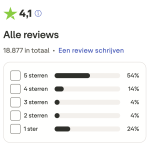
A former employee's Reddit post also mentions the poor customer service: “There is no customer service”.
-

With a new campaign, the banks want to better protect their customers against online fraud. The campaign runs through…