
"The human touch in customer contact" sounds like a well-trodden path. Many customer contact professionals are fed up with all the talk about AI. But anyone who skipped the Customer Contact & CXForum annual conference because of it missed out.
Naturally, the fifteen parallel sessions featured demos and presentations on the use of AI—even pre-recorded demos. But the main focus in Grimbergen was the use of humans in AI and digitalization. Two speakers stood out on this point, and there was a fitting finale.
What does the customer want?
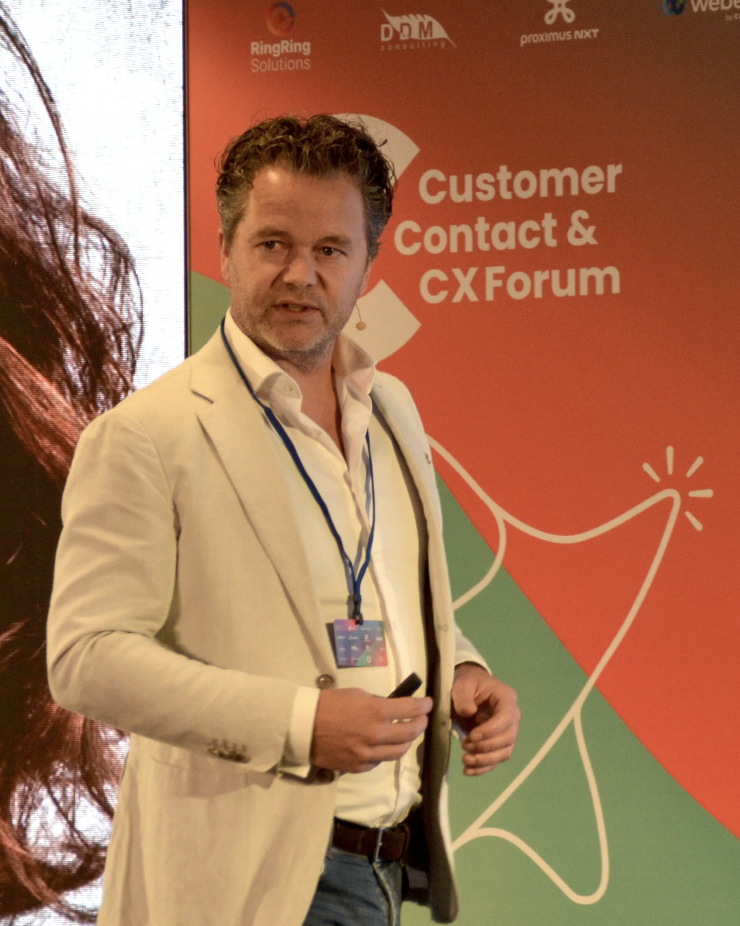 With digitalization, “the customer is being completely eliminated,” according to the keynote Anders Jansen, director of The House of Marketing. Yet, he sought "real connection in the digital world." Jansen started with the customer: what are they actually looking for? First and foremost, people value service more when they see that effort has been put into it. That's why bank-insurer NN shows its customers what the company does at every step of the process—a form of transparency that, incidentally, also comes through new legislation in Spain is enforced.
Customers value service when it's timely, non-intrusive, and offers added value – these preferences are universal and don't change over time. The value of service also increases when the customer has to put in a little effort. Building in friction can therefore help.
Weeks of introduction and options
Sometimes people even have irrational preferences. At ASR, it became clear that customers prefer damage repair within three days to damage repair within a day. And not every option you offer your customers automatically leads to a choice. After some hesitation, FBTO decided to allow customers to switch insurance on and off. Nespresso called the legal withdrawal period for online orders the "adjustment weeks." In both cases, it had a positive effect on sales. For those who are unsure and want to experiment first, Jansen had a good tip: use the principle of "Two-way door decision' from Amazon: you can adjust and change anything, provided it can be easily reversed tomorrow. Lowering the price isn't recommended, but tweaking CX offers plenty of other possibilities.
Jansen believes it's clear that customers want both "high tech" and "high touch"—the equivalent of "always available" and "personal." Human service must offer added value, because "otherwise I might as well have done it online," he says. So, the bar is set high.
From Plant Dialogue to Personal Question
Jansen then focused on ways to make digital services more human and personalized. This quickly evokes the idea of complex personalization operations using data. But other possibilities exist, as he demonstrated with examples.
Legal expenses insurer DAS allows its clients to submit requests for assistance 24/7. When it was first introduced, the company initially opted for a standard response—"we'll get back to you soon"—regardless of the urgency of the request. This naturally led to numerous contact moments: when will I receive a response? By adding a question to the online process, namely "Are you concerned?", the answer not only allowed for an in-depth response to the client's stress and emotions but also resulted in a more appropriate response. Those who say "yes" are called immediately, while those who say "no" receive a response within a few days. The question "Are you concerned?" continues to play a role in the follow-up process.
Insurer Interpolis did something similar by asking the customer what they consider important when reporting a claim – fast payment, quick repair, no hassle – and then tailoring the further handling of the claim accordingly.
Another example is putting yourself in the customer's shoes during the selection process, something that online webshop Plantsome has implemented. With its "Plant Dialogue" about plant preferences, it connects with the customer by focusing on their (living) situation and preferences. Answering a few questions takes some effort, but it leads to an online offer that simplifies the decision-making process. The result: higher conversion, according to Jansen.
Let AI think along about a personal note
"Do we remain stuck in that Sagrada Família of our own never-ending processes, or do we step into the customer's world?" Jansen wondered. With his examples, he demonstrated all sorts of opportunities to integrate people into digital services. Sometimes it's in language use, sometimes in processes, sometimes in technology. An example of the latter: have Notetaker listen in on a customer conversation and, afterward, suggest a personalized email for the customer the next day—that works very well, according to Jansen.
Proximus candid about lessons learned
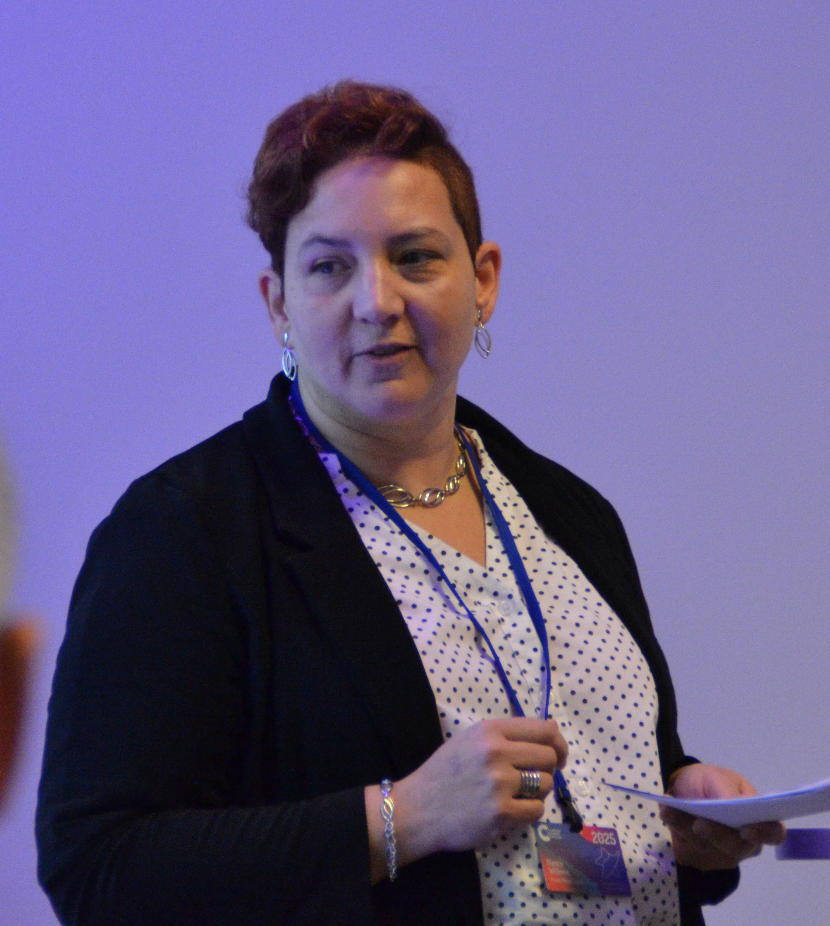
Nancy Willems
With fifteen short parallel sessions spread over three time slots, there was plenty of choice. A few highlights: Nancy Willems (Customer Care Manager at Mazda) explored the question of how to generate support for AI. Here too, it was all about asking questions: what are you working on, what do you expect from AI? Starting a conversation is quite different from a PowerPoint presentation. Also useful: an internal manifesto stating that you will experiment and learn.
Alexander Warnier, head of CX and Siebe de Gezelle, AI strategy manager of the Belgian telco Proximus, spoke candidly about the mistakes made and lessons learned in implementing GenAI. After the first 'scripted chatbot', developed eight years ago, several AI applications have been implemented in quick succession in recent years. This wasn't without its problems. Employee engagement was too low, problems combining data streams (for example, when implementing speech recognition for coaching) and producing transcripts (the quality of which was inadequate), and the replacement of the standard website search function with a GenAI-powered version. Despite using RAG for the latter, the answers weren't accurate enough. The first version wasn't even much better than the old search screen with FAQs. The solution lay in more testing and fine-tuning. "Our support pages were designed for humans, not for AI, which, for example, couldn't handle decision trees."
Starting small with AI: sometimes that's nonsense
Proximus CEO Stijn Bijnens has a master's degree in computer science, so it's no wonder he encourages AI experiments. The company employs 48 data scientists who, together with their colleagues, have now implemented 213 use cases. These include automated service request classification, deploying a writing assistant to make bilingualism a non-issue in the contact center, and automated coaching. Incidentally, Warnier and De Geselle also criticized the "start small" mantra. Some AI applications simply require less accuracy than others—think trend analysis versus customer conversations. So, "starting small" isn't always necessary, let alone wise.
The lessons learned at Proximus have now led to complete conviction: the telecom provider will fully utilize the potential of AI. However, humans remain indispensable for customer service: AI is often unable to consider the full context when solving a problem. Humans are still needed to ask the right follow-up questions. "We still provide 'one size fits all' support, but we want to move towards 'personalized' support. That's within reach."
Curiosity
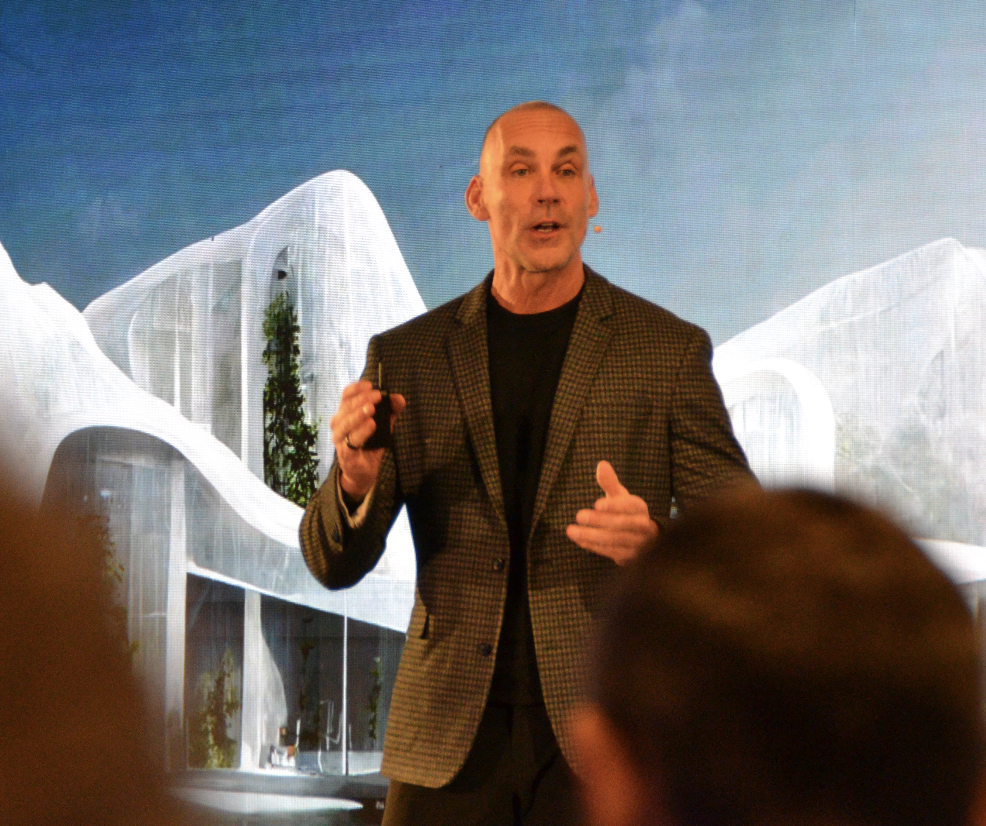 Futurist Richard van Hooijdonk is known, among other things, for having chips implanted in his body. As a futurist, he focused primarily on AI agents: managers will soon have to lead both people and agents. "Organizations that don't use AI will be overtaken by organizations that do." We therefore need fewer generalists and more specialists, according to Van Hooijdonk, who later advised a questioner from the audience to study philosophy, sociology, or anthropology—because we will soon need people who will reorganize society. We also need people with the curiosity of a four-year-old—among them, Van Hooijdonk said, might well be the next Elon Musk. (Whether we benefit from more Musk remains to be seen.)
Future skills
Van Hooijdonk also believes that HR within the organization should take action to address the future skills gap. He also advocated for ecosystem thinking. Companies can't design and implement everything themselves. He mentioned, among other things, the "ecosystem designer" as a role of the future. He also touched on the model of innovation at the edge and reversed mentoring: fortunately, in addition to the views, there are also some practical tips to loosen and speed up what is stuck.
“No exact answers”
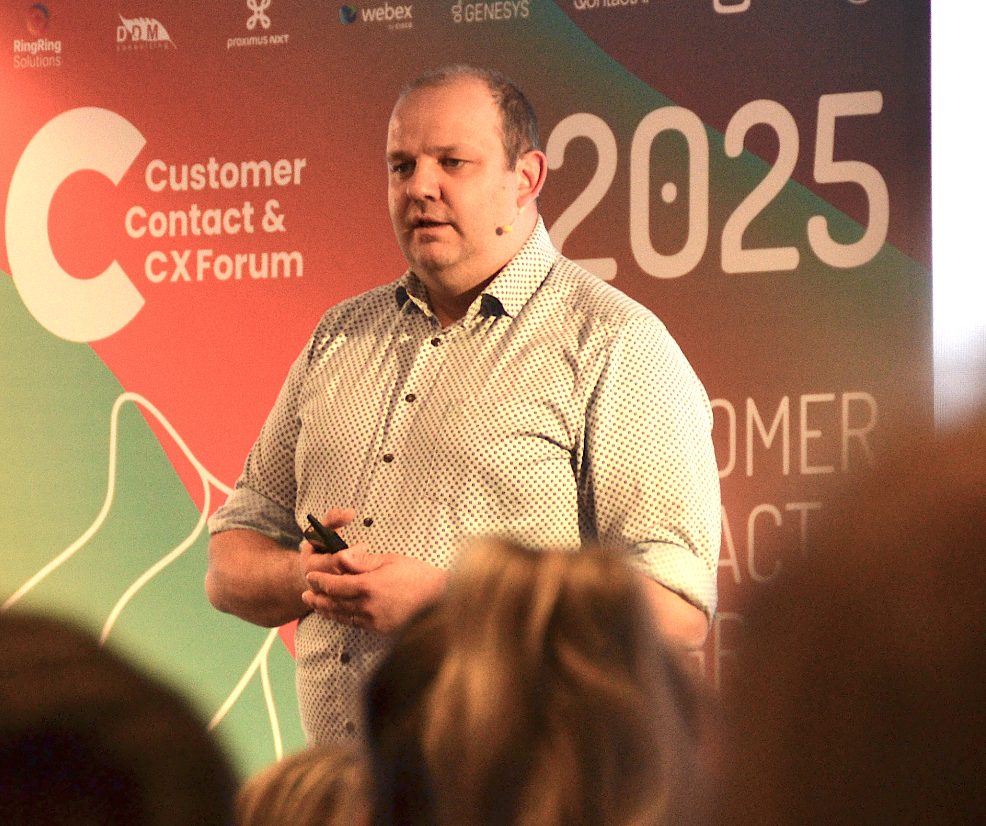 Yves van Vaerenbergh, professor of customer experience management at KU Leuven and co-founder of the consultancy firm Kalepa, brought the audience back down to earth. He first reduced GenAI to what it is: a model that works based on pattern recognition and probability. More specifically: "The machine cannot provide exact answers."
That's precisely why Van Vaerenbergh envisions a future in which people collaborate with AI. In fact, that's the current practice. Not that it immediately leads to revolutionary results. Productivity gains depend on the role and amount to around 15%. AHT can sometimes be slightly reduced, customer satisfaction can increase somewhat, but at the end of the day, longer-serving employees perform just as well as AI. Younger employees and entry-level employees, however, perform better with AI. Van Vaerenbergh also notes that this creates a problem for the future. How will we attract experienced employees in the future?
'Game over' for people in customer contact?
In his presentation, Van Vaerenbergh also showed what contributes to the success of AI agents and chatbots. Research has shown that they perform better in the eyes of consumers if they have a name, look human, possess domain knowledge, and have good conversational capabilities. And of course, Van Vaerenbergh said, bots will continue to improve in the coming years. So, is it 'game over' for humans in customer contact?
That's certainly true for some tasks. But there's still plenty of work to be done. Human employees are warmer, more competent, better at handling complex questions, and more malleable or manipulable. The latter factor contributes to the appreciation, because, the idea is, a bot is designed by the organization and therefore always sides with it. A human is open to arguments.
Van Vaerenbergh also demonstrated through research that human employees are particularly valuable when providing non-standard services. Employee performance contributes to customer satisfaction and loyalty – if that contribution is lacking, you could also opt for agentic AI, according to Van Vaerenbergh. "Simply being empathetic" isn't enough. People with average empathy scores just as well as a chatbot that appears highly empathetic. Therefore, the focus should be on highly empathetic employees.
AI doesn't work without people
What Van Vaerenbergh didn't mention are the collaborative skills of people within an organization. Unlike a bot, employees can walk to another department and talk to or coordinate with a colleague. Human factors such as mood, goodwill, expertise, and a strong argument also play a role. These, too, are often decisive factors in non-standard services. Not missed, and therefore emphasized by Van Vaerenbergh: people are enablers, including those of technology. Every AI tool requires continuous maintenance and management. "AI doesn't work without people."
Ask questions more often
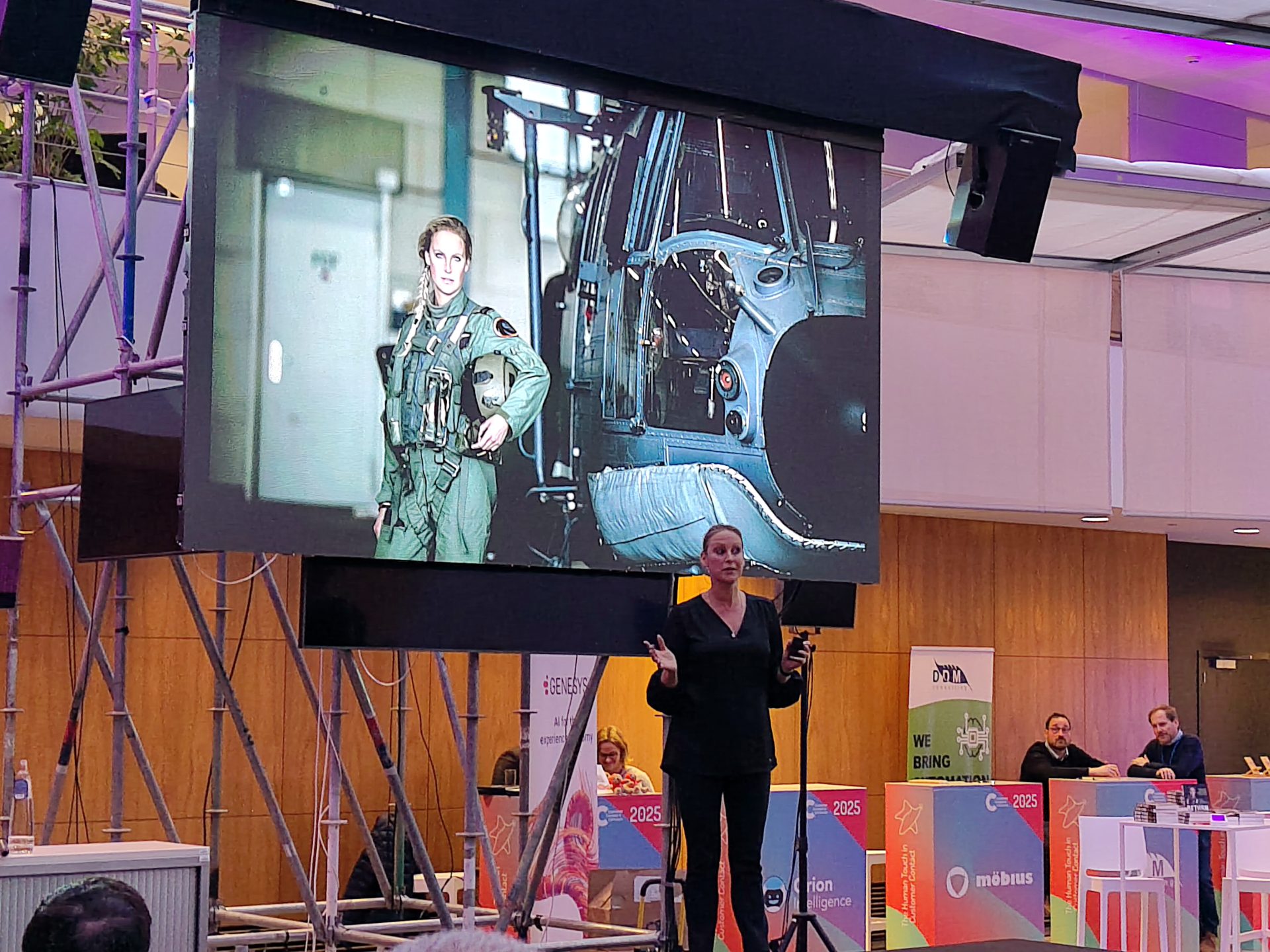 Dominique Schreinemachers She concluded the day with a moving keynote address about her work as a helicopter pilot (the first female in the Air Force) on the Cougar. The highlight was replaying her crew's communication up until the controlled crash of the helicopter in Afghanistan. She reflected on various moments in her training and development, drawing compelling parallels with the practicalities of leadership—and speaking with clients. Ask the person in front of you questions more often, was her powerful message. It's a prerequisite for progress and therefore the foundation of collaboration.
Customer Contact & CXForum develops into an adult trade association with a large board of directors. At the kick-off of the conference, Chairperson Katia Battheu A brief look back at the past year. The board of directors has expanded to 14 members – all of whom are expected to actively contribute – and the number of members (primarily affiliated organizations) has recently grown to more than 100. "These are very different companies with different roles, but we share a passion," said Battheu, who briefly explained the theme of 'the human touch in customer contact.' "Developments are moving quickly, but the role of the employee remains important."
The annual conference of the Belgian trade association Customer Contact & CXForum took place on 20 November in Grimbergen B) and attracted more than 300 participants.
(Ziptone/Erik Bouwer)


Also interesting
-

The innovation budget is a fund from the Ministry of the Interior and Kingdom Relations and contains 3 million euros, intended to…
-

The VNG resolution marks a change of course: municipalities now want to work together in the development of digital services.
-

During the annual Customer Contact & CXForum conference, the 'stars of customer contact' were awarded to six customer contact employees.