
 How does digitalization impact our well-being at work? To answer this question, we need to combine knowledge about the brain and the digitalization of work. But (digital) work is more than just fiddling with your smartphone.
Digitization: curse or blessing? At the beginning of this book, superlatives are used: the rise of digital technology “has changed our lives at a breakneck pace.” However, a look back in time can also lead to a different conclusion: well before the arrival of the smartphone (around 2007), we were already busy with mobile phones and text messages. Screen work emerged in the XNUMXs – there was even a NEN standard for developed, particularly focused on ergonomics. Even then, there was already discussion about screen time.
Wellbeing and digitalization
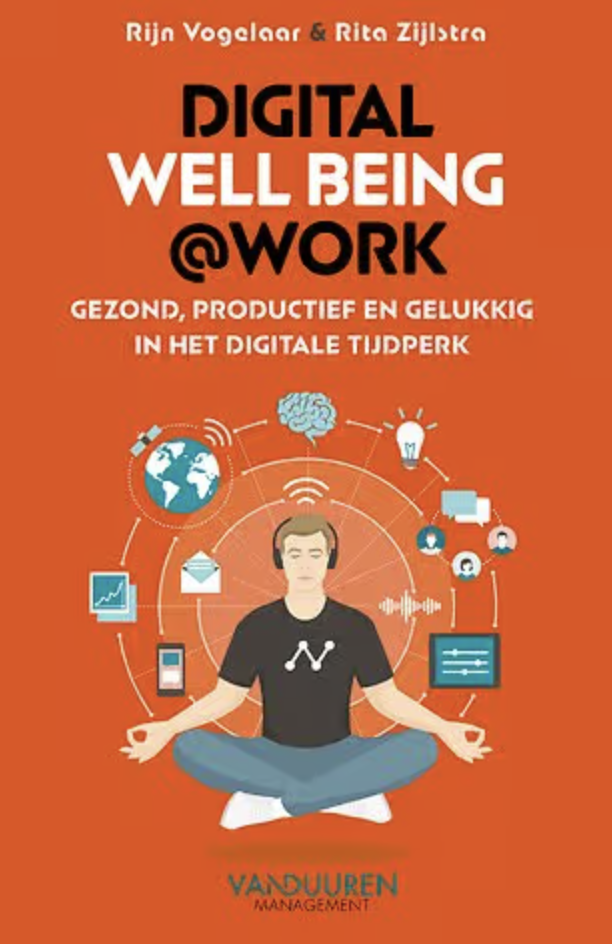
Rijn Vogelaar is a social psychologist; Rita Zijlstra is a clinical neuropsychologist. In "Digital Wellbeing at Work" – a Dutch book – they aim to bring together the worlds of the brain and digitalization. The book explores the impact of digitalization on our brain and job satisfaction and offers practical tools for thriving in a digital world.
Before teasing out the relationship between 'digital' and 'wellbeing,' the authors first list the pros and cons of digitalization. These cons are most relevant when it comes to well-being: think of symptoms like sleep deprivation, a sense of loss of control over data, information, and privacy, a disrupted work-life balance, and a stronger focus on the short term. The concrete implications of all this for well-being remain underexposed, as does the impact of IT shutdowns or suboptimal systems.
The necessity or inability to use certain tools (shadow IT, which can both alleviate and cause considerable stress; AI is also considered this category in many organizations) is another such topic. Are there KPIs for the extent to which IT contributes positively or negatively to well-being? In IT services, there is increasing consideration of outcome- and end-user-based KPIs. This thinking is also linked to leadership, but it is not addressed in this book.
Brain and digitalization
Another, rather detailed chapter explains how digitalization affects our brains, followed by generic tips such as good planning, managing digital stimuli, limiting screen time, and taking mini-breaks every 60-90 minutes. How these tips fit into our daily work isn't explained. Limiting screen time or taking breaks might fit into a knowledge worker's schedule, but not always that of a screen-based user.
Healthy digital working style
The book discusses happiness, creativity, and a healthy lifestyle in considerable detail – focusing primarily on the private use of digital tools, such as "leaving your phone out of the bedroom." Only in the second half do they return to the main topic: a healthy digital work style. Here, the potential sources of stress surrounding digital working are discussed – from Wi-Fi problems to forgotten passwords. It also addresses how to organize IT support. "From a cost perspective, many organizations choose to outsource their IT support to external parties, sometimes in far-flung countries like India or Bangladesh." Outsourcing and offshoring IT support are lumped together here and associated with communication problems. Of course, these still occur, but it's become a cliché and doesn't do justice to other forms of modern IT support.
Digital detox
Missed Opportunity also provides a good overview of the various tasks people can perform at work, including the most suitable communication and work styles and environments – think creativity, communication, coordination, contemplation, and so on. There is, however, a fair amount of attention paid to the "digital detox" – think ten days without (or with limited) smartphone use. For many people, such a detox will only be feasible during their vacation.
What is the role of leaders in organizing work?
Finally, the authors address the role of the manager. Flexibility, trust, and autonomy are central to modern leadership, according to the authors. They emphasize that continuous learning and development (which can lead to things happening too quickly or too much, causing people to drop out) is essential. They also touch on the issue of "digital presenteeism," but they don't answer the question of where work monitoring begins and ends—think of information about presence, availability, activity (which project are you currently working on), and how this relates to modern leadership. This also applies to a digital detox within the company. Is that feasible? How could you approach it? This is relevant, because the authors rightly observe that our brains rarely get a break from the flood of emails, chats, and social media. Shouldn't we also look at how organizations have structured their (digital) work processes? Leaders, for example, are responsible for technology choices—a highly relevant topic, given developments in AI.
Research into digital + well-being Over the past five years, there has been a significant increase in academic research on digital well-being at work, partly fueled by the COVID-19 pandemic and the rise of widespread remote working. Many studies highlight both the benefits of digital tools (such as increased flexibility and efficiency) and the downsides to well-being. A key theme is the downside of constant connectivity: think of information overload and digital fatigue. Good insights have been gained into how constant email and smartphone use is linked to increased employee stress. It is also clear that prolonged, intensive screen use can lead to mental exhaustion and sleep problems. Recent overview studies of digital well-being programs at work show that the focus is often on mental health, physical activity, and lifestyle, and the associated intended health outcomes. Less attention is paid to organization-related outcomes such as burnout, employee engagement, or absenteeism.
Four-day workweek as ideal?
The final chapter focuses specifically on AI, but the authors' perspectives on this topic are limited to promising ones. For example, AFAS's four-day workweek is mentioned, but the authors ignore the serious labor market shortages that will persist in most European countries until at least 2040. AI should not be used to reduce working hours or shorten working hours, but to increase productivity. And that is precisely where well-being may be compromised.
"Digital wellbeing at work" is a bit slow to gain traction when it comes to digital work; moreover, some of the issues raised primarily concern the private lives of digital humans.
While the authors have tackled a compelling topic and aim to raise awareness of "digital well-being," they offer too few answers to the question of how we will (re)define jobs and roles—for both employees and managers—in the coming period. This is unfortunate, as this issue will only become more important in the coming period—evident in numerous reports about changes in work due to the use of AI, which can be seen as the next wave of digitalization.
(Ziptone/Erik Bouwer)
Digital wellbeing at work Healthy, productive and happy in the digital age. Van Duuren Management, 2025


Also interesting
-

Fresh Ziptone columnist Frans Reichardt wrestles with the tail end of the customer journey of a bottle of peanut oil.
-
Anyone who does their customer satisfaction survey incorrectly runs the risk of losing customers, says Shep Hyken.
-

We started with AI, but have no idea where it will end. Maarten Oosterhoff thinks it is time to…