
Why wait for customer service when you can do it faster yourself? Self-service offers freedom to customers and relief for employees. Yet, things often go wrong. Discover in four clear steps how to avoid pitfalls and make self-service successful for everyone involved.
Text: Cynthia Mak
Filling up and paying at a gas station. Booking a flight vacation. Adjusting a data bundle. Examples of actions that we can easily perform ourselves these days. Yet it wasn’t that long ago that a gas station attendant would fill up your tank for you. To book a flight vacation, you went to a travel agency, which helped you with the reservations for the tickets and the hotel. And to adjust a phone subscription, you called customer service.
Customers are increasingly being enabled by companies to help themselves solve a problem or find the answer to a question through self-service.
What is self-service?
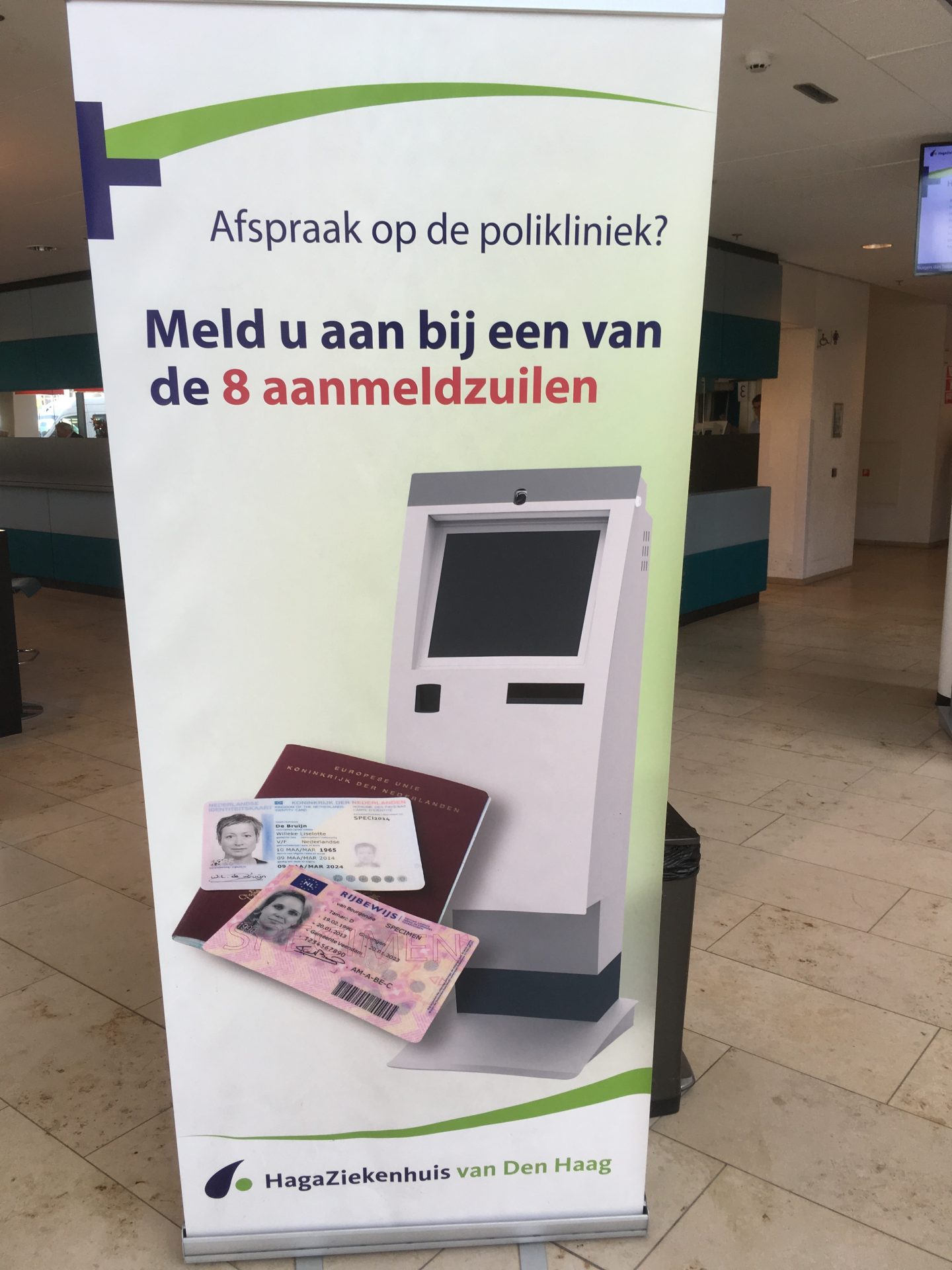
Self service enables customers to help themselves. This can involve making purchases, making changes or finding information. An example of a change that you can increasingly perform via self-help is returning a purchase from an online store. Previously, it was common for a return to be registered with customer service, who then sent a return form to the customer, accompanied by instructions. Nowadays, it is common for customers to receive return forms and instructions immediately upon delivery of the product and for them to be able to register returns online.
A second example is about finding information. Here too, it is now much more common for customers to find the answer to their questions online themselves, with or without the help of a chatbot. That role, of providing information, has largely shifted from the customer service employee to self-service facilities.
Customers can serve themselves both online and offline. Online self-service includes registering returns, booking a train journey or doing online shopping. Offline examples include self-scanning at the checkout, opening the metro gates yourself by scanning your ticket or installing your own internet modem.
What are the benefits of self-service?
People generally don’t like waiting: they prefer to be in action mode rather than in wait mode. By providing self-support options to customers, they can solve their problem without having to wait for an agent.
Especially for companies that are struggling with a staff shortage, offering self-service can lead to a reduction in pressure on customer contact teams. For companies, self-service can also be a good option to curb high contact volumes.
There are also customers who know themselves what needs to be done to solve their problem. They do not need an employee to help them. And many customers want to be able to solve their problems themselves, even when customer service is closed.
In short, empowering customers to help themselves can contribute to a better customer experience by eliminating the need to wait.
The risks of self-service
 Although there are many advantages to self-service, there are also risks. There is hardly any contact with the customer regarding actions that are performed via self-service. As a result, the organization runs the risk of missing valuable information that could improve the company's offering.
Customers can also abuse certain self-help options. For example, by registering unjustified defect reports or – in the case of a self-scan checkout – not scanning all items and thus committing theft. But unintentional mistakes can also be made. For example, if a customer has to provide the meter readings for water consumption, and mixes up two numbers.
Self-service can also be complex. Think of the annual tax return. Filling in the pre-filled tax form is not very difficult for many people, but the complexity lies in understanding all the rules and exceptions. Also, such texts with explanations are often written in a complicated way, which can turn your self-service enthusiasm into despair.
Or maybe you have tried to implement a SaaS solution yourself, where you had to read through extensive instructions to understand how a component actually works. There are also processes that are so complex that they are not or hardly solvable by self-help.
Most risks can be mitigated by providing a clear explanation or by building in a solid process with minimal chance of errors. Many self-support processes have a 'failure process': as soon as customers get stuck or can no longer follow the normal process, an employee will help them further. A recognisable example is the chatbot that does not understand your question and forwards you to an employee. If a customer has moved to a new-build home and wants to apply for internet, there may not yet be a connection point for fibre optic installed. In that case, the application cannot be completed and an employee of the internet provider will first have to arrange for a connection point to be installed. These are examples of failure processes.
How do you handle it?
With the rapid development of technology around us, the options for self-service are increasing rapidly. Not every company has recognized and/or used all the possibilities to apply them. Implementing self-service can yield many benefits, provided that you manage the risks well.
But how do you approach the introduction of self-service? Ziptone helps you with four clear steps to successful implementation of self-service.
1. Why do you want self-service?
If you want to start with self-service, it is advisable to first determine why exactly you want to do this. Self-service is not a goal in itself, but a means to achieve the goal: enabling customers to help themselves. What goals do you want to achieve by introducing self-service? Do you want to reduce waiting times, relieve the customer contact team, do you want to increase customer satisfaction?
Recording these goals is relevant because you also want to know when you are satisfied with the result of the implementation of self-service. So also record which effects of self-service you want to measure and how you are going to measure them. In other words, at which KPIs do you expect changes, what is your zero point and what is your objective?
2. Which processes do you want to enable with self-service?
Now that you know the goal, it's time for the next step. What exactly are you going to make available for self-service? As discussed in the introduction, there are three categories of actions that you can let your customers perform themselves: finding information, performing transactions, and making changes.
Regardless of the category, you will need to determine what exactly you are going to make available for self-service. There are several ways to determine where to start, but the easiest method is to determine where the biggest problem is that you want to solve. Often, these problems can be boiled down to three main areas: time, satisfaction, and cost.
You can identify the customer processes that lend themselves well to self-service by answering the following questions:
- What are customers least satisfied with?
- Which processes take (too) much time for employees to carry out?
- What makes the biggest impact in terms of contact volumes?
- Which processes require the most actions from employees?
- Where do employees really add value?
- In which processes are the costs per contact (too) high?
To find the answer to these questions, it is essential that the basis in customer contact is in order. This means that you have mapped out processes, the CRM system is set up properly, contact reasons are registered and feedback loop reports are set up. These four elements also play a role in contact reduction.
Once you have an overview of the biggest problems, it is time to investigate whether self-service can provide a solution here. You absolutely do not have to reinvent the wheel here: ask your colleagues, consult professional literature and search for customer cases.
Also involve customer contact employees in finding self-service options. They often hear from customers which options they would have preferred to have themselves. Incidentally, you can also get that kind of information from customer feedback. Also look carefully at what competitors or other companies in the market are doing and be inspired by those solutions. You can also ask providers of self-service solutions which tools they offer and how they can solve the problems. Discuss the challenges with peers inside or outside the organization. It is possible that they already see movements in the market that you are not yet aware of.
3. How do you implement self-service?
You have a clear idea of the advantages and disadvantages of self-service. You know what your customer vision is and why you want to use self-service. It is also clear what problems you want to solve and you have mapped out the possibilities. Now it is time for implementation. This is how you approach it.
You start with an important choice: do you go live on a large scale at once, or do you start small? In practice, it often works best to start small, with a limited process or a specific customer group. This way you can gain experience, learn from what works and what doesn't, and adjust based on that.
When setting up self-service processes, always involve multiple disciplines. Of course, customer contact is a logical party, but IT, marketing, legal and, for example, product management also play an important role. Customers should not only be able to go through the process technically, but it should also be clear what is expected of them, which steps they go through, and what they can do if something does not work.
Clear customer communication is essential here. Explain why self-service is offered, what its benefits are, and ensure that customers experience it as a form of help – not as a shifting action. The form and tone of voice of your instructions, buttons and error messages play an important role in this.
Once the first self-service process is in place, it is wise to test it with real customers. Let them go through the process and ask what they think. Do they understand what they have to do? Do they understand the language used? Do they get stuck somewhere in the process, and do they know what the next step could be? Small usability tests or following the customer journey can provide valuable insights.
Also, don’t forget the value of customer contact employees in this process. Not only can they provide input on the design, but they are also a good source for creating instructions. They often know exactly where customers stumble and which explanations really work.
Finally, build in monitoring from the start. Keep track of how many customers use the self-service option, where they might drop out, and whether they still contact you. Also measure satisfaction with the new process. This will give you immediate input for further improvement.
4. How do you set up monitoring?
We have previously discussed the risks of self-service. These risks can be mitigated well by solid processes and clear communication. An important step in offering self-service is to set up the right monitoring. At the self-service petrol station, there are cameras that register when customers drive away without paying. At the self-scan checkout in the supermarket, random samples are taken to encourage customers to scan all products. In this way, you want to ensure that you can monitor the effectiveness of your self-service processes and adjust them when necessary.
Monitoring goes beyond just checking whether customers are going through the process 'properly'. It is also about signalling where customers get stuck, whether the process is experienced as pleasant, and whether it actually leads to less pressure on customer contact. For this you can look at, for example:
- The use of the self-service option: how often is it chosen?
- The success rate: how many customers complete the process without assistance?
- The exit points: where in the process do customers drop out or quit?
- Customer satisfaction: how do customers experience the process?
- The impact on other channels: is the number of contacts with employees decreasing and can this decrease be attributed to self-service?
By periodically analyzing this data, you not only gain insight into the functioning of your self-service, but also concrete tools to further improve. Think of simplifying steps, adjusting instructions or expanding the number of processes that are suitable for self-service.
Ready to see how Snowflake works?
Self-service offers plenty of opportunities: for the customer who likes to take control themselves, and for organizations that want to streamline their customer contact. But it is not a panacea. It requires a well-considered approach in which you continually review: what really helps my customer move forward?
The key lies in the balance. Give customers the opportunity to act independently, without leaving them to their fate. Make sure the technology works, the instructions are correct, and that there is always an employee available when the customer needs it. Only then will self-service become a valuable addition to your customer contact.
DOS
- Start with a clear objective and measurable KPIs;
- Start small and scale up after evaluation;
- Actively involve customer contact employees in the design;
- Test processes with real customers;
- Provide clear language and user-friendly instructions;
- Don't just monitor errors, monitor customer experience.
Don'ts
- Don't view self-service as a cost saving without customer benefit;
- Don't push customers into a corner without an alternative;
- Don't assume you know what the customer wants – ask;
- Don't forget to measure what it yields and what it costs;
- Don’t let go after go-live – self-service is never finished.
(Ziptone/Cynthia Mak)


Also interesting
-

45 percent of customers who started self-service said the company didn't understand what they were trying to do.
-

The marketing machines are running at full speed when it comes to AI applications. But where are the proven use cases and early…
-

The fraudsters tell their intended victims that their SIM card needs to be validated or converted to an eSIM.