
CX or customer experience is an unfamiliar concept to virtually everyone in the customer contact sector. The CXPA, the international network of CX professionals, is less well-known. The relevance of CX is only increasing as digitalization and automation increasingly impact customer experience. So, there's work to be done for the professional association CXPA.
 “We are seeing more and more vacancies asking for experience with the CXPA framework: its awareness is growing,” says Martin van Keulen, board member of CXPA Netherlands. However, he believes there's still room for improvement in explaining what CX entails and what CXPA stands for.
“The number of training opportunities in our country in the field of CX is also increasing. Everyone has to make their own choice in this regard, but the CXPA certificate is particularly valuable because it is the only globally recognized title in the field of CX that you can obtain,” says Nathalie Vermeij, CXPA board member. "CXPA provides periodic, mandatory refresher training, which is a key difference from, for example, a standalone CX course. The Netherlands is a small country, but after the US, we lead the way in the number of CXPA-certified individuals."
“Thanks in part to the work of Nick Flower "Thanks to the collaboration of Jaap Wilms, CXPA has taken off in the Netherlands and is better known here than in neighboring countries," says Van Keulen. "The network exists 'for and by members', to learn from each other." This makes it somewhat internally focused, which is why CXPA is trying to build bridges with the outside world.
One of our goals for this year is to not only focus on current CXPA members, but also to interest others in the philosophy. We'll therefore be inviting more CX enthusiasts to upcoming events. We've partnered with PvKO, and CXPA is also exploring other associations and communities. A second avenue is connecting people through channels like LinkedIn.
Vermeij: "One of the focuses of CXPA in the Netherlands is training CX professionals to connect with other disciplines. You can only successfully improve CX if you collaborate within the organization."
“I think that our focus on experience is particularly unique. That experience is also reflected in our events, where many positivity and a high energy level “CX is about more than just a customer satisfaction score or NPS,” says Van Keulen. “CX is also about the emotions of both the customer and the employee.”
CXPA (Customer Experience Professionals Association) is an international non-profit organisation dedicated to understanding and improving customer experiences, driving better outcomes for customers, employees, and organisations. CXPA supports CX professionals to share, learn, inspire, and grow throughout their careers. CXPA defines customer experience as the perception customers have of an organisation – a perception formed through interactions with all touchpoints, physical and digital, over time. This includes all touchpoints from customer service, to advertising, packaging, product and service features, ease of use, and reliability. A CX Professional is a catalyst who improves an organisation’s outcomes by understanding, designing, and improving experiences across the entire customer relationship. CXPA maintains the CXPA Framework and offers the Certified Customer Experience Professional (CCXP) certification, which recognizes individuals who have demonstrated CX experience and expertise through a rigorous certification process.
Challenges of the CX profession
 To what extent is CXPA affected by the phenomenon of 'poor customer service', which involves having to achieve as much as possible with as few resources as possible?
Vermeij: "CX is increasingly becoming a fundamental part of customer service issues. Customer service professionals are intimately familiar with what's happening within companies. They play a crucial role as a source of information on improvement opportunities. Sometimes, service managers are fully responsible for both CX and customer service."
"In the past, companies were keen to achieve a high NPS rating. Then, more attention was paid to the customer journey," adds Van Keulen. "What friction was created within the various departments of the organization, and how can you eliminate it? CX is typically a vehicle for mobilizing the entire organization, but you do, of course, need colleagues. And the role of strategy has become more prominent, because departments sometimes have differing interests. Moreover, it's the customer service representative who contributes to the experience in a conversation; a company as a whole can only create the preconditions. Furthermore, it's important to realize that CX is also partly created outside of your organization."
Vermeij: "That's why bol.com and PostNL collaborate, for example, because they share the same 'recipient.' I've invested a lot of energy in clarifying this with our various clients over the past few years. With bol.com, we jointly develop plans to improve the overall experience for the recipient. My role at PostNL therefore extends beyond the organization. If you put the recipient first, you'll both move forward."
For companies that prioritize CX, wouldn't it make more sense to give CX a place in the boardroom—rather than, say, customer service? After all, CX is the overarching outcome; with all due respect, the contact center manager is more like a production manager.
“Yes, and you will see that more and more often,” says Vermeij.
Van Keulen: "Perhaps marketing should be at the top of the list, because that's about the brand and what you want to project. Customer experience (CX) must deliver on the brand promise, just like the contact center."
Putting the contact center under marketing is blasphemy. Marketers are just saying things, and the contact center has to clean up the mess.
Vermeij: “Ultimately it comes down to talking to each other and speaking the same language.”
Van Keulen: "Confusion and frustration are often caused by people not knowing the full picture. Shorter connections and highlighting stories from both sides is necessary."
Contact centers face a lot of pressure: besides a constant flow of contacts, there are also technological developments, sourcing issues, budgetary challenges like rising personnel costs, and management decisions like chatbots or hidden phone numbers. To what extent do CX professionals struggle with the focus on lowest costs at contact centers?
Van Keulen: "Chatbots are a good example. Customers are disengaged because of them. That's precisely when you, as a CX professional, need to offer support. For example, by identifying the challenges customer service representatives and customers face. Or by exploring how you can improve the chatbot. Some customers don't need a 'customer experience,' but simply an easy way to achieve their goals."
But do CX specialists even have the space to properly prioritize the customer's interests—whether they're looking for an experience or a solution? Improvements are possible, but they usually come at a cost.
"It can also go hand in hand. Implementing improvements that save money while providing good customer service," says Vermeij. "The question often is: which tool do you use at what time? For example, at PostNL, the recipient can contact the delivery driver directly at a much earlier stage – assuming they're still working. Then a real answer can be given. In the past, this involved a whole process of investigating things over several days by several people. It's a cost-saving measure that benefits both employees and customers."
"It's an example of a change that also requires top-down management," adds Van Keulen. "There's a risk that silos within organizations will fight each other. Someone from senior management, as a sponsor, needs to dictate the direction the organization should take."
The example of PostNL recipients being able to communicate with a parcel delivery driver was a long-term project, Vermeij emphasizes. "You don't implement a plan like that in just a few weeks. But what helps is being able to demonstrate what actually happens – for example, by conducting a pilot first. That really helps to overcome resistance."
What should CX professionals do when an organization makes a decision that works against the customer – think of the practice of hiding phone numbers that some companies take?
"There always has to be a way out, of course. But assumptions are often made that don't always turn out to be true. It's not true that everyone prefers to call. The starting point should be: what does the customer want to achieve?" says Vermeij. "If, as a CX professional, you see that customers are at risk of getting stuck, it's time to demonstrate, based on data, how often the customer can't find a way out."
In an ideal world, according to Vermeij, you're redundant as a CX professional. The CX philosophy is then firmly embedded in the organization. But in practice, you'll take on a director's role, moving smoothly through the organization, according to Vermeij and Van Keulen. Sometimes you'll have to drive projects, but ultimately, diverse teams will have to work according to a script. And if you see things aren't going well, you naturally have to take action and initiative.
Van Keulen: "One of the roles of the CX professional is staying in touch with developments in the outside world: what's coming to the organization? Think of AI or sustainability policy. We're going to pay extra attention to SX, as sustainability is playing an increasingly important role in the customer experience. How do you implement sustainability from the customer's perspective?"
What does CXPA-NL want to work towards?
"While growth isn't the most important thing, we definitely want to grow," Vermeij emphasizes. "We also want to involve our members much more actively, including in organizing events, both in policy and preparation – think practical help."
CXPA also wants to increase the number of events, both live and online. This should contribute to the value of membership, says Van Keulen. "Events should help CX professionals take a step forward in their development. So we'll be giving this more publicity in the coming period."
The customer perspective can sometimes fade into the background for contact center managers due to the daily grind and budget pressures. Are customer contact professionals potential members for you?
“There is a difference between being a CXPA member and letting yourself be certify as a CXPA professional" says Van Keulen. "From the chain perspective, it's important to connect other parts of the organization with our philosophy. Learning from each other is paramount."
Martijn and I both have a background in market research. It wasn't until I encountered the CXPA philosophy years ago in that role that I truly grasped what else there is to do in the customer-focused arena, beyond research. It can also be very helpful for customer contact professionals to broaden their horizons, allowing them to improve and become more effective.
The upcoming CXPA-NL SX event will be announced via LinkedIn and EventBrite.


Also interesting
-
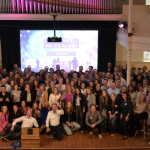
Yesterday, the board of the Dutch chapter of the Customer Experience Professionals Association (CXPA) met for the last time.
-

On Global CX Day, October 6, 2026, Nienke Bloem and Ian Golding introduce CXLM: Customer Experience Leadership Master.
-

Erik Vercouteren, Director Customer & Partner Experience at online platform bol, has been appointed chairman of the Customer Service Federation.