
 AI should get healthcare, which has been stuck for a while, moving again. That is the miracle cure that Fleur Agema wants to pull out of the closet on behalf of the new cabinet.
Now, healthcare has not only come to a standstill due to increased demand. Supply has also developed: more and more diseases can be treated well and we continue to treat at increasingly older ages. And in addition, the healthcare infarction is also due to the lifestyle of healthcare itself. Too fat, too much in the car, unhealthy food and not prepared to change that. These are metaphors for too much overhead and bureaucracy, too little innovation, wrong financial incentives and a strong dose of conservatism and narcissism. Health economics is a complicated field.
Although there are also people in our own sector who meet the above criteria – too fat, too much driving, unhealthy food, etc. – our field is actually quite healthy. In-house contact centers are usually set up quite lean & mean and innovation is not a curse word. Money rarely sloshes against the skirting boards – except for the large facility providers if I am to believe the FNV trade union. And customer contact professionals are used to change. Or am I being too optimistic?
Reduce the administrative burden by half in five years
Agema expects to reduce the administrative time of healthcare professionals by half in five years with the miracle cure AI, as if it were a kind of one-size-fits-all cloth. That 'indirect time' amounts to about 30 to 40 percent in healthcare and the association with after work in contact centers is becoming increasingly important. If only it were that simple. Healthcare involves working with patients, contact centers deal with customers. You can't send patients to the FAQs or fob them off. The average disease process is often more complicated than the average customer problem.
That Agema wants to cycle AI into healthcare is an open goal. No sector can ultimately escape this super automation. But I do foresee some problems with reliability if AI starts to pre-chew what healthcare professionals need to record in their status overviews. Not that AI can do it better or worse than the (para)medic, who knows what counts based on experience - but can just as easily overlook things. I mainly think that the chance is small that there will be well-functioning AI in five years that has won the trust of physicians, lawyers, CISOs, supervisors and patients.
In our country, 'operation failed' rarely means 'patient died'
As customer contact specialists, we can be happy with our relatively clear and uninvasive processes. For us, 'operation failed' rarely means 'patient dead'. The customer simply calls or emails again. We can be happy that we have all kinds of practical solutions at our fingertips for all other customer contact problems. We can, without being bothered by robust medical-ethical committees, calmly engage in channel management based on customer value. Customer economics is a lot clearer than health economics. And where we have a staff shortage, we automate the after-work time with AI or move the customer contact to Suriname. And on a daily basis, it is sufficient to manage the average conversation duration, customer effort score, first time fix and employee satisfaction.
I wish healthcare professionals much strength in the coming cabinet period.
(Ziptone/Erik Bouwer)


Also interesting
-

Shep Hyken comes across all kinds of things in his search for the pillars of customer service, but not the word 'respect'.
-
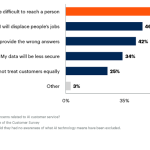
Two-thirds of respondents are mainly concerned that it will become more difficult to speak to an employee.
-

The machine customer is ready to do business with your organization, but is your organization also ready to do business…