
Tour operator and airline Corendon has strong growth ambitions. Part of the strategy: Salesforce as a hub for CX and customer contact. The implementation of Salesforce is not a project, but an ongoing journey, according to Yanaika van der Wel, customer care manager. Reason why Corendon has also brought Salesforce competencies on board.
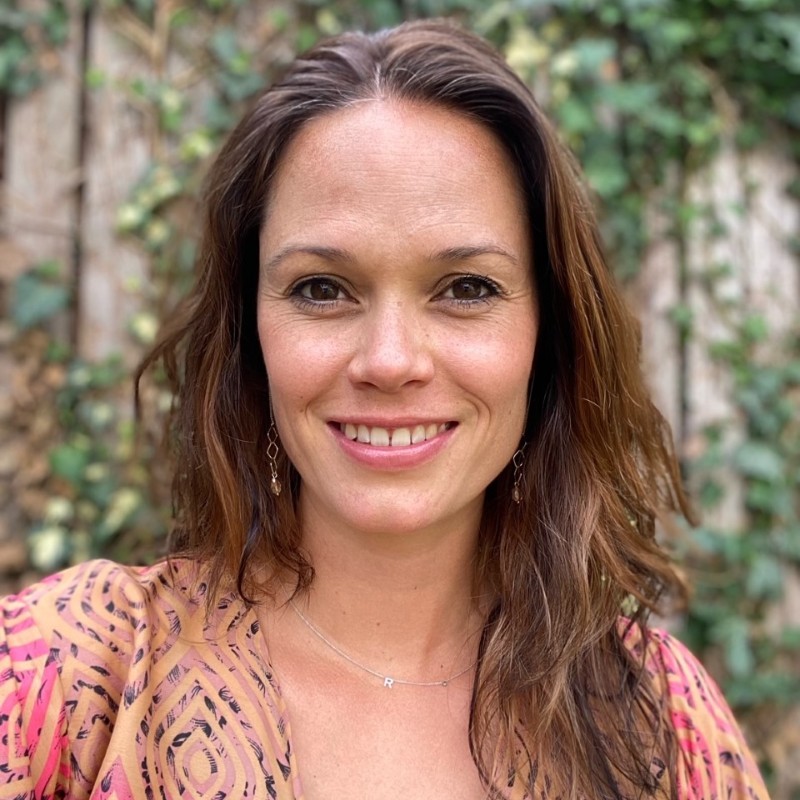 “In the travel sector it is quite difficult to retain customers for a longer period of time. Many customers ultimately choose the lowest price, even if it is only a few tens of euros. We want to make a difference with service, in combination with the lowest price. There is a lot to be gained there, especially by listening even better to the needs of customers instead of just answering their questions. Customers want to be helped as personally as possible.”
That says Yanaika Franken-van der Wel, Customer Care Manager at Corendon. In addition to the growth target from 750.000 to 850.000 bookings in 2023, a higher CSAT, a higher customer lifetime revenue (due to more returning customers) and a more efficient and unambiguous way of working were also on the agenda.
Customer contact before, during and after the trip
Van der Wel's customer care department is new and includes 15 customer care employees, CX, web care and a process lead. The team is in the air 24×7 and is responsible for customers 'on site': customers who are on holiday. That part of the journey runs from 12 hours before departure to 12 hours after return. Van der Wel's team also acts as a 'backup' for the tour guides at the destinations and the staff of their own airline. This makes it possible to respond effectively to special needs and wishes of passengers - such as previous complaints, illness, physical limitations or matters such as a honeymoon or a birth.
The customer care team is not only new, but also not the only customer contact team within Corendon. That needs some explanation. Corendon's customer contact organization literally follows the customer's customer journey. The customer service specialisms are therefore divided into: for the trip, during the trip en after the trip. The two other parts of the journey (before and after) lie on the one hand at the contact center (a total of about 60 employees spread over the Netherlands, Curaçao and Turkey, responsible for customers who still have to go on holiday) and at client service, for customers in the phase after their holiday.
Making customer contact scalable
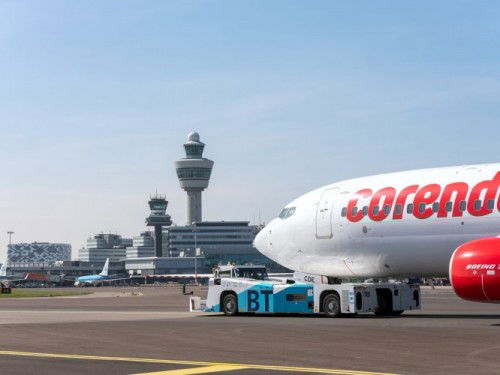 The choice to arrive at this classification was due to the corona pandemic. Van der Wel: “Originally, customer contact focused mainly on before and after a holiday. Of course, customers were also supported by customer service during their trip or stay. Before that, we had 24×7 teams for Corendon flights at the airports, but they were strongly focused on questions surrounding flights, not on questions from customers during their stay.”
The tour guide at the customer's destination also has an important role, but this turned out to be insufficiently scalable, especially relevant in crisis situations such as the corona pandemic.
New department for 24×7 support
During the height of the corona pandemic, these airport teams were disbanded, according to Van der Wel: they could no longer do anything at the airport. To prevent a gap in service and the local tour guide - who in the past handled a large proportion of customer queries on location - from being overwhelmed, a new team had to be set up. Moreover, the local tour guides did not always have access to relevant (booking) information. However, 24×7 service is essential for part of the journey, says Van der Wel: consider the time differences between the Netherlands and the destination; and customers sometimes leave in the middle of the night. At the same time, the opportunities are there for the taking: “We are dealing with package holidays, so we know a lot about the booking and can, in principle, inform customers very well.”
Data-driven working
Restructuring the customer contact organization was not the only direct consequence of the corona pandemic. In order to achieve its growth objectives, Corendon would have to work more data-driven and make its services more efficient and personalized. Part of this included a clear customer view for the entire organization, so that all employees know exactly what is going on. That was precisely a problem at Corendon: they worked from a booking system that did not provide sufficient insight into customer history. Van der Wel gives an example: “Consider a customer who indicated during a previous holiday that he or she needed a wheelchair on location. This is information that may also be extremely relevant for a new booking.”
The corona pandemic broke out at the start of the Salesforce implementation
Corendon had already chosen Salesforce before the corona pandemic and the start of the implementation was planned just before the corona pandemic broke out in full force. “We were faced with the challenge of repatriating all customers. At that moment the feeling prevailed that we were lagging behind. If only we had implemented Salesforce earlier, many processes would have been significantly easier and faster. We ultimately managed it, of course, but with the help of all kinds of Excel files and manually extracting data from systems. In the first period of the pandemic alone, around 30.000 files were processed every month, largely manually. A complicating factor was that government rules often changed. And of course the entire organization had to switch to working from home.”
Complex files
Customers also had many questions later in the corona pandemic and when the airspace reopened, especially about 'Is my vaccination still valid, can I go to this country?' A special voucher team was set up for the canceled holidays. It was essential for Corendon employees to be able to quickly see when a customer has booked, when a customer is going to fly, and what information a customer has already received. Van der Wel: “Could customers possibly have missed information? How do we handle vouchers? It would be great if you could have files handled by a bot, but as mentioned, the pandemic really involved complex questions.”
Tackling applications
The repatriation operation at the beginning of the pandemic and the various peak periods afterwards also provided a clear lesson for Corendon: this must be even better next time. That is why the customer contact process is being organized differently and Salesforce must become the hub with current and relevant customer information for everyone within Corendon. More personalized customer service is the overarching goal, says Van der Wel. This requires rationalization of the application landscape.
Or as Van der Wel sums up: “We currently have all kinds of separate software solutions, for example for e-mail marketing, for SMS, for bookings and for customer reviews. We use Anywhere365 as a routing solution, part of Teams. We want to bring everything together in Salesforce. Salesforce works at customer level, the bookings are now linked to it, so that we can now clearly see which bookings a customer has made previously and what has happened. Consider information about a promised payment, so that a reminder does not have to be sent out yet. Very simple things that allow people to rely on systems.”
Continuous process
 Large parts of Corendon's customer journey are currently housed in Salesforce. The cabin crew also has access to relevant information about passengers via tablets. “Previously, this was done with an email to the cabin crew, for example about a specific customer, all manual work. The tour guide now also has access to certain components.”
A large part of the Salesforce support lies with implementation partner Gen25. “Starting to work with Salesforce is not exactly a standard implementation process with a head and an end, we see it much more as a continuous process,” Van der Wel explains. “If you position Salesforce for employees as the hub where everything has to happen, then you simply have to deliver on that promise, otherwise employees may lose confidence in such a new application. This means, for example, that you have to solve bugs very quickly. In order to better distribute the workload, increase speed and build up our own knowledge, we have set up a Salesforce center of excellence of 4 FTE within Corendon.”
On the roadmap
The chatbot will go live at Corendon at the beginning of 2024. It must be able to answer the most frequently asked and simple questions. In addition, the ability to send bulk messages is planned in the coming months. The next step is to supplement the 'My Corendon' environment with information from Salesforce, so that it can be determined per message or per Salesforce action what should and should not be shown in the customer's personal environment. Customers did of course receive a response to their e-mail, but that does not mean that the communication is still in the personal environment, Van der Wel explains.
“Last year we hired a CX lead: we want to do much more with data.”
“We are also working on a review project for customers who have traveled with us. A separate system is also used for this, which must be integrated into Salesforce. This should make it possible for us to make analyzes at all levels: customers, reviews, destinations, processes. That is also why we hired a CX lead last year: we want to do much more with data.”
World of difference
Within Corendon Netherlands, except for a few office locations and labels of the organization, everything is connected to Salesforce, but work is still underway to implement and make adjustments. “Working with Salesforce really makes a world of difference. This is currently being seen, for example, by our central back office, which literally sees the difference between parts that are already connected to Salesforce and those that are not. The clarity makes it easier to provide customers with the correct and up-to-date information. We work together more efficiently because everyone uses the same information. 20% of all complaints are resolved during the trip, which is an increase of 7% compared to last year.” (Ziptone/Erik Bouwer)


Also interesting
-

Ron van Munster, who previously worked for TUI for a long time, starts as Head of Customer Services at… as of April 1.
-
Bol still sees opportunities to grow in the Benelux and is opting to broaden its platform services.
-

Deloitte is setting up a new EMEA organization focused on technology, AI, cloud, and sovereignty. A number of organizations are coming together in one regional…