
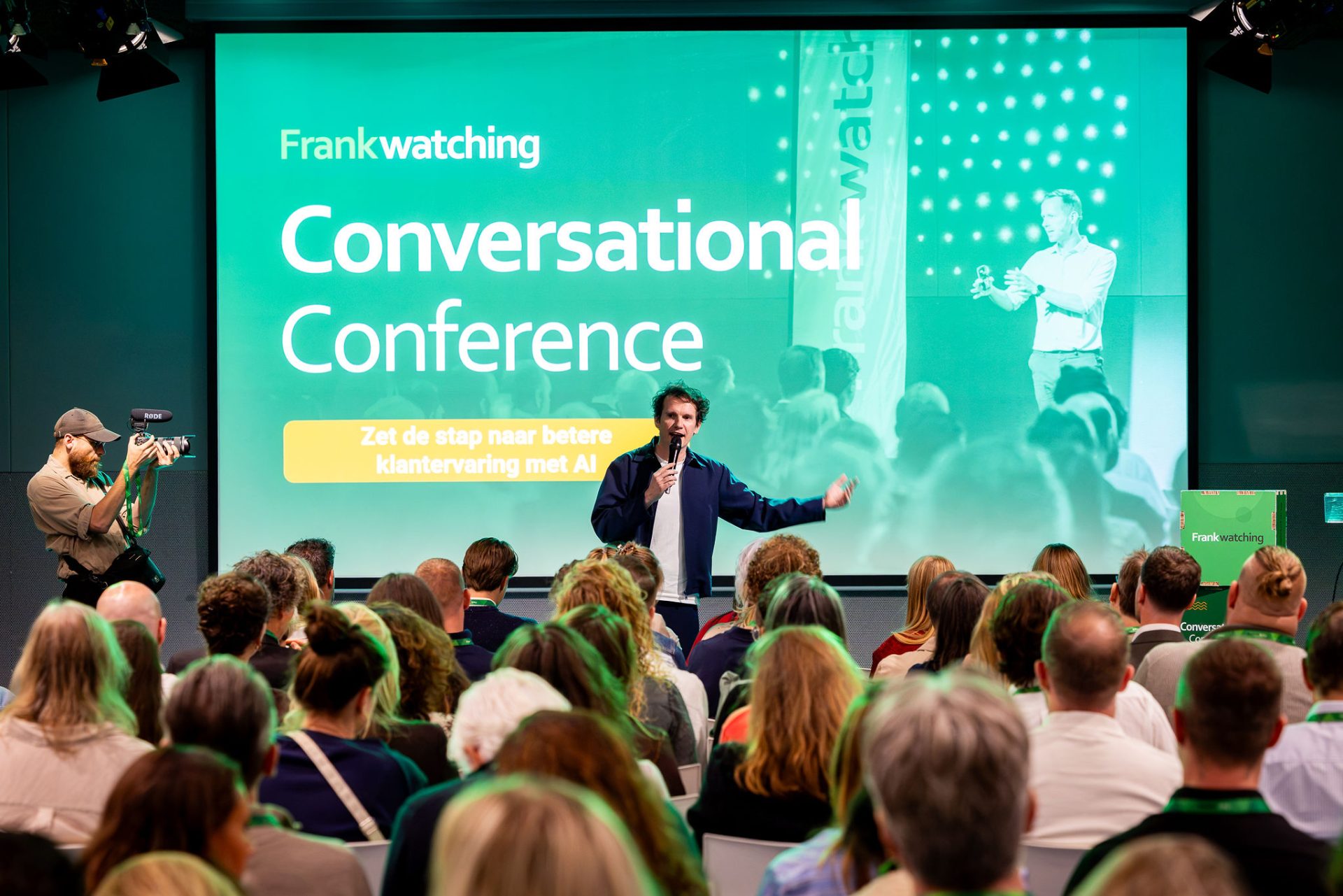
Moderator Tom Jessen – Image: TONmedia
A key element in the deployment of conversational AI: who determines what you expose the customer to? The uncomfortable conclusion: both managers and suppliers rush from solution to solution, while the customer is consulted very little (in advance). Part 2 of the report on Conversational Conference 2026. With a closing statement: engage in more self-reflection.
It sounds like a long time ago: in November 2022, everyone was marveling at OpenAI's GPT-3.5. After that, there were many more moments that elicited oohs and aahs: from spaghetti-eating movie stars to bizarre conversations between bots and customers.
The AI train thunders on. Even the very latest slick demo video from OpenAI – a promo for the latest model, the Astra – evokes admiration once again. Deborah Nas, Professor of Strategic Design at TU Delft and expert in new technology, maintains: “I have never seen a tech that is becoming better and cheaper so fast.”
(text continues after the video below)
Bot-to-bot communication: not a good plan
We are going to talk to computers, correction, with computers – finally, they understand our language too. Even though it is not practical in an open-plan office, collaborating with AI is becoming a conversation. Of course, there is still much that AI cannot (yet) do, also referred to as the 'jagged frontier'. But in that ability for humans and computers to converse lies enormous potential. One of the applications is that machine agents start talking to your customer service organization. But Nas warns: if a bot is working there as well, you get agent-to-agent contact, and that exacerbates the problematic characteristics of generative AI.
These problems are partly known. They involve hallucination, which worsens as the 'temperature' of agents allows for more creativity and freedom. They also involve sycophancy: flattering the user. Another problem: language is still more important than visuals in the operation of GenAI, and this leads to errors. Finally, anthropomorphism: we humans are quick to attribute human characteristics to AI agents. This influences the way we interact with this technology.
If Big Tech has its way, agentic AI will increasingly become part of hardware. Meta’s glasses not only talk to you as a user, but also see and hear everything you see and hear. That knowledge will soon be transferred directly to customer service. That becomes riskier when AI can start doing things on its own.
Deborah Nas spoke about AI in 2018. during the Content Guru Knowledge Event. There, she outlined major and far-reaching changes for the next ten years: a warehouse where no more people work or the fully automated testing of new software. She also wondered: who will still be calling the contact center in five or ten years: people or voice assistants?
Interesting times
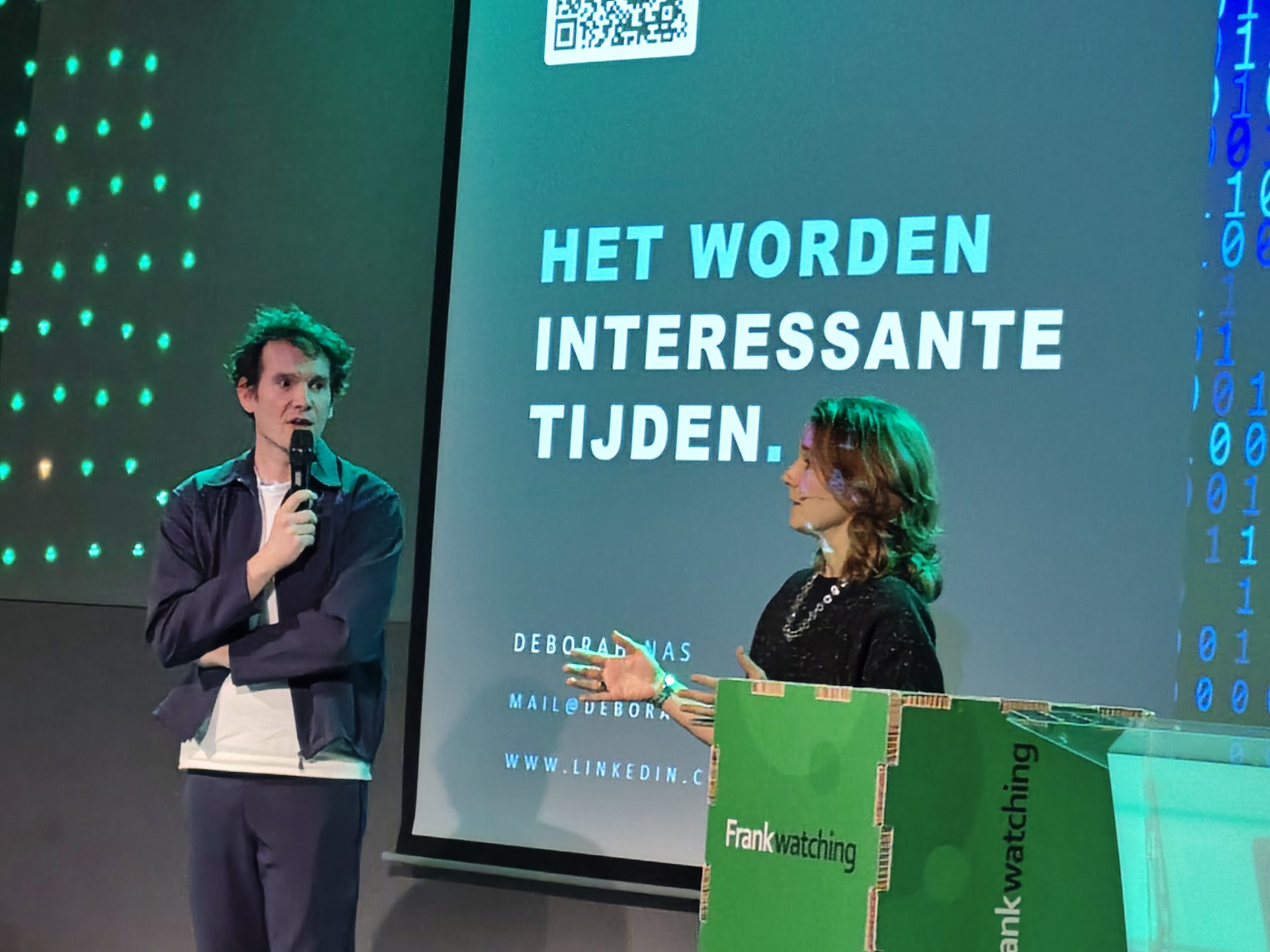
Deborah Nas – Image: Ziptone
“These will be interesting times,” says Nas, who foresees an increasing number of AI-native organizations that can do things with thirty people that another organization would need ten or twenty times as many people for.
The way organizations embrace AI is often determined in the boardroom; AI transformation rarely originates from operations, says Nas. She is also deeply concerned about education, where the foundation must be laid for effectively handling this technology. The learning objectives in our primary education were last revised in 2006. New learning objectives are in the works, but schools are not allowed to old learning objectives valid until mid-2031 continue using (!)
Do you ask questions of your knowledge base, or does your knowledge base ask questions of you?
Maarten Dechamps – Image: Ziptone
Deploying AI agents for your contact center is, of course, possible. Marketers and communications specialists will be pleased if thought is given in advance to the voice, face, and tone of voice the organization or brand will adopt. This often starts with the content issue, the foundation for bots and knowledge assistants. It was precisely about this exercise that we spoke. Walter de Vries (Studio Winegum) and Maarten DeschampsThe latter is affiliated with the Antwerp Hydraulic Engineering Laboratory as coordinator of the Hydrological Information Centre (HIC).
That lab, comparable to Dutch institutions such as Deltares or MARIN, sits on a mountain of information and data that needed to be made more accessible. It concerns sources that all relate to the River Scheldt, an important waterway for Flanders in many respects.
Think of that mountain of data as stacks of reports, university research, articles, datasets, and policy notes. But also as real-time data streams from dozens of sensors suspended in the river, or as knowledge in the heads of employees. All in all, 33.000 sources, not all of which are equally accessible to employees, let alone other stakeholders.
Give the river a voice
The HIC wanted to make that mountain of information available, understandable, link it to policy in real time, and scalable it to other waterways, in a transparent and reliable manner for both internal and external users. That is quite a mouthful, but AI can help with all those different needs, or so the idea went.
In addition, a somewhat philosophical need resonated from the HIC: give the river Scheldt a voice, an identity, so that it is represented at negotiating tables: the river as a dialogue partner. If that approach were scalable, the Scheldt could even enter into dialogue with the Meuse. That sounds far-fetched, but most organizations dealing with water (and waterways) limit themselves to their own area. That hinders collaboration and the identification of connections, according to Deschamps.
In conversation with the knowledge base
Back to the everyday. A tender was issued for an 'environmental AI' (an ENVAI in technical terms) with the motto: 'give a voice to the Scheldt'. More specifically: provide a solution that leads to a knowledge base with which you can engage in dialogue.
The project led, among other things, to an AI avatar with its own voice, face, and personality, but the very first applications were less grandiose: a knowledge finder, a daily debrief for employees in video form, and a number of specialized water data agents.
The development of the avatar is the most captivating. When literally talking to the Scheldt avatar, you are in fact dealing with a voicebot powered by a knowledge base. A heavier load – think of complex questions or many concurrent users – can lead to latency, stuttering conversations, or higher token costs, according to Deschamps, but the avatar is not intended for mass use.
Insight into the development process contributes to adoption
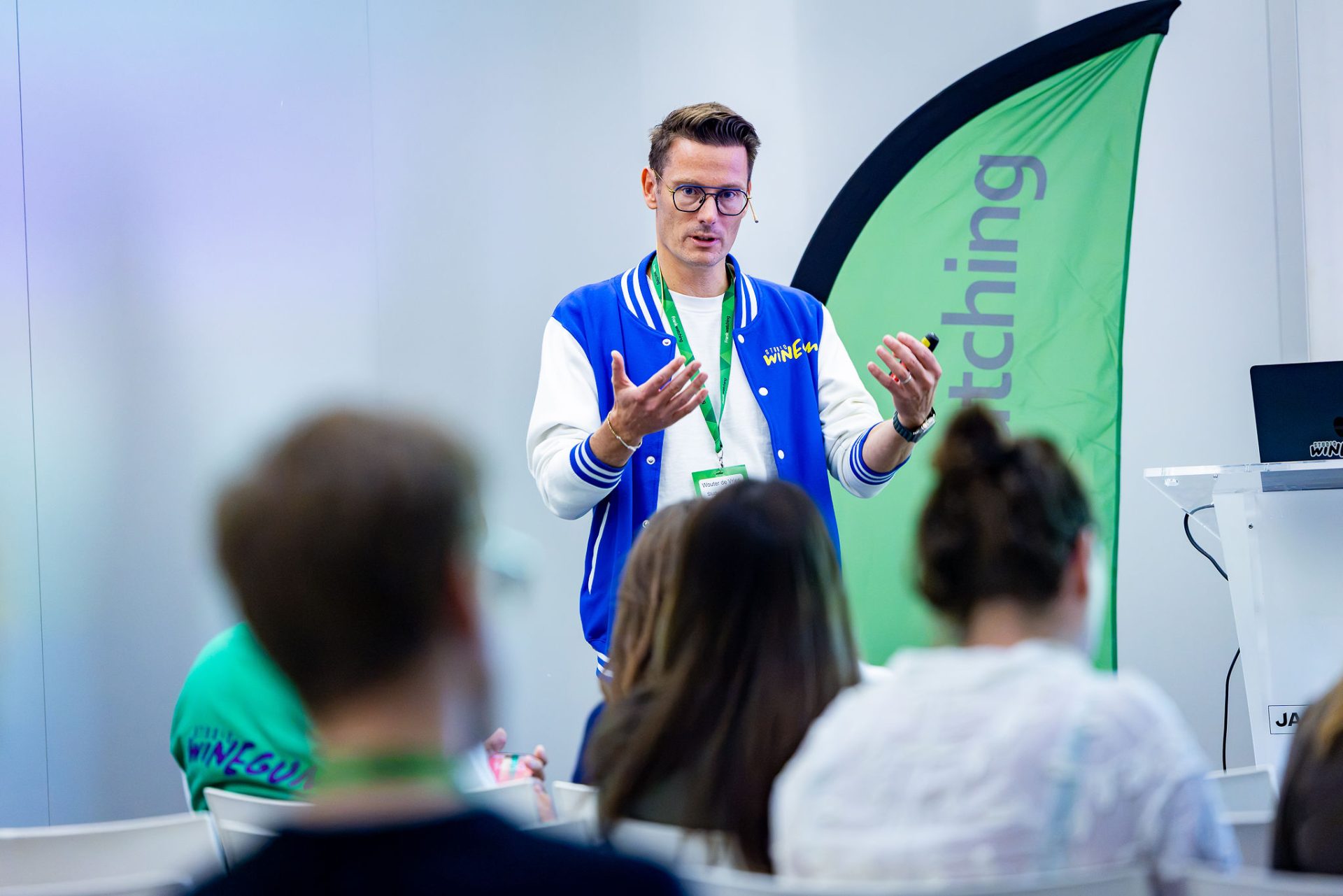
Wouter de Vries – Image: TONmedia
Just like at NS, the HIC/Winegum team also had to get to work with chunking: breaking down content contained in knowledge bases into manageable pieces. This enables the LLM to generate better output based on retrieval augmented generation (RAG). A valuable lesson: making precisely these development steps transparent contributed to adoption among end users, according to De Vries. Another lesson: testing the specialized agents had to be performed by human domain specialists. The capacity required for this was underestimated, Deschamps acknowledges; “we do not have those FTEs immediately available.”
The foundation that has now been laid also offers inspiration for future scenarios. The HIC knowledge base can now be queried by specialists. But if the knowledge base can handle natural language via AI, can AI also query the user?
Our (chat)bot works fine. Right?
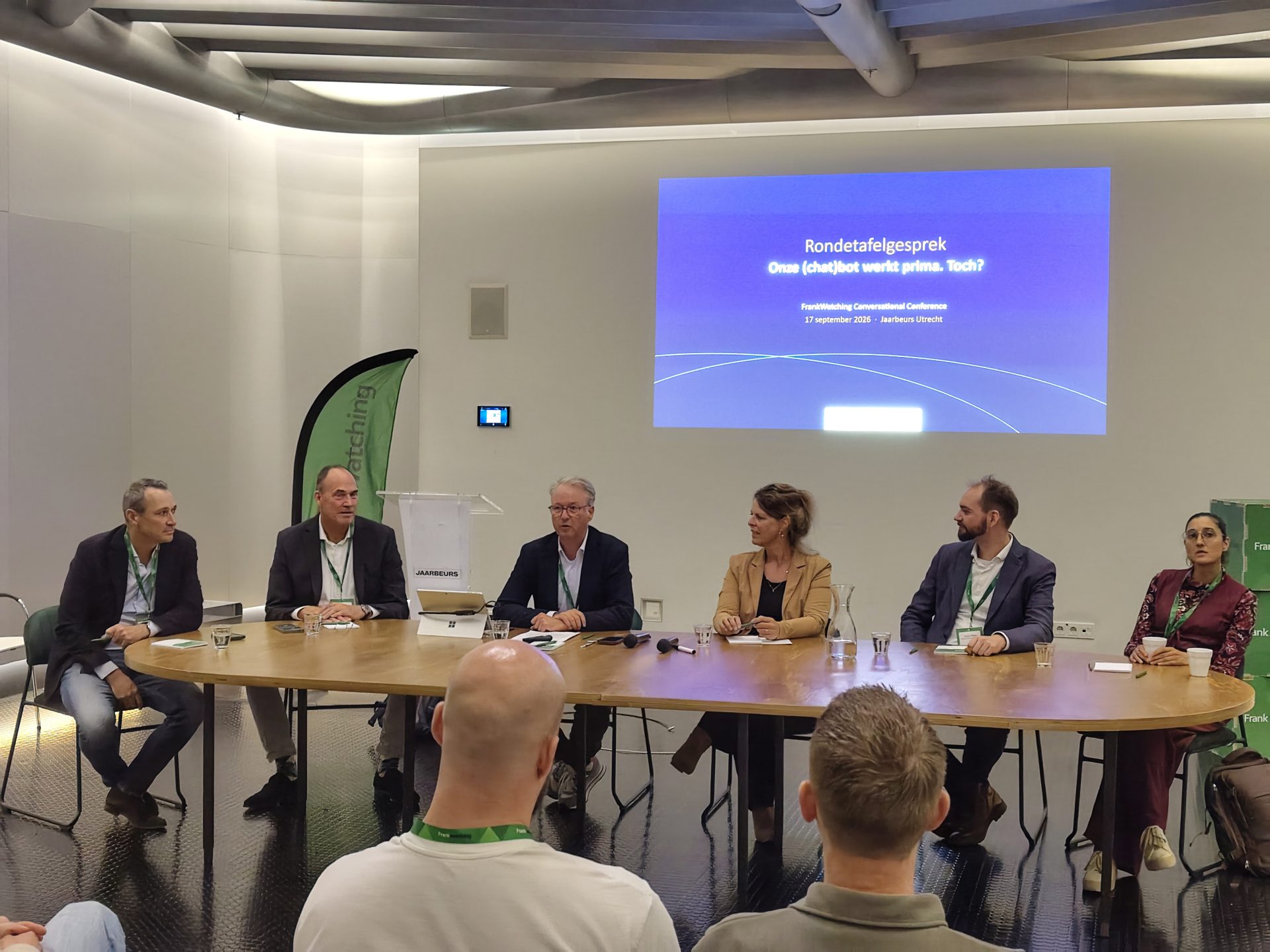
KSF Roundtable Discussion – Image: Ziptone
This rhetorical question formed the starting point for a roundtable discussion, part of Conversational Conference 2026, organized by the Customer Service Federation. Seated at the table, alongside moderator Roel Masselink: Jurian Baas (HvA), Marc Boer (formerly of TransLink), Arnon Post (including Insightful and KSF), Carla Verwijmeren (Y.digital), and Nathalie den Engelse (Utrecht University of Applied Sciences).
“The chatbot is not scoring well,” says Verwijmeren, the initiator of the National Voice Monitor. Although chatbots produce answers, customers expect more than a dynamic or 'smart' FAQ. Moreover, it is questionable whether the answer is relevant to the customer, and the latter often remains underexposed, according to Den Engelse.
When Masselink asks those present in the room, "Do you know what your customers think of your chatbot?", only a handful of attendees raise their hands. To which Post responds: "Why did you put that bot there then?"
And Den Engelse: “Or can you fix the underlying problem, so that the chatbot is not needed?”
Not everything is bad about chatbot 1.0
Information on a company's website often corresponds to information provided by a chatbot, according to public responses. However, the interactive nature of the chatbot can be a plus: you (ideally) find the right information faster.
The question 'Is the chatbot there to solve an organizational problem or a customer problem?' also came up. In response to the audience's reaction ('the chatbot makes time available'), Verwijmeren added, “but properly setting up and maintaining a bot also costs FTE.” Unfortunately, the question 'how much time does the customer have to spend on the chatbot' was skipped.
The ANWB also ran into this, according to someone in the audience: with 150 years of history and 40.000 pages of content, setting up a good chatbot was quite a task. On top of that, the client cannot access all (outdated) pages, but the chance that ChatGPT will find them is realistic. And that raises yet another question: 'are you going to wait until all the content is in order, or do you start with a small, well-defined use case?'
Are customers really waiting for a chatbot?
A telling silence fell when the next question was posed: are customers actually waiting for a chatbot? Panel member Jurian Baas responded: in many cases, young people do expect a chatbot and appreciate being able to download the conversation; older people often have a bit more trouble with chatbots. At the same time, it was noted: we are moving towards a situation where consumers have their own chatbot or agent on their phone. The question, therefore, is what the future of FAQs and websites holds.
The takeaway from the roundtable: the organization often thinks for the customer, while the customer chooses the channel. Or as someone from the audience said: “Customers want to be served well in the channel they are using at that moment.”
Look in the mirror more often

Bernard Steenbergen – Image: TONmedia
Aan Bernard Steenbergen (Director Customer Service B2C, Vattenfall) faced the challenge of delivering a good message as the last speaker. He called upon customer contact professionals to look in the mirror more often. He, too, indirectly referred to the gap between what customers want and what organizations decide for customers: it is the elephant in the room.
Steenbergen (who started at Transcom in Groningen a long time ago, where he worked on the phone for Tele2) now manages 300 FTEs, spread across four locations in the Netherlands. As far as Steenbergen is concerned, the customer contact profession has definitely gained importance and recognition in recent years. On the other hand: we are operating with fewer and fewer FTEs, and customers are dissatisfied. What does that mean? Are we too pleased with ourselves, or does the customer not understand us?
Naturally, there are impressive technology applications that even Steenbergen is proud of. Such as training customer conversations with an AI-based fake customer, allowing employees to practice extensively and safely. Or the agentic AI solution for payment arrangements that Vattenfall has implemented, for which a conscious choice was made for a small use case rather than one with a quick return or low-hanging fruit. We have heard that trade-off before. Incidentally, 'small' does not mean the same as 'easy' (the implementation time was well over half a year), but the risk of failure is certainly smaller.
Steenbergen gives out homework
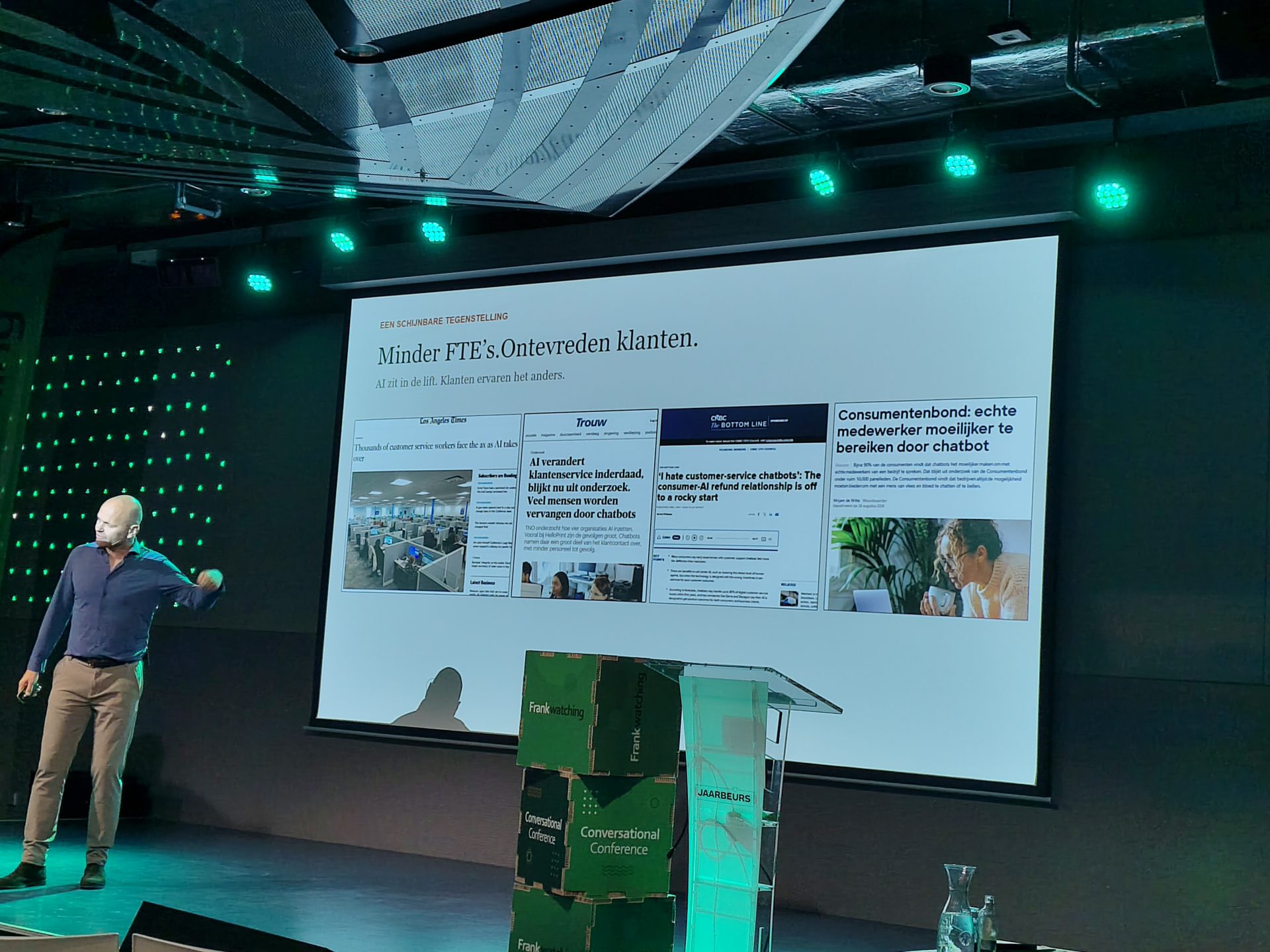 Steenbergen wonders who will bridge the gap between what the organization devises and does, and what the customer experiences. Pointing the finger at someone else only widens that gap. That is why there is homework for everyone.
As far as Steenbergen is concerned, managers could be a bit less hesitant and conservative. Have you already trained your employees for the new world? Are we sufficiently actively pursuing innovation opportunities?
Steenbergen tells suppliers: do not walk away from your customer too quickly after the deal. Suppliers are missed when new applications are being tested. They could also be a little less defensive – for example, by not constantly saying 'if technology doesn't work well, the strategy isn't good'. Or 'studies such as those by the Consumentenbond or the Nationale Voice Monitor are an inaccurate representation'.
And for the innovators, experts, and consultants, the message is: as a bridge between business and supplier, do you take sufficient time to get to know the client's operation? Steenbergen also debunks a commonly used chatbot KPI: 'bot recognizes the question'. Would you apply that same metric to your employees?
Start with CX
The free advice from Steenbergen: Start with the customer experience and work backwards from there., Steve Jobs' credo. Ensure a single pace is maintained within the organization, maintain continuous alignment with your customer when rolling out new CX solutions (“everyone puts everything live and then looks away,” according to Steenbergen), and engage in dialogue more frequently. Those were good closing messages for a room that, even at the end of the day, was still filled with all 350 attendees.
(Ziptone/Erik Bouwer)
Also read the first part of this article about Conversational Conference 2026, including a case study by NS:
How do you successfully make the transition from rule-based to AI-based chatbots?


Also interesting
-

The upcoming edition of Conversational Conference will focus on how organizations can make automated customer contact work well.
-
On the stage of CCMA Digital Conversation 2026: including ABN Amro, Eneco, VGZ, Univé, Lebara and the Norwegian Posten,…
-

System integrator PAteam, specialized in AI and automation, CCaaS transformation and CX optimization, has become an Elite Partner of the KSF.