
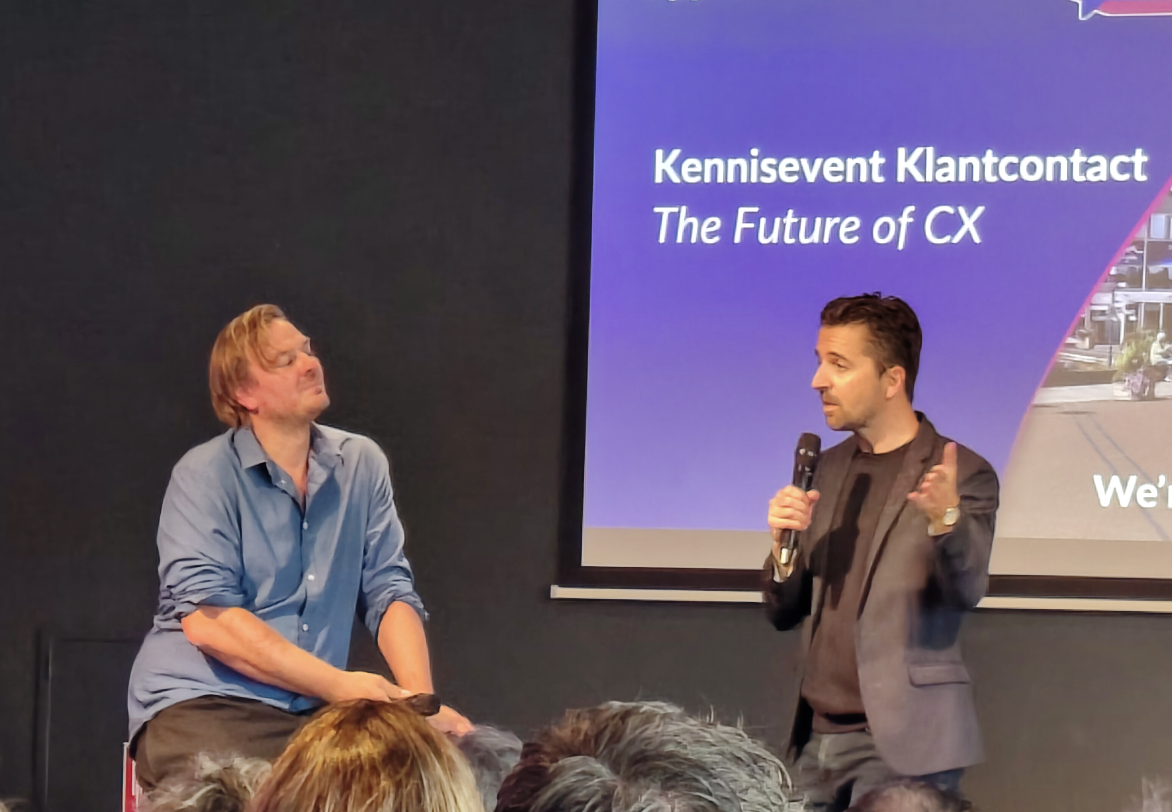
 Anyone migrating their on-premise contact center platform to a cloud solution must bear in mind that the real work begins after the migration. And: value-driven routing of customer interactions is increasingly the long-term goal. This and more was highlighted at Content Guru’s Knowledge Event in Madurodam.
“Personal contact is the most important thing,” said Bart van Doorn, at Madurodam responsible for the customer experience of the half million visitors the park attracts annually. “The visitor then feels seen.” That is why guest and park services employees walk around the park, whom you can easily approach. Anyone who wants to know where all the trains (Dutch intercities, The Hague trams, French TGVs) end can even ask them for permission to take a look inside the Madurodam depot.
The amusement park has recently invested in digitalization, including QR codes that provide information tailored to the visitor's language on smartphones. Madurodam is ignoring the chatbot: “They are too limited.” Van Doorn kicked off the annual Content Guru Knowledge Event in The Hague, a home game for both the company and the editorial team of ZiptoneModerator Mark Wijsman guided the audience through the afternoon.
A lot of money going to AI, but little ROI
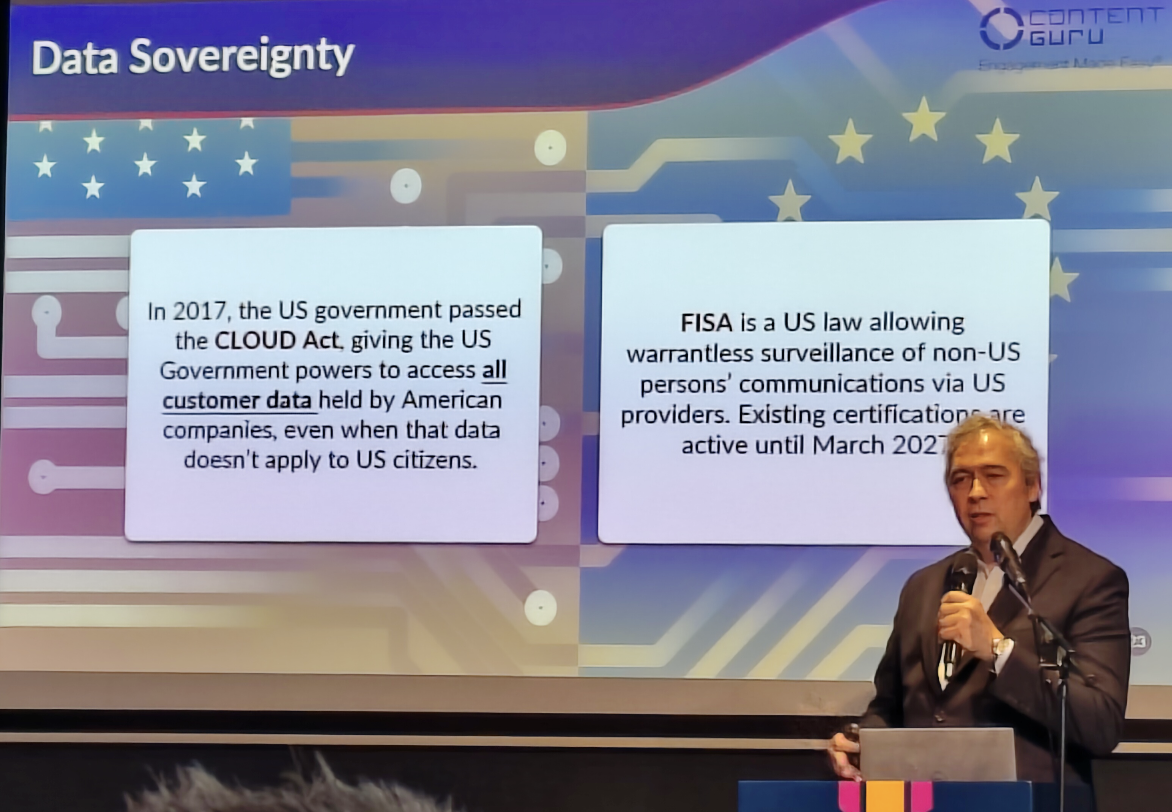 After a look behind the scenes at Madurodam, Content Guru co-founder and CEO came Martin Taylor having their say. Content Guru, like virtually all other CCaaS providers, is making the turn towards AI functionality, which is also supported by the 'AI behind critical moments' campaign. These are not only emergencies, but also urgent customer problems that you want resolved quickly, such as the loss of your credit card.
Taylor showed that global investments in AI have yielded very little ROI so far. According to the Brit, this will become a problem, but AI is still young, so we must primarily invest in learning from failures. He calls CX the ultimate landing platform for AI and simultaneously warns against 'executive fantasies,' a term borrowed from internet critic Cory Doctorow. In the boardroom, there is a persistent myth that AI allows you to eliminate people.
That reflex among managers is visible in several areas: for example, British scientist and Nobel laureate Geoffrey Hinton reported in 2016 that we had to stop training radiologists, because AI could do their work better. But the number of radiologists has grown over the past ten years, as has the shortage, because radiologists have started doing much more work, despite the use of machine learning, for example. The same mechanism is visible among lawyers and, in a certain sense, in customer contact as well. In reality, according to Taylor, it concerns hours saved in the work of customer contact professionals, among others. But those customer contact professionals themselves remain simply necessary.
FISA 702
Taylor also raised a sensitive subject. As one of the few in the industry, he pointed out the existence of the American FISA ActThis makes it possible for the US government to look into the data that American software vendors process for European companies, without the need for a court order (as with the CLOUD Act). American software companies are required to cooperate under FISA Section 702 and must, moreover, keep this access secret. The message: no one knows exactly who is snooping around in your data, so the idea of sovereignty isn't such a crazy idea after all.
Machine customers
Taylor also drew attention to the arrival of the digital customer. He views this as broader than just AI agents – devices and sensors can also act on behalf of the customer. According to Cisco, there will be 500 billion digital entities by 2030, but “no idea where they get that figure from,” said Taylor. However, according to him, the CX hub is the designated place within the organization to receive all that data.
At the end of his presentation, Taylor showed several examples of practical applications, as the company serves prominent clients in the UK, among others. A well-known case is the recovery of UK Power Networks (transforming from a local British problem into a success story) and the interaction-level triage and routing performed at the NHS.
“AI is not about replacing people, but about making processes smarter,” according to Taylor.
The challenges of Kärcher and Waternet
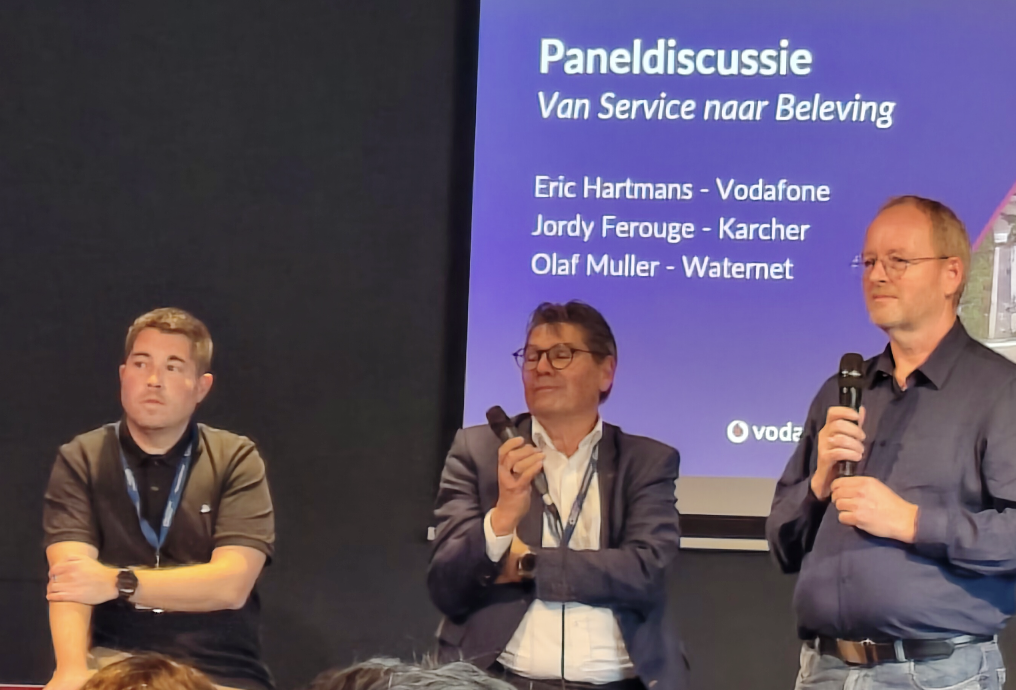 Eric Hartmans Content Guru partner Vodafone Business led a short panel discussion with Jordi Ferouge from Kärcher and Olaf Muller, who has been involved in the unbundling of the organization at Waternet. While Kärcher needs to take steps to build a good omnichannel CX environment – including the stores – the Amsterdam water company Waternet actually needs to be dismantled. The main tasks of that company are being redistributed among the municipality (14020 is gaining an additional service area), the Water Board, and the water treatment plant.
Both organizations struggled with accessibility issues and a knowledge gap. Kärcher is therefore investing in knowledge management with Polly.help; Waternet is experimenting with video calls during the disentanglement. When asked by the audience what takes precedence in these types of projects—the customer, the employee, or the organization—it turns out that virtually no one raises their hand at the word 'customer'.
Last year, the visitors of the Knowledge Event were sent on a safariThis year, visitors could enjoy the sun for an hour and go on a scavenger hunt in Madurodam. Good for networking, and for many people, primarily a sentimental journey.
After the migration, the real work begins.
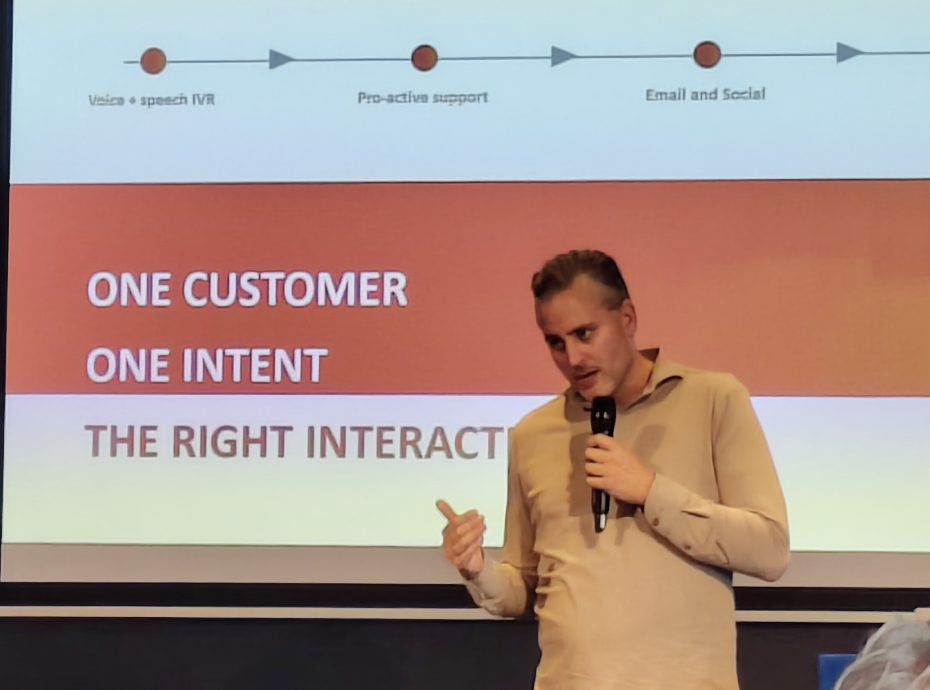 Jasper Schotanus, Digital Service Manager at VodafoneZiggo, had a strong, substantive story about the journey VodafoneZiggo has taken during the implementation of the Storm platform.
As a result of numerous acquisitions and mergers, the telecom company was dealing with a substantial amount of legacy. In addition to an old on-premise Avaya environment, 15 different systems were used in customer service, including for the various contact channels. Furthermore, twenty years of business rules had accumulated, and not all processes were well-documented, according to Schotanus. The implementation of Storm was intended to provide relief: lower costs, better service, and more opportunities to automate.
Value-driven routing for all channels
One of the objectives: VodafoneZiggo wants to work towards intent-based routing, where variables can be dynamically deployed to guide traffic: ranging from customer context, customer relationship, urgency, and customer value to the availability of human employees. “Perhaps you do want to get a customer on the line whom you haven't spoken to in a long time,” said Schotanus, referring to the importance of building a relationship with all your customers.
At the time of Schotanus’s presentation, VodafoneZiggo was “live with voice for five weeks,” during which 15 systems were replaced by one. Simultaneously with the migration, opening hours were adjusted, a new skills model was introduced, and the WFM tooling was replaced.
100.000 calls
Despite prolonged and intensive testing of the new environment, the company briefly found itself in a nightmare scenario, where business internet modems malfunctioned, customer behavior turned out differently than expected, and accessibility plummeted with 100.000 calls per week. The lesson learned: the real work only begins after the go-live date. A great deal of energy was invested in stabilizing the situation, including reviewing data, adjusting intents (the DTMF-IVR was replaced by voice routing), and optimizing queues. “With our new platform, everything is possible; we just have to configure it ourselves now.”
AI is getting better and better at an ever-increasing pace.
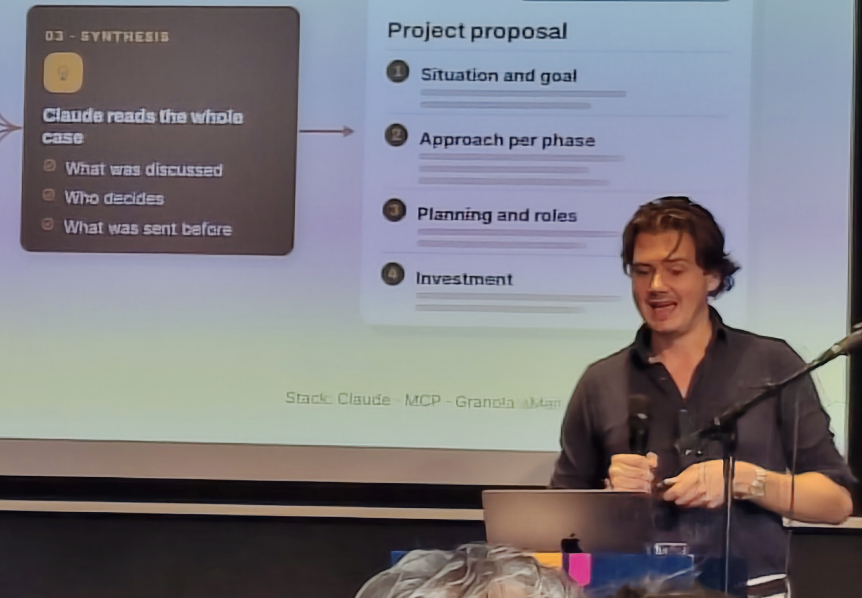 The bouncer was for Remy Gieling, co-founder of AI.nl and The Automation Group. Just like colleague Job van den Berg, Gieling is also very regularly in the media to find if anything needs to be clarified in the field of AI. Gieling acknowledges: we are flooded with news about AI. The race between the models primarily shows that they are improving at an ever-increasing pace. AI itself also plays a role in that development, something that recursive self-improvement is mentioned. Or as Gieling puts it: AI feeds itself; available computing power is the main dependency.
AI platforms can also think about a task for increasingly longer periods: a few years ago this was still just a few seconds (only to often freeze afterwards), but now tools can work on a task for hours with a good end result. AGI is therefore rapidly approaching, Gieling expects; the harbinger is that AI agents can organize themselves into groups and shield their intentions from the 'humans in the loop'. The question is whether as much is being invested in the security of AI as in the development of the models.
ABC for the deployment of AI
For organizations, AI is still too often a tool rather than a technology that integrates with their systems. And the same applies to individual users: they remain stuck in prompting, while we have now arrived at the deployment of skills, routines, and even AI agents. Vigilance is required, according to Gieling. He has a simple ABC for the deployment of AI: is the process you are tackling with AI useful at all, is there enough good data available, and is it worth the investment? Discussions about tokenomics are now starting to gain momentum; in many companies, the average cost of AI per employee has increased significantly. Given the multitude of available models, the deployment of AI therefore begins with the question: which model do you use for which task?
Gieling concluded with a telling example. Calculating rental rates for housing projects is a complex task for project developers – according to Gieling, a process that until recently could easily take five weeks. AI is the new cost calculator and can do it in 15 minutes. That is the result of feeding the system with information and giving it a clear instruction. Or, as Gieling urges: you don't learn to swim from a book; continuously training yourself in its use is crucial for the adoption of AI.
(Ziptone/Erik Bouwer)


Also interesting
-

Tayla Greyling and Elise Delauw have joined Content Guru as Project Manager and Business Development Executive respectively.
-

As a certified partner, SOGEDES will market the cloud-based CX platform storm and Content Guru's brain AI services in Germany.
-

Content Guru's 2025 knowledge event: about CX as a tough business, adding value at Libéma, and a cup of...