
 The market for offshore outsourcing of customer contact in Suriname is hot. About half of the estimated labor potential for customer contact work is now working for mostly Dutch parties. Ziptone asked Romy de Roo (MD ContactCare) and Jasper Meerding (founder ContactCare) about their motives and the state of affairs.
Why did you start in Suriname?
Meerding: “We noticed that during a pitch, larger customers dropped out because they wanted offshoring as an option when outsourcing customer contact. In view of our competitive position, we have had to refocus.”
The Dutch customer contact employee is difficult to obtain, has become too expensive and does not stay on board long enough?
Meerding: “Those are the most important arguments, yes. On top of that, the costs for us – from IT and accommodation to recruitment, wages and absenteeism – have become much more expensive in a short time. Near and offshoring have been around for some time. Nearshoring within Europe is becoming less and less interesting from a financial perspective - think of Spain, Portugal and Greece. Suriname is an attractive alternative. You can pay an employee there double what is usual. Employees are enthusiastic. Finding motivated staff for customer contact is becoming an increasing challenge in our own country. And in Suriname we can contribute relatively much to our ambitions in the field of sustainable development. In the Netherlands, people regularly say: I will work a few hours less, because then I will receive more allowances and have more left over. That is the reality.”
Ziptone occasionally receives messages from Suriname about the salary. They then grumble about an hourly wage of 2 euros.
Meerding: “If clients place work in Suriname, they have a cost advantage of about 50 percent. Part of our costs naturally remain the same as in the Netherlands. Employees in Suriname earn six to nine hundred euros per month on a full-time basis. The average monthly salary in Suriname is about 300 dollars. As an offshore party you cannot simply pay a multiple of this, which means that you place people in a golden cage and that they cannot go anywhere else later. It is difficult to find out who pays what in Suriname. We especially want to focus on offering development opportunities and training opportunities. A year of higher education costs 15.000 Surinamese dollars and that is very difficult for Surinamese to bear. We can contribute well to this. ”
The market in Suriname is hot, are you already seeing an upward effect on prices?
De Roo (from Suriname): “A price-increasing effect is indeed a risk for local entrepreneurs. We will therefore have to keep an eye on a good balance. Of course, all customer contact service providers come here to make money. At the same time, I think it is important that we keep an eye on our impact: we don't just come and get, we also come and bring something. First of all, we will have to ensure that employees land here, enjoy their work and are proud of it. But then we want to offer them all the development opportunities that we also offer in the Netherlands. This also means: if they want to study, they will have their study costs reimbursed. We can make a big impact here.”
There is little information available about most providers: who does what and who pays for what?
Meerding: “The competition is fierce here. Most players don't care to look at the cards. There is little information available about most providers: who does what and who pays for what? It Ziptone market overview lift a glimpse of the veil here and there. In any case, we try to bring our core values from the Netherlands: be yourself, be real, develop yourself and go for connection. We will see what fits well here.”
How much certainty is there that all branches of Dutch companies will still be here in ten years' time?
Meerding: “Our ambition is not to become the biggest, not in the Netherlands and not in Suriname. We want to create a nice company with around 500 employees and we are now - all in all - half way there. Due to the labor market in the Netherlands, growth will mainly take place in Suriname. We are actively looking at opportunities to acquire small parties, because it is becoming increasingly difficult for them to keep their heads above water if you do not have sufficient size. In the meantime, the prospects in the Netherlands for doing business with customer contact are not improving. Previously you could assume an annual indexation of a few percent, but now it's about the minimum wage, the collective labor agreement and who knows what will happen after the elections. It is very difficult to look ahead, also in discussions with clients.”
We expect that the pool of Surinamese talent for customer contact positions will be emptied fairly quickly
Is it time for clients to stop scratching their heads?
Meerding: “Our rates increased by about 15 percent last year. Next year we expect costs to rise again by at least 11 percent, regardless of the collective labor agreement. The FNV is already betting on 16 euros per hour.”
De Roo: “There are clients who go along with the increases in all costs. But there is also a part where there is no option and the pressure to opt for offshoring is very high.”
Meerding: “It is nowhere cheaper than in Suriname for Dutch outsourcers.”
De Roo: “We expect that the pool of Surinamese talent for customer contact positions will be emptied fairly quickly.”
Where are you now in Suriname?
Meerding: “We expect to have 50 seats operational at the beginning of November and from there we want to grow step by step.”
I have to be a little cautious with my own directness here.
De Roo: “In the Netherlands we keep the formation stable. So we are expanding in Suriname and are now in the construction phase. Unlike our fellow colleagues, we have not opted for a concrete office or new construction, but invested in the UNESCO world heritage site, namely in an old colonial building in the center that is now being renovated. We expect to formally open in October, but we already have some employees on board and are therefore up and running. The biggest hurdles you have to overcome have to do with the infrastructure: power supply and data connections. And it is also true that what is best practice in the Netherlands does not necessarily work here. You cannot copy-paste your ISO certificates or your processes to Suriname. That also plays a role on a personal level: I have to be a little cautious with my own directness here. Surinamese attach more importance to politeness and are more sensitive to hierarchy than the Dutch. At the same time, you need to do more here to ensure the conversations run efficiently. We would like to contribute to the future prospects of people here, so we will also have to shape the development opportunities together with them.”
A while ago there was a lot of fuss about the oil discoveries: it was presented as an opportunity for the further development of the local service economy. Gaining work experience in a contact center can better equip people for another job. Is there any visible economic recovery?
Meerding: “Real estate is being bought up and invested in new construction. This has a price-raising effect. But I don't see the service economy getting a boost here yet. That would be a great opportunity in a few years. The question is of course what the oil industry needs – judging by neighboring country Guyana, where the same thing is happening, that is quite relative.”
Something has also changed within ContactCare itself.
 Meerding: “Romy has been a co-shareholder since 2023 and is in charge of the daily management of ContactCare. I mainly focus on projects. I am developing a software product, we will also sell MyCare as a separate product; I am also involved in sales and strategic account management.”
De Roo: “The expansion here requires a lot of time and attention, so I asked Jasper to help. We are completely complementary, we work closely together.”
Meerding: “Delivering on your promise every day – offering operational excellence – sounds easy, but it does not happen automatically. So we divide the tasks well. But Suriname really gives a lot of energy. And we're impressed with how quick and easy it is to get things done here. The people here really, really want it. That does not alter the fact that we also have a roadmap aimed at growth in the Netherlands.”
De Roo: “We also have a very motivated team in the Netherlands. There is every reason to be proud of this profession in the Netherlands as well. Of course they ask questions about the expansion of ContactCare in Suriname. We are clear about this: in the Netherlands we want to continue our efforts to retain the best talent in the market. In the Netherlands we can only make a distinction with quality.” (Ziptone/Erik Bouwer)


Also interesting
-
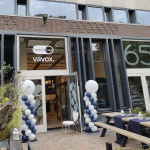
The new location is smaller than the previous one, but the number of workstations in the office is no longer the determining factor for facilities…
-

This summer, facilities contact center ContactCare is expanding with a new branch in Antwerp.
-

BPO service provider ContactCare has opened a new location on Dr. JF Nassylaan in Paramaribo.